
House of David Season 2: Hybrid AI Workflow Achieves Blockbuster Scale

House of David Season 2 production | Wonder Project
Share this post:
House of David Season 2: Hybrid AI Workflow Achieves Blockbuster Scale
Vu Technologies partnered with Wonder Project on House of David Season 2, deploying over 253 AI generated shots integrated with virtual production and practical effects. The series premiered exclusively on Wonder Project's Prime Video subscription service October 5, 2025, after Season 1 attracted 40 million viewers.
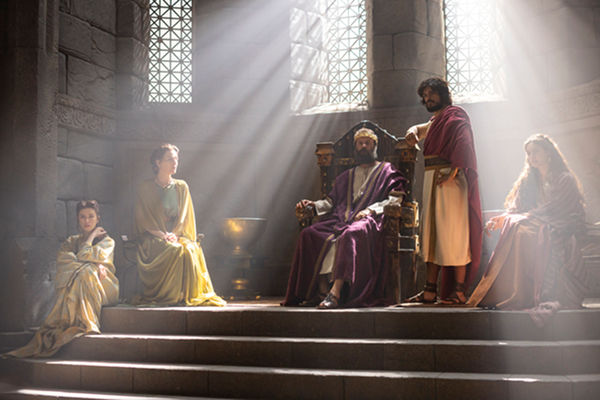
Technical Stack and Partnership
Vu Technologies provided state of the art virtual production infrastructure:
LED and lighting systems:
- Two Vu One LED walls
- 50-foot by 20 foot Aputure Infinimat System
- Aputure industry leading lighting solutions
Computing and cameras:
- NVIDIA RTX 6000 Ada Generation GPUs
- Multiple remotely controllable RED Cameras
- RED high performance camera systems
- Mark Roberts Motion Control
Software and AI:
- Vu Studio proprietary software
- Vu Gen AI Orchestrator
- Runway Gen-3 Alpha for image-to-video generation
- NVIDIA accelerated computing
The technology stack enabled realtime iteration on set, allowing creators to generate and adjust assets during production rather than lengthy post production cycles.
Scale of AI Integration
House of David Season 2 incorporated 253 AI generated shots, increasing from 73 shots in Season 1. Some reports indicate the final count reached 350 to 400 shots, representing a fivefold expansion in generative AI utilization.
The opening episode provided the stress test. The entire episode takes place during massive battle featuring armies of 100,000 on each side. Series creator Jon Erwin detailed which elements used AI generation:
- Close up shots of horses charging past lens (too dangerous to film practically)
- Wide battle shots blending practical extras with AI generated crowds
- Sweeping vistas creating environmental scale
- Crowd sequences expanding practical performer counts
- Epic conflict establishing shots
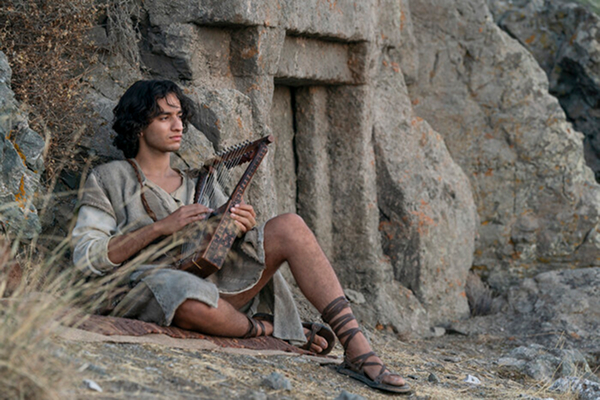
"The entire scene is driven with generative AI tools as the horsepower to the scene," Erwin told Variety magazine. "What we found is that these tools work best when combined with traditional tools."
Hybrid Workflow Approach
The production developed what Erwin describes as a hybrid approach seamlessly blending AI generated content with live action photography and traditional VFX. Individual techniques become nearly impossible to distinguish in final output.
Erwin compared the methodology to puppeteering: "Let's say we only have the money to have a certain scale to the frame. You can put a very real camera on a very real actor and direct that actor, direct the camera, and that becomes, in essence, the hand inside a puppet. The puppet itself is this digital world that you create."
The approach places cameras on real actors while AI generates surrounding digital landscapes, blurring the line between reality and augmentation.
Multi Tool Integration
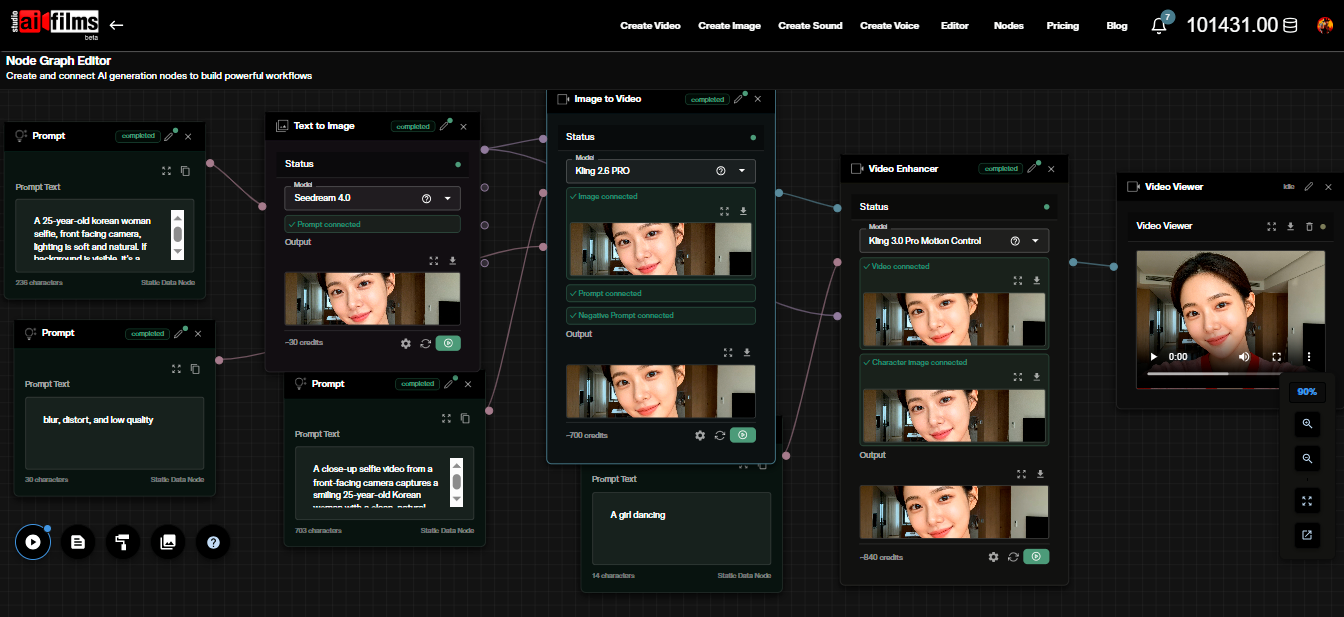
The production utilized 10 to 15 different AI platforms, stacking tools to achieve broadcast quality results. No single tool provides production ready output alone; the workflow requires creative combination.
Tools mentioned:
- Runway Gen-3 Alpha (image-to-video generation)
- Midjourney (image generation)
- Kling (video generation)
- Luma (3D and video generation)
- Google AI tools
- Adobe AI tools
- Dedicated upscaling tools
- Topaz (upscaling and enhancement)
Traditional VFX tools integrated with AI generation:
- Adobe After Effects
- Unreal Engine
- Standard compositing workflows

The technical breakthrough came through style transfers, applying the show's visual aesthetic and shooting style directly onto AI generated assets. This allowed matching AI content to live action photography so closely that stability in the workflow made AI a planned production technique rather than backup solution.
Production Efficiency and Budget
"The cost of augmenting those shots is minuscule compared to the time and cost it would have been to generate those with traditional VFX methods," Erwin explained to press.
Vu CEO Tim Moore emphasized the economic advantage: "From quickly generating assets in AI that are based on the reference photography on Season 1, to iterating changes live on set, this type of hybrid AI workflow allows production companies to be more creative and achieve blockbuster film results for a fraction of the cost and time."
Erwin's strategic decision to embrace AI stemmed primarily from financial constraints. Conventional methods for achieving the grand scale he envisioned were economically prohibitive. The hybrid approach enabled budget conscious filmmaking without compromising visual ambition.
Runway's Role in Production
Runway provided its Gen-3 Alpha model for image-to-video generation. The company brought frontier AI research and multimodal models to production workflows.
"House of David is a perfect example of what can be achieved with Runway's tools – captivating visuals and ambitious storytelling, all at a fraction of the cost," said Runway cofounder and CEO Cristóbal Valenzuela. "Combining new technology with traditional filmmaking techniques is something all creators can benefit from."
Runway's technology has been instrumental in projects ranging from Madonna's Celebration Tour visuals to major brand campaigns for Under Armour and New Balance. The company enhances workflows for top studios, brands, and creators.
Quality Standards and Broadcast Requirements
The jump from 73 shots to 253 required solving fundamental production challenges preventing AI generated content from holding up at broadcast quality.
Chris del Conte, Amazon MGM Studios' global head of VFX, collaborated with Erwin's team starting January 2025. The partnership brought together del Conte's experience building Amazon's AWS powered virtual production infrastructure with Erwin's vision for AI integrated storytelling.
Legal and technical challenges included proving visual chain of title (similar to script copyrights) and developing reliable upscaling pipelines to 4K HDR standards.
Del Conte noted at AWS's Culver Cup Gen AI Film Showcase: "Season one, we were kind of swimming. You guys were coming up with solutions for shots that might never have been attempted traditionally. Season two, you actually planned for Gen AI to be the workflow."
Training and Implementation Process
The production developed three critical components: education, process, and implementation.
The team trained daily on generative tools, treating AI like stunt performers who drill constantly before applying skills to productions. "What I've learned is that the amount of time you put in matters," Erwin stated. "A lot of people wish to win, very few have a wish to prepare to win."
Discoveries that went into Season 2 came from the team training together daily, building repeatable workflows around AI tools, and integrating them as an "acceleration layer" within commercial production schedules.
Photorealistic Results
"The combination of generative AI backgrounds and live practical effects creates a type of photorealism that is going to blow audiences away in Season 2," said Vu CEO Tim Moore.
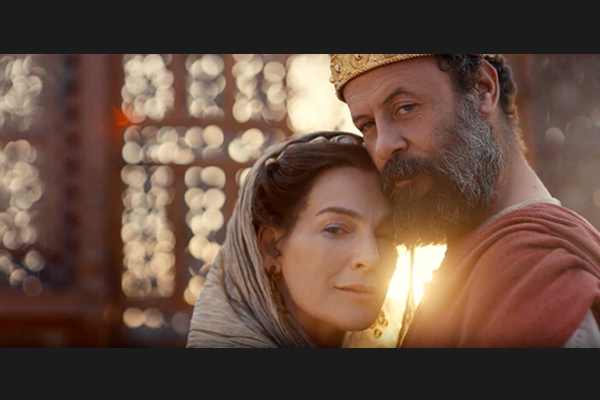
The production matched AI content to live action photography through style transfers and technical refinement. Audiences witnessed 100,000 warriors charging into battle, horses galloping directly at the camera, and entire episodes taking place in epic conflict with AI generated elements nearly impossible to detect.
Industry Context and Debate
House of David's AI integration occurs amid Hollywood's broader debate about generative technology in filmmaking.
Not everyone in the industry agrees with Erwin's approach. Director Guillermo del Toro told NPR he would "rather die" than use generative AI. Filmmaker Justine Bateman criticized the technology's economic implications.
"It's presenting itself as a solution if we had a business where we didn't have enough writers or we didn't have enough directors or actors or location managers. But we have the opposite situation," Bateman told press. "We have more workers than we have jobs. So it's not solving any problem except the problem a CEO might have of not having profit margins wide enough for their liking."
Erwin defended his approach by emphasizing creative possibilities and budget constraints rather than labor replacement. The hybrid workflow enables productions that wouldn't exist otherwise at accessible budget levels.
Wonder Project Platform
House of David Season 2 debuted exclusively on Wonder Project's subscription service on Prime Video. Season 1 attracted over 40 million viewers across free streaming platforms before Wonder Project launched its paid service.
The series represents Wonder Project's flagship content demonstrating production value achievable through AI augmented workflows. The platform invites filmmakers, technologists, and audiences worldwide to experience industry defining production approaches.
Behind the Scenes Documentation
Vu Technologies and Wonder Project produced a behind the scenes case study video in Greece, offering exclusive insights into the workflows and creative breakthroughs driving the project.
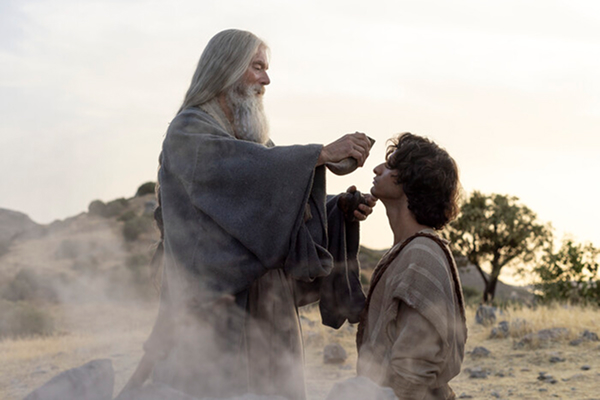
The case study provides audiences and industry professionals with firsthand look at how technology transforms storytelling. It documents the technical stack, workflow development, and integration of AI tools with traditional filmmaking techniques.
Future Implications
"Jon and his team are pushing the boundaries on how films will be made in the future," said Tim Moore.
The production establishes precedent for AI integration at scale in episodic content. The hybrid approach demonstrates that generative tools combined with virtual production and practical effects can achieve broadcast quality results for fraction of traditional costs.
Technical Lessons
The production revealed several key insights:
No single AI tool suffices: Stacking multiple tools creatively achieves what Erwin calls "superpowers." The workflow requires combining image generators, upscaling tools, video generators, and traditional VFX.
Style consistency requires training: Applying show specific visual aesthetic to AI generated assets maintains coherent look across AI and live action elements.
Daily practice essential: Teams must train constantly with AI tools before applying skills to productions under commercial schedules.
Hybrid integration works: Smooth blending of AI generated content with live action photography and traditional VFX makes individual techniques nearly impossible to distinguish.
Planning AI workflows: Season 2 planned for generative AI from the start rather than using it as backup solution, enabling stable, repeatable processes.
Production Scale Achievement
The series achieved visual scale typically requiring prohibitive budgets. Armies of 100,000 warriors, complex battle choreography, sweeping environmental vistas, and dangerous stunts all rendered through combination of practical photography and AI generation.
This scale enabled storytelling ambition matching major studio productions at independent production budgets. The hybrid workflow democratizes access to blockbuster level visual effects for productions with limited resources.
Vu Technologies Platform
Vu Technologies describes itself as a cutting edge creative technology company and studio network. Through turnkey systems and software platform, the company empowers creators to produce content at the speed of thought.
The partnership with House of David demonstrates Vu's capabilities at scale in episodic production. The technology stack handled complex requirements for virtual production, realtime iteration, and AI integration across multiple episodes.
Market Reception
House of David Season 1's 40 million viewers established audience appetite for the series. Season 2's exclusive release on Wonder Project's paid subscription service tests whether AI augmented production quality justifies premium positioning.
The production's success or failure will influence industry decisions about AI integration scale in episodic content. Audience reception determines whether hybrid workflows achieve viewer acceptance alongside traditional production methods.
At Cannes 2026, Erwin joined Kling AI's panel to share data on his next project: "Moses", starring Ben Kingsley, moved from concept to a broadcast ready first episode in approximately five months, a fraction of the typical streamer cycle. The same panel showcased Wei Li's ink painting epic Born of the Tide, which cut a third off production using a comparable hybrid pipeline.
Erwin took that hybrid methodology to his first major theatrical release in July 2026, when he detailed the use of AI across more than 100 shots of Young Washington, the Angel Studios film built through Innovative Dreams, his production company founded together with Luma AI.
Broader Industry Adoption
Vu Technologies positions House of David as case study for future filmmaking approaches. The company invites other productions to adopt similar hybrid workflows combining virtual production, AI generation, and practical effects.
"This type of hybrid AI workflow allows production companies to be more creative and achieve blockbuster film results for a fraction of the cost and time," said Tim Moore.
As AI video generation tools mature and virtual production infrastructure becomes more accessible, the House of David workflow model may influence independent and studio productions seeking budget efficiency without sacrificing visual ambition.
Sources:
- PR Newswire: "Vu Technologies Joins Forces with Wonder Project to Redefine AI Powered Filmmaking"
- Variety: Jon Erwin interview on AI integration
- VP Land: "House of David Season 2 Used 253 AI Generated Shots"
- The Wrap: "House of David Season 2 Features Over 350 AI Generated Images"
- Mid Michigan AI Hub: Production efficiency analysis
- Vu Technologies: https://www.vu.network/news/house-of-david
- AWS Culver Cup Gen AI Film Showcase
Continue Reading


Video & LipSync
- Video Generator
- Text to Video
- Image to Video
- Start-End Frame to Video
- Draw to Video
- Motion Control
- Video Enhancer
- Video Upscaler
- Video Extend
- Video to Video LipSync
- Audio to Video LipSync
- Image to Video LipSync
- Video FaceSwap
- Seedance 2.5
- WAN 3.0
- Seedance 2
- FLUX 3
- Minimax H3
- Vidu Q3 Pro
- Grok Imagine Video 1.5
- Gemini Omni
- Google Veo 3.1
- Kling 3.0 Pro
- Luma Ray 3.2
- LTX 2.3
- Happy Horse 1.1
- Kling 3.0 Motion
- ByteDance Upscaler
- InfiniteTalk
- InsightFace
Image & Edit
- AI Character
- AI Actor
- Art Generator
- Text to Image
- Image to Image
- LoRA Image to Image
- Draw to Edit
- Image LoRA Training
- Remove Background
- Image Enhancer
- MidJourney 8.0
- Krea 2
- OpenAI GPT Image 2.0
- Nano Banana Pro Ultra
- Nano Banana 2 Lite
- Nano Banana Pro
- Minimax Image
- Clarity Pro
- Z-Image Turbo LoRA
- Krea 2 Turbo LoRA
- Z-Image LoRA Trainer
- Qwen Image LoRA Trainer
- Background Erase Network 2 (BEN2)