
South Korean Court Rules Virtual Avatars Can Be Defamed, Awards ₩500,000

Share this post:
South Korean Court Rules Virtual Avatars Can Be Defamed, Awards ₩500,000
A South Korean court has ruled that insults directed at virtual idols constitute defamation of the real performers behind the avatars. The Goyang branch of Uijeongbu District Court ordered a defendant to pay 500,000 won ($360) in damages to virtual K-pop group PLAVE, establishing the first legal precedent in Korea recognizing avatar-operator identity for defamation claims.
The September 2024 ruling addresses a question facing digital entertainment worldwide: Can you defame someone who performs behind an avatar?

The Case
In July 2024, a social media user posted multiple derogatory comments on X (formerly Twitter) targeting PLAVE, a five member virtual K-pop group whose performers remain anonymous. The posts included claims that the performers "could be ugly in real life," statements about giving off a "typical Korean man vibe," and direct profanity aimed at the avatars.
PLAVE's management agency, Vlast, filed a civil lawsuit on behalf of the five performers. Each sought 6.5 million won ($4,650) in damages, citing emotional distress caused by the remarks. The total claim reached 32.5 million won ($23,250).
The defendant's defense centered on a simple argument: PLAVE consists of fictional characters with no revealed identities, therefore defamation cannot be established. The court rejected this reasoning entirely.
The Court's Reasoning
Judge Jang Yoo Jin delivered a ruling that reframes how Korean law views digital identity. "Avatars are virtual representations used by individuals for self expression and communication in digital spaces," the court stated. "In the era of the metaverse, where digital and real life identities are increasingly intertwined, insults directed at an avatar may infringe on the external reputation of the actual user."
The decision rests on four legal pillars:
Identity recognition through public knowledge. The performers behind PLAVE were known to many fans through investigative journalism and amateur sleuthing, despite Vlast never officially revealing their identities. This public awareness satisfied Korean law's requirement that defamation victims be identifiable.

Avatars as self expression. The court recognized that avatars function beyond mere digital images. They serve as forms of self expression, social interaction, and identity representation in modern digital society.
Specificity without naming. Under South Korean defamation law, victims need not be named directly. If the statement's context allows the public to reasonably identify the target, the legal standard of specificity is met.
Widely recognized connection. If an avatar is widely recognized as representing a real person, insults aimed at the avatar can be regarded as insults against the person behind it.
The Damages
The court awarded 100,000 won ($72) to each of the five performers, totaling 500,000 won. This represented approximately 1.5% of the requested damages.
The ruling cited "the severity of the offending comments and the circumstances surrounding the incident" as factors in determining the amount. Vlast has appealed, seeking higher compensation while accepting the fundamental principle that avatars can be defamed.
The modest damages reflect a court establishing new legal ground cautiously. Legal experts note that early precedent setting cases often result in conservative awards, with damages potentially increasing as the legal framework solidifies.
Who Is PLAVE?
PLAVE debuted in March 2023 as South Korea's first mainstream virtual idol group to achieve commercial success comparable to traditional K-pop acts. The five members—Yejun, Noah, Bamby, Eunho, and Hamin—appear exclusively as avatars animated through motion capture technology performed by real but anonymous individuals.
The group's achievements include:
- Over 1 million YouTube subscribers
- First virtual idol group to win on major Korean music shows
- Hit single "Way 4 Luv" reached mainstream chart success
- Regular appearances at major Korean music awards
- Significant merchandise sales and international fan base
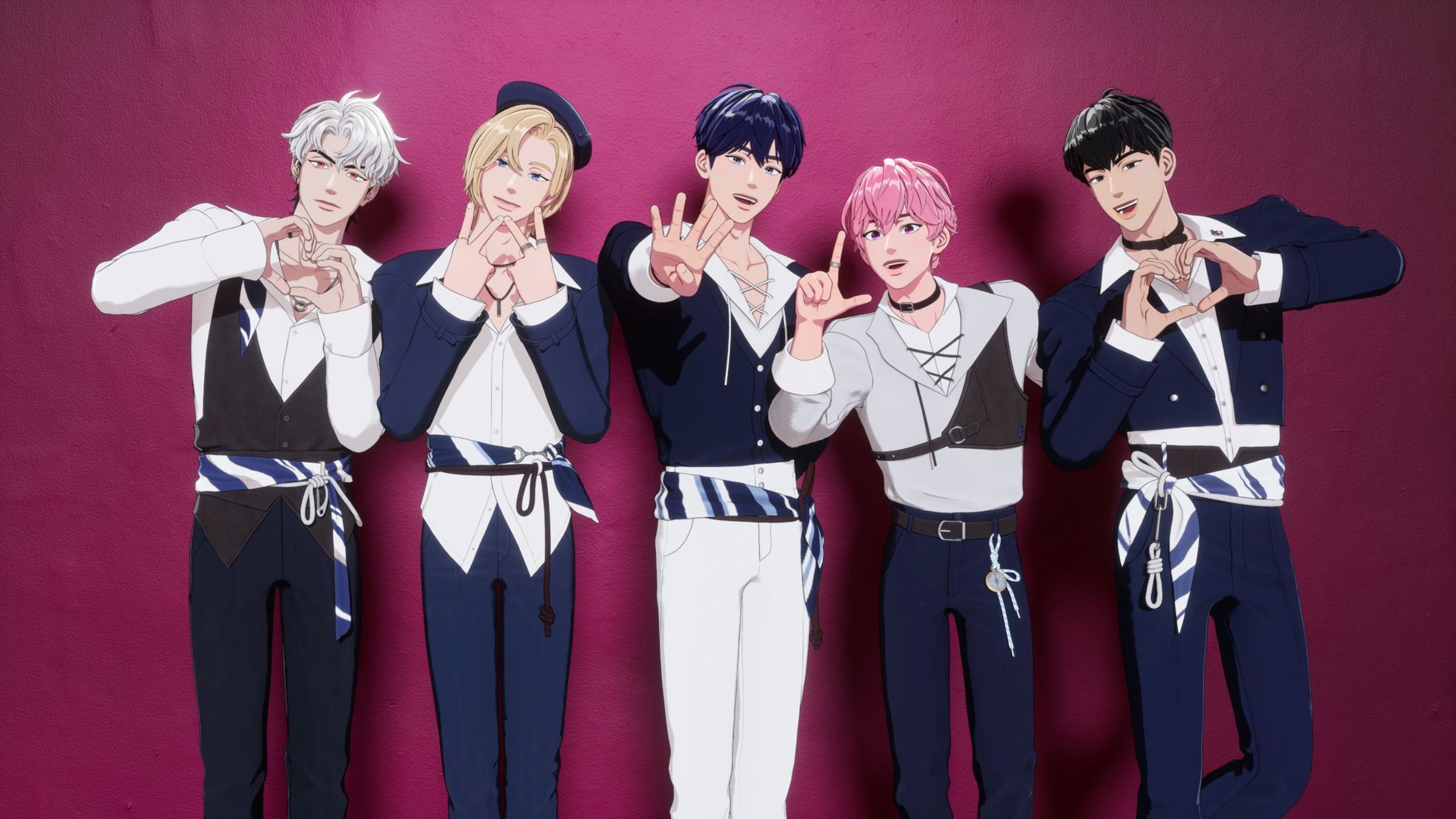
Real actors using motion capture technology deliver the performances. The actors' voices and movements animate the digital avatars in real time during performances, broadcasts, and video content. Vlast maintains the performers' anonymity, though fan investigations have identified several of them.
Legal Implications
This ruling establishes several precedents for virtual personas in South Korean law:
Virtual avatars gain defamation standing. When linked to identifiable real individuals, virtual avatars now have legal standing for defamation claims in South Korea.
Identity standards evolve. Courts will evaluate whether avatars are "widely recognized as representing" their operators. This threshold determines when the avatar person connection becomes legally actionable.
Platform accountability extends. Social media posts targeting virtual personas can face legal consequences equivalent to attacks on traditional public figures.
Specificity requirements adapt. Traditional defamation requirements adapt to digital contexts where direct naming may not occur but identification remains possible through context and public knowledge.
The decision extends beyond entertainment. VTubers, content creators using virtual avatars, individuals controlling AI generated avatars for business or education, and companies using virtual brand ambassadors may all claim similar protections when identifiable operators face defamation.
International Context
South Korea's ruling arrives as jurisdictions worldwide address the legal status of virtual personas and digital identity protection.

Japan has investigated various harassment incidents involving VTuber talents through criminal and civil proceedings, though legal frameworks remain evolving. Some US states recognize digital likenesses under right of publicity laws, but application to fully fictional avatars remains untested. The EU's General Data Protection Regulation addresses personal data but leaves avatar defamation legally ambiguous. China requires disclosure of AI/virtual nature of digital influencers, establishing transparency standards.
The PLAVE ruling positions South Korea as a potential leader in establishing virtual persona legal protections.
Unresolved Questions
The precedent raises complex questions for future applications:
The identity disclosure dilemma. If operator anonymity protects performers, how does public identification change legal standing? Does operator identification become a prerequisite for defamation claims, potentially forcing performers to sacrifice privacy for legal protection?
Avatar versus character distinction. How do courts differentiate between attacking a fictional character (protected speech) and defaming an avatar operator (actionable)? The boundary remains unclear.
Multiple operators. If multiple people perform behind a single avatar—common in some virtual contexts—how are defamation claims allocated?
AI autonomous avatars. As AI systems generate increasingly autonomous virtual personalities, who claims defamation standing? The AI developer? The content creator using the AI? Or no one?
Parody and criticism boundaries. How will courts balance defamation protections with legitimate parody, criticism, and free expression regarding virtual performances?
Industry Impact
Virtual K-pop idols represent a growing segment of South Korea's entertainment industry, combining technology with traditional production values. Following PLAVE's success, multiple virtual idol groups have launched. Major K-pop agencies are investing in virtual entertainment divisions. Technology providers are developing advanced motion capture and rendering systems.
The ruling provides these operations with legal clarity. Virtual entertainment companies can now develop harassment response protocols, legal protection strategies, and performer identity policies with established precedent.
For creators exploring AI generated content and virtual characters, AI video generation tools and image generation capabilities offer ways to experiment with digital character creation while understanding the evolving legal landscape.
Practical Considerations
For virtual performers:
- Document connections between avatar and real identity
- Preserve evidence of defamatory statements
- Understand that anonymity doesn't preclude legal protection if publicly identifiable
- Expect modest damages in early precedent cases
For agencies and platforms:
- Develop harassment response protocols for virtual talent
- Balance performer privacy with legal protection requirements
- Monitor evolving legal standards across jurisdictions
For social media users:
- Recognize that insults toward virtual avatars may constitute defamation in South Korea
- Understand that "they're not real" defense has been rejected by Korean courts
- Differentiate between criticism of performance and personal attacks
What This Means for Digital Identity
The ruling reflects changing relationships between digital and physical identity in increasingly virtual societies. As people spend more time in virtual spaces using avatar representations, legal systems must adapt to protect digital identity as an extension of personal identity.
Younger generations navigate seamlessly between physical and virtual identities. Legal frameworks reflecting this fluidity may gain broader acceptance. However, performers seek anonymity through avatars while requiring public identification for legal protections—a tension requiring careful balancing.
Technology advancement consistently outpaces legal framework development. Cases like PLAVE demonstrate courts catching up to technological reality, establishing precedents that will shape how law treats virtual personas for years to come.

Sources:
The Korea Times. "Court holds defendant liable for online defamation of virtual K-pop idols." September 2024. https://www.koreatimes.co.kr/southkorea/law-crime/20250918/court-holds-defendant-liable-for-online-defamation-of-virtual-k-pop-idols
Chosun Ilbo. "Virtual idols win 500000 won damages over online insults." September 2024.
Korea JoongAng Daily. "Virtual idols win lawsuit for damages from online comments." September 2024.
Asia News Network / The Korea Herald. "Is it a crime to insult 'virtual idols'? South Korean court says yes." September 2024.
BBC News. "Can you be sued for defaming virtual K-pop stars? South Korean case tests digital rights." 2024.
Continue Reading


Video & LipSync
- Video Generator
- Text to Video
- Image to Video
- Start-End Frame to Video
- Draw to Video
- Motion Control
- Video Enhancer
- Video Upscaler
- Video Extend
- Video to Video LipSync
- Audio to Video LipSync
- Image to Video LipSync
- Video FaceSwap
- Seedance 2.5
- WAN 3.0
- Seedance 2
- FLUX 3
- Minimax H3
- Vidu Q3 Pro
- Grok Imagine Video 1.5
- Gemini Omni
- Google Veo 3.1
- Kling 3.0 Pro
- Luma Ray 3.2
- LTX 2.3
- Happy Horse 1.1
- Kling 3.0 Motion
- ByteDance Upscaler
- InfiniteTalk
- InsightFace
Image & Edit
- AI Character
- AI Actor
- Art Generator
- Text to Image
- Image to Image
- LoRA Image to Image
- Draw to Edit
- Image LoRA Training
- Remove Background
- Image Enhancer
- MidJourney 8.0
- Krea 2
- OpenAI GPT Image 2.0
- Nano Banana Pro Ultra
- Nano Banana 2 Lite
- Nano Banana Pro
- Minimax Image
- Clarity Pro
- Z-Image Turbo LoRA
- Krea 2 Turbo LoRA
- Z-Image LoRA Trainer
- Qwen Image LoRA Trainer
- Background Erase Network 2 (BEN2)