
Share this post:
SAG-AFTRA Proposes Digital Likeness Tax on AI Performers
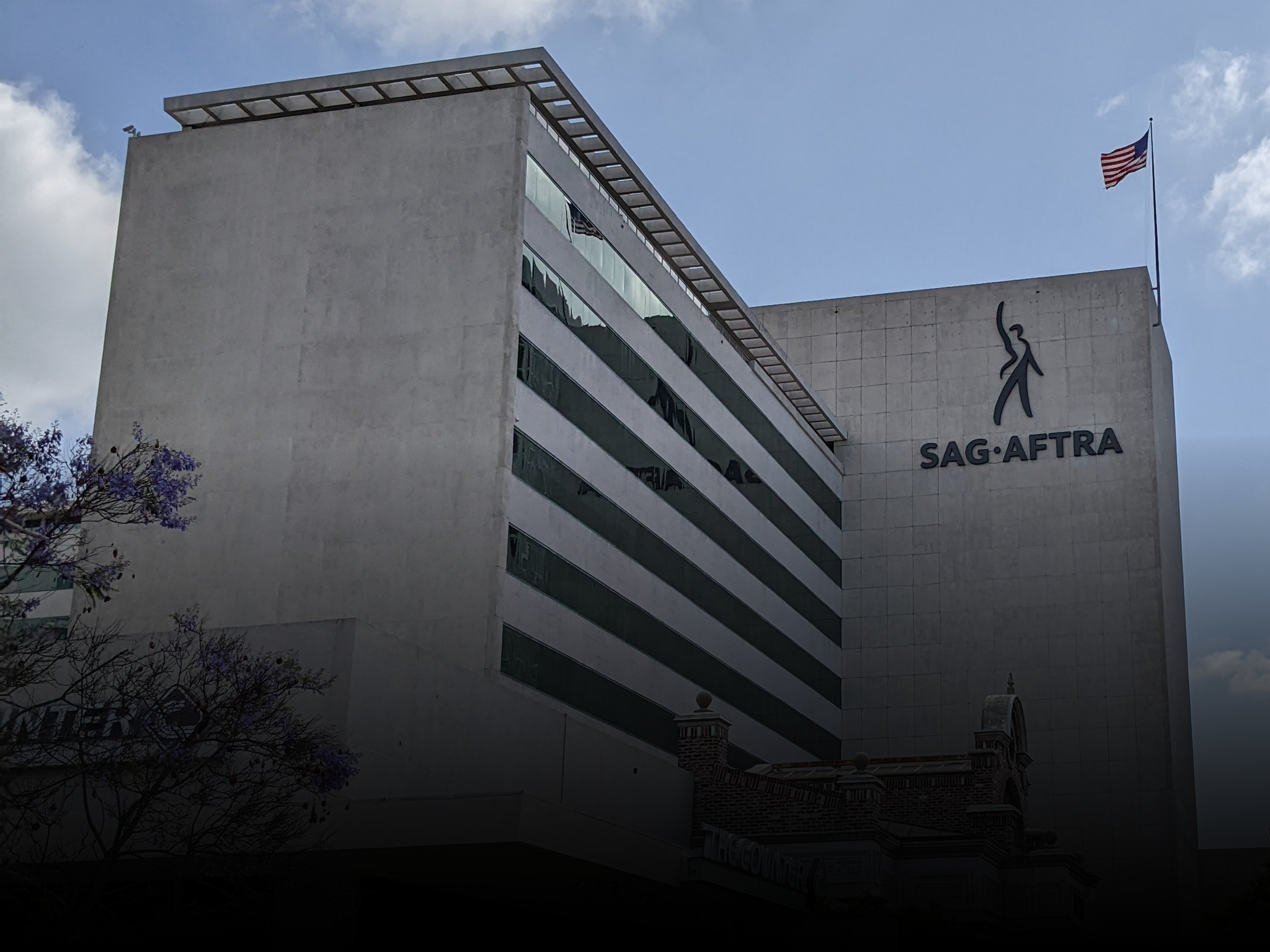
SAG-AFTRA is shifting its approach to AI regulation from outright prohibition toward economic taxation. Reports from late January through early February 2026 indicate the union now views AI performer usage as a "taxable event" within production budgets, with proceeds directed to the SAG-Producers Pension & Health Plans. The strategy acknowledges that banning synthetic performers has proven difficult while regulatory efforts stall at federal and state levels.
The Economics of AI Performers
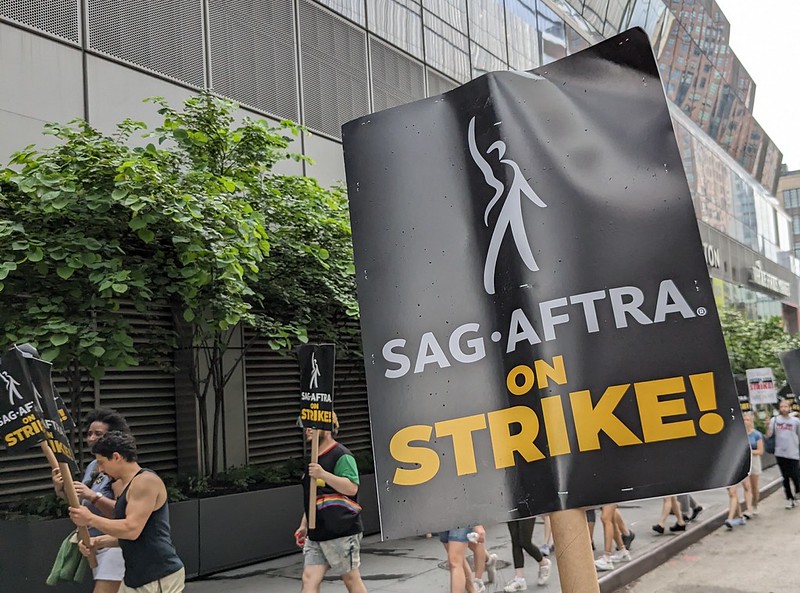
The proposed tax mechanism addresses a fundamental problem. When productions replace human actors with AI generated performers, the percentage based contributions that fund pension and health benefits disappear. Since synthetic characters do not earn wages, they trigger no automatic payments to union benefit plans. The levy would function similarly to residuals or pension contributions, treating every AI performer deployment as a budget line item requiring payment to SAG-AFTRA funds.
The goal extends beyond revenue generation. Union leadership believes that imposing financial costs on AI usage makes hiring human actors the economically rational choice. According to SAG-AFTRA's 2026 philosophy statement, the tax would make "the choice to use a human over A.I. the smartest financial choice." This reframes AI regulation as economic incentive rather than prohibition.

Synthetic Performers vs Digital Replicas
SAG-AFTRA draws a sharp distinction between two categories of AI generated actors. Digital Replicas are based on real performers, created from scans, recordings, or other source material depicting an actual person. The 2025 Commercials Contract and upcoming 2026 TV/Theatrical negotiations require "Informed Consent" and "Just Compensation" for such uses.
Synthetic Performers present a different challenge. These entirely AI generated characters, exemplified by the controversial "Tilly Norwood" created by Xicoia, have no human counterpart requiring consent. In a February 2, 2026 statement, SAG-AFTRA declared that synthetic characters "are not actors but computer programs trained on stolen performances." The union warned signatory producers that casting such synthetics without bargaining constitutes a contractual violation.
Leadership Heading Into February 9 Negotiations
SAG-AFTRA President Sean Astin and National Executive Director Duncan Crabtree-Ireland have defined the union's position ahead of contract talks. In a February 7, 2026 interview with Backstage, Astin emphasized that "hope is the coin of the realm" while cautioning that members enter negotiations with "extraordinary unity" against AI exploitation. His remarks signal confidence in the union's leverage despite rapid technological change.
Crabtree-Ireland reinforced the urgency at CES 2026, arguing that guardrails must be "baked in" immediately. With tools like OpenAI Sora 2 reaching production readiness, the window for establishing protections narrows. Once synthetic performers become normalized in productions, reversing that trend becomes exponentially harder. The union views current negotiations as potentially decisive for the next decade of entertainment labor relations.
| AI Category | Definition | Union Requirement |
|---|---|---|
| Digital Replica | Based on real performer | Informed Consent + Compensation |
| Synthetic Performer | Entirely AI generated | Subject to proposed tax levy |
Implications for Independent Creators
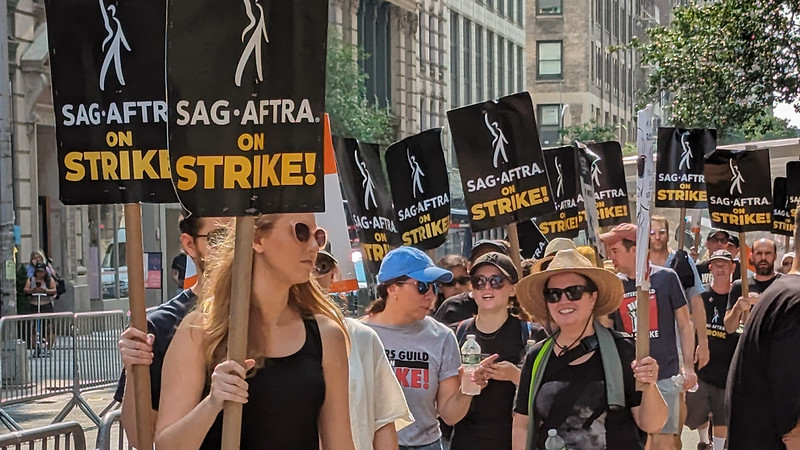
The proposed taxation framework targets SAG-AFTRA signatory productions, primarily major studios and network television. Independent filmmakers and content creators using tools like AI FILMS Studio operate outside this jurisdiction. The tax would not apply to creators generating AI characters for independent projects, social media content, or non-union productions.
However, the broader implications deserve attention. If major studios face AI performer taxes, the cost differential between synthetic and human actors shrinks, potentially increasing demand for human talent in union productions. This could redirect resources and attention within the industry while independent AI filmmaking continues to develop its own ecosystem and distribution channels. The tax proposal fits into a wider push in which Hollywood insiders are calling for a proactive AI strategy that pairs economic guardrails with creative leadership.
The February 9 negotiations will likely establish whether taxation becomes the primary mechanism for AI performer regulation in Hollywood productions. Related coverage of guild negotiations can be found in our analysis of Christopher Nolan's DGA leadership and its implications for director AI protections. For how these evolving legal frameworks reach beyond fiction filmmaking, see our analysis of what AI copyright law means for documentary filmmakers, where archival footage scraping disputes introduce a separate set of risks. The White House's March 2026 AI legislative framework, which proposes federal preemption of state actor likeness laws including California's AB 2602, adds a further complication to the union's regulatory strategy. That analysis is covered in our piece on how the White House AI plan targets Hollywood's state protections.
Sources
SAG-AFTRA: "SAG-AFTRA Statement on Synthetic Performer" Published: February 2, 2026 https://www.sagaftra.org/sag-aftra-statement-synthetic-performer
SAG-AFTRA: "AI Bargaining and Policy Timeline" https://www.sagaftra.org/contracts-industry-resources/member-resources/artificial-intelligence/sag-aftra-ai-bargaining-and
SAG-AFTRA: "Digital Replicas 101" https://www.sagaftra.org/sites/default/files/sa_documents/DigitalReplicas.pdf
SAG-AFTRA: "Regulating Artificial Intelligence - TV/Theatrical" https://www.sagaftra.org/sites/default/files/sa_documents/AI%20TVTH.pdf
Continue Reading
.jpg?w=3840)


Video & LipSync
- Video Generator
- Text to Video
- Image to Video
- Start-End Frame to Video
- Draw to Video
- Motion Control
- Video Enhancer
- Video Upscaler
- Video Extend
- Video to Video LipSync
- Audio to Video LipSync
- Image to Video LipSync
- Video FaceSwap
- Seedance 2.5
- WAN 3.0
- Seedance 2
- FLUX 3
- Minimax H3
- Vidu Q3 Pro
- Grok Imagine Video 1.5
- Gemini Omni
- Google Veo 3.1
- Kling 3.0 Pro
- Luma Ray 3.2
- LTX 2.3
- Happy Horse 1.1
- Kling 3.0 Motion
- ByteDance Upscaler
- InfiniteTalk
- InsightFace
Image & Edit
- AI Character
- AI Actor
- Art Generator
- Text to Image
- Image to Image
- LoRA Image to Image
- Draw to Edit
- Image LoRA Training
- Remove Background
- Image Enhancer
- MidJourney 8.0
- Krea 2
- OpenAI GPT Image 2.0
- Nano Banana Pro Ultra
- Nano Banana 2 Lite
- Nano Banana Pro
- Minimax Image
- Clarity Pro
- Z-Image Turbo LoRA
- Krea 2 Turbo LoRA
- Z-Image LoRA Trainer
- Qwen Image LoRA Trainer
- Background Erase Network 2 (BEN2)