EditorNodesPricingBlog

Kwon Han-sl: why AI filmmaking is a new genre, not a gimmick

October 1, 2025
Updated: June 30, 2026
Kwon Han-sl: why AI filmmaking is a new genre, not a gimmick

Share this post:

Kwon Han-sl: why AI filmmaking is a new genre, not a gimmick

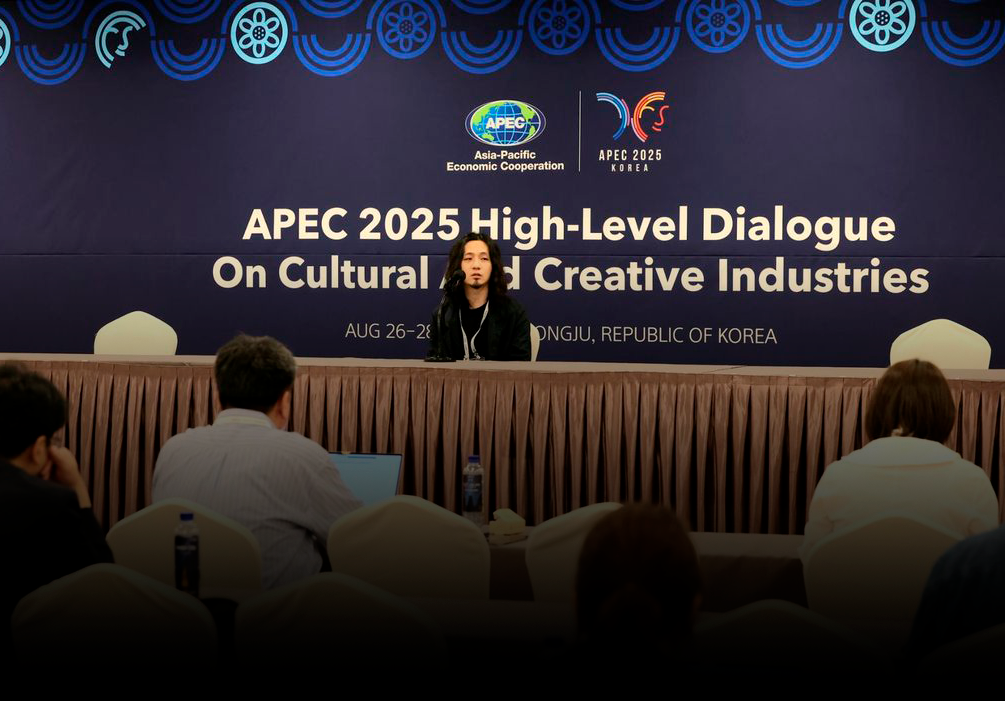
At a media session in Gyeongju during APEC 2025, director Kwon Han-sl (also credited as Hansl von Kwon) made a direct, practical argument. Generative AI has not added a new tool to the filmmaker's kit. It has created a new cinematic register with its own aesthetic vocabulary, production patterns, and curatorial expectations. His claim is backed by a concrete filmography: his three-minute short "One More Pumpkin" won the Grand Prize and the Audience Award at the inaugural AI Film Festival in Dubai, and collected additional honors at the Bucheon International Fantastic Film Festival.

The argument has weight because it comes from a filmmaker with documented results rather than from a commentator describing the medium from the outside. Kwon has made AI shorts, entered them in competitive festivals, won awards, and built a studio around the practice. When he describes AI filmmaking as a genre with its own logic, he is describing something he has tested in production, not something he has theorized about.

The Aesthetic Argument

Kwon's central argument is that AI filmmaking has developed repeatable style primitives that do not exist in traditional cinematography or VFX. Texture blending, dreamlike compositing, hybrid creature design, and the specific feel of AI generated motion are now recognizable as creative choices rather than technical defects. Audiences and festival programmers are learning to read these choices as a visual language, not as evidence of budget limitations.

That learning process is accelerating. When "One More Pumpkin" won in Dubai, the jury was evaluating AI aesthetic choices on their own terms. A short that uses AI generation in a way that serves its story and communicates a specific visual intent is now comparable to a short that uses any other production technique with intention. The medium has crossed the threshold where technical novelty substitutes for creative judgment.

Kwon described spending hundreds of prompt refinements to achieve the lensing, lighting, and mood he wanted in specific scenes. That number is the practical evidence that AI filmmaking is not a shortcut to a finished film. It is a different kind of labor. It is iterative, precision demanding, and dependent on having a clear aesthetic vision before generating anything.

The "hundreds of refinements" figure also challenges a common assumption about AI film production. The assumption is that AI removes effort from filmmaking by automating the hardest creative work. Kwon's practice suggests a different pattern: AI changes where the effort goes, shifting it from physical production toward iterative prompting, selection, and editorial judgment. The total work may be comparable to conventional production; the skills it requires are different.

A Technology Shift Comparable to Color Film

Kwon compared the arrival of AI generation to two earlier technology shifts: the introduction of color film and the shift to streaming. Both changed not only what filmmakers could make but what audiences expected to see, what festivals programmed, and what distributors would acquire.

Color film did not simply add color to black and white filmmaking. It enabled specific genres and aesthetics that black and white could not produce. Saturated melodrama, the visual language of classic Hollywood musicals, and the particular color grammar of Italian genre cinema in the 1960s all depended on what color made expressively possible, not just technically available.

Kwon argues AI generation is producing an analogous shift. The aesthetic possibilities AI enables are not a color version of what cinematographers were already doing. They are a new set of expressive options that filmmakers are still mapping.

The streaming comparison is useful for a different reason. When streaming arrived, it did not eliminate theatrical cinema but it created a distinct context for certain kinds of content that theatrical did not accommodate well. Long form serialized narrative, documentary and nonfiction, and experimental forms all found audiences through streaming that they could not reach through theatrical windows. AI filmmaking may be producing a similar expansion: content types and aesthetic approaches that existing platforms and festival circuits were not designed for, now finding an audience through venues that are specifically built to receive them.

One More Pumpkin and the Festival Validation

"One More Pumpkin" is a three-minute short that Kwon produced under the name Hansl von Kwon. The film won at the inaugural Expo AI Film Festival in Dubai before collecting honors at BIFAN. Kwon's Studio Freewillusion documented the full toolchain on the studio's site, including the models, versions, and editorial decisions that went into the production.

The festival traction matters for the genre argument. When an established festival jury like BIFAN's selects an AI short for its program and an audience awards panel chooses it for the top prize, that is institutional validation that the work meets a curatorial standard. The Dubai festival's focus on AI specifically meant its jury was evaluating the creative achievement within the medium, not despite it.

BIFAN's inclusion was more significant in one respect. The Bucheon International Fantastic Film Festival is a genre festival with a reputation built over more than two decades, and the AI shorts it selects sit alongside conventional live action and animation. That placement within a non AI specific context is a different kind of recognition than winning at a festival created for AI work.

The BIFAN AI competition launched in 2024 with 15 selected titles. Kwon's selection in that context demonstrates that the festival's programmers are treating AI shorts as a distinct category with its own curatorial standards, not as a novelty category with lowered expectations. The 15 title selection from what was presumably a larger submission pool indicates genuine curation rather than token inclusion.

What Kwon Means by Cultural Responsibility

At the Gyeongju session, Kwon returned repeatedly to the question of cultural authenticity in AI generated content. His argument is that AI generation does not automatically produce culturally accurate depictions of the communities, histories, or aesthetics it renders, and that filmmakers using AI to depict communities other than their own have a documentation obligation that directors of conventional productions rarely face.

The documentation obligation comes from how AI systems are trained. A model that has seen proportionally less data from a specific culture will produce less accurate outputs for that culture, and the filmmaker has to compensate through direction, selection, and iteration. Documenting that process creates a record of the editorial judgment that shaped the final representation, which allows the work to be evaluated fairly rather than judged against the assumption that the model's outputs are unmediated.

Korean cinema's conversations around AI have emphasized cultural authenticity alongside technological capability. Kwon's APEC session was part of a broader industry discussion in Korea about how AI filmmaking relates to national cultural identity and how Korean filmmakers can use AI tools to produce work that is authentically Korean rather than generic.

The cultural provenance question is not unique to Korean filmmakers, but Korea's active engagement with it at government media sessions like APEC gives it a policy dimension that most other national film industries have not yet developed. The framing that emerges from those sessions, balancing AI adoption with cultural protection, will likely shape Korean co production terms and distribution agreements in subsequent years.

The Toolchain Documentation Practice

Kwon's practical recommendation is that every AI filmmaker should maintain a toolchain document for each project. The document should list the models used, the versions or checkpoints, representative prompt formulations, seeds where applicable, and a description of any human editorial work that shaped the final output.

Festivals are beginning to ask for this information. At the Dubai AI Film Festival, Kwon notes that the submission process included technical disclosure fields. As the AI festival circuit develops standard submission requirements, toolchain documentation will likely become as routine as production notes or festival technical specs.

A well-maintained toolchain document also enables iteration on a project after its first submission. If a festival judge or a distributor asks for a revision to a specific scene, a filmmaker who knows exactly which model, prompt, and seed produced that scene can regenerate it with controlled changes. A filmmaker without that record faces a guessing process that may not reproduce the original visual style reliably.

The documentation practice also protects the filmmaker in rights disputes. If a model was trained on third party data that creates a rights claim against the generated output, a filmmaker who can demonstrate which model version they used and what prompts they submitted has more to work with than a filmmaker who cannot reconstruct their generation history. Toolchain records are the equivalent of production accounting for AI generated content.

For rights and license verification specifically, Kwon advises confirming commercial terms for each model independently before any submission or distribution. Research checkpoint releases often carry non-commercial licenses. A model that is free to download is not necessarily cleared for a film entered in a commercial competition or sold to a broadcaster.

The export practice Kwon describes includes saving high resolution key frames and intermediate generation outputs as separate files alongside the finished video. These intermediate outputs serve multiple functions: they are evidence of the production process, they can be reviewed by festival technical committees, and they enable downstream restoration or remastering if the original output degrades or needs updating for new display standards.

The APEC Context and Regional Framing

The Gyeongju session took place within the broader APEC 2025 programming, where Korean AI technology and creative output were positioned as connected examples of the country's innovation capacity. That context shaped how Kwon's arguments were received. They were received not as one filmmaker's personal aesthetic theory but as a marker of where Korean filmmaking is going.

That regional framing is worth tracking for filmmakers outside Korea. The countries where AI filmmaking is receiving institutional support, including through government media sessions, funding programs, and official festival programming, are creating the audiences and critical frameworks that will shape how AI films are received globally over the next several years. Korea's active early engagement positions its filmmakers to influence those frameworks.

The APEC context also means Kwon's arguments reached an audience of government ministers and technology policymakers alongside the film industry representatives. Policy attention to AI filmmaking at that level accelerates regulatory and funding framework development. South Korea's film industry has a history of government co-investment in cultural production; the direction of that investment in the AI era will be shaped in part by conversations like the one Kwon participated in at Gyeongju.

Industry analysis tracking 2026 as AI filmmaking's inflection point covers how this adoption pattern is developing across studios and independent creators globally.

What Filmmakers Should Do Now

Kwon's argument implies a specific set of actions for filmmakers building an AI practice. Document every toolchain from the first project. Build a director's note for each film that explains the aesthetic choices, not only the technical ones. Keep high resolution key frames and intermediate outputs as production artifacts.

The toolchain document does not need to be elaborate to be useful. A single text file per project that records the models used, the approximate prompt structure, and the key editorial decisions that shaped the final cut is sufficient for most festival submission requirements and most downstream rights questions. The habit of maintaining it from the start of production is more important than the detail level of any individual record.

On the audience side, data on audience acceptance of AI filmmaking in 2026 shows 86 percent of surveyed viewers demand disclosure of AI use and 61 percent accept AI generated content when its role is transparent. Kwon's emphasis on documentation directly addresses the disclosure demand.

The 61 percent acceptance figure at the point of transparent disclosure is a useful production target. A filmmaker who can discuss the tools, the choices, and the intentions behind an AI film can address the other 39 percent's skepticism on specific grounds rather than abstract ones. Audiences who see the gap between the tool's default output and the filmmaker's edited result are more likely to credit the directorial judgment that shaped the final film.

That gap is where Kwon's hundreds of prompt refinements become visible to an informed audience. The difference between what a model produces on a first prompt and what it produces after hundreds of iterations is a record of creative work that audiences can assess if the filmmaker is willing to share it.

Provenance transparency is Kwon's practical framework for building the trust that the audience data says viewers require. It does not mean explaining the technology to every viewer. It means having the documentation available when a festival, distributor, or journalist asks for it, and being willing to discuss aesthetic intent openly.

For filmmakers earlier in the process, building a practice of prompt documentation from the first generation run establishes the records that make this kind of transparency credible. A filmmaker who can show the draft prompts, the rejected outputs, and the selection decisions that produced the final frame is demonstrating the same directorial judgment that a conventional director demonstrates through shot lists and reference boards.

Kwon's practice at Studio Freewillusion is a working example of what this looks like in a filmmaking context with real festival submissions and real audience responses behind it.

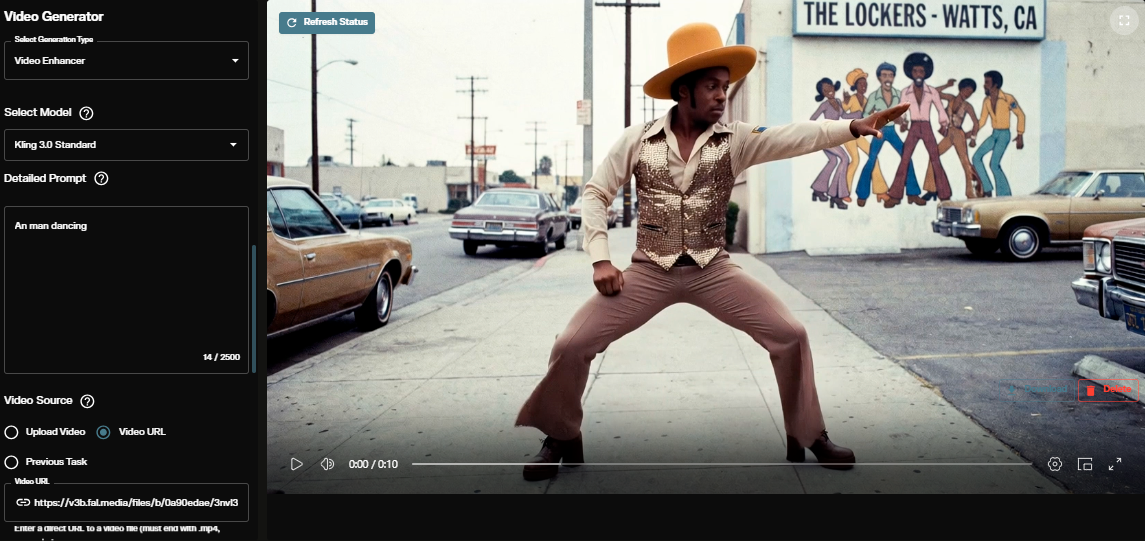
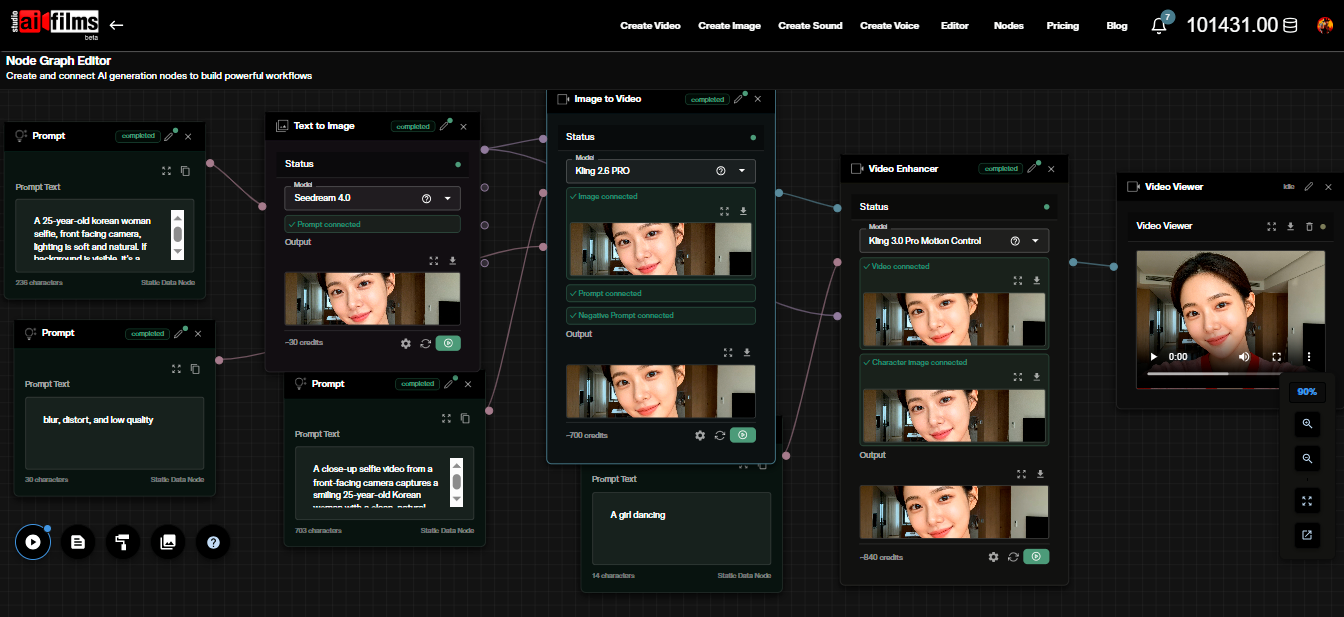
The AI FILMS Studio video workspace provides access to the latest text-to-video and image-to-video models for filmmakers building an AI production practice. The iterative generation workflow that Kwon describes, hundreds of prompt refinements to reach the right aesthetic, benefits from a platform where multiple models are available in a single interface.


What Studio Freewillusion Represents

Studio Freewillusion, the production company Kwon runs, is a small example of what an AI first production studio looks like at the individual filmmaker level. The studio website publishes credits, toolchain notes, and press materials in a format that treats AI filmmaking as a professional discipline with documentation standards, not as an experiment without accountability.

That professionalization model is relevant for independent AI filmmakers building their own practices. A studio identity, even for a one or two person operation, creates a context for the work that a filmmaker releasing films under their own name alone does not have. It signals that the filmmaker intends a body of work rather than a single project, and that the production has been managed with the discipline that a real studio implies.

The studio's public documentation of toolchains and production notes also serves as a reference for other filmmakers. When Kwon describes the models and decisions that produced "One More Pumpkin", he is providing information that the broader AI filmmaking community can learn from directly, not only appreciating the finished film but understanding how it was made.

The Freewillusion model, a named studio with public documentation and a developing slate, is one template for how an individual AI filmmaker can build a professional identity. The alternative, releasing films under a personal name with minimal production context, is also viable, but it limits the filmmaker's ability to attract collaborators, funding, and buyers who want to see a studio track record rather than an individual portfolio.


Sources

Korea Times | Korea JoongAng Daily | NDTV | Screen Daily

BIFAN: One More Pumpkin program entry Expo AI Film Festival: aifilmfest.ae/film/one-more-pumpkin Studio Freewillusion: studiofreewillusion.com