
Inside China's AI Filmmaking Revolution: How Hengdian Studios Is Transforming Production

Share this post:
Inside China's AI Filmmaking Revolution: How Hengdian Studios Is Transforming Production
A post production technician in Dongyang, China faces a problem familiar to budget filmmakers: creating epic battle sequences with few actors and less time. Zhang Shiyu's solution arrives not from traditional VFX studios but from artificial intelligence systems that generate entire armies of digital performers in minutes.
"What used to take me long days to create, AI can deliver in mere minutes with even greater continuity and realism," said Zhang, who works for Dongyang Gewuzhizhi Culture Media at Hengdian World Studios. The leap in large language models through 2025 transformed his workflow from labor intensive frame manipulation to rapid AI assisted generation.
Zhang's experience reflects a broader industrial transformation centered in Hengdian, often called "China's Hollywood." By the end of October 2025, the studio complex hosted 3,095 vertical screen drama crews and productions. The annual total projects to triple 2024's numbers. China's short and micro drama market reached 50.44 billion yuan ($6.9 billion) in 2024, surpassing the traditional film market for the first time while creating 647,000 direct and indirect jobs.
.jpg)
Micro Drama Production at Industrial Scale
Hengdian's explosive growth stems from a production system built for rapid content creation. The complex houses more than 20 large scale film and TV bases, efficient production services, and a pool of 100,000 background performers. Production costs for micro dramas shot at Hengdian run approximately 60% lower than similar overseas projects according to festival organizers.
"This year, we have prioritized integrating technology with film and television, powering the industry's growth," said Lu Pingping, deputy director of the Hengdian Film and Television Cultural Industry Development Service Center. The focus on technology integration accelerated through 2025 as AI tools moved from experimental additions to production infrastructure.
Micro dramas, typically vertical format content optimized for mobile viewing, exploded on platforms like Douyin and Kuaishou. These short form narratives feature frequent plot twists, rapid pacing, and production cycles measured in days rather than months. The format's constraints align perfectly with AI capabilities: generating background crowds, creating establishing shots, adding VFX to existing footage, and evaluating scripts at speed.
Dongyang Yuanying Technology Co. established operations in Hengdian in October 2024 and participated in over 20 short drama productions by year end. Lin Ju, the company's operations manager, noted AI currently handles grand scenes, science fiction and fantasy genres, and special effects addition to already shot footage.
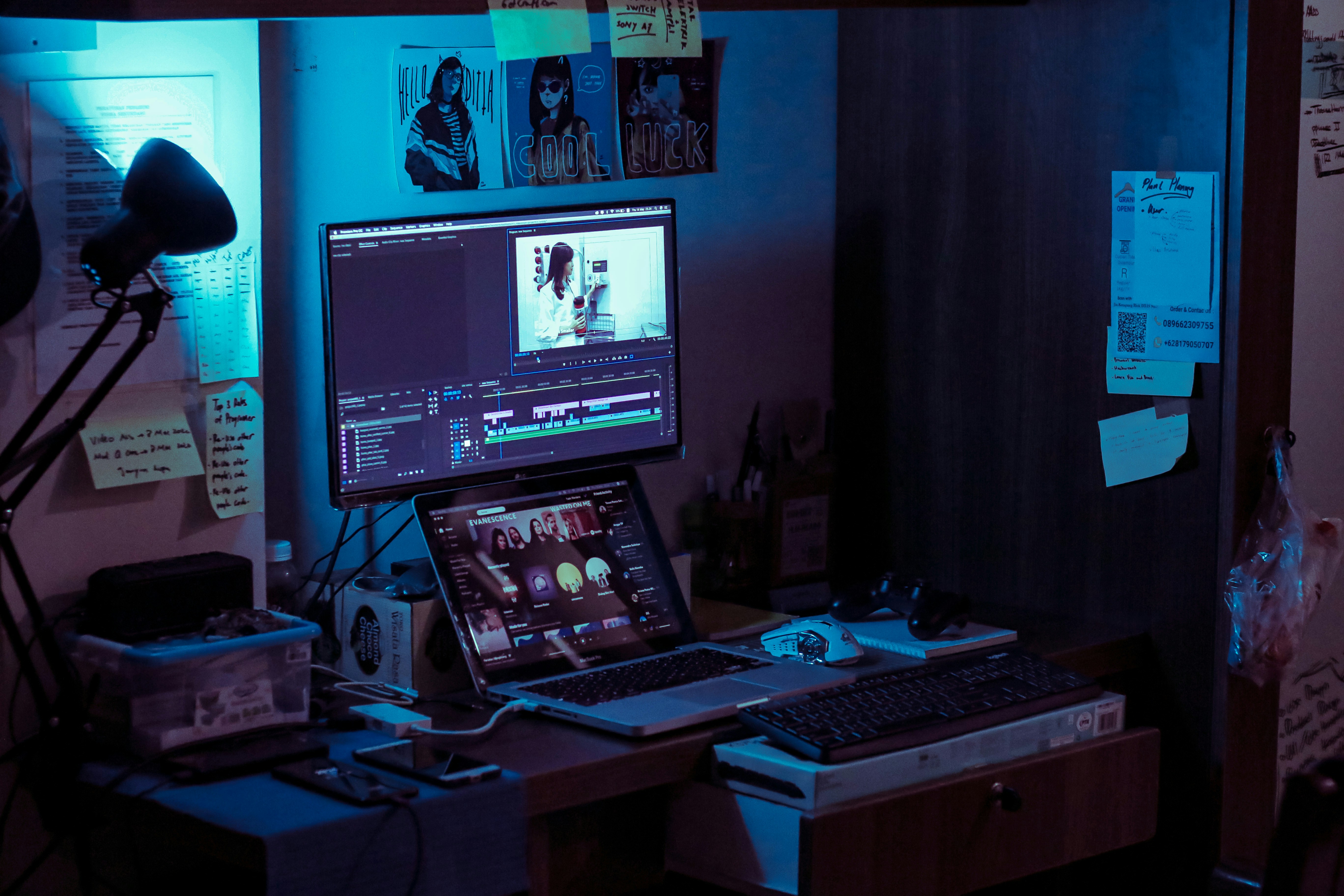
Large Language Models for Script Evaluation
The AI transformation extends upstream into development and greenlight decisions. Hangzhou based media company Huace Group developed an in house large language model for script summarization, evaluation, and creation. The model trains on Huace's resources including 50,000 hours of film and television copyright assets plus 30 years of accumulated data: scripts, evaluation reports, and industry performance metrics.
The system produces rapid preliminary evaluations of novels up to 1.2 million words. Tasks previously requiring a human team 10 to 14 days complete in one to two hours through AI processing. Combining AI screening and manual assessment increased overall efficiency by over 50%, according to Fu Binxing, president of Huace Group.
"The model helps efficiently identify suitable projects during the initial stages, and inspires creators by optimizing scripts," Fu said. The company continues refining the model's accuracy while expanding its application to active development projects.
This represents a significant shift in how Chinese studios approach IP acquisition and development. Traditional evaluation methods relied on experienced readers working through manuscripts page by page, often taking weeks to assess a single property. The compressed timeline allows studios to evaluate more potential properties while reacting faster to market trends.
The model's training on historical performance data gives it pattern recognition capabilities beyond traditional story analysis. It identifies elements correlated with commercial success: character archetypes that resonate with specific demographics, plot structures that maintain engagement, pacing rhythms that match platform consumption patterns. Human developers still make final creative decisions, but the AI pre screening filters hundreds of options to a manageable shortlist.
AI Generated VFX at Post Production Speed
Zhang Shiyu's work exemplifies the production side transformation. His company specializes in micro short dramas where budgets measure in tens of thousands of yuan rather than millions. Traditional VFX studios charge rates that would consume entire micro drama budgets for single sequences.
AI tools changed this economic equation. Zhang uses generative systems to create background crowds, environmental extensions, and fantastical elements that would be impossible to capture practically. A period drama requires hundreds of extras in elaborate costumes. Science fiction needs futuristic cityscapes. Fantasy demands magical effects and mythical creatures.
"Especially with the leap in AI large language models this year, the process has become smoother, more precise and strikingly efficient," Zhang noted. The integration happened seamlessly into existing editing pipelines. AI generated visuals export in standard formats compatible with professional editing software.
The quality threshold matters critically. Micro dramas compete for attention on mobile platforms where viewers scroll past content within seconds. Production values must meet viewer expectations even at compressed budgets and timelines. AI allows small studios to deliver visual polish previously restricted to major productions.
.jpg)
Virtual Production and Real Time Rendering
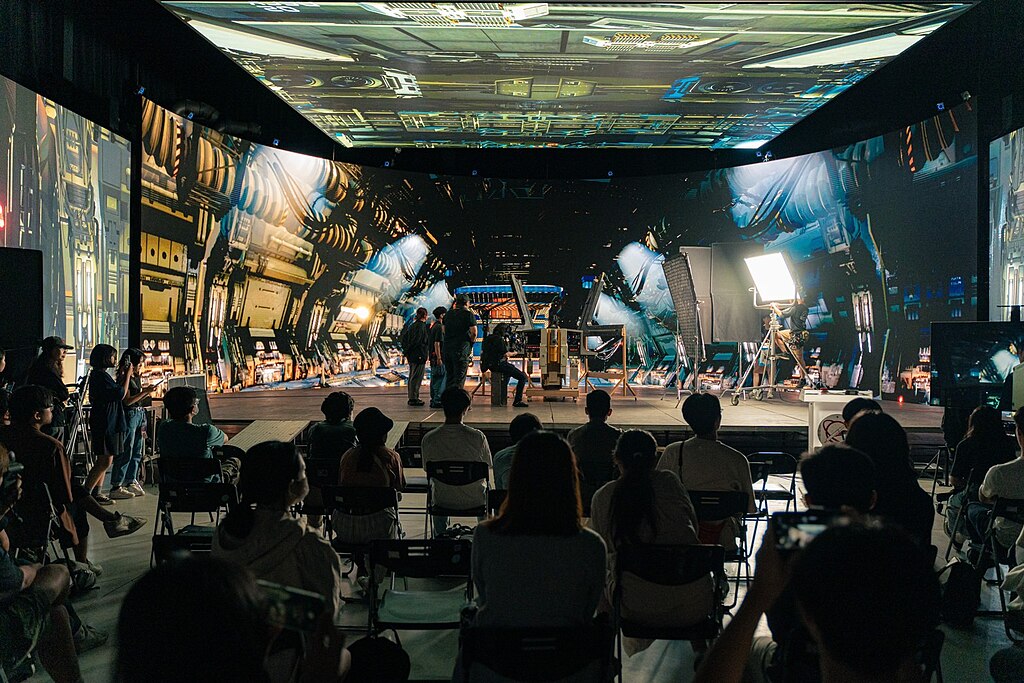
iQiyi, one of China's major streaming platforms, operates a flagship virtual production facility at Hengdian's Stage 13 studio. The company hosted its first open house during the 2025 Hengdian Film & TV Festival in November, demonstrating the upgraded iQStage system.
Virtual production combines real time game engine rendering with physical sets and performers. LED walls display photorealistic environments that respond to camera movements instantly. This allows filmmakers to shoot scenes in fantastical locations without leaving the studio. The technology also enables real time creative iteration: directors adjust lighting, time of day, or environmental conditions between takes.
The complete workflow spans camera tracking, real time rendering, and immediate playback. Crews see final composited shots during filming rather than waiting for post production. This "what you see is what you get" approach changes how directors work, allowing creative decisions based on finished imagery rather than imagination and placeholder green screens.
For micro drama production, virtual production solves location scouting and travel logistics. A single stage hosts scenes set in multiple locations shot back to back. The economic efficiency matters as much as creative flexibility. Productions schedule tighter shoot days knowing they control every environmental variable.
AI Copyright Protection Systems
The rapid growth of micro drama production created an equally rapid proliferation of copyright infringement. With approximately 150,000 short dramas released between 2021 and 2025, tracking ownership and protecting IP became nearly impossible through manual methods.
Hengdian launched an AI powered monitoring system in 2025 that automates copyright infringement identification and evidence collection online. The system addresses long standing challenges of low efficiency and limited coverage in manual monitoring. China's Copyright Association named micro drama infringement among its top copyright issues for 2024.
East China's Jiangxi Province established the first dedicated agency to protect micro short drama copyright using AI systems. From establishment in 2024 through May 2025, the agency resolved eight infringement cases and recovered tens of millions of yuan in losses.
The systems work by fingerprinting registered content then scanning video platforms for unauthorized copies. Pattern recognition identifies modified versions: recut sequences, altered color grading, changed audio, or scenes inserted into different productions. When potential infringement appears, the system captures evidence and initiates takedown procedures.
This represents AI functioning as both creative tool and governance mechanism within the same industry. Studios use generative AI to create content while copyright AI protects their output from unauthorized redistribution. The dual application addresses concerns about AI undermining creative ownership by providing technical enforcement infrastructure.
Global Context: Western Studios Adopt Similar Approaches
China's AI integration parallels developments in Hollywood, though with different execution models. Lionsgate partnered with Runway to train a generative model on its back catalog, giving the studio access to proprietary AI tools trained on its specific visual style and IP.
James Cameron joined the board of Stability AI, positioning a tier one filmmaker as stakeholder in model development rather than passive user. This signals recognition that AI systems will reshape production infrastructure, making strategic positioning essential for major creative figures.
The key difference lies in industrial organization. Hollywood operates through established studios with decades of institutional knowledge and capital reserves. China's micro drama boom emerged from distributed production: thousands of small studios, rapid market entry, platform driven distribution. This created different selection pressures favoring speed and cost efficiency over prestige markers.
According to a report from the China Society of Motion Picture and Television Engineers, AI reshapes industry workflow from scriptwriting through marketing. The integration spans more production phases than typical Western implementations that focus on specific applications like rotoscoping or stunt double replacement.
Western productions typically involve AI at discrete workflow points: generating concept art during pre production, creating digital extras in VFX heavy scenes, accelerating rotoscoping in post. Chinese micro drama production integrates AI more fundamentally into production economics and scheduling assumptions.
Economic Impact and Employment
The 647,000 jobs created by China's short and micro drama sector in 2024 represent significant economic impact concentrated in Zhejiang Province where Hengdian operates. These positions span traditional production roles (performers, crew, support staff) plus emerging specializations: AI tool operators, virtual production technicians, real time rendering specialists, copyright monitoring analysts.
First quarter 2025 saw Chinese short and micro dramas record over 270 million global downloads, generating more than 2.4 billion yuan ($330 million) in revenue. Total market scale projects to reach $10 billion. The international expansion follows content discovery patterns similar to Korean dramas and Japanese anime: platform availability drives viewership which attracts production investment. Japan's own animation sector is pursuing comparable AI efficiencies to address a parallel animator workforce crisis, with studios like K&K Design and Toei Animation automating in betweening, coloring, and background art at scale.
Production cost advantages matter critically. Hengdian's 60% cost reduction versus overseas projects stems from integrated infrastructure, ready availability of locations and talent, and now AI efficiency gains. Studios shooting micro dramas can complete entire productions for what a single day of Hollywood shooting costs.
This cost structure enables different creative risk taking. Projects with niche appeal or unproven formats get greenlit because financial exposure remains limited. Some experiments fail but successful formats scale rapidly across hundreds of productions. The market rewards rapid iteration and format innovation.
By 2026, those costs had dropped further. A full AI-generated episode cost as little as $2,800, and AI digital human dramas had captured 38% of China's top 100 streaming shows.

Technical Infrastructure Requirements
The AI integration at Hengdian relies on substantial technical infrastructure. Cloud computing resources handle large language model training and inference. High bandwidth networks move large video files between production facilities, editing suites, and AI processing systems. Local GPU clusters run real time rendering for virtual production stages.
Dongyang Yuanying Technology arrived in Hengdian in October 2024, immediately participating in over 20 productions. This rapid deployment required compatible technical infrastructure already in place. The company leveraged existing networking, computing, and storage rather than building isolated systems.
Studios implementing AI tools need technical capabilities beyond traditional production: machine learning expertise, data pipeline engineering, systems integration specialists. Hengdian's concentration of production activity created market conditions supporting these specialized services. Technology companies establish operations knowing sufficient client density exists to sustain their business.
The capital investment in technical infrastructure gets amortized across thousands of productions. A single high end GPU cluster serves multiple shows concurrently. Virtual production stages schedule back to back shoots across different projects. This utilization rate makes advanced technology economically viable for budget conscious productions.
Challenges and Limitations
Despite rapid adoption, AI integration faces meaningful limitations. Character consistency across shots remains challenging, though systems like StoryMem demonstrate progress. Facial expressions and subtle performances require human actors. Dialogue delivery needs human timing and emotional authenticity.
Copyright concerns extend beyond infringement into training data questions. Large language models learn from existing content, raising questions about when inspiration becomes copying. Chinese regulators are developing frameworks but legal clarity lags behind technical capability.
Quality control matters critically. AI generated content requires human review and refinement. Studios employing AI tools still need experienced editors, VFX supervisors, and creative directors. The technology augments rather than replaces skilled practitioners, at least in current implementations.
The rapid market growth created sustainability questions. Can 150,000 short dramas per year maintain audience attention? Does content quantity dilute quality? Will viewer fatigue slow the sector's explosive trajectory? These remain open questions as the market continues evolving.
What This Means for Global Filmmakers
China's micro drama market demonstrates AI filmmaking at production scale rather than experimental deployment. The lessons transfer across markets and formats:
Speed Advantages Are Real: Productions completing scripts to distribution in weeks rather than months gain competitive advantages in trending topic exploitation and reactive content creation.
Cost Reductions Enable Different Creative Risks: When financial exposure drops 60%, studios greenlight projects that would never justify traditional budgets. This expands the range of stories reaching production.
Infrastructure Matters as Much as Tools: AI capabilities alone don't transform production. Supporting infrastructure (facilities, networks, technical talent) enables AI integration at scale.
Human Creative Direction Remains Essential: AI tools need human oversight, creative judgment, and quality control. The technology augments rather than automates filmmaking.
Regulatory Frameworks Are Still Forming: Copyright law, labor protections, and content standards lag behind technical capabilities. Expect ongoing adjustments as regulators catch up.
Future Trajectory
Lu Pingping's emphasis on technology integration signals continued investment in AI capabilities at Hengdian. The facility's position as infrastructure hub for China's micro drama sector gives it natural advantages in aggregating technical talent and testing new tools at scale.
Huace Group's LLM refinement suggests models will gain accuracy and expand into more development functions. Current applications focus on evaluation and optimization. Future versions might participate more actively in story generation, character development, and structural plotting.
Virtual production capability will spread beyond premium facilities like iQiyi's Stage 13. As LED wall costs decrease and real time rendering hardware improves, mid tier productions gain access to technology previously restricted to flagship projects.
International expansion creates pressure for cultural adaptation. Micro dramas targeting overseas viewers need translation, cultural consulting, and format adjustments. AI tools might assist in localization, helping Chinese productions reach global audiences while maintaining production efficiency.
The transformation at Hengdian represents a test case for AI filmmaking at industrial scale. Unlike experimental projects at major studios or indie films using generative tools creatively, this is systematic integration across thousands of productions. The results inform how AI reshapes media production globally as tools mature and costs decline.
For filmmakers worldwide, China's experience offers a preview of production workflows where AI functions as standard infrastructure rather than novelty. The question shifts from "should we use AI" to "how do we use it effectively while maintaining creative control and production quality."
Continue Reading
.jpg?w=3840)


Video & LipSync
- Video Generator
- Text to Video
- Image to Video
- Start-End Frame to Video
- Draw to Video
- Motion Control
- Video Enhancer
- Video Upscaler
- Video Extend
- Video to Video LipSync
- Audio to Video LipSync
- Image to Video LipSync
- Video FaceSwap
- Seedance 2.5
- WAN 3.0
- Seedance 2
- FLUX 3
- Minimax H3
- Vidu Q3 Pro
- Grok Imagine Video 1.5
- Gemini Omni
- Google Veo 3.1
- Kling 3.0 Pro
- Luma Ray 3.2
- LTX 2.3
- Happy Horse 1.1
- Kling 3.0 Motion
- ByteDance Upscaler
- InfiniteTalk
- InsightFace
Image & Edit
- AI Character
- AI Actor
- Art Generator
- Text to Image
- Image to Image
- LoRA Image to Image
- Draw to Edit
- Image LoRA Training
- Remove Background
- Image Enhancer
- MidJourney 8.0
- Krea 2
- OpenAI GPT Image 2.0
- Nano Banana Pro Ultra
- Nano Banana 2 Lite
- Nano Banana Pro
- Minimax Image
- Clarity Pro
- Z-Image Turbo LoRA
- Krea 2 Turbo LoRA
- Z-Image LoRA Trainer
- Qwen Image LoRA Trainer
- Background Erase Network 2 (BEN2)