
Aronofsky at Cannes: AI Project Was 'Mind Blowing'
Share this post:
Aronofsky at Cannes: AI Project Was 'Mind Blowing'
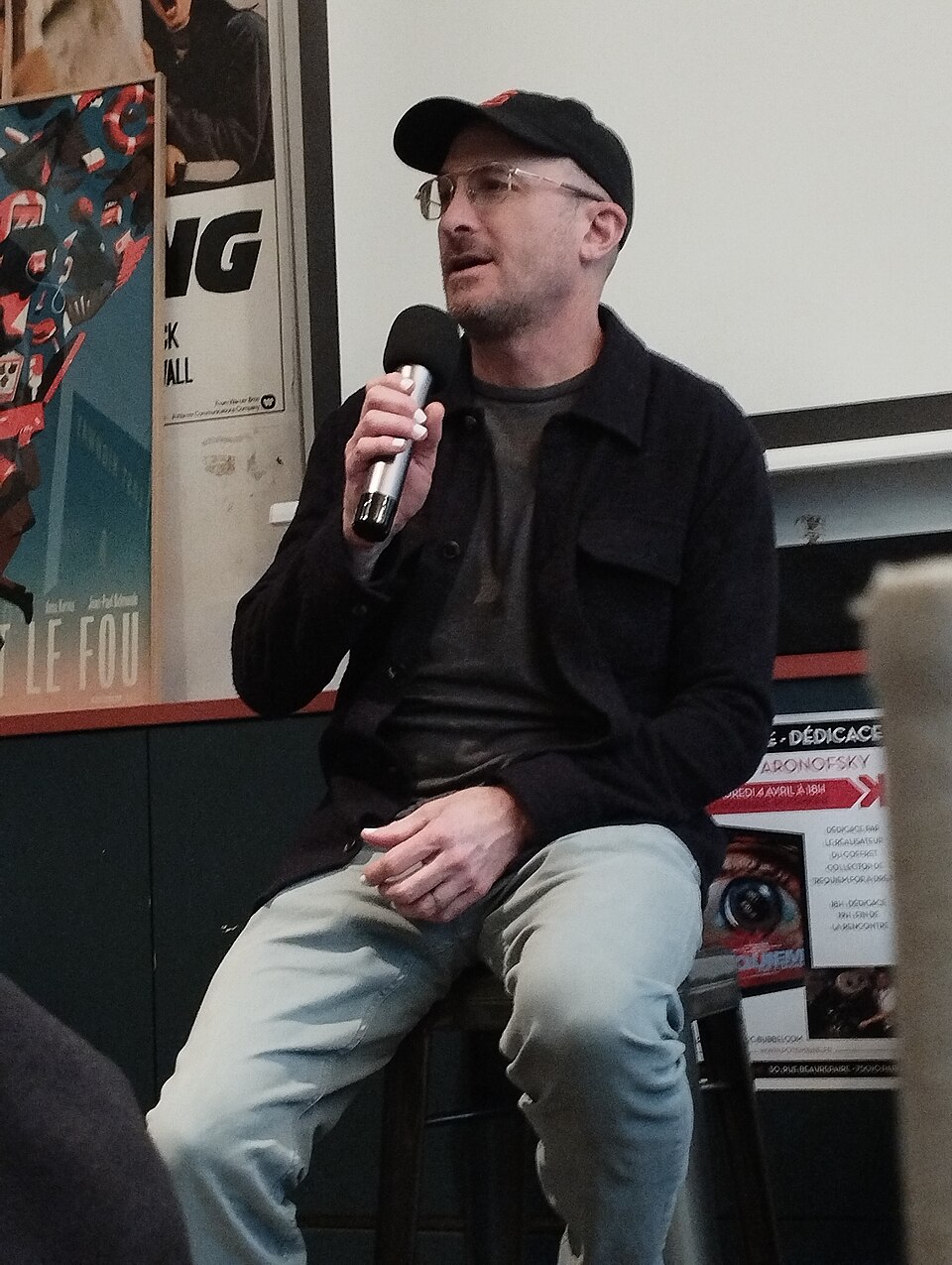
Darren Aronofsky told the Cannes AI for Talent Summit on May 16, 2026 that his AI animated series improved so dramatically between January and April that the difference is "mind blowing." The remark was a direct answer to the backlash his On This Day... 1776 series received at launch, delivered before an audience of studio and technology executives at the Marché du Film.
From January Backlash to Cannes
Aronofsky's AI production company Primordial Soup, founded in partnership with Google, released the first episode of On This Day... 1776 in January 2026. The animated series covers the American Revolution in 30 episodes, each timed to the 250th anniversary of the event it depicts. Audiences widely rejected the initial release.
Deadline covered the reaction as evidence that "the world is not ready for auteur AI." Aronofsky did not step back from the project. He brought it to Cannes instead.
The AI for Talent Summit
The Marché du Film's AI for Talent Summit is invitation only, drawing senior executives from film and technology. Aronofsky appeared in conversation with James Manyika, President of Research, Labs, Technology and Society at Google.
"If you look at the first release we did in January, and then you compare it to the project we just released on April 29, it's mind blowing", he told the summit.
Three things drove the improvement between January and April, in his account: advances in the underlying AI models, refinements in Primordial Soup's own production pipeline, and the development of its collaborating artists within the medium.
"Tremendous Human Labor"
Aronofsky rejected the premise that AI reduces the craft required to produce something good. "It takes a tremendous amount of human labor and artistry and intention to make anything good with this technology", he said.
He described the series as strictly experimental, separate from his narrative feature career. Throughout On This Day... 1776, SAG-AFTRA union voice actors perform all roles. AI generates the animation; the human performances provide the audio layer. That arrangement has held since the January 2026 launch of Primordial Soup.
The split separates the labor objection from the aesthetic one. Critics of the January release were responding to the visuals, not to who performed the dialogue.
The Orson Welles Argument
Aronofsky placed AI alongside every technology filmmakers once resisted: sound film, portable cameras, visual effects. Each was absorbed. He argued AI would follow the same path, and that it may remove a specific obstacle that has historically stopped major work from existing.
"It may actually be even easier to tell stories", he said, invoking Orson Welles directly: "Many years did that genius waste trying to raise money to do his art".
"The reality is, storytelling is my art", he added. The technology serves that, not the other way around.
.jpg)
Abxbay, CC0, via Wikimedia Commons
Outside Cannes, the Venice Reply AI Film Festival drew over 2,181 submissions for its 2026 edition, running alongside Venice Film Festival each September.
Aronofsky's Cannes appearance came as the festival was simultaneously banning AI generated work from its Official Competition. The AI for Talent Summit, hosted at the Marché du Film, operated in a separate institutional lane from the festival's programming decisions.
What Changed Between January and April
The January 2026 episode of On This Day... 1776 drew immediate negative responses online. Critics described the animation as stiff and visually inconsistent. Aronofsky did not dispute the response. He described it as a starting point rather than a finished product.
The April 29 release reflected three specific improvements he named at the summit: the underlying AI generation models had advanced significantly in the four months between releases, Primordial Soup had refined its own production pipeline based on what the January episode revealed about its weaknesses, and the animators and artists working within the process had developed skill and intuition specific to AI generated animation. All three factors compounded together.
Primordial Soup's Google Partnership
Primordial Soup was founded specifically as an AI production company, not as an adaptation of an existing studio. The Google partnership provides Aronofsky's team with access to model infrastructure and compute resources at a scale that would not be available to an independent production company working without a technology partner.
Google's involvement gives Primordial Soup early access to advances in generative video and image models. Aronofsky's role in the partnership is creative direction, IP development, and distribution relationships. The arrangement parallels other studio technology partnerships that formed in 2025 and 2026, but Primordial Soup was built for AI production from the start rather than retrofitting existing workflows.
The 30-Episode Structure and How It Works
On This Day... 1776 covers the American Revolution across 30 episodes, each released on or near the 250th anniversary of the historical event it depicts. The first episode premiered on January 2, 2026, timed to events from January 2, 1776. Releases continue through the year at the pace of the actual events.
That structure makes the series a sustained test of how much AI animation quality can improve during a single production cycle. The January and April episodes are not separate projects. They are episodes 1 and roughly episode 30 of the same series, produced on a live schedule. The quality gap Aronofsky described at Cannes is visible within a single production as a record of the technology's development.
The SAG-AFTRA Voice Actor Arrangement
Throughout On This Day... 1776, all spoken performances are delivered by SAG-AFTRA union voice actors. The guild agreement governing AI productions requires consent and disclosure when AI tools are used alongside or in place of traditional performance. Primordial Soup's arrangement separates the audio layer from the visual layer. Human actors deliver the performances, while AI generates the animation that accompanies those performances.
That split was a deliberate choice that addressed the most sensitive dimension of the AI labor debate in entertainment. The January backlash focused on visual quality. The guild concern centers on performer displacement. By keeping union voice actors for all roles, Primordial Soup's model does not replace performers with AI generated dialogue.
James Manyika's Role at the Summit
James Manyika is President of Research, Labs, Technology and Society at Google, overseeing the company's work on AI safety, policy, and social impact alongside its research programs. His presence as Aronofsky's conversation partner at the AI for Talent Summit was a deliberate framing choice: Google chose its most prominent voice on AI responsibility to represent the company at an entertainment industry event focused on creative applications.
Manyika's specific statements at the Cannes summit have not been reported in detail. His institutional position at Google makes his involvement in the Primordial Soup partnership a signal about how Google wants its AI filmmaking work to be understood publicly.
Aronofsky's Career and Why the Experiment Matters
Aronofsky's feature career includes Pi, Requiem for a Dream, Black Swan, Noah, and The Whale, spanning more than 25 years of award winning narrative filmmaking. He is not a director who needed AI to lower production costs or reach a wider audience. His choice to build a separate AI production company alongside his feature work signals something different.
The Primordial Soup experiment tests a question his prior films cannot answer: whether AI can serve ambitious storytelling at a scale and pace that traditional production cannot match. Thirty episodes covering a historical event in the calendar year of its 250th anniversary is a production feat that would be logistically impossible with traditional animation budgets. Aronofsky's credibility as a filmmaker gives the AI production a standard of comparison that promotional AI projects do not carry.
The January Audience Response and What It Measured
The negative reception to the January 2026 episode of On This Day... 1776 was concentrated on the visual quality of the AI generated animation. Online commentary described the character movement as stilted, the lighting as inconsistent, and the overall aesthetic as unmistakably AI in ways that broke the historical immersion the series required. Those criticisms were accurate descriptions of what early AI animation looked like.
What the January episode could not demonstrate was trajectory. A first release from a production cycle built on iteratively improving AI models will look different from a release made four months later on the same pipeline. The audience that rejected the January episode was evaluating a starting point. Aronofsky brought the April result to Cannes to show what the same pipeline produced when both the tools and the team had four months of development behind them.
Primordial Soup vs. AI Tools in Existing Productions
Aronofsky's choice to build a separate AI production company, rather than integrating AI tools into his existing feature film workflow, is a structural difference from how most established directors have engaged with AI. Directors including Gareth Edwards and Steven Soderbergh have incorporated AI tools into the production pipelines of specific projects. That approach uses AI as one tool among many within a conventional production structure.
Primordial Soup was designed from the beginning as a studio where AI generation is the primary production method. Every workflow decision, every hire, and every budget assumption is built around AI tools rather than retrofitted to accommodate them. The distinction produces a different kind of experiment: not what AI can do inside a traditional production, but what a production looks like when AI is the assumed default at every step.
The Series Structure as a Production Stress Test
The 250th anniversary release schedule of On This Day... 1776 created a production constraint that has no equivalent in traditional animation. Each episode must be ready for release on a specific date tied to the historical calendar. There is no flexibility in the schedule and no option to delay a difficult episode until the next production cycle.
That constraint means Primordial Soup is building and maintaining a production pipeline that can produce finished episodes on a live schedule, with AI models that are themselves changing underneath it. The quality gap Aronofsky described between January and April is an artifact of that live production context. The same pipeline that produced the January episode continued operating while the underlying models improved, and the April episode captured that improvement without pausing the schedule.
The Backlash and Aronofsky's Response
Deadline described the January audience response as evidence that "the world is not ready for auteur AI." Aronofsky brought the improved April episode to Cannes four months later as a direct answer to that framing. The AI for Talent Summit, drawing senior film and technology executives, was a harder audience to dismiss as reactionary or unsophisticated than the online communities where the January backlash originated. His choice of venue was deliberate.
The pattern is consistent with how Aronofsky has historically responded to critical hostility. Black Swan and Noah both received divided early responses before consolidating positive assessments over time. His decision to continue and bring better work to a more credible platform, rather than retreating from the project, is the same response he has applied to prior controversies in his feature career.
What Aronofsky's Google Partnership Means for the Field
Aronofsky's formal partnership with Google through Primordial Soup is the most prominent example of an A-list director building a structured institutional relationship with a technology company for AI filmmaking. The partnership gives Primordial Soup access to model infrastructure and compute at a level no independent production company can replicate independently, while Google gains a credibility signal from Aronofsky's artistic reputation that a corporate AI filmmaking announcement alone would not produce.
The arrangement also raises a structural question that the AI filmmaking field will face repeatedly. A director whose AI production company is funded and technically supported by a major technology corporation is not independent from that corporation's interests in the same way an independent filmmaker is independent from studio financing. The Primordial Soup-Google relationship is publicly disclosed, which is what distinguishes it from undisclosed dependencies. But the field is developing enough such relationships that how they affect creative decisions will eventually become a subject of scrutiny.
Aronofsky's choice to engage with that question publicly rather than leaving it implicit is consistent with how he has handled controversial production decisions throughout his career. His Cannes appearance placed the partnership, the improvement in quality, and the Orson Welles argument all in the same conversation, leaving the audience to weigh them together.
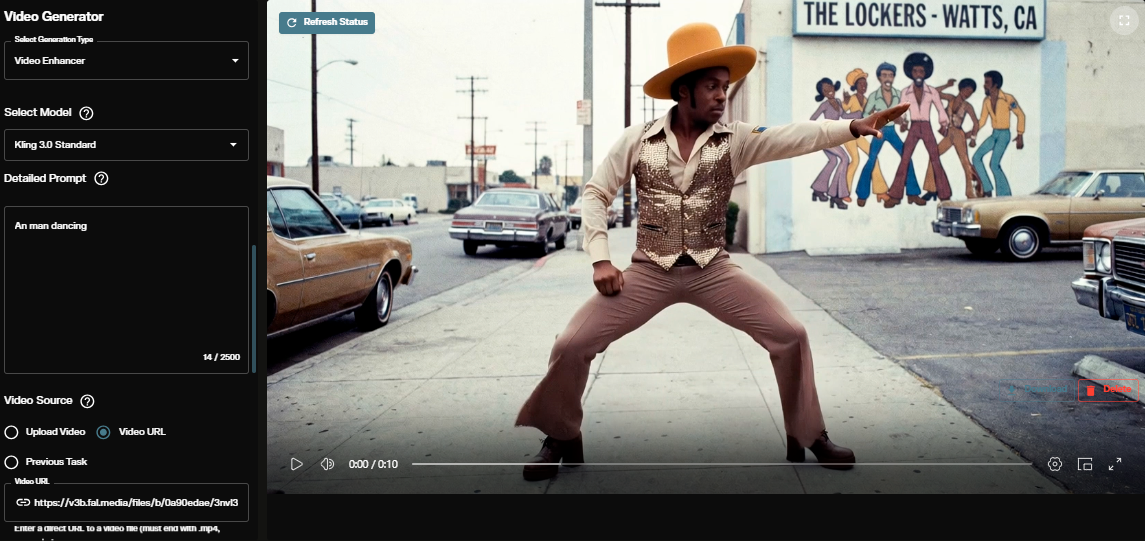
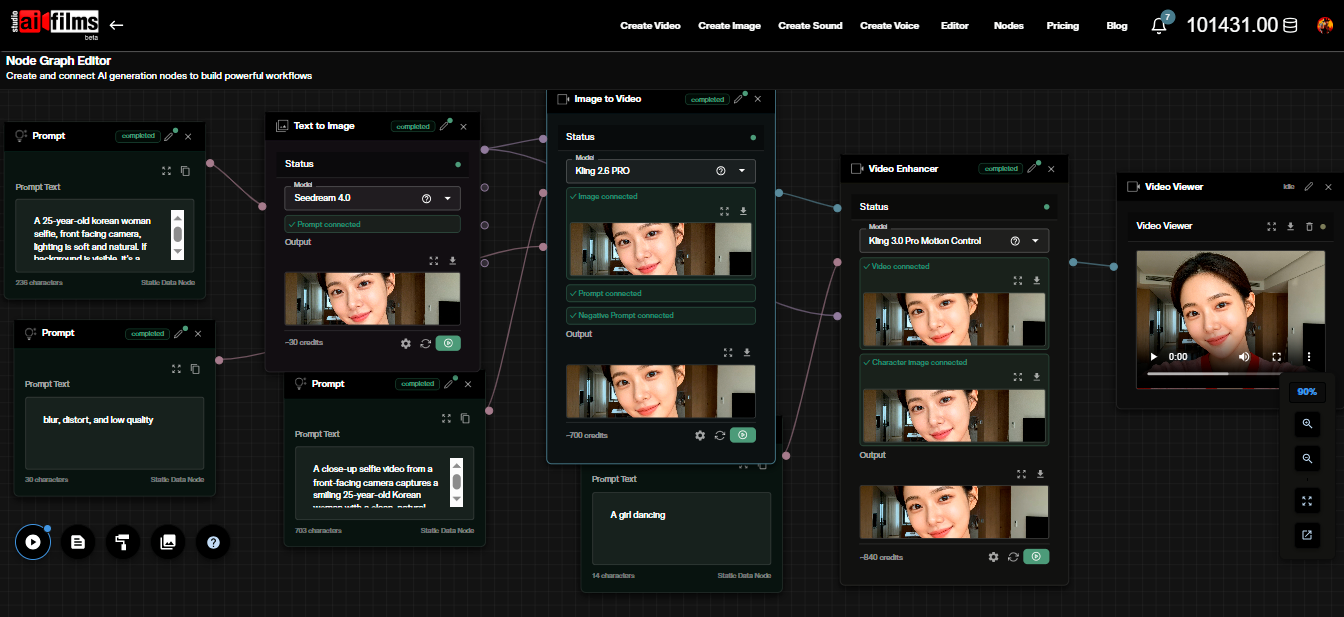
Filmmakers exploring AI animation and video generation can work with the latest models in the AI FILMS Studio video workspace.
Two months after Cannes, Primordial Soup Labs filed an SEC disclosure revealing $11 million already raised toward a $15 million target, with the first equity sale closing July 1, 2026. The studio simultaneously posted a Head of Studio role covering feature films, TV series, and branded commercials.
Sources
Deadline | Variety | The Hollywood Reporter | Marché du Film
Continue Reading
.jpg?w=3840)


Video & LipSync
- Video Generator
- Text to Video
- Image to Video
- Start-End Frame to Video
- Draw to Video
- Motion Control
- Video Enhancer
- Video Upscaler
- Video Extend
- Video to Video LipSync
- Audio to Video LipSync
- Image to Video LipSync
- Video FaceSwap
- Seedance 2.5
- WAN 3.0
- Seedance 2
- FLUX 3
- Minimax H3
- Vidu Q3 Pro
- Grok Imagine Video 1.5
- Gemini Omni
- Google Veo 3.1
- Kling 3.0 Pro
- Luma Ray 3.2
- LTX 2.3
- Happy Horse 1.1
- Kling 3.0 Motion
- ByteDance Upscaler
- InfiniteTalk
- InsightFace
Image & Edit
- AI Character
- AI Actor
- Art Generator
- Text to Image
- Image to Image
- LoRA Image to Image
- Draw to Edit
- Image LoRA Training
- Remove Background
- Image Enhancer
- MidJourney 8.0
- Krea 2
- OpenAI GPT Image 2.0
- Nano Banana Pro Ultra
- Nano Banana 2 Lite
- Nano Banana Pro
- Minimax Image
- Clarity Pro
- Z-Image Turbo LoRA
- Krea 2 Turbo LoRA
- Z-Image LoRA Trainer
- Qwen Image LoRA Trainer
- Background Erase Network 2 (BEN2)