
Two AI Film Tools Built for Independent Filmmakers Launch at Cannes
Jennifer 8. Lee / WikiPortraits, CC BY 4.0, via Wikimedia Commons
Share this post:
Two AI Film Tools Built for Independent Filmmakers Launch at Cannes
Chris Bird, former Managing Director of Prime Video UK, launched two AI companies at the Cannes Marché du Film this week: Hawkshead AI and CineMe AI. Both are designed to bring capabilities that have been exclusive to major studio productions within reach of independent filmmakers.
Bird's Path from Prime Video to Independent Tools
Bird spent years on the acquiring side of the independent film market, running Prime Video UK's development slate and acquisition program. That position gave him sustained visibility into both what global buyers want from pitches and what production infrastructure independent creators lack.
A streaming executive who has evaluated thousands of independent pitches knows exactly which materials are persuasive and which are thin. The gap between a well resourced studio pitch and an independent filmmaker's pitch is rarely a creative gap. It is an infrastructure gap.
Hawkshead addresses the data gap. Independent producers pitch without the audience intelligence that studio development teams use to evaluate projects. CineMe addresses the materials gap. Independent filmmakers pitch without visual development assets that major studio projects receive as standard development infrastructure.
Both gaps are structural and do not reflect creative shortcomings. They reflect the absence of institutional resources that large production companies provide to their in house slates and that independent producers cannot access at equivalent cost. Building tools to close those gaps is a logical extension of the decade Bird spent evaluating exactly that disparity.
Hawkshead AI: Script to Audience Forecast
Hawkshead AI is a predictive analytics platform for the film industry. It uses AI and proprietary databases to forecast how a project will perform with audiences, working from a script or synopsis before production begins.
The platform provides guidance on adjusting scripts, casting choices, and creative direction based on what the data shows. The goal is to give independent producers and development teams access to the kind of audience intelligence that studio greenlight committees have long used internally.
Audience Intelligence and What It Changes
For a studio with a development slate, audience forecasting is built into the greenlight process. A head of development evaluating projects has internal data, release history, and market research informing every conversation. Independent producers pitching to that executive typically work from instinct, precedent, and whatever market knowledge they have accumulated.
A producer who can show a buyer a predicted audience demographic breakdown and territory specific performance range is providing a conversation on comparable terms rather than hoping the buyer's internal data aligns with the producer's creative instincts.
For international coproductions, audience intelligence matters at the cofinancing stage. Coproduction agreements depend on both parties being able to project how a project will perform in their respective markets. A tool that generates market specific audience forecasts from a script allows a coproduction conversation to start from shared data rather than from competing assumptions about cross cultural appeal.
The proprietary databases that Hawkshead combines with its AI analysis differentiate it from generic market research tools. The value is in the specificity: which genres are performing in which territories, which casting decisions correlate with better reception in specific demographics, and what script elements track with specific audience segments.
The value of that data extends beyond the initial pitch. A producer working from audience forecasts can adjust script elements, casting discussions, and genre framing throughout development in response to what the data shows rather than waiting for buyer feedback at the pitch stage. That earlier integration changes what arrives at the pitch meeting.
For development teams at smaller production companies who produce multiple independent projects per year, Hawkshead's forecasts also function as a portfolio management tool. Understanding the comparative market potential of multiple projects in development allows development executives to prioritize resources without relying exclusively on subjective creative judgment.
The Cannes market context specifically rewards producers who arrive with data. Buyers at the Marché evaluate dozens of pitches in compressed schedules. A producer who can state audience targeting clearly and back it with projections stands out from the field in a way that creative materials alone do not achieve.
CineMe AI: Visual Development Outside the Studio System
CineMe AI is a visual development tool for filmmakers, which Bird founded alongside director Dan Hartley. Hartley previously directed "The Boy Who Lived". The company was built to address a specific gap: outside major studio systems, visual development tools are either prohibitively expensive or simply absent.
The platform targets both established filmmakers looking to move faster in development and newer creators working without studio backing.
The Cost Gap in Visual Development
Visual development for a feature film pitch or series bible at the professional level can run from $30,000 to several hundred thousand dollars, depending on scope. That figure covers concept artists, storyboard illustrators, animatics supervisors, and production designers whose work converts a script into visual proof of concept materials. For a major studio's development slate, those costs sit inside an overhead structure. For an independent filmmaker, they represent a budget that must be spent before any buyer has agreed to see the pitch.
The practical result is that most independent pitches arrive as text documents with a small number of reference images pulled from publicly available sources. The visual materials that would most directly communicate the tone, visual ambition, and production design of the project are absent because they are too expensive to produce speculatively.
CineMe aims to put a version of that visual development capability into the hands of filmmakers who cannot afford the traditional approach. Faster visual development also changes the economics of testing ideas. A creator who can prototype a visual look in days rather than months can test whether it resonates before making a significant commitment to a specific direction.
The speed argument is as relevant as the cost argument. Even for filmmakers who could afford traditional visual development, the timeline is prohibitive at early development stages. Hiring a concept artist for a week to prototype looks for a pitch that may not get a second meeting is a difficult investment decision. A tool that produces comparable results in hours changes whether the investment makes sense.
The quality floor matters as well. Buyers have seen enough AI generated materials to recognize when they were produced quickly with minimal investment. CineMe's value depends on producing visual development outputs that communicate the filmmaker's actual vision rather than generic AI aesthetics. That is a product quality question that the market will answer over time.
Dan Hartley and the Director's Angle
Hartley's experience as a director gives CineMe its creative orientation. His work on "The Boy Who Lived" positioned him inside the creative decisions that visual development enables and exposed him to the cost reality that prevents most independent directors from accessing those tools before a project is funded.
A founding director who has made the actual creative decisions that visual development informs understands the tool requirements from the user side. That perspective shapes what the product is built to do: not to produce outputs that impress a technology audience, but to produce materials that are useful at the pitch stage of a filmmaker's actual development workflow.
The combination of Bird's buyer side experience and Hartley's director side experience positions CineMe differently than tools built primarily by engineers who understand the capability but have limited exposure to how development decisions actually get made.
The CineMe Future Fund
CineMe AI has allocated 5% of the company to a charitable trust called the CineMe Future Fund. The fund's purpose is to provide enterprise grade AI tools to workers in the screen based creative industries who would not otherwise have access to them.
The structure is unusual among AI film startups, most of which are organized as purely commercial ventures. Bird is positioning CineMe as a company that treats access as part of its founding mandate.
Allocating 5% of the company to a charitable trust is a structural commitment distinct from a corporate social responsibility program. A trust holds those shares permanently for the stated charitable purpose. That allocation cannot be redirected toward investor returns or repurposed for commercial programs. The commitment is embedded in the company's legal structure rather than left as a discretionary executive decision.
The fund's framing around "enterprise grade" tools is relevant. The gap it addresses is access to the same quality of tools that well resourced production companies use, at a level that produces competitive outputs. That framing positions the fund as an equality mechanism rather than a charity mechanism.
The Access Gap in Global Markets
Outside major production centers, the infrastructure supporting independent film development is thin. No development deal means no development executive relationship, no access to audience research, and no budget for visual development materials. A filmmaker in a smaller market pitching to an international buyer is competing against productions backed by that infrastructure.
AI tools in development are starting to compress that gap. A filmmaker who can generate visual lookbook materials, prototype tonal approaches, and arrive at an international coproduction conversation with audience data is better positioned than one without those resources.
This is the practical implication of Bird's two tools. They do not replace the creative work of filmmaking. They provide the infrastructure layer between a creative idea and the point at which buyers can evaluate it, which has historically been available only to filmmakers with institutional backing.
The compounding effect of that access gap has been largest in markets without significant public film development funding. A filmmaker whose target audience is in a territory with thin international distribution capacity can now produce pitch materials that address that audience specifically, rather than defaulting to a generic international pitch format.
What This Signals for Independent Film Development
The launches of Hawkshead and CineMe represent a broader shift in where the tools for film development are coming from. The traditional route was to find a development deal or coproduction financing that included the infrastructure these tools provide. What Bird is building assumes that individual filmmakers will increasingly need to access that infrastructure directly, without an institutional intermediary.
That assumption reflects a documented trend. The number of independent films entering the international marketplace has grown consistently, while the number of development deals that include comprehensive institutional support has remained concentrated among a smaller number of established companies. The gap between those two numbers is where these tools are positioned.
For filmmakers who intend to work independently throughout their careers rather than through studio affiliations, both tools represent a potential shift in how sustainable that model is. Audience data and visual development materials are not nice to have additions to a pitch. They are increasingly the baseline that serious international buyers expect before a meaningful conversation begins.
Launching at Cannes
.jpg)
Mike is Michi, CC BY-SA 4.0, via Wikimedia Commons
Both companies are debuting during the Marché du Film, which runs May 12 to 20 alongside the 79th Cannes Film Festival. The Marché has built AI into the center of its 2026 commercial program, with an AI for Talent Summit for senior industry executives and the first Creator Economy Summit in its history.
Bird's launches arrive as VC funding for AI video generation companies reached $3.08 billion in 2025, nearly double the prior year. What separates Hawkshead and CineMe from the larger funded players is their explicit orientation toward independent creators, rather than studio workflows.
The Marché du Film is where a producer's ability to communicate a project's potential translates directly into market outcomes. Buyers evaluating dozens of pitches in a compressed schedule respond to materials that reduce evaluation time: clear visual tone, audience targeting, and financial projection. Both Hawkshead and CineMe produce materials that serve those evaluation criteria.
A producer who arrives at a Cannes meeting with Hawkshead's audience demographic forecast and CineMe's visual development outputs is presenting a different package than one arriving with a script and a one page synopsis. Whether buyers respond to that difference at scale is what subsequent Marché cycles will document.
The Cannes launch also signals the market both companies are targeting. Hawkshead's data product and CineMe's visual development capability are most useful to producers who have projects ready to pitch internationally. That is exactly the audience attending the Marché. Launching here rather than at a technology conference is a deliberate positioning choice.
The launches come at a moment when the independent film market is adjusting to the contraction of streaming acquisition budgets that followed content spending peaks in 2021-2023. That contraction put pressure on independent producers to arrive at acquisition conversations with stronger materials and clearer audience projections. Tools that improve pitch quality directly address that pressure.
Both companies will face the test of whether independent filmmakers incorporate their outputs into development workflows rather than using them for a single pitch and reverting to existing processes. The adoption pattern over the next two Marché cycles will be the more informative indicator of whether these tools change how independent film development actually works.
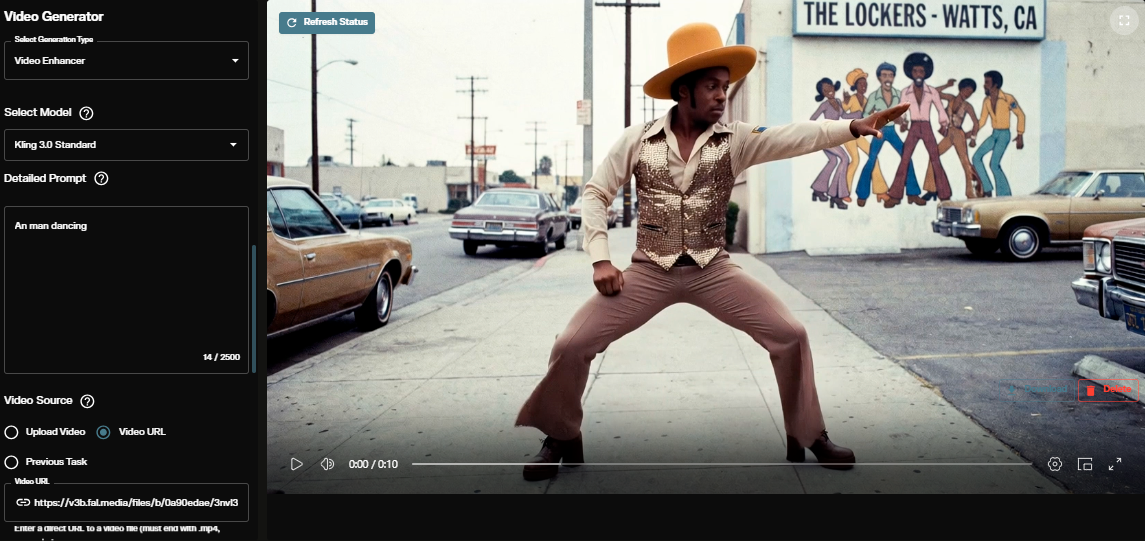
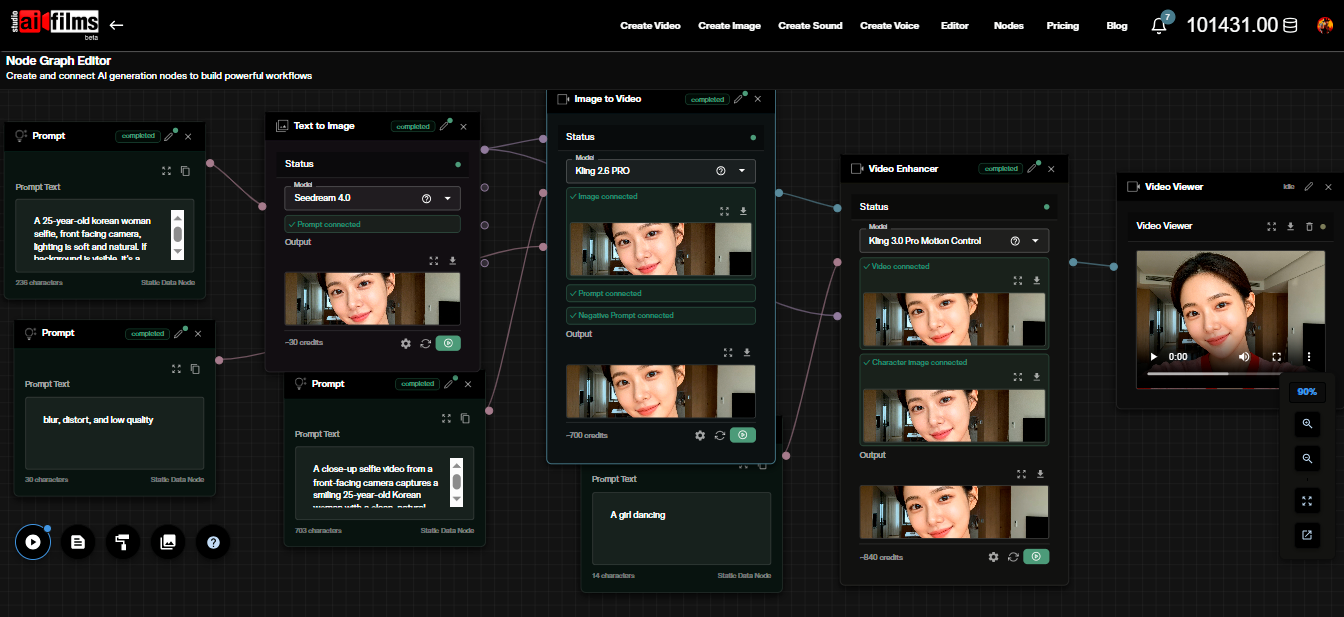
Filmmakers can access generation and image-to-video tools through AI FILMS Studio, independent of the studio system.
Sources
Deadline | Variety | The Hollywood Reporter | Screen Daily
Continue Reading
.jpg?w=3840)


Video & LipSync
- Video Generator
- Text to Video
- Image to Video
- Start-End Frame to Video
- Draw to Video
- Motion Control
- Video Enhancer
- Video Upscaler
- Video Extend
- Video to Video LipSync
- Audio to Video LipSync
- Image to Video LipSync
- Video FaceSwap
- Seedance 2.5
- WAN 3.0
- Seedance 2
- FLUX 3
- Minimax H3
- Vidu Q3 Pro
- Grok Imagine Video 1.5
- Gemini Omni
- Google Veo 3.1
- Kling 3.0 Pro
- Luma Ray 3.2
- LTX 2.3
- Happy Horse 1.1
- Kling 3.0 Motion
- ByteDance Upscaler
- InfiniteTalk
- InsightFace
Image & Edit
- AI Character
- AI Actor
- Art Generator
- Text to Image
- Image to Image
- LoRA Image to Image
- Draw to Edit
- Image LoRA Training
- Remove Background
- Image Enhancer
- MidJourney 8.0
- Krea 2
- OpenAI GPT Image 2.0
- Nano Banana Pro Ultra
- Nano Banana 2 Lite
- Nano Banana Pro
- Minimax Image
- Clarity Pro
- Z-Image Turbo LoRA
- Krea 2 Turbo LoRA
- Z-Image LoRA Trainer
- Qwen Image LoRA Trainer
- Background Erase Network 2 (BEN2)