
Cannes Marché du Film 2026: AI Moves to Center Stage
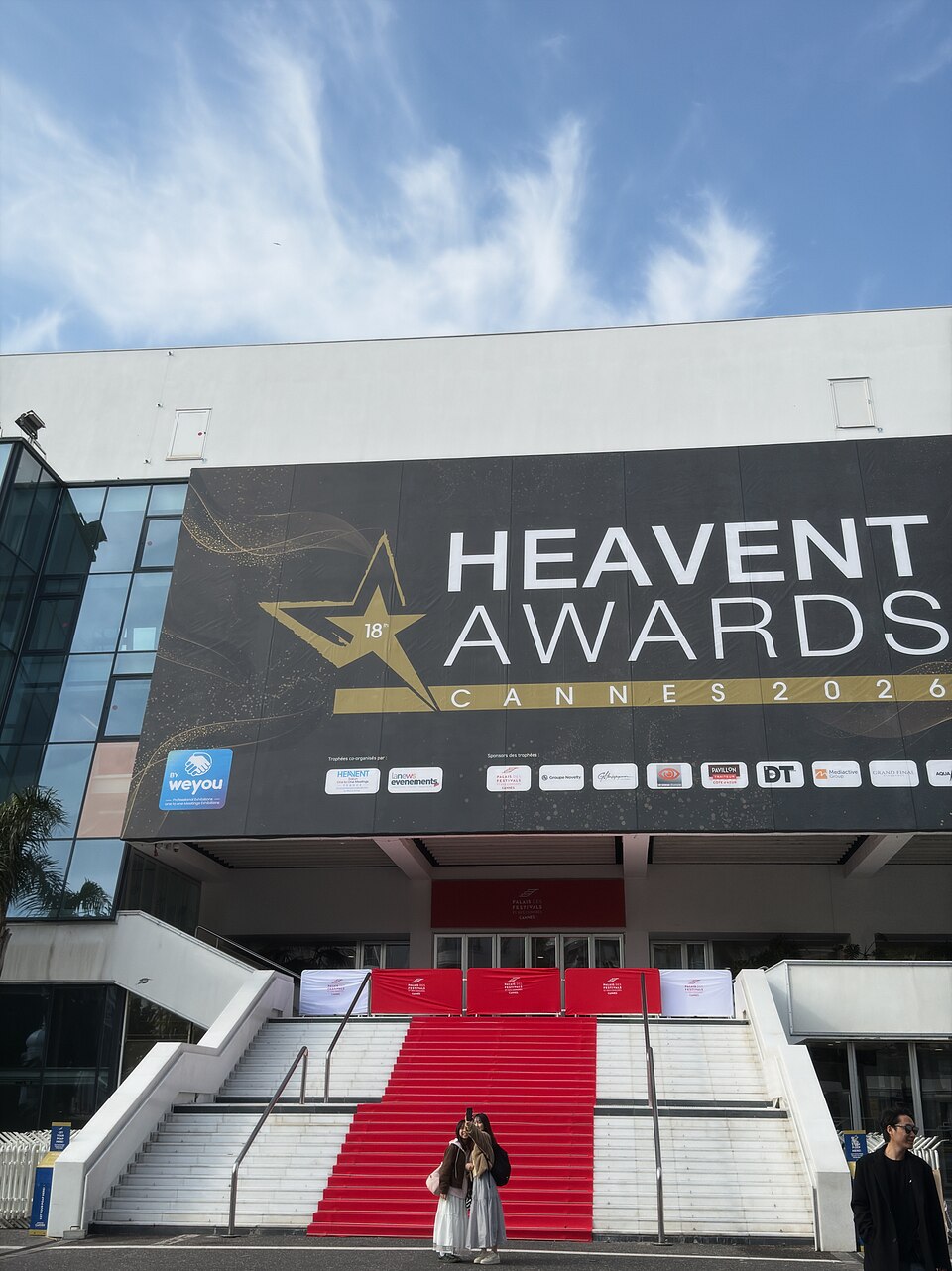
Mike is Michi, CC BY-SA 4.0, via Wikimedia Commons
Share this post:
Cannes Marché du Film 2026: AI Moves to Center Stage
The Marché du Film is using its 2026 edition to make AI a central feature of its commercial program. The market, running May 12 to 20 alongside the 79th Cannes Film Festival, hosts a summit for industry executives on AI integration, the first Creator Economy Summit in the market's history, and the largest virtual production stage ever assembled at a film market.
The AI for Talent Summit
The summit runs May 15 and 16, from 10:00 to 13:00, at Plage des Palmes on La Croisette. Access is reserved for senior executives, investors, technology leaders, and major media organizations.
Three themes structure the program: integrating AI into production workflows, ethical and responsible AI use, and education for creative professionals working alongside AI tools. The restricted access signals the Marché is treating AI as a business track for decision makers, not a general conference audience.
Creator Economy Summit
The 2026 Marché introduces its first Creator Economy Summit alongside the AI for Talent program. The addition reflects the market broadening its scope beyond traditional studio buyers toward the independent creator sector that now moves significant volume through international distribution.
Virtual Production at Scale
_en_période_de_CANNESERIES_(avril_2023).jpg)
Benoît Prieur, CC0, via Wikimedia Commons
The market's Village Innovation space hosts the largest virtual production stage ever presented at a film market, with hands on demonstrations for buyers and filmmakers throughout the event. That scale of physical infrastructure is a commercial statement. The Marché is positioning itself as the place where virtual production dealmaking happens at international scale.
The Contradiction at the Heart of Cannes
The Marché's AI programming runs directly alongside the festival's rejection of it. Cannes declared generative AI ineligible for the Official Competition in April 2026, excluding films where AI drives scripting, visual generation, or principal performance. The same city hosts both positions simultaneously.
The festival and the Marché operate as separate organizations with separate mandates. The festival protects the auteur tradition and Palme d'Or prestige. The Marché facilitates global film commerce. AI is commercially viable even where it remains artistically contested, and the market's 2026 program reflects that distinction without apology.
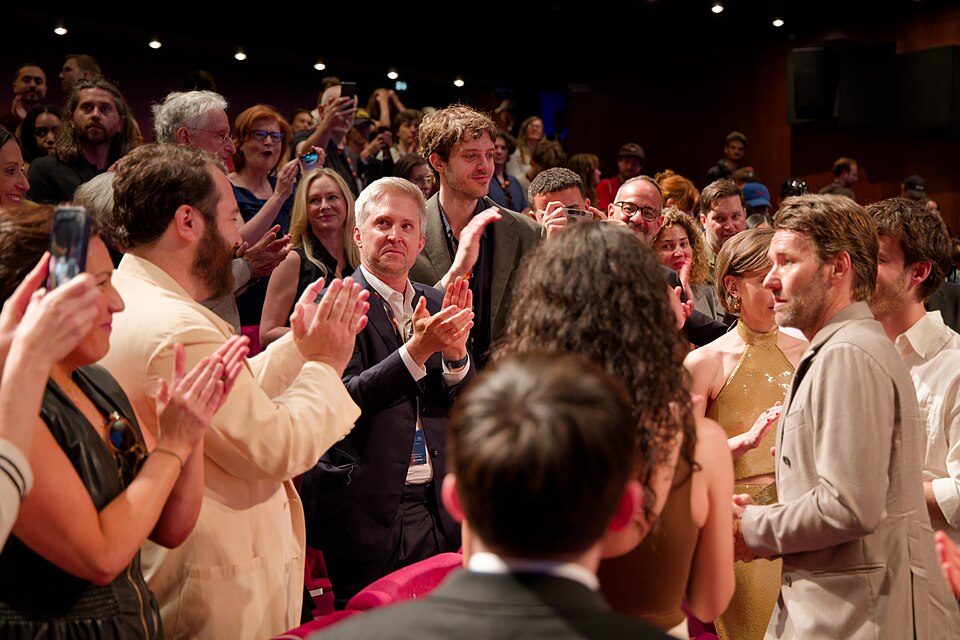
Kevin Payravi / WikiPortraits
A Different Event Than WAiFF
The World AI Film Festival ran at the Palais des Festivals in April 2026 as an independent event outside both Cannes institutions. What the Marché is doing is different: it is the commercial film market itself integrating AI into its official calendar rather than hosting it as a parallel track.
Kling AI is running a panel on May 18 titled "From Creative Possibility to Production Reality", bringing together filmmakers from the United States, China, and South Korea to discuss AI tools in active production. The session runs within the broader market program alongside the executive-level summit.
Emmy nominated producer Jesse Z. is also debuting Storyverse at the Marché, an AI native studio claiming a five day production pipeline from script to finished film. Its flagship fantasy property, "Solis Ark Academy", is being pitched to buyers alongside a slate covering crime and science fiction.
Two new AI companies built for independent filmmakers, Hawkshead AI and CineMe AI, also debuted at the Marché, launched by former Prime Video UK chief Chris Bird. CineMe AI includes a charitable fund allocating 5% of the company to expand tool access for creators who cannot afford enterprise pricing.
The most prominent production announcement at the Marché this year came from New Hollywood, an AI platform covering script development, animatics, pitch decks, self tape submissions, and automated daily cuts. David Mamet's "Speed the Plow" adaptation starring Anthony Mackie and Sharon Stone became the first major prestige production to use the platform, announced on May 13.
By the festival's close, the prediction came true: AI vendors dominated the Marché's final four days while A24 and Mubi led acquisitions as US studios sat out.
The Marché vs. the Festival Distinction
The Cannes Film Festival and the Marché du Film are separate institutions sharing the same venue and calendar. The Festival selects films for prestige competition. The Marché is a commercial trading market where buyers and sellers negotiate distribution rights for thousands of films simultaneously. The AI for Talent Summit and Creator Economy Summit are Marché programs, not Festival events, which is why the Palme d'Or AI ban does not apply to them.
That separation is not new, but the scale of the AI programming at the 2026 Marché makes the distinction more visible than in previous years. The festival's AI ban in Official Competition draws headlines. The Marché's AI for Talent Summit draws executives. The two events produce different narratives about the same technology, running in parallel across the same venues on the same calendar days.
Jesse Z. and the Five Day Pipeline
Emmy nominated producer Jesse Z. used the Marché's pitching infrastructure to present Storyverse, an AI native studio claiming a five day pipeline from script to finished film. The "Solis Ark Academy" project and a concurrent crime and science fiction slate were both in active development at the time. A five day production timeline represents a structural change to how development economics work, not an incremental improvement.
The pitch at Cannes is structured around Storyverse as an alternative to the traditional development pipeline, where a project from pitch to greenlight can take 12 to 18 months before a single day of production. Jesse Z.'s claim is that comparable creative output is achievable in five days using AI generation and agentic workflow tools. Whether buyers evaluated that timeline as a production breakthrough or as a marketing claim is unclear from the Marché reporting.
Kling AI's May 18 Panel
Kling AI, developed by Kuaishou, held a panel at the Marché titled "From Creative Possibility to Production Reality" with filmmakers from the US, China, and South Korea. Possibility language signals demonstration mode. Reality language signals production mode. Commercial AI video vendors at the 2026 Marché were presenting in production mode, offering case studies from active productions rather than proof of concept demos.
The South Korean filmmaker on the Kling AI panel, Yang Eekjun, had recently completed an AI feature that drew international press coverage. Placing him alongside an American director within a panel led by the tool his film used is the testimonial format that AI video vendors have standardized at 2026 film markets. The case study format is more persuasive to production executives than a product demonstration.
Why A24 and Mubi Led Acquisitions
In the Marché's final four days, AI vendors dominated commercial exhibition space while traditional distributor activity concentrated at A24 and Mubi. Both companies operate in the auteur and international art cinema segment that Cannes's Official Selection serves. Their acquisition activity during the same days illustrates the parallel markets the festival now contains simultaneously.
The two distribution tracks at the 2026 Marché are not in competition for the same audience. AI tool companies are selling production capability to filmmakers. A24 and Mubi are buying completed films for exhibition markets. Their simultaneous presence illustrates that the same commercial venue serves different stages of the film industry's value chain.
The Virtual Production Stage as a Commercial Signal
The Village Innovation space hosts the largest virtual production stage ever presented at a film market, with demonstrations running throughout the event. Virtual production uses LED volumes and real time rendering to create environments that would otherwise require location shoots or post production compositing. The inclusion of a physical stage, rather than simply panel sessions on virtual production, signals that vendors are selling capability, not concepts.
The scale of the infrastructure is a market commitment. Industry events that install physical stages are investing in a technology's continuing presence in the commercial calendar. The Marché's decision to build and fund the stage reflects commercial confidence that virtual production dealmaking will continue to grow at this specific venue.
Who the AI for Talent Summit Addresses
The restricted access to the AI for Talent Summit, senior executives, investors, and major media organizations, separates it from the general AI film programming that runs throughout the Marché. Decision-makers at the executive level are the audience; filmmakers and independent buyers are not. The summit is a business track, not an educational one.
That distinction matters for reading the Marché's AI programming as a whole. The summit is where licensing deals, partnership frameworks, and production technology agreements are discussed at an institutional level. The Kling AI panel and Storyverse pitch are where those tools meet the filmmakers expected to use them. Both tracks ran simultaneously, serving different stages of the same commercial chain.
CineMe AI and Hawkshead AI at Debut
Chris Bird, former head of Prime Video UK, launched two AI companies at the Marché: Hawkshead AI and CineMe AI. Both are built for independent filmmakers rather than studio production teams. CineMe AI includes a charitable fund structure that allocates 5% of the company to expanding tool access for creators who cannot afford enterprise pricing.
The timing of the launch, at a market where AI was simultaneously a summit topic for executives and a pitch vehicle for emerging studios, positioned both companies at the intersection of institutional and independent AI adoption. Bird's Prime Video background gives both companies credibility with platform buyers that purely AI native startups lack.
David Mamet's "Speed the Plow" at the Marché
The most prominent prestige production announced at the Marché came from New Hollywood AI: David Mamet's adaptation of his own play "Speed the Plow", starring Anthony Mackie and Sharon Stone, announced on May 13. Mamet's involvement marks a specific kind of credential for AI assisted production. He is a playwright and screenwriter whose work, from American Buffalo to Glengarry Glen Ross, represents a tradition of text driven drama where language carries primary narrative weight.
New Hollywood AI's platform covers script development, animatics, pitch decks, and automated daily cuts. A Mamet adaptation using those tools represents a use case where AI assists the production workflow around a script written entirely by a human playwright. That distinction matters for how the production is categorized under the WGA's 2026 AI provisions.
The Cannes Market Closing and What It Confirmed
The market closed after nine days with the pattern that reporters had been framing as a prediction since opening day: AI vendors dominated commercial exhibition while traditional buyers concentrated their activity elsewhere. That outcome confirmed the dual structure rather than establishing a new one. The Marché's AI and conventional film commerce segments never directly competed because they were targeting different transactions.
The closing also confirmed the Marché's value to AI vendors as a showcase venue. Companies that paid for exhibition space at Village Innovation received access to the full international film buyer audience attending the Marché simultaneously. That access is what makes the Marché a more valuable venue for AI tool launches than a standalone technology conference. The filmmaking audience and the technology audience occupied the same building.
The Marché's dual structure, running AI business tracks and conventional distribution activity in parallel, will determine whether future editions follow the same model or begin to integrate rather than separate the two. The 2026 edition ran them apart.
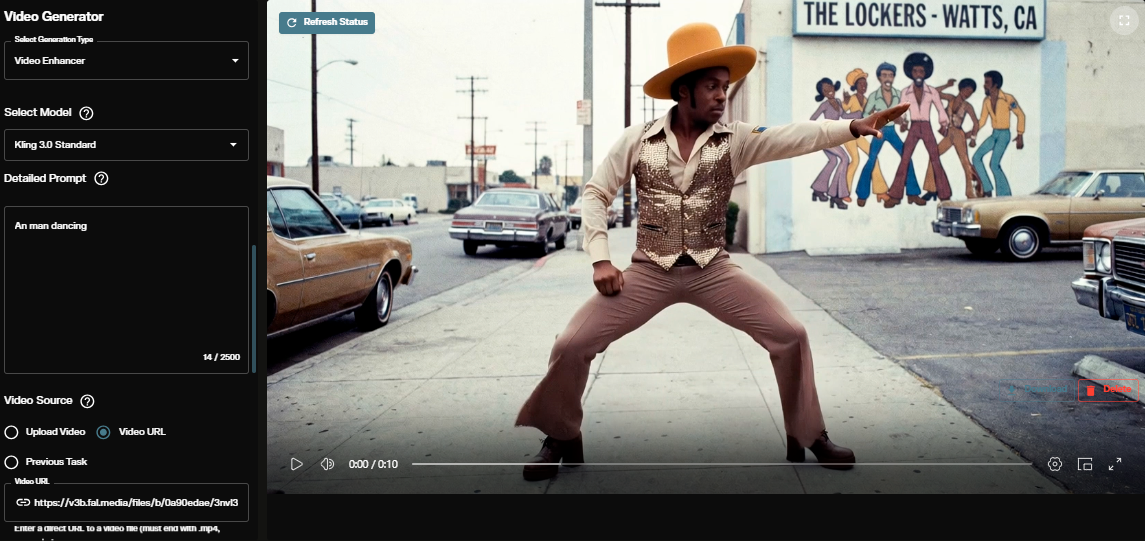
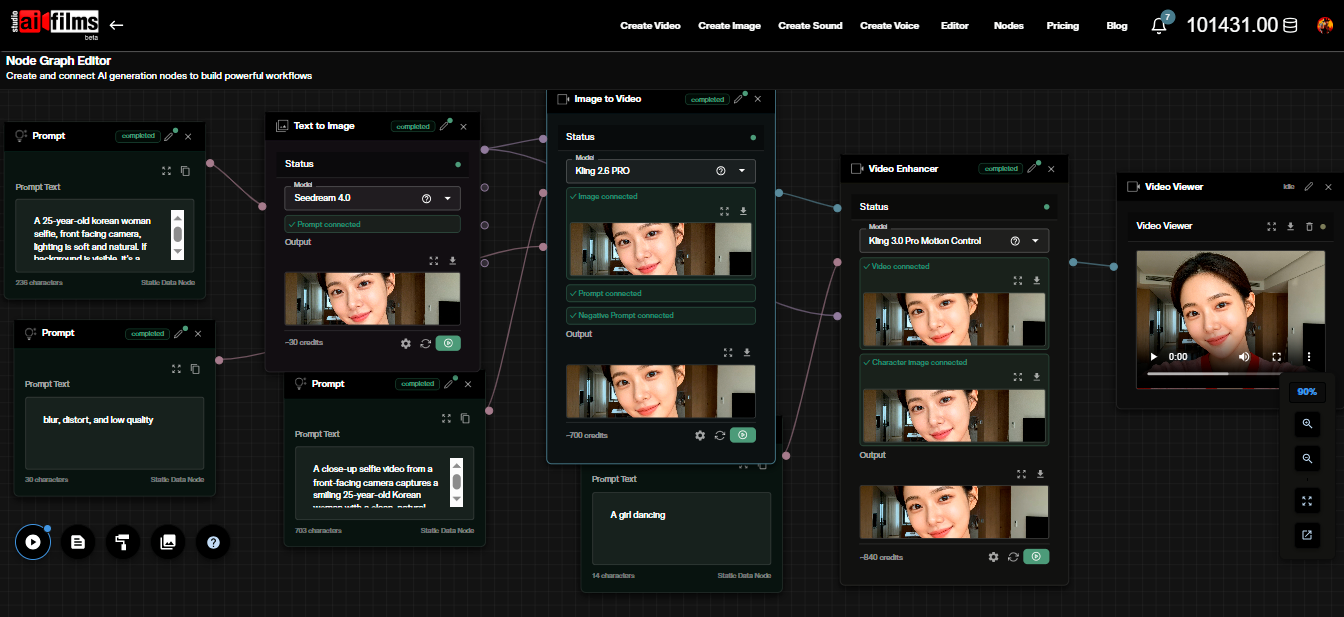
Filmmakers attending the Marché or exploring AI production outside of it can access generation and enhancement tools through the AI FILMS Studio video workspace.
Sources
Variety | Deadline | The Hollywood Reporter | Cineuropa | StephenFollows
Continue Reading
.jpg?w=3840)


Video & LipSync
- Video Generator
- Text to Video
- Image to Video
- Start-End Frame to Video
- Draw to Video
- Motion Control
- Video Enhancer
- Video Upscaler
- Video to Video LipSync
- Audio to Video LipSync
- Image to Video LipSync
- Video FaceSwap
- Seedance 2.5
- WAN 3.0
- Seedance 2
- FLUX 3
- Minimax H3
- Vidu Q3 Pro
- Grok Imagine Video 1.5
- Gemini Omni
- Google Veo 3.1
- Kling 3.0 Pro
- Luma Ray 3.2
- LTX 2.3
- Happy Horse 1.1
- Kling 3.0 Motion
- ByteDance Upscaler
- InfiniteTalk
- InsightFace
Image & Edit
- AI Character
- AI Actor
- Art Generator
- Text to Image
- Image to Image
- LoRA Image to Image
- Draw to Edit
- Image LoRA Training
- Remove Background
- Image Enhancer
- MidJourney 8.0
- Krea 2
- OpenAI GPT Image 2.0
- Nano Banana Pro Ultra
- Nano Banana 2 Lite
- Nano Banana Pro
- Minimax Image
- Clarity Pro
- Z-Image Turbo LoRA
- Krea 2 Turbo LoRA
- Z-Image LoRA Trainer
- Qwen Image LoRA Trainer
- Background Erase Network 2 (BEN2)