
Christopher Nolan Says Gen Z Rejects AI. His Own Film's 611,000 YouTube Dislikes Tell a More Complicated Story.
_(53532289710)_(cropped2).jpg?w=3840&q=90)
Share this post:
Christopher Nolan Says Gen Z Rejects AI. His Own Film's 611,000 YouTube Dislikes Tell a More Complicated Story.
The numbers Christopher Nolan is citing are real. Obsession, directed by Curry Barker, crossed $400 million globally on a $750,000 production budget. That makes it the highest grossing festival acquisition in film history and Focus Features' highest grossing release ever. Backrooms, directed by Kane Parsons, who was 21 at the time, crossed $350 million globally and became A24's highest grossing film in multiple countries. Neither film used AI generation in production.
In a July 2026 interview with The Telegraph, Nolan argued those results are not coincidental. "I've never seen a more rapid wholesale dismissal of a supposedly foundational jump in technology in my lifetime," he said of generative AI. The audience sending that message, he argued, is Gen Z.
The Person Making This Argument
Nolan is currently serving as DGA president, leading the guild that ratified a four year AI protections deal in June 2026. He is simultaneously promoting The Odyssey, his most ambitious IMAX production to date. His institutional position means his AI skepticism carries policy weight, not just personal conviction. It is embedded in the contracts his guild just negotiated.
.jpg)
Mike Dillon, CC BY-SA 3.0, via Wikimedia Commons
He is also one of cinema's most consistent resisters of technology disruption. Nolan does not own a smartphone, does not use email, and receives printed messages delivered to him in person. He uses a flip phone while traveling and has banned mobile phones from his film sets. In May 2026, he acknowledged it is "getting harder" to maintain that position but said he has not changed it.
His DGA presidency, which began in September 2025, reflects the same pattern. He has engaged with AI governance through negotiation and contractual guardrails rather than through personal adoption of the tools. This is worth naming because it shapes how to read his claims. A director applying consistent resistance to smartphones, email, and generative AI is operating from a philosophy about disruption, not a position derived from evidence about what AI can or cannot do in filmmaking.
In August 2026, Nolan brought that same governance approach to the AFI Human Generative Workflows summit, joining Kathleen Kennedy and 120 industry leaders to develop the first written AI copyright framework that Hollywood itself has produced.
The Gen Z Argument
Nolan's mechanism is specific. Gen Z grew up in online spaces where AI content was already pervasive, and that exposure trained them to recognize it faster than any prior generation. "Their judgment of AI slop has been immediate and harsh," he said. "They see it for what it is very quickly." His own children, in their late teens and early twenties, are his primary data point.
He also described a broader production trend. "After years of driving towards heavily virtual environments," he said, "we're seeing a renewed interest in more tactile, more real forms of storytelling." Both Obsession and Backrooms fit that description: practical locations, physical effects, no generated imagery.
What the Box Office Actually Says
Obsession's return on its $750,000 budget is without a comparable precedent in modern theatrical history. But that budget did not arrive without infrastructure. Curry Barker needed a festival platform to connect with a Focus Features acquisition team and a distribution system that placed the film in theaters at scale. Most filmmakers do not have access to any part of that pipeline.
Backrooms performed at comparable scale. Parsons became the youngest director to top the domestic box office, and the film became A24's highest grossing release in multiple international markets. He built his visual language over years of YouTube production and Blender work before he had access to feature film resources. The commercial result reflects both his craft and the production access he eventually secured.
The case Nolan is making is commercially grounded. Audiences paid for both films. The question his argument does not answer is whether that result is evidence of AI rejection specifically, or something simpler. Specific, unconventional filmmaking voices attract audiences regardless of how they were made.
The Odyssey and 611,000 Dislikes
On July 7, 2026, the social media embargo on The Odyssey trailer broke. Within 72 hours, the video on Universal's YouTube channel had accumulated more than 300,000 dislikes. By July 8, the total reached 611,000 dislikes against 68,000 likes, roughly nine dislikes for every one like. That places it among the most disliked Hollywood trailers in YouTube history.
The reaction was driven by casting choices that audiences felt departed from the cultural expectations of the source material. Universal locked replies on the film's official X account as negative responses passed 500,000. Lupita Nyong'o, who plays Helen of Troy and Clytemnestra, addressed the backlash directly: "This is a mythological story."
Nolan called the reaction "irrelevant" and compared it to a decade of Batman casting controversies. He also acknowledged that his choice to use modern English dialogue might "bite me on the ass" and said he "was maybe being naive" about how audiences would receive it.
The Critic Divide and What It Reveals
Professional critics who attended advance screenings gave The Odyssey nearly universal praise. The Hollywood Reporter described it as "staggering" and Nolan's biggest film to date. Variety called it "astonishing" with "flawless filmmaking." The Guardian described it as "an absolute triumph." Advance IMAX and 70mm ticket sales are strong.
The structure of that divide is worth sitting with. Institutional critics validate the film. Popular audiences on social media reject specific creative choices. That is the exact dynamic Nolan is describing when he talks about Gen Z rejecting AI slop. He is saying institutional enthusiasm for AI does not match popular rejection of it. His own trailer is running the same dynamic in reverse, with critics providing the enthusiasm and audiences expressing the rejection.
The same platforms Nolan argues trained Gen Z to identify AI content are driving 611,000 dislikes on his trailer. His framework about discernment applies in both directions.
The Case for AI Filmmakers
Nolan's commercial argument contains two separate claims, and only one of them is supported by his data. The first is that authentic craft is commercially rewarded, which Obsession and Backrooms support. The second is that AI filmmaking cannot produce authentic craft, which is asserted but not demonstrated.
Obsession's $750,000 budget was real, but it was accompanied by professional crew access, a Sundance platform, and a Focus Features distribution deal. Parsons built his craft through years of YouTube production and teaching himself Blender before he ever had access to studio resources. For a filmmaker with $5,000 and no crew, neither path is available. AI generation is the tool that makes their story producible at all. It is not a substitute for craft. It is the difference between making the film and not making it.
Nolan is speaking from inside an industrial system that has never been equally accessible. His observation that authentic craft wins at the box office is accurate. His implication that AI filmmakers are choosing convenience over authenticity does not follow from that data. The filmmakers using AI to produce stories that would otherwise remain unproduced are making the same choice Curry Barker and Kane Parsons made. They chose to make the film.
What the DGA Contract Actually Covers
The four year DGA agreement ratified in June 2026, negotiated under Nolan's presidency, establishes specific AI provisions across the production pipeline. Directors cannot be required to use AI tools as a condition of employment. Studios must notify directors when AI is used to generate visual materials connected to a production, including concept art, previsualization, and background generation. Compensation for AI assisted production elements requires director consent.
Those provisions are guardrails, not a ban. The contract does not prohibit AI in filmmaking. It establishes director authority over whether and how AI tools appear in productions covered by the agreement. Nolan's public opposition to AI and his guild's contractual framework are consistent. Both center on who controls the decision, not on whether the technology can be used.
Obsession and How Independent Films Reach Audiences
Curry Barker's path to a $400 million box office began at Sundance, where acquisition teams from every major distributor were watching submissions. Focus Features, Universal's specialty division, acquired the film and placed it in theaters across multiple territories. The distribution infrastructure that turned a $750,000 production into a historic return is as much a part of the outcome as the filmmaking itself.
Sundance accepts roughly 2% of narrative feature submissions each year. Focus Features acquires a handful of films per year from the full range of festival circuit submissions. The commercial result Nolan cites required a specific institutional path that most filmmakers cannot access by merit alone. Barker's craft was necessary. The platform was also necessary.
Kane Parsons and the YouTube Pipeline
Kane Parsons built his filmmaking practice on YouTube before he had access to any professional production infrastructure. The original Backrooms video, uploaded in 2022, accumulated tens of millions of views. The visual aesthetic Parsons developed, using Blender and consumer equipment, was the same aesthetic that eventually attracted A24. His progression from YouTube creator to the director of A24's highest grossing international release unfolded over years of sustained technical development.
The path Parsons took illustrates one route to distribution access that did not require traditional industry entry points. It required years of public work, a large existing audience, and a visual identity distinctive enough that a major distributor saw theatrical potential. The craft was developed through the tools he had. That is the argument AI filmmakers are making about their own work.
The Odyssey's Production Scale
The Odyssey is shooting across IMAX locations in Morocco, Malta, Greece, and Hawaii. Universal has committed to IMAX and 70mm releases on a scale that matches Nolan's previous productions. The budget is reported in the hundreds of millions. The film is the product of decades of studio relationships, DGA membership, and access to the full apparatus of major studio filmmaking.
That production scale does not invalidate Nolan's argument. It frames it. When he observes that authentic filmmaking is commercially rewarded, he is describing an outcome that requires resources most filmmakers will never have. His point about craft is accurate at the level where he operates. The question of whether that point applies to the filmmaker with no crew and a story to tell is a different question.
The Accessibility Gap His Argument Does Not Address
Nolan is making a case about craft and commercial reward within an industrial system that controls its own entry points. Sundance, A24, Focus Features, and the IMAX network are institutions. They decide what gets amplified. Most work never reaches them.
AI generation does not give a filmmaker access to those institutions. It gives them access to the production step that previously required crew and equipment they could not afford. The authenticity argument Nolan is making is real. The gap between the filmmaking context he is speaking from and the context of most independent creators is equally real.
The Gen Z Discernment Claim and Its Limits
Nolan's theory about Gen Z recognizing AI slop quickly rests on a correlation. Two films without AI generation did well commercially, their audiences skew young, and those audiences appear online in spaces where AI rejection is common. That correlation does not establish that Gen Z is rejecting AI filmmaking specifically. It could equally establish that unconventional filmmaking with a clear voice attracts young audiences when it reaches them through credible platforms.
The 611,000 dislikes on The Odyssey trailer from the same demographic complicate the narrative. Audiences rejected specific casting choices in a film that used no AI generation. The mechanism Nolan describes, discernment trained in online spaces leading to rejection of content that fails a quality threshold, produced that result too. The discernment he is attributing to AI detection is operating in a broader way.
What the Nolan-Parsons Comparison Actually Shows
Kane Parsons built a YouTube following with no industry access, no studio relationships, and no crew. His path to A24 required years of public work. But when A24 came, it came with the production infrastructure of a major independent studio: distribution in dozens of countries, P&A spend on theatrical release, and the brand recognition that puts A24 films in front of festival programmers and critics who shape theatrical reception.
Parsons' craft got him to A24. A24 got Backrooms into theaters. A filmmaker who builds the same craft through AI tools on a $5,000 budget and posts the work to YouTube is doing what Parsons did in the years before A24 noticed him. The commercial result Nolan is citing was not inevitable from the craft alone. It required institutional amplification at the moment the craft was ready. AI filmmakers are building craft. Institutional access is a separate question.
Where Nolan's Argument Has The Most Force
The part of Nolan's argument that is hardest to dismiss is the quality floor observation. He is not saying AI generation cannot produce impressive outputs. He is saying that impressive outputs are not the same as filmmaking with a genuine perspective. The commercial success of Obsession and Backrooms reflects audiences responding to something specific. That something is a filmmaker's way of seeing, developed through years of practice and expressed with real stakes. That quality does not come from the tools. It comes from the person using them.
The challenge for AI filmmakers is not the tools. It is developing the underlying perspective and craft that audiences respond to, regardless of production method. Nolan's Gen Z discernment argument is weakest as a claim about AI specifically. It is strongest as a claim about quality. Audiences can recognize when something was made with genuine conviction and when it was made to fit a formula. That recognition applies to AI and non-AI work equally.
The stronger version of Nolan's argument does not require AI to be uniquely bad. It requires craft and genuine perspective to be detectable by audiences. If that is true, then AI filmmakers who develop real craft and genuine perspectives will find audiences for their work regardless of whether Nolan approves. His framework, correctly understood, is a brief for the necessity of craft rather than a prohibition on tools.
The Craft Argument Applied to AI Production
The specific combination Nolan describes, obsession with a subject and the willingness to pursue it regardless of commercial outcome, is a description of how the most compelling independent films get made. AI tools change the production cost equation. They do not change the requirement to have something to say.
A filmmaker with genuine creative conviction who uses AI to express that conviction is doing what Obsession's director and Backrooms' creator did before them. Working from authentic motivation rather than commercial calculation. The institutional infrastructure that eventually amplified those two projects is not something AI filmmakers can replicate through tool choice. It comes from building visible, specific, distinctive work over time.
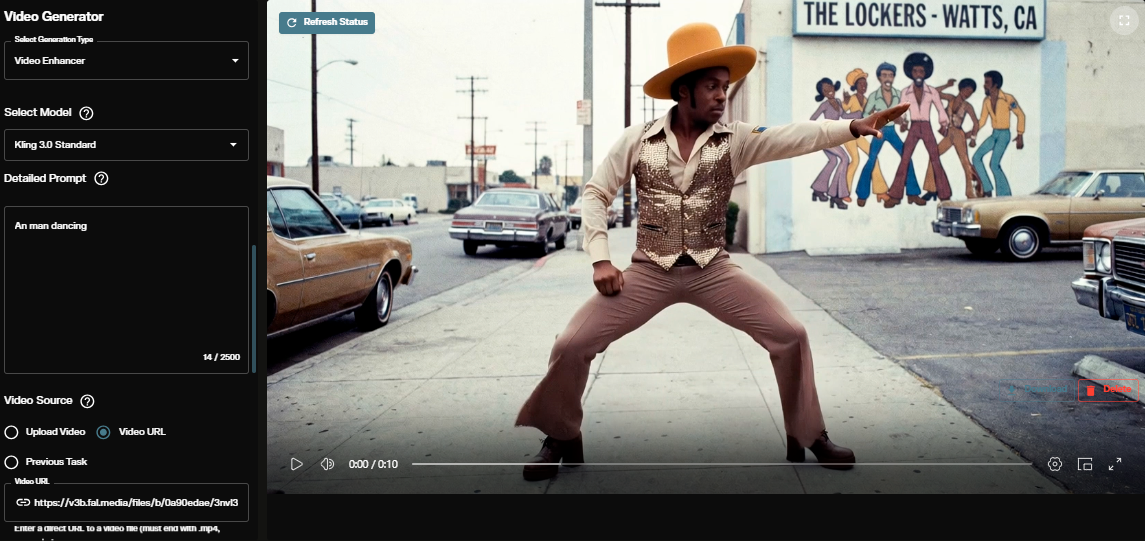
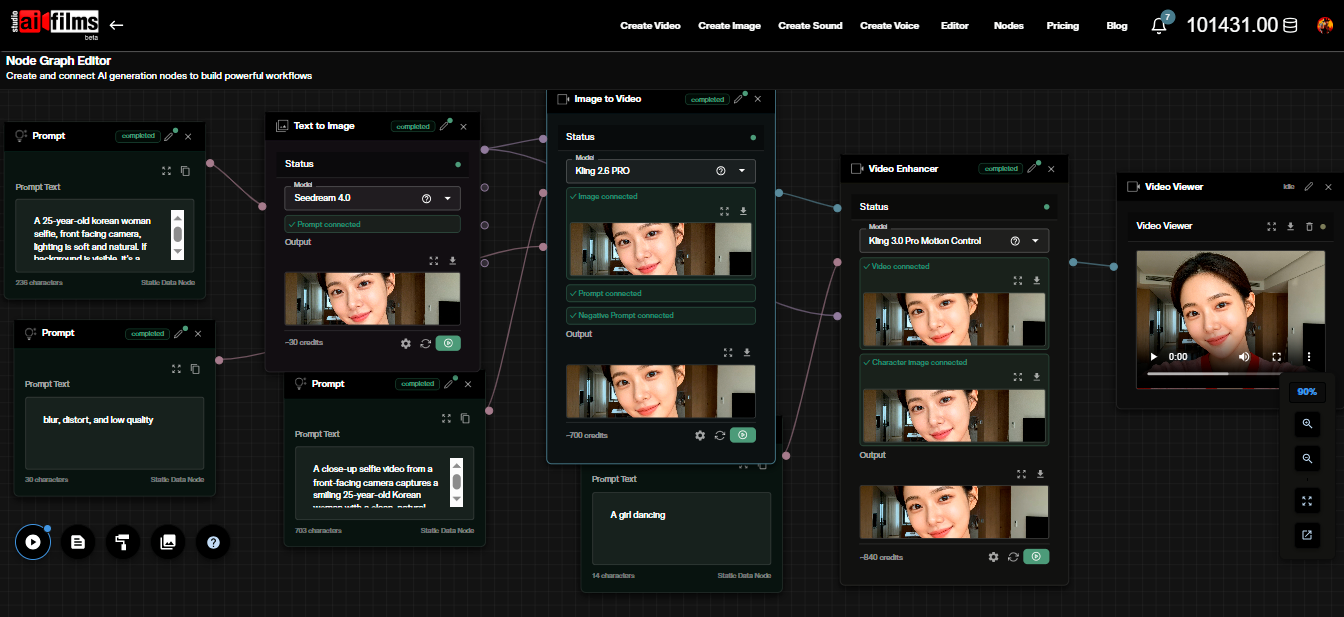
The irony of his position is that he is making the best possible case for taking AI filmmaking seriously. If audiences are as discerning as he claims, and they are rewarding genuine craft regardless of production method, then the AI filmmaker who develops real creative voice and uses AI as the tool to express it is precisely the creator his framework predicts will succeed. Filmmakers who can build a distinctive voice and access distribution can test that claim directly at AI FILMS Studio.
Sources
The Telegraph | Deadline | The Hollywood Reporter | Variety | The Wrap | World of Reel
Continue Reading
.jpg?w=3840)


Video & LipSync
- Video Generator
- Text to Video
- Image to Video
- Start-End Frame to Video
- Draw to Video
- Motion Control
- Video Enhancer
- Video Upscaler
- Video Extend
- Video to Video LipSync
- Audio to Video LipSync
- Image to Video LipSync
- Video FaceSwap
- Seedance 2.5
- WAN 3.0
- Seedance 2
- FLUX 3
- Minimax H3
- Vidu Q3 Pro
- Grok Imagine Video 1.5
- Gemini Omni
- Google Veo 3.1
- Kling 3.0 Pro
- Luma Ray 3.2
- LTX 2.3
- Happy Horse 1.1
- Kling 3.0 Motion
- ByteDance Upscaler
- InfiniteTalk
- InsightFace
Image & Edit
- AI Character
- AI Actor
- Art Generator
- Text to Image
- Image to Image
- LoRA Image to Image
- Draw to Edit
- Image LoRA Training
- Remove Background
- Image Enhancer
- MidJourney 8.0
- Krea 2
- OpenAI GPT Image 2.0
- Nano Banana Pro Ultra
- Nano Banana 2 Lite
- Nano Banana Pro
- Minimax Image
- Clarity Pro
- Z-Image Turbo LoRA
- Krea 2 Turbo LoRA
- Z-Image LoRA Trainer
- Qwen Image LoRA Trainer
- Background Erase Network 2 (BEN2)