
DGA Ratifies Four Year Deal: All Three Major Guilds Now Complete With AI Protections

Share this post:
DGA Ratifies Four Year Deal: All Three Major Guilds Now Complete With AI Protections
The Directors Guild of America ratified its four year contract with the Alliance of Motion Picture and Television Producers on June 30, 2026, with 87% of voting members approving the deal. The vote closes Hollywood's 2026 bargaining cycle, completing formal AI protections across all three of the industry's major guilds for the first time.
The margin is the clearest signal of member sentiment after months of formal negotiations. Ratification votes in Hollywood guild history rarely break 90%, making 87% a strong mandate. DGA President Christopher Nolan described the deal as protecting director authority over creative decisions at a moment when AI tools have made that authority easier for studios to bypass.
The AMPTP responded with a statement calling the spring 2026 bargaining cycle "now complete." With the WGA, SAG-AFTRA, and DGA all ratified, no major Hollywood guild is currently in open negotiations with the studios.
What June 30 Means for the Bargaining Cycle
The DGA's contract technically expired on June 30, the same day the ratification vote was conducted. The deal was signed in principle on June 9, three weeks before expiry, so the ratification confirmed an agreement already in place. The formal vote was a procedural step, not a cliff edge deadline.
Formal negotiations opened May 11 with the DGA as the last major guild entering talks in 2026. The WGA had already ratified in April, SAG-AFTRA in May. The DGA's later start reflected the different nature of its AI concerns: directors face displacement through automated post production decisions rather than through synthetic replicas, requiring different contract language than the performer and writer agreements had addressed.
The June 9 tentative agreement and the June 30 ratification together completed what the AMPTP called the most consequential spring bargaining cycle since the 2023 strikes. The studios committed to no strike action and no production shutdown between the signing and the vote, a standard practice for guild contracts that have reached a tentative agreement stage. The DGA membership voted on a contract they had read in full, with two weeks to review the complete language before the ballot opened.
The AI Protections Directors Now Have
The ratified contract establishes three distinct AI protections for directors and employees covered under DGA agreements.
The first covers AI generated footage. Any footage produced by generative AI tools is placed under the director's creative control, requiring studios to treat it as part of the production's creative elements rather than as a separate technical deliverable outside the director's jurisdiction. The provision closes a gap that the June 9 tentative deal identified: studios had begun generating AI footage as a pre production resource without treating it as part of the director's creative purview.
The second is a notice requirement. Studios must inform directors when they intend to use AI to train models on footage or other creative elements from a production. The notice must be given in advance, creating a documented record of AI training decisions rather than allowing studios to conduct model training without the production team's knowledge.
The third provision is a skills enhancement program, to be established by the end of 2026. The program is structured to help directors and their covered teams build working knowledge of AI tools as they are deployed in productions. The contract does not govern only how studios deploy AI. It commits studios to preparing their workforce for that deployment.
The Skills Enhancement Program
Of the three AI provisions, the skills enhancement commitment looks furthest ahead. The notice requirement and the creative control clause are both defensive: they protect directors against AI decisions made without their involvement. The skills program positions directors as active participants in the AI tools being used around them, not only as recipients of protection.
The contract sets a December 2026 deadline for the program to be established. That timeline gives studios and the guild six months after ratification to design a structure that can be delivered at scale across both film and television production. Directors, unit production managers, first and second assistant directors, technical coordinators, and associate directors all fall under DGA jurisdiction. A skills program that reaches all of those job categories requires significant coordination between the guild and the studio alliance.
What the program will teach, how long it will run, and which AI systems it will cover are questions the contract defers to the joint implementation process. The key fact is that the contract funds and requires the program rather than simply endorsing training as an aspiration. Studios that do not establish the program by year end will be in breach of the contract's terms.
The skills provision also changes how directors can engage the consultation requirement. A director who has used AI tools and understands their outputs is in a stronger position during a production consultation than a director who has not. The training program, whatever its final form, makes the consultation requirement more substantive in practice.
The 14% Health Contribution Raise
The ratified deal produces a significant shift in healthcare funding. Health plan contributions from studios will rise from 11.25% to 14% of covered earnings, a 2.75 percentage point increase.
The significance of that number sits in the context of a production sector that has contracted sharply. DGA data shows that production employment fell approximately 40% in the four years before this contract's negotiation, spanning the pandemic restriction period, the streaming economics realignment, and the post strike production slowdown. Fewer productions mean fewer working days, which means fewer hours of employer contributions flowing into the health plan. A higher contribution rate partially compensates for the volume decline without requiring that production numbers recover immediately.
The health plan increase was one of the DGA's four publicly stated priorities entering negotiations, alongside AI protections, the production volume decline, and studio consolidation. The ratified deal delivers concrete contractual language on two of those four priorities. On production volume and consolidation, the agreement achieves more limited structural change.
Guild health plans in the entertainment industry operate differently from employer-sponsored health insurance in most sectors. Benefits accrue based on hours worked, so a member who works fewer days in a year may fall below the threshold required to maintain coverage. The contribution rate increase helps maintain the plan's financial stability during a period when the membership's aggregate hours have declined, buying time for the production sector to stabilize before the plan faces a funding shortfall.
Production Employment: The 40% Figure
The 40% decline in production jobs over four years is the statistical foundation of the DGA's bargaining position. It is a loss larger than any single studio consolidation or streaming service restructuring can account for on its own, encompassing the period when the pandemic restricted shoots, streaming economics shifted against content spending, and AI tools began reaching production pipelines at scale.
The figure places the DGA's AI protections in a specific economic context. Directors and the employees they supervise have already absorbed a major employment contraction before the AI tooling question reached the bargaining table. The contract's AI provisions address a risk of further displacement on top of a workforce that has already shrunk considerably.
DGA chief negotiator Russell Hollander described the combination of healthcare funding and AI governance as the two essential outcomes from the 2026 cycle. Hollander, whose contract with the guild runs through 2029, led the bargaining team alongside member committee chairs Jon Avnet and Karen Gaviola. His extended contract signals the guild expects him to oversee the practical application of the 2026 language through the full four year term.
The AMPTP has not published employment projections for the 2026 to 2030 period. The DGA's 40% figure represents the industry's own accounting of what happened to the labor market during the previous contract cycle. Whatever production volumes the studios achieve over the next four years, the health contribution rate and the AI governance framework now apply across all of them.
AMPTP's "Labor Peace" Frame
The AMPTP's statement following ratification used the phrase "labor peace." The framing positions the completion of all three major guild agreements as the end of a period of industrial conflict rather than simply the conclusion of contract negotiations.
That characterization is commercially significant. Studios entering the 2027 and 2028 production cycles with ratified agreements across all three major guilds can schedule more ambitiously, commit to longer production timelines, and plan AI deployments with the contracts' governance frameworks in place rather than with unresolved negotiations as background risk.
The phrase also implicitly acknowledges how disruptive the absence of those agreements was. The 2023 strikes halted major productions for months and cost the industry an estimated $6 billion in lost economic activity in the Los Angeles area alone, according to a Milken Institute analysis. The AMPTP framing "labor peace" as the 2026 outcome is a direct reference to that disruption.
AMPTP, Public domain, via Wikimedia Commons
No guild is currently in talks with the AMPTP. The next contracts across all three guilds expire in 2030. For four years, the AI governance frameworks in each agreement will be applied to actual productions, building a case record of how the consultation, consent, and notice requirements function in practice. That case record will be the primary input when 2030 negotiations begin.
The four year window without major guild negotiations is also a period in which AI tools will continue to develop significantly. The generative video and image systems available in 2030 will be substantially more capable than those in use when the 2026 contracts were written. The language in the ratified agreements is designed to cover tools as they exist today. Whether that language covers the tools that exist in 2030 is a question the next negotiating teams will need to answer.
That gap between the contracts as written and the technology as it develops is why the DGA's skills program matters beyond its immediate workforce development value. Directors and their teams who have engaged with AI tools throughout the contract period will be better equipped to articulate what the 2026 frameworks did and did not address when the time comes to negotiate the 2030 agreements.
The 87% ratification margin suggests members understood that trade: accepting consultation rights now in exchange for a skills program and a 2030 return to the table, rather than pushing for opt out rights the guild lacked leverage to secure.
How the Three Guild Agreements Compare
All three ratified deals share a four year term running through 2030. The AI governance frameworks each guild secured reflect the different ways AI tools affect directors, writers, and performers.
| Guild | AI Protection Type | Individual Right |
|---|---|---|
| WGA | Writers may refuse AI use on their scripts | Opt out (strongest) |
| SAG-AFTRA | Performers must consent to digital likeness use | Affirmative consent |
| DGA | Studios must consult directors before AI on creative elements | Consultation (documented) |
The WGA's April 2026 agreement gives writers the right to opt out of AI use on their scripts. A writer can contractually prevent a studio from using AI to generate or revise their material. That opt out right is the most protective individual provision in any of the three agreements.
SAG-AFTRA's ratification requires performers to give affirmative consent before their digital likeness or synthetic performance can be used. A studio cannot create a synthetic version of an actor without that actor's agreement. The consent framework addresses the direct substitution risk that AI generated performers represent.
The DGA's framework requires consultation rather than consent. Studios must discuss AI deployment on creative elements with the director before proceeding. The consultation is documented and creates a record, but it does not give directors a right of refusal. A studio that completes the required consultation may proceed with AI use even if the director objects.
The three agreements together represent a tiered structure. Writers can refuse. Performers must consent. Directors must be consulted. Each tier reflects the specific substitution risk each guild's members face and the negotiating leverage each guild brought to its respective bargaining table.
The tiered structure also reflects the different negotiating positions available to each guild. Performers have direct market leverage because their likeness is a property right: studios need consent because the alternative is a legal challenge, not just a labor dispute. Writers have creative authorship claims that make an opt out right defensible as a matter of professional standard rather than purely union power. Directors have authority over the production but have historically exercised that authority through creative relationships rather than contractual veto rights. The consultation requirement fits that tradition.
Across all three agreements, the 2026 cycle produced frameworks that address the immediate AI deployment risks specific to each guild. None resolved the broader question of how workers share financially in the productivity gains that AI tools are expected to deliver. Entertainment lawyer Ken Ziffren has described that revenue sharing question as Phase 2 of Hollywood's AI response, a negotiation he has said will likely define the 2030 bargaining cycle.
Christopher Nolan's Role in the Outcome
Nolan has led the DGA's AI strategy since his election as president in September 2025, chairing both the guild's AI Committee and its Theatrical Creative Rights Committee. The 87% ratification result is the most direct measure of how well his framework landed with members.
His decision to reject a five year contract term in February 2026 shaped the agreement's structure. Nolan told Deadline that a five year deal was "not in any way a realistic proposal." The four year term the DGA accepted allows the guild to return to the bargaining table in 2030, when generative AI tools will have four more years of production deployment behind them and the specific disputes the contract language generates will be on record.
The skills enhancement program, set to launch by the end of 2026, reflects a second strategic decision Nolan's leadership brought to the table. Treating AI governance as a matter of training as well as contractual rights positions the DGA membership to engage with the tools rather than simply restrict their use. Directors who understand how the AI systems work have a more substantive role in the consultation process the contract requires.
The 87% ratification margin suggests members accepted that framework. A more restrictive approach, one that sought an opt out right equivalent to the WGA's, would have required either concessions not available in this cycle or a willingness to authorize a strike over the issue. The consultation requirement the DGA secured does not give directors the power to block AI use. It gives them a documented role and a contractual commitment to preparation.
Whether that framework proves sufficient will depend on how studios apply the AI provisions in actual productions over the next four years. The consultation requirement creates records. Those records will be available to the 2030 negotiating team, giving the guild a documented basis for expanding or tightening the language when the next contract cycle opens.
The DGA's ratification also completes a historical moment with no direct precedent. All three major production guilds now have formal AI governance language in active contracts simultaneously, negotiated in the same calendar year, with overlapping expiry dates. The 2030 bargaining cycle will be the first in which all three guilds can coordinate their AI positions knowing what three years of actual contract enforcement produced. The 2026 cycle set the table. The 2030 cycle will be negotiated by people who have lived under the frameworks these votes ratified.
The AI protection framework is also reaching beyond the three major guilds. In July 2026, on set VFX workers on three Star Wars productions voted to join IATSE, with IATSE contract language requiring Lucasfilm to negotiate before deploying new AI systems that affect those workers. The same consultation and negotiation rights the DGA codified for directors now extend to the on set technical crew at ILM, one of Hollywood's most advanced AI production facilities.
Nolan extended his argument beyond the contract in a July 2026 Telegraph interview, citing Obsession's $400 million run and Backrooms' global gross as market evidence that Gen Z audiences are already enforcing what the DGA codified in its AI provisions. His argument also drew a sharp response, including scrutiny of his own film The Odyssey's reception.
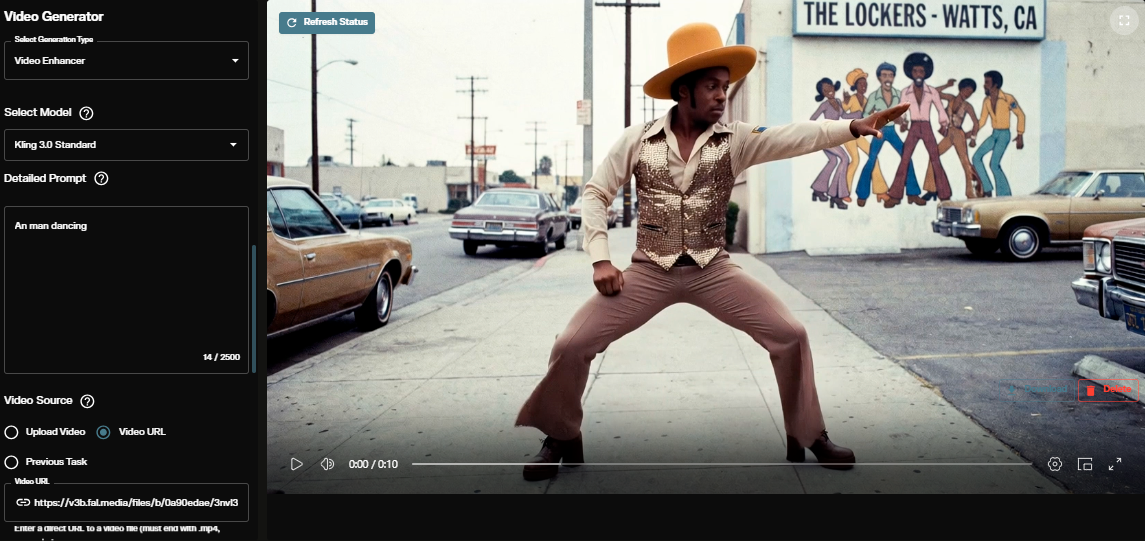
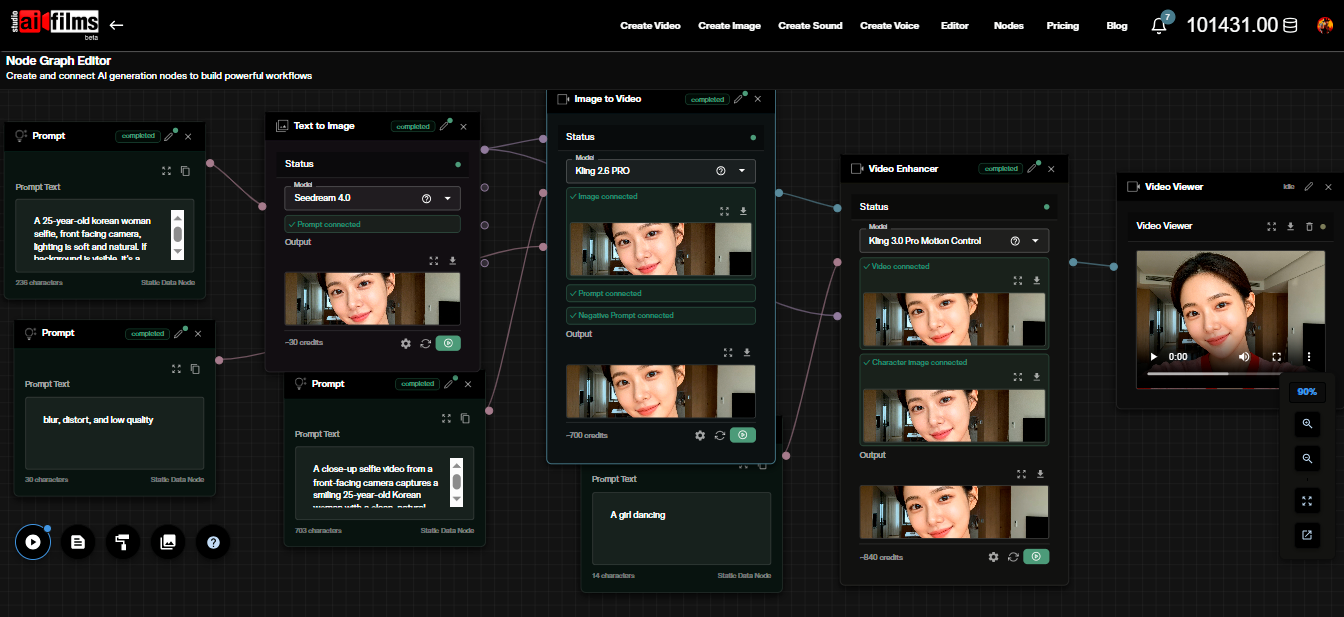
Independent filmmakers developing work outside studio agreements can use the AI FILMS Studio video workspace to generate, develop, and produce content without the institutional frameworks these contracts govern.
Sources
Variety | Deadline | The Hollywood Reporter | The Wrap | Directors Guild of America
Continue Reading
.jpg?w=3840)


Video & LipSync
- Video Generator
- Text to Video
- Image to Video
- Start-End Frame to Video
- Draw to Video
- Motion Control
- Video Enhancer
- Video Upscaler
- Video Extend
- Video to Video LipSync
- Audio to Video LipSync
- Image to Video LipSync
- Video FaceSwap
- Seedance 2.5
- WAN 3.0
- Seedance 2
- FLUX 3
- Minimax H3
- Vidu Q3 Pro
- Grok Imagine Video 1.5
- Gemini Omni
- Google Veo 3.1
- Kling 3.0 Pro
- Luma Ray 3.2
- LTX 2.3
- Happy Horse 1.1
- Kling 3.0 Motion
- ByteDance Upscaler
- InfiniteTalk
- InsightFace
Image & Edit
- AI Character
- AI Actor
- Art Generator
- Text to Image
- Image to Image
- LoRA Image to Image
- Draw to Edit
- Image LoRA Training
- Remove Background
- Image Enhancer
- MidJourney 8.0
- Krea 2
- OpenAI GPT Image 2.0
- Nano Banana Pro Ultra
- Nano Banana 2 Lite
- Nano Banana Pro
- Minimax Image
- Clarity Pro
- Z-Image Turbo LoRA
- Krea 2 Turbo LoRA
- Z-Image LoRA Trainer
- Qwen Image LoRA Trainer
- Background Erase Network 2 (BEN2)