
PRX Pixel: Photoroom's Open Source Image Model Skips VAE Compression Entirely

Share this post:
PRX Pixel: Photoroom's Open Source Image Model Skips VAE Compression Entirely
Photoroom released PRX Pixel on July 6, 2026, a 7 billion parameter text to image model available under Apache 2.0. The release includes full model weights on HuggingFace, training code on GitHub, and a live demo on HuggingFace Spaces. Every component is available for commercial use without restriction.
Studio availability. PRX Pixel is not available in AI FILMS Studio. This article covers a public research release. To generate images in the Studio, see the models listed on the text to image page.
The model follows from the original PRX architecture Photoroom published in November 2025. PRX Pixel scales the parameter count from 1.3 billion to 7 billion and introduces a fundamental architectural change: it generates images directly in pixel space, with no Variational Autoencoder involved at any stage.
Why Pixel Space Matters
The dominant architecture in text to image generation today, used by Stable Diffusion, FLUX, and most major commercial models, is latent diffusion. An image is compressed by a VAE into a smaller representation, the diffusion process runs in that compressed space, and the result is decoded back to pixels at the end.
That round trip introduces artifacts. VAE encoding and decoding shifts colors subtly, particularly in skin tones and solid color surfaces. Textures can drift across the compression boundary. Fine detail, most visibly in text embedded in images including signage, labels, and typography in generated scenes, is frequently lost or distorted during reconstruction. These are acceptable tradeoffs when the goal is fast generation at scale.
They become a problem when the output needs to meet a production specification: a specific Pantone code for a costume, a readable product label on a prop, an exact color match for a set design reference. PRX Pixel eliminates the compression step. The model denoises directly from noise to pixel values without ever encoding the image into a compressed representation. The output is what the model computes, without a reconstruction pass that can alter it.
Why No VAE Is Different From Faster Decoding
Many models offer optimized VAE decoding for speed. PRX Pixel's distinction is that there is no VAE at all. Fast decoding still passes through a compression layer that can introduce artifacts. Pixel space generation does not.
The distinction matters for use cases requiring pixel accurate output, where decoding speed is irrelevant if the output has already been altered by the compression step. Product photography and production design reference images are the clearest examples: what the model generates is exactly what the user receives, with no reconstruction pass between computation and output.
Color measurement tools used in physical production, colorimeters and spectrophotometers, measure the actual rendered pixel values in a reference image. A VAE decoded output may measure differently from what the model computed. A pixel space output measures exactly what the model produced.
Architecture
The model uses FlowMatchEulerDiscreteScheduler and a Qwen3-VL vision language model as its text encoder. The Qwen3-VL encoder is multilingual, which means PRX Pixel accepts prompts in languages other than English without requiring translation preprocessing.
Photoroom trained the model on 32 H200 GPUs in under 10 days. The training incorporates three techniques not standard in published diffusion model recipes:
- TREAD (Token Routing Efficient Attention Diffusion): a routing mechanism that selects which token pairs participate in attention at each step, reducing compute cost in pixel space where sequence lengths are significantly longer than in latent space
- REPA alignment with DINOv3: a representation alignment approach that trains the model's internal representations to match a strong visual feature extractor, improving structural coherence in generated images
- LPIPS and DINOv2 perceptual losses: training losses that evaluate image quality in feature space rather than pixel space, pushing the model toward outputs that score well on learned perceptual metrics beyond accuracy at the pixel level
Photoroom developed PRX Pixel as a research release, not a production deployment inside their commercial product. The company used their product photography and online retail image platform as the testbed domain, which means the model's training distribution emphasizes precise product rendering: exact colors, sharp edges, readable text, and accurate material surfaces. Those properties transfer directly to production design use cases that require outputs meeting a visual specification rather than just aesthetic quality.
Maximum output resolution is 1024 pixels. The model has accumulated approximately 5,900 downloads per month on HuggingFace since release, suggesting active evaluation beyond the research community.
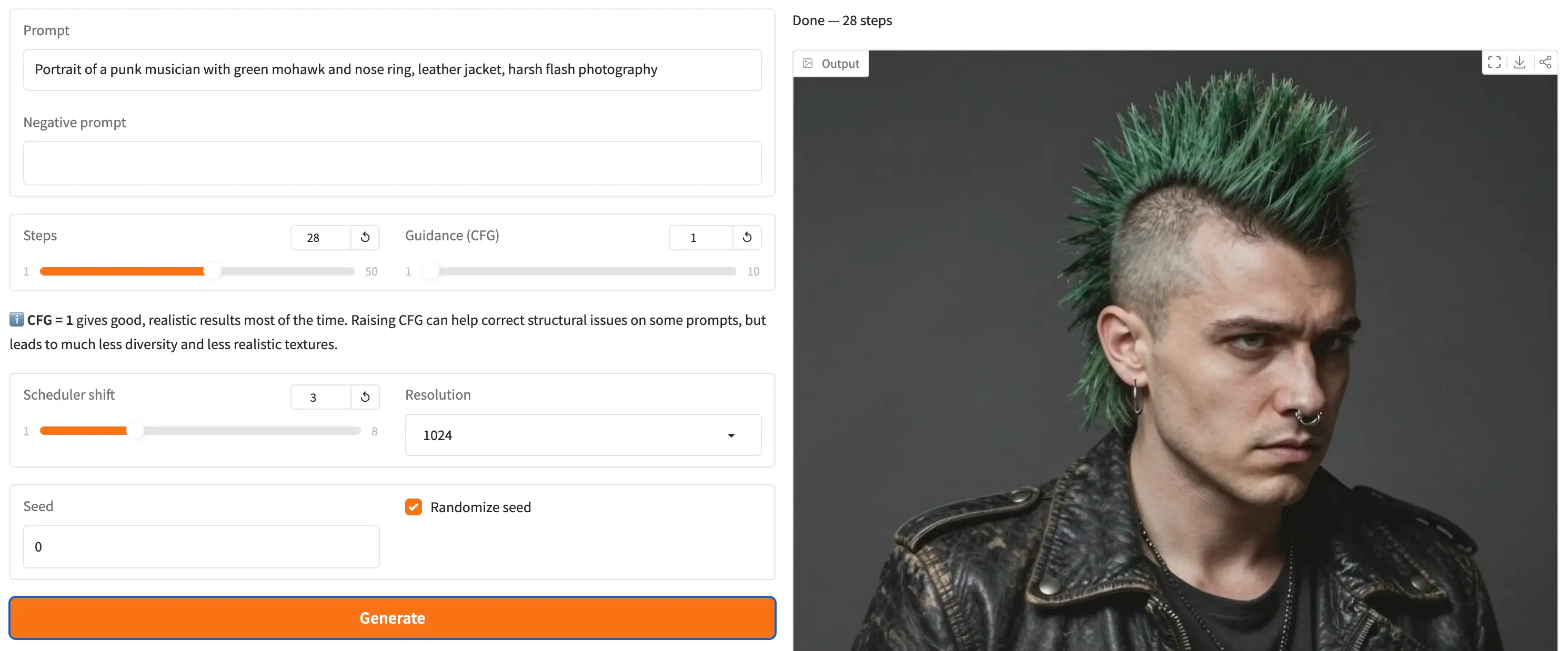
Text to image output from PRX Pixel. Courtesy Photoroom.
What TREAD Does in Practice
Token Routing Efficient Attention Diffusion reduces compute by selectively routing which token pairs participate in attention at each diffusion step. Pixel space models have substantially longer sequence lengths than latent space models because they operate at full resolution rather than in a compressed latent representation.
TREAD addresses that compute cost directly, making 7B pixel space inference feasible on 32 H200 GPUs in under 10 days of training. Without it, the sequence length overhead would make pixel space training at that parameter count prohibitively expensive on available GPU hardware.
The REPA Alignment Advantage
REPA alignment trains the model's internal representations to match the features learned by DINOv3, a strong visual feature extractor. The effect is that the model's internal understanding of image structure becomes better calibrated to human perceptual quality, even though DINOv3 is not used at inference time.
The alignment step is performed during training. It is not a post processing pass applied to outputs. Aligning the model's internal representations to a perceptually strong extractor means the generative process itself learns to prioritize features that correspond to how humans perceive image quality, not just pixel accuracy against training examples.
The Product Photography Training Domain
Photoroom built PRX Pixel using its commercial platform as the training domain, emphasizing product photography for online retail. That domain prioritizes exact color fidelity, sharp edges, readable text on labels, and accurate material rendering over stylistic range.
The tradeoff is a model with narrower aesthetic range but higher fidelity on the specific properties production design requires. Concept art spanning a wide range of painterly styles is not what PRX Pixel was optimized for. Color accurate, detail sharp product and prop references are.
What the Qwen3-VL Encoder Adds
The Qwen3-VL vision language model is multilingual by design, trained across text in multiple languages. PRX Pixel inherits that multilingual capability at the text encoding stage.
Most open source text to image models use CLIP or T5 encoders trained primarily on English captioned data, requiring non-English speakers to either translate or accept degraded alignment between prompt and output. PRX Pixel handles non-English prompts natively, which matters for production teams working in any of the languages covered by Qwen3-VL's training distribution.
5,900 Monthly Downloads: What That Number Means
Approximately 5,900 monthly downloads on HuggingFace since July 2026 suggests active evaluation by teams going beyond the initial research community. Model releases that stay within academic audiences typically accumulate downloads in the low hundreds per month.
Figures in the thousands indicate evaluation by practitioners building tools or workflows on top of the model. For a pixel space model released without an established ecosystem of fine-tuned variants, that download rate points to genuine interest in the no-VAE architecture rather than momentum carried by an existing user base.
The Apache 2.0 license removes the friction that slows commercial adoption of research releases. Teams can run the model in a production pipeline, build a product on top of it, or include it in a client deliverable without a separate licensing negotiation. That permissiveness is a practical factor in the download numbers: organizations evaluating commercial deployment do not need to treat the license as a blocker before beginning technical evaluation.
Try the Live Demo
The model is available as a Gradio interface on HuggingFace Spaces. It accepts a text prompt, negative prompt, step count, guidance scale, scheduler shift, resolution, and seed as inputs. The Space loads without requiring a login.
The step count and guidance scale controls follow the same conventions as standard diffusion interfaces. The scheduler shift parameter is specific to the FlowMatch scheduler and adjusts the time step distribution during denoising. Higher shift values bias the schedule toward early denoising steps, which can improve coherence in complex scenes at the cost of some detail in later steps.
Production Applications
For filmmakers and production designers, the absence of VAE compression has three practical implications.
Color accuracy is the most direct. Concept art used as a production reference often needs to communicate specific color information to a team: a costume color that matches a character's established palette, a set paint color coordinated with a cinematographer's lighting plan, or a prop color that photographs accurately under specific conditions. VAE reconstruction introduces small but measurable color drift. Pixel space generation preserves the color the model computes without an additional translation step.
Fine detail retention matters for any generated image that contains text or structured visual elements. Prop design references, product labels on set, signage in concept art, or typography in visual development work are all candidates where conventional latent diffusion models distort or lose the detail entirely. PRX Pixel's direct output path preserves them.
Multilingual prompt support via the Qwen3-VL encoder makes the model accessible to production teams working in languages other than English without requiring a separate translation step. This is not a common feature in open source image models, most of which use CLIP or T5 encoders trained primarily on English text.
For image generation in the cloud without local model setup, AI FILMS Studio's image workspace provides access to the latest models in the browser.
Open Source and License
PRX Pixel is available under Apache 2.0, which permits commercial use without restriction, including use in commercial productions, client work, and products built on top of the model. The Apache 2.0 license requires attribution in derivative works but places no limitation on revenue or production scale.
The full training code is published in the Photoroom/PRX repository on GitHub, including the architecture implementation, training loop, evaluation scripts, and ablation experiments. This level of release is less common than releases that provide only model weights, and makes PRX Pixel useful as a research baseline for teams developing custom pixel space generation systems.
The ablation experiments in the repository document the contribution of each training technique individually, TREAD, REPA, LPIPS, and DINOv2 losses, with results showing the effect of removing each component. That data makes it possible to adapt the architecture for a different domain by starting from a known baseline rather than running the full ablation again from scratch.
For comparison with other open source pixel space approaches released in 2026, HiDream-O1-Image is an 8B MIT-licensed model that takes a similar no-VAE approach using the Pixel-level Unified Transformer architecture and adds instruction-based image editing and subject personalization alongside text to image generation.
Sources
Project Page: photoroom.com/blog/prx-pixel GitHub: Photoroom/PRX HuggingFace: Photoroom/prxpixel-t2i HuggingFace Space: Photoroom/PRX-Pixel HuggingFace Blog: PRX Open Source T2I Model License: Apache 2.0
Continue Reading
.jpg?w=3840)


Video & LipSync
- Video Generator
- Text to Video
- Image to Video
- Start-End Frame to Video
- Draw to Video
- Motion Control
- Video Enhancer
- Video Upscaler
- Video Extend
- Video to Video LipSync
- Audio to Video LipSync
- Image to Video LipSync
- Video FaceSwap
- Seedance 2.5
- WAN 3.0
- Seedance 2
- FLUX 3
- Minimax H3
- Vidu Q3 Pro
- Grok Imagine Video 1.5
- Gemini Omni
- Google Veo 3.1
- Kling 3.0 Pro
- Luma Ray 3.2
- LTX 2.3
- Happy Horse 1.1
- Kling 3.0 Motion
- ByteDance Upscaler
- InfiniteTalk
- InsightFace
Image & Edit
- AI Character
- AI Actor
- Art Generator
- Text to Image
- Image to Image
- LoRA Image to Image
- Draw to Edit
- Image LoRA Training
- Remove Background
- Image Enhancer
- MidJourney 8.0
- Krea 2
- OpenAI GPT Image 2.0
- Nano Banana Pro Ultra
- Nano Banana 2 Lite
- Nano Banana Pro
- Minimax Image
- Clarity Pro
- Z-Image Turbo LoRA
- Krea 2 Turbo LoRA
- Z-Image LoRA Trainer
- Qwen Image LoRA Trainer
- Background Erase Network 2 (BEN2)