
Emily Blunt Refused AI for Her Alien Voice in Spielberg's Disclosure Day

Share this post:
Emily Blunt Refused AI for Her Alien Voice in Spielberg's Disclosure Day
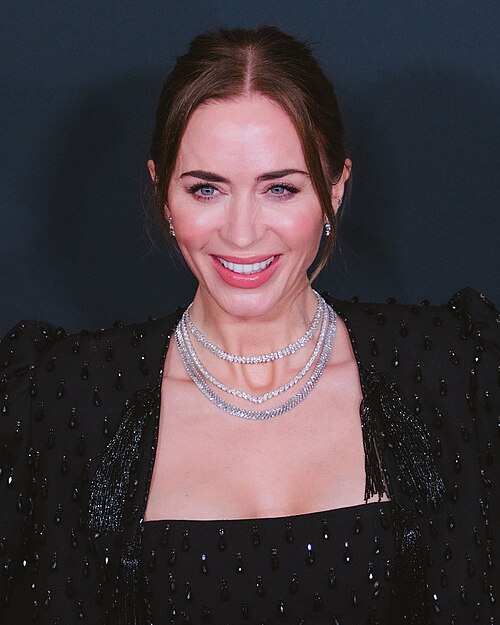
Kevin Paul, CC BY 4.0, via Wikimedia Commons
Emily Blunt chose not to use generative AI to produce the alien voice at the center of Steven Spielberg's upcoming science fiction film, recording the sounds herself instead across a four minute unbroken shot. Her creative choice, and the specific recording method that followed, produced one of the more technically unusual vocal performances in recent Hollywood filmmaking.
The scene required Blunt's character to deteriorate gradually before speaking a non human language. She recorded clicking sounds, humming sounds, consonant sounds, and strange breathing sounds with microphones positioned simultaneously at her mouth and her throat.
Recording the Alien Voice
Rather than generating the sounds artificially, Blunt recorded clicking sounds, humming sounds, consonant sounds, and strange breathing sounds with microphones positioned simultaneously at her mouth and her throat. A sound designer processed those organic recordings into the final alien effect.
The dual microphone setup was chosen specifically to capture two distinct acoustic layers from a single performance.
"I could make some real, really strange sounds," Blunt said. The dual microphone placement captured acoustic properties that AI synthesis would not have generated. Breath contact sounds from the throat and articulation sounds from the mouth arrived as two distinct acoustic sources in parallel, giving the sound designer raw material with a physical origin.
Spielberg's Principle
Blunt described herself as "a bit terrified" of using AI for the scene. Director Steven Spielberg's position on the technology had already shaped the production's approach.
"There is no substitute for the soul," Spielberg said. He has consistently held the same position on both sides of the tool question. AI may serve as a practical instrument in production, but cannot be the final word on a creative decision. "Use AI as a tool, but do not use AI as the final word on anything creative," he told Michelle Obama's podcast on May 27.
Spielberg has articulated that position in public at least three times in 2026, from SXSW in March to the Michelle Obama podcast in late May. Disclosure Day is his first film to release since [he stated publicly at SXSW that he has never used AI in any of his films](/blog/spielberg-never-used-ai-films).
The consistency of his public statements reflects a deliberate effort to establish his creative position before the film arrives in theaters. A director of Spielberg's profile making repeated public statements about AI sets terms for how the film will be discussed and reviewed.
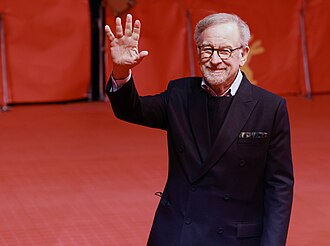
Elena Ternovaja, CC BY-SA 3.0, via Wikimedia Commons
About Disclosure Day
Disclosure Day follows Margaret Fairchild, a Kansas City television meteorologist and former journalist who gains abilities after an encounter with non human life during a live weather broadcast. The screenplay was written by David Koepp, who previously collaborated with Spielberg on Jurassic Park and the War of the Worlds adaptation.
Koepp's previous Spielberg scripts cover science fiction, action, and spectacle across three decades. His experience designing scenes for productions that depend on specific physical effects and practical performance decisions made him the appropriate writer for a story where an actor's voice had to carry the film's central alien communication moment without synthetic augmentation.
The cast includes Josh O'Connor, Colin Firth, Eve Hewson, Colman Domingo, Wyatt Russell, and Henry Lloyd-Hughes alongside Blunt. Universal Pictures releases the film on June 12, 2026. First reactions from press screenings, published on May 30, called it "Spielberg's best film in 20 years" and described Blunt's central performance as one of the best of her career.
The Four Minute Unbroken Take
Recording an unbroken four minute take for a scene involving deteriorating physical performance and alien vocalizations is a specific technical and physical challenge. Actors working within a continuous single take cannot rely on editing to join the best fragments of multiple attempts into a composite performance. Every element of the scene must arrive in sequence and in working condition on the same attempt.
That constraint changes how a performance is prepared. Rather than developing individual moments that can be assembled in editing, the actor must develop the architecture of the scene as a continuous experience. Where deterioration begins, when the voice shifts, how the breath changes as the character loses control. All of these decisions must be fixed in the body before the take begins. Blunt's unusual recording setup, dual microphones at mouth and throat, further constrained the physical range of movement available to her.
David Koepp's Screenplay
The screenplay for Disclosure Day was written by David Koepp, who has one of the most sustained collaborative relationships with Spielberg in contemporary Hollywood. Koepp wrote Jurassic Park and its sequel The Lost World, the War of the Worlds adaptation, and Indiana Jones and the Kingdom of the Crystal Skull.
The alien communication scene at the film's center is the kind of script problem where the writer must design something that is simultaneously coherent as a dramatic event, physically producible by an actor, and processable by a sound department into a finished effect. Koepp's experience across science fiction, action, and spectacle filmmaking across three decades provides the context for why Spielberg chose him for a story that requires that combination.
The Cast and the Film's Distribution
Universal Pictures releases Disclosure Day on June 12, 2026. Beyond Blunt, the film stars Josh O'Connor, Colin Firth, Eve Hewson, Colman Domingo, Wyatt Russell, and Henry Lloyd-Hughes. The ensemble reflects Spielberg's consistent pattern of building films around a core lead surrounded by actors with strong individual track records.
Josh O'Connor's inclusion is notable following his performance in Challengers in 2024 and his period work in The Crown. Colman Domingo has been one of the most consistently praised character actors of the past five years. Universal's June release date positions the film for the summer theatrical window rather than the awards season calendar, though the press screening reactions calling it "Spielberg's best film in 20 years" suggest potential for year end awards consideration regardless.
Blunt's Performance Range and the Alien Voice Challenge
Emily Blunt's screen history includes A Quiet Place and A Quiet Place Part II, both of which required her to perform under conditions where sound was constrained as a production element. The silent performance discipline those films demanded is adjacent to what the alien voice scene in Disclosure Day required: physical precision in the absence of conventional dialogue.
For an actor who has worked extensively with suppressed and distorted sound as a dramatic element, recording clicks and hums into dual microphones represents an extension of existing technique rather than an entirely new challenge. Her background in physical performance and sound-restricted filming gave her a working method for the scene that a less experienced performer in that specific register might not have had.
A Quiet Place required Blunt to communicate emotion, danger, and intention entirely through body language and facial expression for extended sequences. That discipline translates directly to a scene where the voice itself is the instrument and every sound must be intentional enough to be recorded and processed into a final effect.
The Michelle Obama Podcast Statement
Spielberg's appearance on Michelle Obama's podcast on May 27, 2026, came two weeks before Disclosure Day's release date. His statement there, "Use AI as a tool, but do not use AI as the final word on anything creative," arrived in the window when press screenings were happening and initial reactions were being published.
The timing was not accidental. Directors at Spielberg's level manage the public narrative around a film's release as carefully as the film itself. A clear public statement on AI, made in the specific week that press reaction to Disclosure Day was being written, shaped the context in which reviewers would discuss his choices on the film. Blunt's alien voice recording decision, described in press materials, fit directly into the position he had just articulated publicly.
What the Press Screening Reactions Indicated
Press screenings on May 30, 2026, produced reactions that called Disclosure Day "Spielberg's best film in 20 years." That framing places the comparison against films made after 2006, which would include Lincoln, Bridge of Spies, and Ready Player One. If the reactions hold through broader review coverage and audience response, the film enters the conversation about his late career legacy.
Blunt's performance was specifically cited in those first reactions as one of the best of her career. For a performer who has received SAG Award nominations and BAFTA recognition across a range of genres, that assessment carries weight. The alien voice scene is likely central to that assessment. A performance that required physical recording technique, continuous take endurance, and a sound design collaboration to produce a finished effect is the kind of work that reviewers can describe precisely when they have seen it.
AI Voice Synthesis and What Human Recording Offers
Current AI voice synthesis tools can generate speech and produce range of vocal textures with increasing precision. What they do not reproduce is the physical origin of sound. Human vocal production involves the resonance of specific physical cavities, the contact of air with tissue surfaces, and the acoustic character of individual anatomies that are unique to each person.
The dual microphone setup Blunt used captured those physical characteristics at two points in their production. A microphone at the throat records before sounds arrive in the open air; a microphone at the mouth records the fully formed output. AI synthesis would generate an approximation of the final acoustic result without the physical origin information that the dual capture technique preserves. For a sound designer building an alien voice from organic material, the difference between captured and synthesized input changes what is available to work with.
The SAG-AFTRA Context for Vocal Performance
SAG-AFTRA's 2023 agreement with the major studios included provisions specific to the synthetic replication of a performer's voice. An actor's voice requires consent and compensation before it can be reproduced digitally. That protection is directly relevant to what Blunt chose to do. Recording her own sounds and feeding them to a sound designer is a use of her physical instrument that she controls. An AI generated alien voice built from training data would involve different questions about who provided the source material.
Spielberg's production followed the established practice. The sound design built on what the performer recorded herself. That is not a statement about compliance alone. It reflects how creative decisions and legal frameworks can align in a production that treats the performer's instrument as the starting point rather than an element to be bypassed.
The SAG-AFTRA voice provisions came directly from the 2023 contract negotiations, where the proliferation of AI voice synthesis tools made consent and compensation protections a priority item. Productions that launched after those provisions took effect operate within a framework that was not yet in place for films produced before 2023. Disclosure Day is a film that was developed and produced entirely within that framework, which is part of what makes its specific creative choices on the voice scene legible as decisions rather than defaults.
What the Dual Microphone Technique Captured
The simultaneous recording at mouth and throat captures two stages of vocal production. A microphone placed at the throat, on or near the larynx, records the vibration of the vocal cords before sound has passed through the resonating cavities of the chest, mouth, and nasal passages that shape it. A microphone at the mouth records the final shaped output.
The difference between those two signals is the acoustic contribution of Blunt's specific anatomy. No two performers have identical resonance. No AI synthesis tool trained on other voices can reproduce the physical filter that a specific person's body applies to the raw vibration from their vocal cords. A sound designer working with both the pre resonance and post resonance recordings from the same take has access to that physical distinction as material to work with.
Spielberg's 2026 Public Position on AI
Spielberg's three public statements on AI across 2026 each addressed the same core distinction from a different angle. At SXSW in March he confirmed he has never used AI in his films. At the IMO podcast he described "no substitute for the soul." On the Michelle Obama podcast in May he offered the most operationally specific version: AI as tool, not as final creative authority.
The accumulation of those statements across a five-month period, tied directly to the release of a film where the choice was visible in the production, is an unusually complete public record for a director at his level. Spielberg does not give frequent interviews. When he does speak publicly three times on the same subject in a single awards season and release cycle, the consistency is deliberate. Disclosure Day arrives in theaters with a director who has already stated his position in detail, which shapes how audiences and press interpret the specific creative decisions made during production.
What Performance Delivers
Blunt's decision illustrates the specific claim behind Spielberg's broader position. Some elements of a performance are produced by a body in real time, and no current tool replicates what that produces. The four minute shot placed her voice, breath, and physical technique in sequence without the option of editing between takes.
Her choice also shows how AI and human craft can operate alongside each other without conflict. The sound designer who processed the recordings into a workable alien effect was using technical tools to shape what she had already made. That collaboration, a performer's physical instrument feeding a designer's processing, is the model for how creative tools extend rather than replace human creative decisions.
Spielberg's broader position, and Blunt's specific implementation of it on this scene, offers a practical working definition for productions that want to engage with AI tools while keeping the performer's physical contribution central. The distinction is not between AI and no AI. It is between AI that starts from human material and AI that substitutes for it. Filmmakers exploring AI audio tools can work with voice generation in the AI FILMS Studio voice workspace.
Sources
Variety | Deadline | The Hollywood Reporter | The Wrap | Screen Daily
Continue Reading
.jpg?w=3840)


Video & LipSync
- Video Generator
- Text to Video
- Image to Video
- Start-End Frame to Video
- Draw to Video
- Motion Control
- Video Enhancer
- Video Upscaler
- Video Extend
- Video to Video LipSync
- Audio to Video LipSync
- Image to Video LipSync
- Video FaceSwap
- Seedance 2.5
- WAN 3.0
- Seedance 2
- FLUX 3
- Minimax H3
- Vidu Q3 Pro
- Grok Imagine Video 1.5
- Gemini Omni
- Google Veo 3.1
- Kling 3.0 Pro
- Luma Ray 3.2
- LTX 2.3
- Happy Horse 1.1
- Kling 3.0 Motion
- ByteDance Upscaler
- InfiniteTalk
- InsightFace
Image & Edit
- AI Character
- AI Actor
- Art Generator
- Text to Image
- Image to Image
- LoRA Image to Image
- Draw to Edit
- Image LoRA Training
- Remove Background
- Image Enhancer
- MidJourney 8.0
- Krea 2
- OpenAI GPT Image 2.0
- Nano Banana Pro Ultra
- Nano Banana 2 Lite
- Nano Banana Pro
- Minimax Image
- Clarity Pro
- Z-Image Turbo LoRA
- Krea 2 Turbo LoRA
- Z-Image LoRA Trainer
- Qwen Image LoRA Trainer
- Background Erase Network 2 (BEN2)