
Hollywood Veterans From Sharknado and Doctor Who Are Now Making AI Films

Peter Capaldi filming Doctor Who in Cardiff, June 2014. Photo by Shaun Smith, CC BY-SA 2.0, via Wikimedia Commons
Share this post:
Hollywood Veterans From Sharknado and Doctor Who Are Now Making AI Films
Jamie Magnus Stone directed eight episodes of Doctor Who for the BBC. Micho Rutare spent years engineering the tonal precision that made Sharknado a B movie institution at The Asylum. Both have now signed on to write features for Promise AI, a Los Angeles startup pairing established Hollywood writers with AI filmmakers. The appeal, for both, is speed of iteration at a cost conventional production cannot match.
What Promise AI Is Building
Promise AI was founded by YouTube veterans and is run by Tyler Mitchell, a former Imagine Entertainment executive who heads development, and Dave Clark, the company's chief creative officer. The company originated from the AI filmmaking community on YouTube, where creators like Hurbault and Metapuppet had built audiences by documenting real AI production workflows. That origin gives Promise a different starting point from production companies that came to AI from institutional Hollywood. The founders understand the tools from direct practice rather than from business strategy. Verena Puhm, former Head of Dream Lab LA at Luma AI, launched Matriarch in August 2026, a production company built by someone who came from the tool-making side of the industry.
The YouTube origin is also why internal funding works as a model at this stage. The company's founders built audiences without capital backing. The production model follows the same logic. Create work that stands on craft, find distribution through the quality of the product rather than through deals sold in advance, and keep the creative control that comes from not having answered to investors during development. The company pairs AI filmmakers including Guillaume Hurbault and digital artist Metapuppet with experienced Hollywood writers who bring story craft and proven commercial instincts.
Funding is entirely internal. No outside financing is required unless a project adds live action elements. Investor connections include North Road, the production company founded by Peter Chernin and recently sold to Mediawan. Rick Carter, a veteran cinematic artist, has attended Promise's AI film school.
The Writers and Their Track Records
Stone directed eight episodes of Doctor Who during Seasons 12 and 13. That run covered major story arcs including episodes with Jodie Whittaker as the Doctor and the introduction of several significant supporting characters. Directing eight episodes of a long running franchise means managing recurring cast relationships, maintaining visual and tonal consistency across episodes produced under different production conditions, and working within a rigid schedule that leaves little room for reshoots. That experience translates directly into the AI production context, where maintaining consistency across generated sequences requires the same kind of disciplined creative decision making. He is writing Everything Is Within Tolerance for Promise, a thriller about scientists conducting secret experiments in a bunker.
Rutare's career was built on B movie precision at The Asylum, where he developed the Sharknado franchise. He later wrote Predator: Killer of Killers for Hulu. For Promise, he is writing Ninja Punk, an animated film set in 2065 Los Angeles that involves ninjas, Yakuza, and supernatural elements.
Two additional projects are already in production. Tuning In is an animated coming of age music film with a supernatural premise, written by Clark and Robert Rugan. Hardcore 94 is an animated short series about a 1994 Compton alien invasion, directed by Clark and Metapuppet with Ivan Rome.
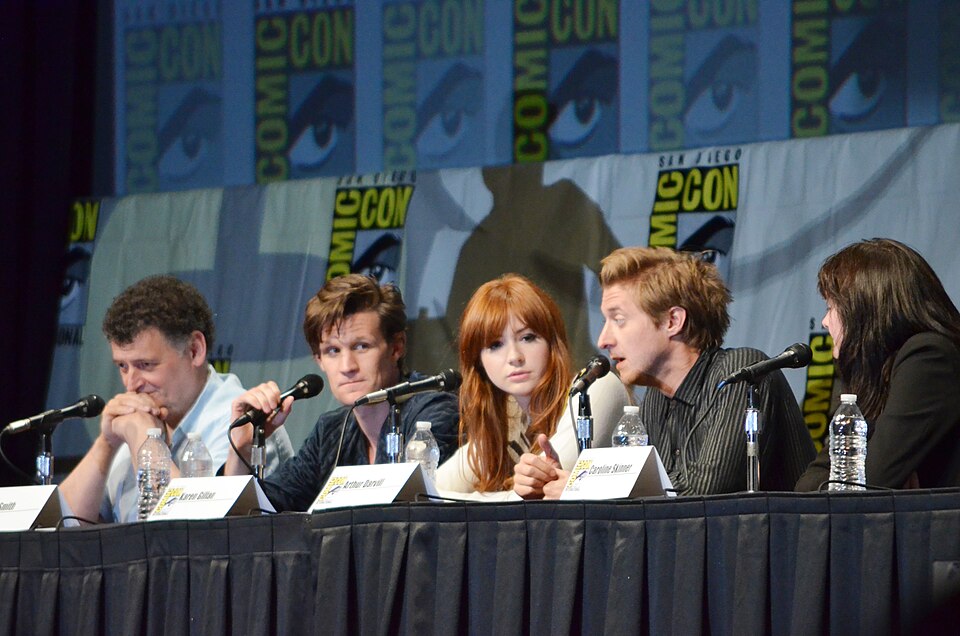
Genevieve, CC BY 2.0, via Wikimedia Commons
Ninja Punk: The Project in Detail
Rutare's project for Promise AI sits in the genre space he knows best: a film that requires precise tonal calibration to land its humor and its action simultaneously. "Ninja Punk" is set in 2065 Los Angeles and layers three genre traditions: martial arts action, organized crime, and supernatural horror. The 2065 setting adds a science fiction dimension that gives the production room to use AI environments for the future city backdrop.
Animated features are a natural first format for AI production. Every visual in an animated film is generated rather than captured, which means integrating AI generation into the pipeline is less disruptive than in live action, where AI must composite with footage of real actors in real environments. Promise AI's choice to develop animated projects alongside live action reflects this practical advantage.
Everything Is Within Tolerance: Stone's Thriller
Stone's project for Promise AI draws on the genre experience he built directing Doctor Who: scientists in a contained environment, secrets with stakes that escalate beyond the initial premise. A bunker thriller is a format that compresses action into a small number of locations, which aligns with how AI production currently handles environments. Generating and maintaining consistency across two or three distinct interior spaces is manageable at production quality; an open world action film requires orders of magnitude more environment generation work.
The choice of a confined thriller is not accidental. Stone is a director who has worked on one of television's most technically demanding productions. His decision to start with a premise that works within AI's current environmental range suggests he has thought carefully about where the tools are strong and where they are not yet.
Promise AI's School for Filmmakers
Rick Carter won the Oscar for production design twice, for "Forrest Gump" and "Avatar". His presence at Promise's AI film school signals the company is positioning itself as a training ground for how established craft practitioners integrate AI into their existing work, not just a production company.
The school component is consistent with the broader hybrid model. Promise AI is not building a pipeline where AI handles the creative work and experienced people supervise it. It is teaching people with deep craft backgrounds how to direct AI tools the same way they have directed production departments throughout their careers.
Predator: Killer of Killers as the Bridge
Between Sharknado and Promise AI, Rutare wrote Predator: Killer of Killers for Hulu. The Hulu short, released in 2025, was part of a series of animated Predator stories produced by Walt Disney Television Animation. It demonstrated that Rutare's voice works in animation as well as live action B movie production.
That credit matters for his work at Promise AI. Animated production requires writers who can describe visual action in terms that translate directly into animated sequences. Rutare's experience writing for Hulu animation means he arrives at Promise with an existing mental vocabulary for scripting visual sequences without the assumption of physical props, locations, or performer constraints. That is exactly the vocabulary AI animated production requires.
The Iteration Argument
Rutare's reason for joining Promise AI goes directly to the economics of tone in genre filmmaking. "That was an exercise in tone, a Goldilocks hybrid of earnestness and ridiculousness," he said of Sharknado. "Experimenting with things like tone and pioneering new microgenres will become less of a crapshoot and more of a science."
Traditional genre productions succeed or fail based on how precisely a creative team can calibrate register across dozens of production decisions. Capturing that calibration by reshooting and retesting is expensive and slow. AI compresses those decisions into an earlier, faster stage. A writer who has spent years learning what works at the margins of genre can apply that knowledge without the cost of reshooting.
Mitchell drew the same point from a different reference. "Look at what Pixar does, constantly putting things up on a feed and rewriting them over and over again. But that's really expensive. AI can do it much faster and cheaper."
The Distribution Question
Promise AI's current slate does not include confirmed distribution deals. For animated features from a startup, distribution is typically secured after a finished cut exists or after festival selection. The company's North Road connection and relationships through Imagine Entertainment's network give it access to distributors and platforms that a startup without those connections would lack.
The absence of distribution deals at the project development stage is standard for the kind of work Promise is making. B movie production has traditionally been sold in advance to foreign markets through sales agents before production begins, a model that does not apply to AI animated features that have no physical production cost. Promise AI's bet is that the finished films will find distribution on the strength of the work rather than through presales agreements that require a proven track record the company is still building.
The creator economy route to theatrical gained a new landmark in July 2026, when YouTube AI filmmaker Gossip Goblin announced his AI anthology 'Gods Don't Give Gifts' would open in several hundred U.S. theaters on October 30, produced with Fable Studio.
The Distribution Question
The distribution challenge is also the test of the hybrid model. If Promise AI's combination of experienced Hollywood writers and AI filmmakers produces work that finds platform or theatrical distribution at commercial terms, the model is validated for the next generation of similar companies. If distributors treat AI animated features as a separate lower prestige category regardless of writing quality, the bet on story craft does not pay off the way the company is planning.
The Funding Model and Creative Control
Internal funding with no outside financing means Promise AI does not answer to investors for project selection decisions. Studios and production companies that take outside financing enter development processes shaped partly by investor return requirements. Promise's model eliminates that constraint for its current slate.
The trade off is scale. Projects that require significant cast or location budgets beyond what AI can replace must find outside financing to add those elements. The internal funding model works cleanly for animated features and contained live action productions. It becomes complicated the moment a production requires marquee talent or physical locations at scale.
The North Road connection is the hedge against that constraint. North Road was Peter Chernin's production company, which he sold to Mediawan in 2024 after a run that included significant film and television productions. That connection to Chernin's network gives Promise AI distribution knowledge and industry relationships that a startup without that backing would take years to build.
What Veterans Bring That AI Cannot Generate
The working premise at Promise AI is that experienced writers carry something the tools cannot produce on their own.
"People who work on AI films have a mastery that very few people have. You need to learn dozens of tools. And a [traditional] writer can bring in all their talent," Mitchell said.
Rutare described a varied response among his peers. Some screenwriters feel fear about the unknown. Others feel excitement about what the new tools can make possible for writers who know genre deeply.
The company is not pursuing outside financing for its current slate. "We want to be among the first to make great stories with this new technology," Mitchell said. "At the end of the day that's how we will be judged."
The AI Filmmakers: Hurbault and Metapuppet
Guillaume Hurbault and Metapuppet are the AI filmmaking side of Promise's pairings. Hurbault is a digital filmmaker who has built workflow experience across multiple AI generation platforms. Metapuppet is a digital artist whose practice spans character design and short film work in AI generated visual environments.
The pairing model is explicit about what each side brings. The Hollywood writer brings story architecture, commercial instincts, and an understanding of how genre expectations work. The AI filmmaker brings technical fluency: knowledge of which tools produce which results, how to maintain visual consistency across a production, and how to manage the iteration cycle that AI generation requires.
The Arcana Labs Connection
Promise AI is associated with Arcana Labs, the AI production and education infrastructure behind the project. Arcana Labs runs the film school component and provides the AI production support that makes the hybrid model function. Rick Carter's attendance at the film school is one data point; the broader operation provides the training, tools, and support structure that allows writers like Stone and Rutare to enter AI production without building their own AI infrastructure from scratch.
The existence of a school component alongside a production company is a signal about where Promise AI sees its long term position. If the model works, the school is where the next generation of hybrid AI filmmakers trains.
The Tuning In and Hardcore 94 Projects
Two additional Promise AI projects already in production demonstrate the range the company is covering. Tuning In is an animated coming of age music film with a supernatural premise, written by Dave Clark and Robert Rugan. Hardcore 94 is an animated short series about a 1994 Compton alien invasion, directed by Clark and Metapuppet with Ivan Rome.
Both are animated and both take place in fully generated environments, which means they are optimized for the AI pipeline in the same way Ninja Punk is. The 1994 period setting of Hardcore 94 adds a distinct production challenge: period accuracy in a generated environment requires the model to produce visual details that are specific to a particular era without defaulting to either generic current production design or clichéd period signifiers.
Promise AI Within the Arcana Labs
The school component of Promise AI operates under the Arcana Labs umbrella. Arcana Labs provides the AI production infrastructure, curriculum, and technical support that makes the hybrid model function at scale. The film school and the production company share the same tool stack and the same network of AI filmmakers, which means students in the school are working alongside the same practitioners building the production slate.
That integration between education and production is unusual in the film industry, where film schools and production companies are typically separate institutions. The Promise AI model collapses the distinction: the school is where the next generation of hybrid filmmakers trains, and the production company is where the current generation demonstrates what those methods produce.
Story First, Tools Second
Promise AI's hybrid model sits in a different position from the solo creator approach that Ash Koosha brought to Odysseus: The Fall, his 135 minute AI generated feature produced for a budget in the mid five figures without a physical crew or distributor. Where Fountain 0 builds from a single creative director outward, Promise AI recruits experienced writers and directors first and provides the AI filmmaking infrastructure around them.
The bet is the same in both cases. Story craft built across years of produced work is the resource AI cannot generate. The tools can be learned. The instinct for when a scene earns an audience's investment cannot. Blomkamp's Barley Studios, announced in July 2026, follows the same pattern: a director with Hollywood credits building an independent AI studio outside the studio system. The company announced its first feature, Touch Grass, in August 2026. The film is a hybrid AI horror feature directed by Clark himself, pairing live action performances and practical effects with generative AI.
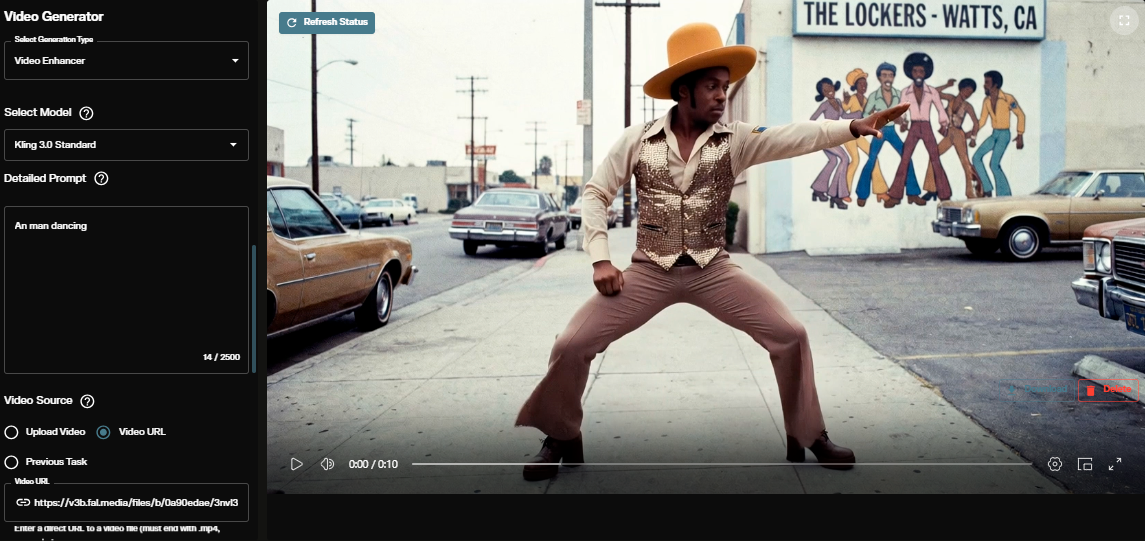
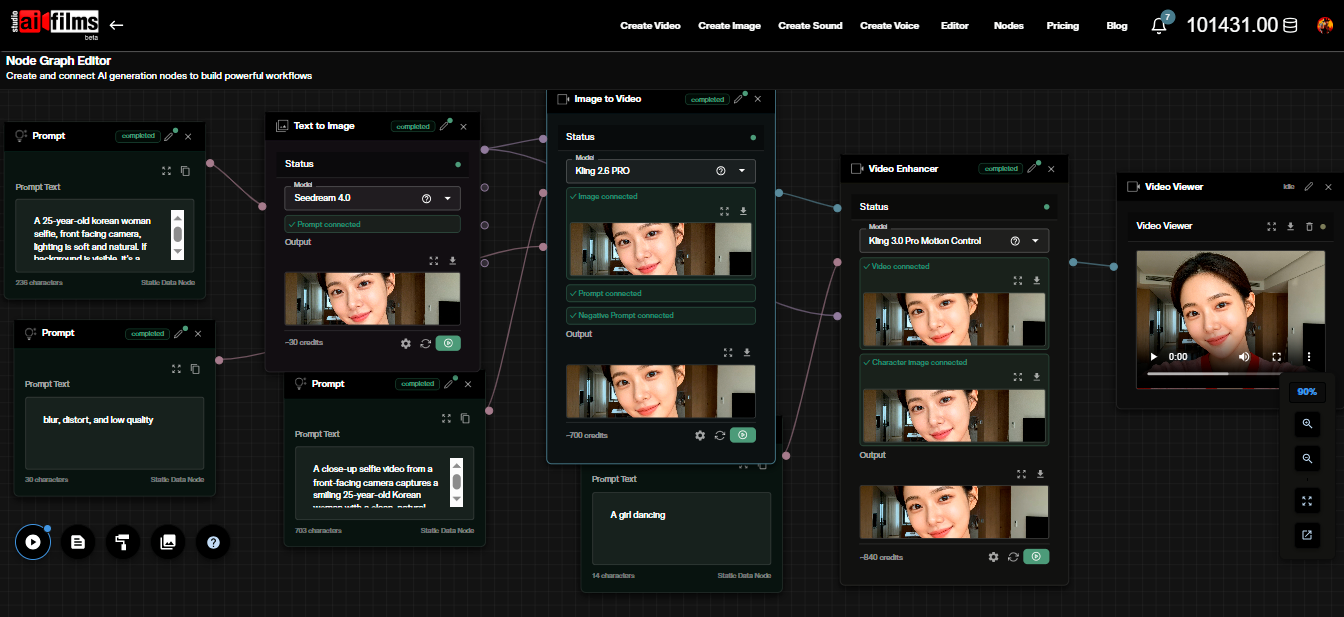
Explore text-to-video and image-to-video tools used in AI productions at the AI FILMS Studio video workspace.
Sources
The Hollywood Reporter
Continue Reading
.jpg?w=3840)


Video & LipSync
- Video Generator
- Text to Video
- Image to Video
- Start-End Frame to Video
- Draw to Video
- Motion Control
- Video Enhancer
- Video Upscaler
- Video Extend
- Video to Video LipSync
- Audio to Video LipSync
- Image to Video LipSync
- Video FaceSwap
- Seedance 2.5
- WAN 3.0
- Seedance 2
- FLUX 3
- Minimax H3
- Vidu Q3 Pro
- Grok Imagine Video 1.5
- Gemini Omni
- Google Veo 3.1
- Kling 3.0 Pro
- Luma Ray 3.2
- LTX 2.3
- Happy Horse 1.1
- Kling 3.0 Motion
- ByteDance Upscaler
- InfiniteTalk
- InsightFace
Image & Edit
- AI Character
- AI Actor
- Art Generator
- Text to Image
- Image to Image
- LoRA Image to Image
- Draw to Edit
- Image LoRA Training
- Remove Background
- Image Enhancer
- MidJourney 8.0
- Krea 2
- OpenAI GPT Image 2.0
- Nano Banana Pro Ultra
- Nano Banana 2 Lite
- Nano Banana Pro
- Minimax Image
- Clarity Pro
- Z-Image Turbo LoRA
- Krea 2 Turbo LoRA
- Z-Image LoRA Trainer
- Qwen Image LoRA Trainer
- Background Erase Network 2 (BEN2)