
Millennium Media's Jonathan Yunger Spent 15 Years Making Action Films. Now He's Building an AI Production Suite.

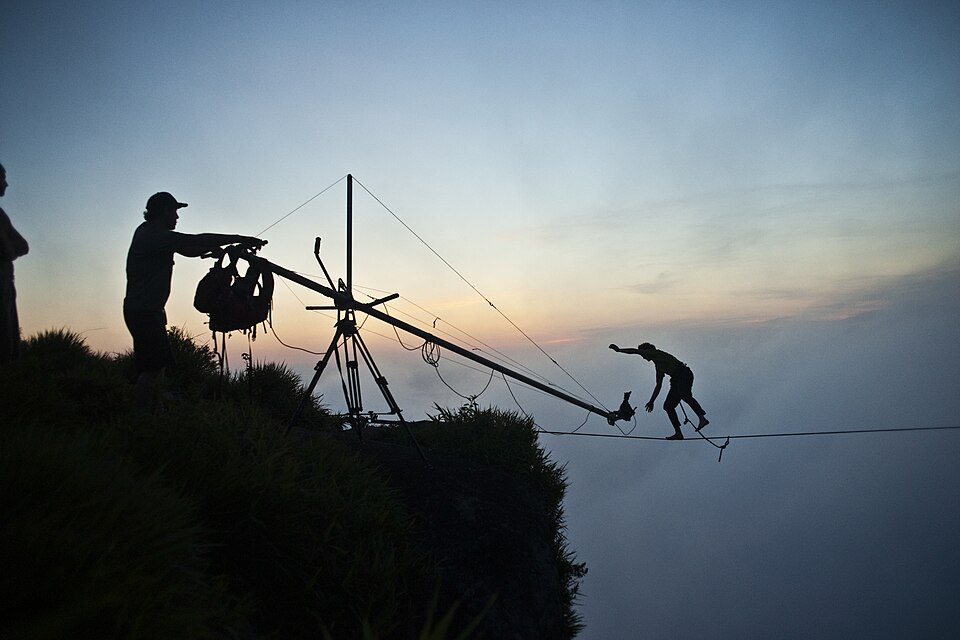
Behind the scenes film crew in Death Valley. Phonyfilm, CC BY-SA 4.0, via Wikimedia Commons
Share this post:
Millennium Media's Jonathan Yunger Spent 15 Years Making Action Films. Now He's Building an AI Production Suite.
Jonathan Yunger ran Millennium Media for fifteen years. During that time, he produced The Expendables franchise, the Has Fallen series, The Hitman's Bodyguard, Rambo, and Hellboy. These are not indie experiments. They are mainstream theatrical releases with recognizable casts, studio distribution, and combined worldwide grosses in the billions.
Last year Yunger cofounded Arcana Labs with producer Hank Hoffman. The company's first publicly documented production, a short film called Echo Hunter, cost less than $50,000, secured a SAG-AFTRA contract, and reached approximately 500,000 YouTube views.
The three numbers together are the argument. Under $50,000. Union contracted. Half a million views. Each alone is a data point. Combined, they define a production model that has not existed before in Hollywood's documented history.
The $50,000 Proof Point
Echo Hunter was written and directed by Kavan the Kid. The budget came in under $50,000. That figure would not warrant a headline on its own, but the production conditions behind it change its meaning.
The film used what Yunger described as the gray stage approach. Performers worked on minimally dressed physical sets, referred to as gray boxes, while AI handled all environmental and background elements. This is distinct from traditional green screen, which replaces a captured background after production. In the gray stage model, AI integration shapes the production design from the start.
The union contract matters as much as the budget figure. A $50,000 production that avoids SAG-AFTRA is a cost reduction. A $50,000 production that meets SAG-AFTRA standards is a proof that the labor framework and the AI workflow can coexist at a price point that has not existed before.
The gray stage approach preserves what the union contract protects: a real human performance, captured on a real set, with conditions and compensation appropriate to the performer's work. What changes is everything around that performance. Environments, backgrounds, and scene scale are AI generated, removing costs that would otherwise require a traditional physical production infrastructure to create.
That structural separation, human performance in the physical space and AI generated world surrounding it, is the reason the SAG-AFTRA contract was achievable. The performer's rights are fully intact. The technology operates on the layer the performer never occupies.
Forresbj, CC BY-SA 3.0, via Wikimedia Commons
How the Gray Stage Method Works
The term refers to the physical environment in which the performance is captured. A gray stage is a nearly empty space with minimal set dressing, usually geometric forms or colored markers that provide performers with physical reference points without building out a full production design. Actors interact with actual objects in actual space. The camera captures a real human performance with real physics.
What AI generates is the world. Backgrounds, environments, architecture, natural settings, and crowd elements are produced through AI image and video generation tools rather than through location shoots, physical set construction, or conventional VFX. The outputs are composited with the captured performance.
This differs from performance capture, which replaces the actor's visual appearance entirely with a digital character. In the gray stage approach, the captured human performance is what the audience sees. AI creates the world around it, not the person within it.
The practical consequence is a significant reduction in physical production costs without reducing the quality of the human performance at the center of the scene. Location fees, set construction labor, transportation, and the logistical coordination required to move a crew to a real environment are either reduced or eliminated. The performer's contribution remains unchanged.
What Arcana Labs Is Building
Arcana Labs describes itself as an AI production suite that carries a story "from script to finished scene without losing narrative control." Yunger and Hoffman built the company to compress the phases of production that have historically consumed the largest share of budget before a project reaches an audience.
Those phases include development iteration, production design, location reconstruction, and coordination between departments in post production. For a production at Millennium Media's scale, those costs compound across multiple departments. For an independent production with a fixed ceiling, they are what determines whether a project can be financed at all.
The gray stage method addresses one specific production constraint. Building the physical world a script describes has historically required location shoots, set construction, or conventional VFX. Replace that infrastructure with a gray box and AI generation, and the cost of achieving visual scope shifts from a location and set budget to a computational one.
What 500,000 Views Reveals About the Audience
Echo Hunter reaching 500,000 views on YouTube does not make it a mainstream hit. What it establishes is more useful. An AI produced short film with a SAG-AFTRA credit and a gray stage production method can find an audience without a theatrical release, a streaming platform acquisition, or a marketing budget at scale.
The YouTube platform distributes based on engagement. An algorithmically surfaced film competes for attention against professionally produced content from studios, networks, and established creators. Reaching 500,000 views in that environment means the film retained enough viewers through its runtime to generate the engagement signals the platform uses to widen distribution.
For a production that cost under $50,000, the revenue math from that viewership is secondary. What the number proves is that the audience acceptance problem that critics of AI filmmaking frequently raise has a concrete answer. Real viewers, encountering the work in an environment where they had no obligation to watch, watched.
The SAG-AFTRA credit matters in the context of that viewership number. A union contract on a production at this cost level would historically indicate a studio or broadcaster mandate. Here it reflects a choice by the producers about how they wanted the production to be seen within the industry. The combination of union standards and audience reach on a $50,000 budget is the signal Arcana Labs is sending to the studios and financiers it is positioned to partner with.
How Arcana Labs Targets the Production Stack
The phrase "from script to finished scene without losing narrative control" describes a specific problem in traditional production, not a general aspiration. Each phase of conventional film production requires its own set of vendors, facilities, and coordinated specialists. At a mainstream theatrical studio, the path from script to screen involves development executives, location scouts, production designers, VFX coordinators, and post production supervisors, each hand-off introducing additional cost and schedule risk.
Arcana Labs is built to compress those hand-offs. The gray stage eliminates the location scout phase. AI environment generation eliminates the production design build-out for environments that do not need a physical set. In post production, AI generation tools reduce the iteration cost of scene adjustments that would otherwise require reshoots or expensive VFX facility time.
The compression is cumulative across phases. Each hand-off removed represents both a cost reduction and a schedule reduction. A project that moves from script to finished scene within a single coordinated AI workflow avoids the calendar overhead that accumulates when each production phase requires a new team, new contracts, and a new approval process.
The result is not a faster version of the conventional pipeline. It is a different pipeline with fewer phases that require physical resources or specialist coordination. The cost reduction follows from the structural simplification, not from doing the same things more cheaply.
For productions at the scale Arcana Labs is targeting, starting at under $50,000 and building toward longer format projects, the pipeline compression also reduces the minimum viable team. Echo Hunter was written and directed by a single creator, Kavan the Kid, with Yunger and Hoffman providing production oversight. That ratio of creative to overhead is not achievable in the conventional film production model at any scale large enough to yield a finished theatrically presentable film.
The Argument Yunger Is Making
Yunger's public statements about Arcana Labs return to a specific framing that separates the company's position from the usual AI productivity claims.
"The point of bringing AI into production is not to make movies without people. It's to make movies that were impossible to fund."
The second statement follows directly from the first. "The savings gained from integrating AI workflows...exist to pay the storytellers better and empower studios to let them take braver swings."
His governing principle runs through both: "Artist-driven AI, not AI-driven art. It should be humans to the power of AI and never AI to the power of humans."
The last formulation is not a positioning statement. It describes a constraint built into the gray stage model. Without a human performance at the center, there is no subject for the AI generated world to serve. The method requires the actor. The technology cannot function otherwise.
The Case for Financing Films That Could Not Get Made Before
Yunger's most specific claim is about the financing math, not the technology.
The commercial film industry operates under a set of implicit minimums. A story set in multiple locations requires a location budget. A story requiring a period environment requires set construction or period location scouting. A story involving crowd scenes requires a crowd budget or VFX. Each of these adds costs that narrow the range of stories a given budget level can tell. Below certain budget thresholds, specific types of stories simply cannot be produced within guild standards at a quality level that commercial audiences expect.
The gray stage method changes those implicit minimums. If AI can generate the environment credibly enough for the production's intended audience, and if the human performance can be captured at union standards in a gray box, then stories that previously required $5 million in physical production infrastructure now require a fraction of that. The range of stories that specific budget levels can finance expands.
That is what Yunger means by "impossible to fund." He is describing a specific structural feature of the current financing system, not a general observation about AI democratizing creativity. The films are not impossible because they lack merit. They are impossible because the cost of producing them to the standard required for distribution exceeds what their expected commercial return justifies to a financier.
Why This Comes From Inside the Industry
The argument would be dismissed quickly from a tech company promising to change Hollywood from outside it. It carries different weight from someone who spent fifteen years working inside the production constraints that determine whether a film gets made.
Millennium Media's portfolio is genre films with commercial targets: action franchises, wide theatrical releases, productions where budget discipline and distribution expectations shape every creative decision from development through post. Yunger's specific expertise is production where the numbers have to work or the film does not get made.
He is not describing what AI might do to filmmaking in theory. He is describing what he is already doing with it after building a career inside the constraints that most people proposing to change the system have never operated within.
Millennium Media's genre films were not experimental productions. The Expendables franchise required coordinating major celebrity casts, including Sylvester Stallone, Arnold Schwarzenegger, and Jason Statham, across international location shoots. The Has Fallen series demanded large scale action sequences within compressed production timelines. The Hitman's Bodyguard involved two Oscar-level performers in Ryan Reynolds and Samuel L. Jackson. These productions required a producer who could manage competing pressures from talent, distributors, financiers, and guilds simultaneously.
Producing those films under the conditions that commercial theatrical distribution requires is a specific skill set, distinct from the skills of an independent filmmaker or a technology entrepreneur. Yunger brings that knowledge to Arcana Labs. It is the reason the company's claims about what AI can do at a production level are grounded in practical experience rather than projected possibility.
A Different Starting Point Than Other AI Productions
Arcana Labs' gray stage approach represents one of two main vectors through which experienced Hollywood filmmakers are now entering AI production.
Jon Erwin's Young Washington took the opposite starting point. Erwin began with a conventional production and used AI to extend it. More than 100 shots in the finished film extended a water tank environment into frozen river landscapes, multiplied colonial extras to fill 18th century battle formations, and scaled cannon fire sequences beyond what the physical set contained. The film opened to $20.8 million over July 4 weekend, the first wide AI assisted theatrical release to demonstrate holiday box office viability at a major studio distribution scale.
Arcana Labs builds from AI infrastructure upward. The gray stage is the foundation, not a layer applied on top of a completed conventional shoot. The two approaches describe different problems. Erwin was solving the problem of achieving period epic scale within a theatrical budget. Yunger is solving the problem of producing stories that the current studio system cannot finance at conventional production costs.
Both share the same underlying premise. Human performance and human story craft are the irreducible elements. The cost of everything that surrounds those elements is now a variable in ways it was not a decade ago.
At the studio level, Doug Liman's Killing Satoshi is running the same experiment with a $70 million budget, replacing real locations entirely with AI generated environments while preserving full actor performances under a markerless capture stage. The approach differs from Arcana Labs in scale and resources, but the same structural logic applies: AI handles the world the script describes, and performers work in a minimal physical space. The fact that this logic is being applied simultaneously at the $50,000 level and the $70 million level suggests it is becoming a standard production option rather than an experimental edge case.
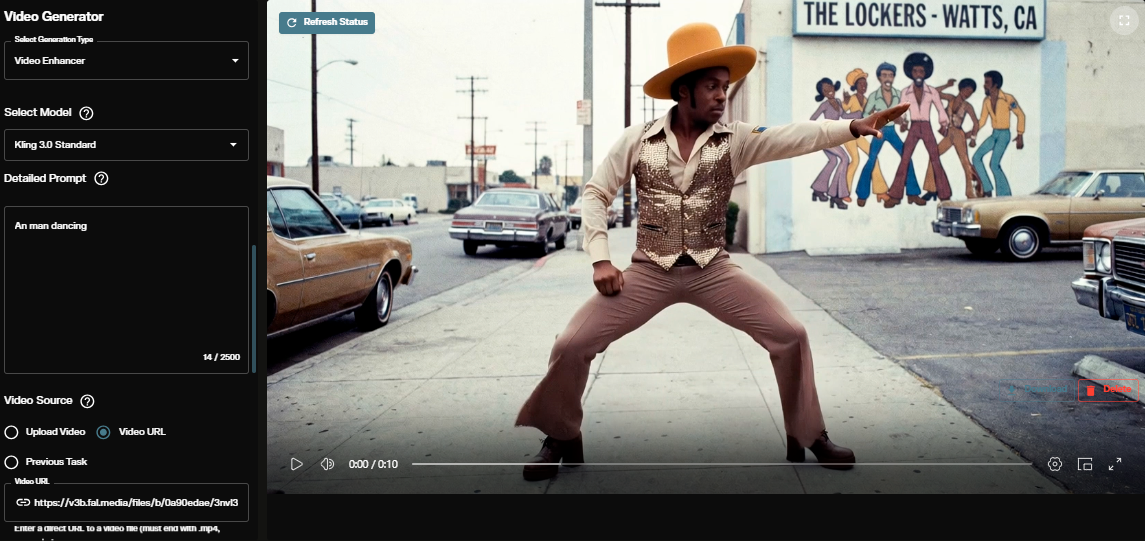
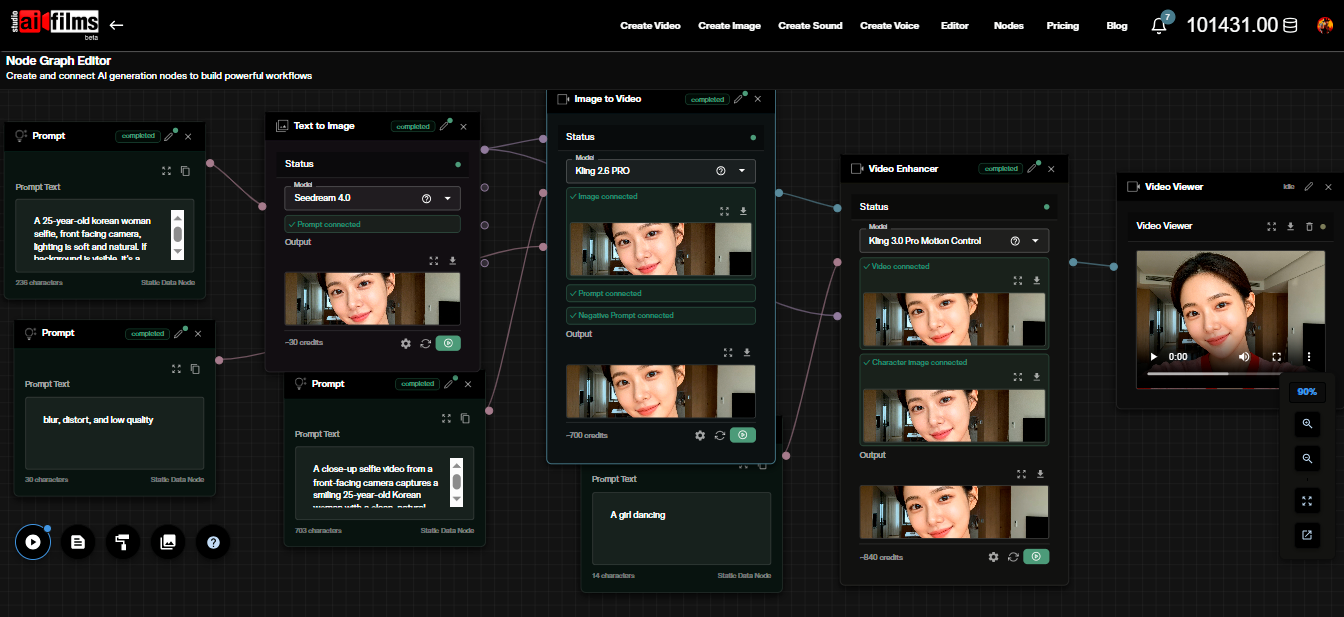
Access text-to-video and image-to-video production tools in the AI FILMS Studio video workspace.
Sources
The Hollywood Reporter
Continue Reading
.jpg?w=3840)


Video & LipSync
- Video Generator
- Text to Video
- Image to Video
- Start-End Frame to Video
- Draw to Video
- Motion Control
- Video Enhancer
- Video Upscaler
- Video Extend
- Video to Video LipSync
- Audio to Video LipSync
- Image to Video LipSync
- Video FaceSwap
- Seedance 2.5
- WAN 3.0
- Seedance 2
- FLUX 3
- Minimax H3
- Vidu Q3 Pro
- Grok Imagine Video 1.5
- Gemini Omni
- Google Veo 3.1
- Kling 3.0 Pro
- Luma Ray 3.2
- LTX 2.3
- Happy Horse 1.1
- Kling 3.0 Motion
- ByteDance Upscaler
- InfiniteTalk
- InsightFace
Image & Edit
- AI Character
- AI Actor
- Art Generator
- Text to Image
- Image to Image
- LoRA Image to Image
- Draw to Edit
- Image LoRA Training
- Remove Background
- Image Enhancer
- MidJourney 8.0
- Krea 2
- OpenAI GPT Image 2.0
- Nano Banana Pro Ultra
- Nano Banana 2 Lite
- Nano Banana Pro
- Minimax Image
- Clarity Pro
- Z-Image Turbo LoRA
- Krea 2 Turbo LoRA
- Z-Image LoRA Trainer
- Qwen Image LoRA Trainer
- Background Erase Network 2 (BEN2)