
FLUX.2 Multi Reference Control: Specs, Klein Variants and Limits

FLUX.2 multi reference composition example | Black Forest Labs
Share this post:
FLUX.2 Multi Reference Control: Specs, Klein Variants and Limits
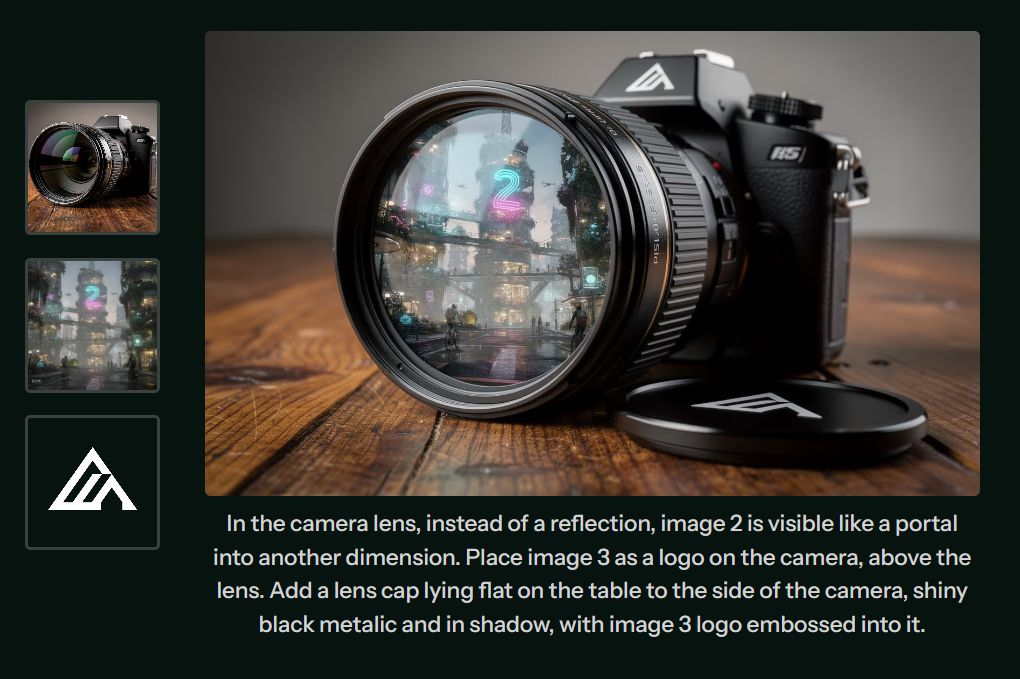
Black Forest Labs released FLUX.2 on November 25, 2025. The image generation system combines up to 10 reference images with 4 megapixel editing capability and photorealistic detail quality.
Technical Architecture
FLUX.2 builds on latent flow matching architecture, coupling the Mistral-3 24 billion parameter vision language model with a rectified flow transformer. The vision language model provides real world knowledge and contextual understanding. The transformer captures spatial relationships, material properties, and compositional logic.
The system retrained its latent space from scratch to achieve better learnability and higher image quality simultaneously. This addresses the "Learnability-Quality-Compression" trilemma that constrained previous architectures.
The combined architecture generates and edits images within a single framework. This eliminates separate pipelines for different tasks and maintains consistency across generation and editing workflows.
Technical specifications:
- 32-billion parameter model
- 4-megapixel maximum resolution
- 32,000 text input tokens
- Sub-10-second generation speeds
- Any aspect ratio support
- JSON based control system
Multi-Reference Control System
FLUX.2 references up to 10 images simultaneously, maintaining character, product, and style consistency across outputs. The system combines multiple visual references into novel compositions while preserving identity and aesthetic coherence.
This capability enables production scale asset generation with consistent visual identity. A single character can appear across hundreds of images in different contexts, lighting conditions, and poses without degradation.
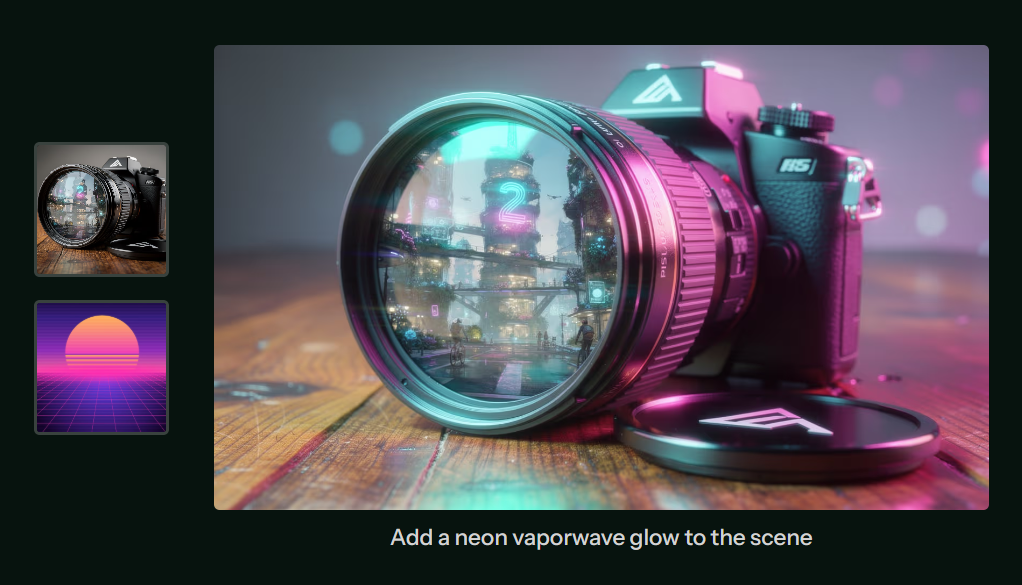
The multi reference system handles:
- Character consistency across scenes
- Product placement in varied contexts
- Style preservation across compositions
- Brand identity maintenance
- Lighting adaptation
- Physics coherence
For marketing campaigns requiring consistent character portrayal across dozens of assets, the multi reference control maintains visual identity without manual intervention or post processing.
Photorealistic Detail Quality
FLUX.2 achieves unprecedented detail quality that approaches real photography. Fabric textures, architectural elements, material properties, and lighting behavior render with accuracy that eliminates typical AI generation artifacts.
The model understands real world physics. When placing products in different contexts, lighting adapts naturally, shadows fall correctly, and reflections behave as expected. This eliminates the uncanny valley effect that marks generated images as artificial.
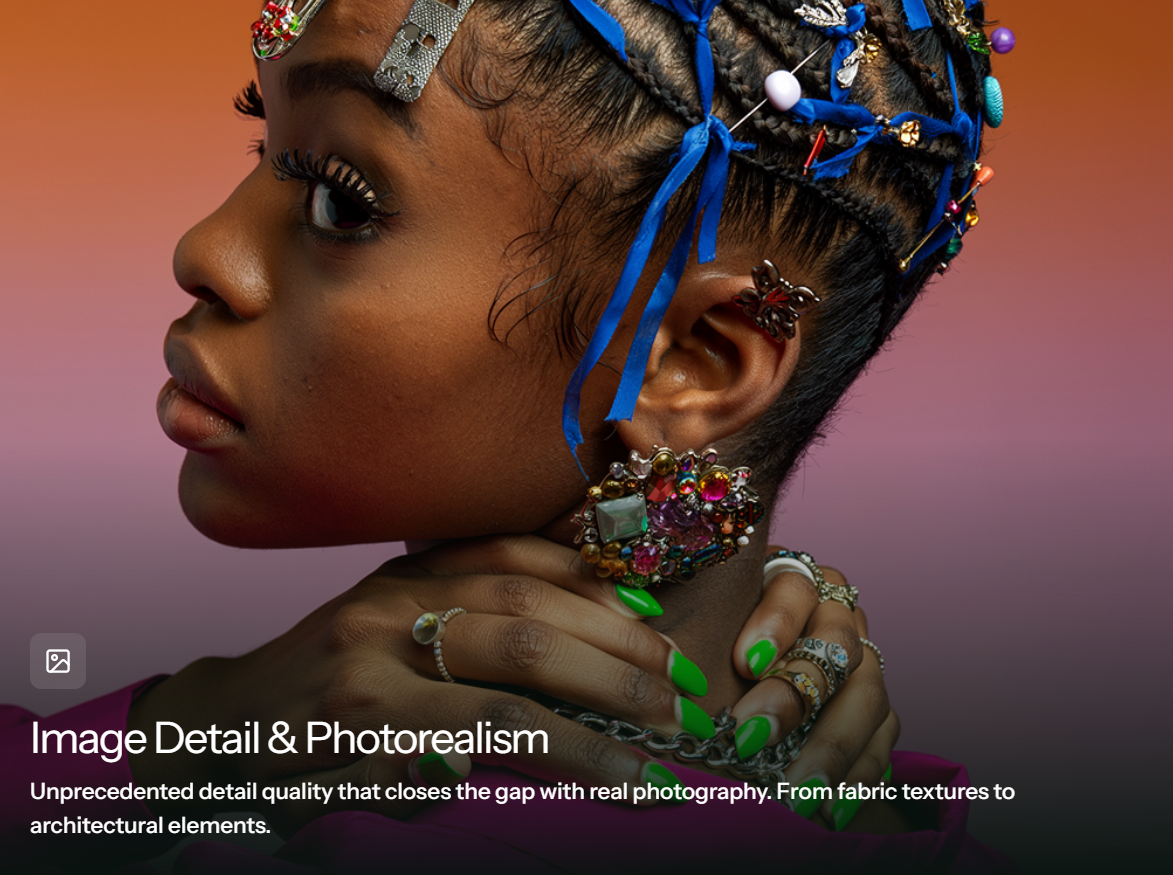
Detail quality extends from macro to micro scales. Wide architectural shots maintain structural accuracy. Closeup portraits render individual fabric threads, jewelry facets, and skin texture variations.
The improvement over FLUX.1 comes from enhanced world knowledge. The model's training incorporates deeper understanding of material properties, spatial logic, and lighting behavior. Results show stable lighting, sharper textures, and more coherent scenes suitable for professional product photography and visualization.
Exact Color Matching
FLUX.2 accepts brand colors via hex codes with zero approximation. This precision enables brand guideline compliance without iterative correction or color grading.
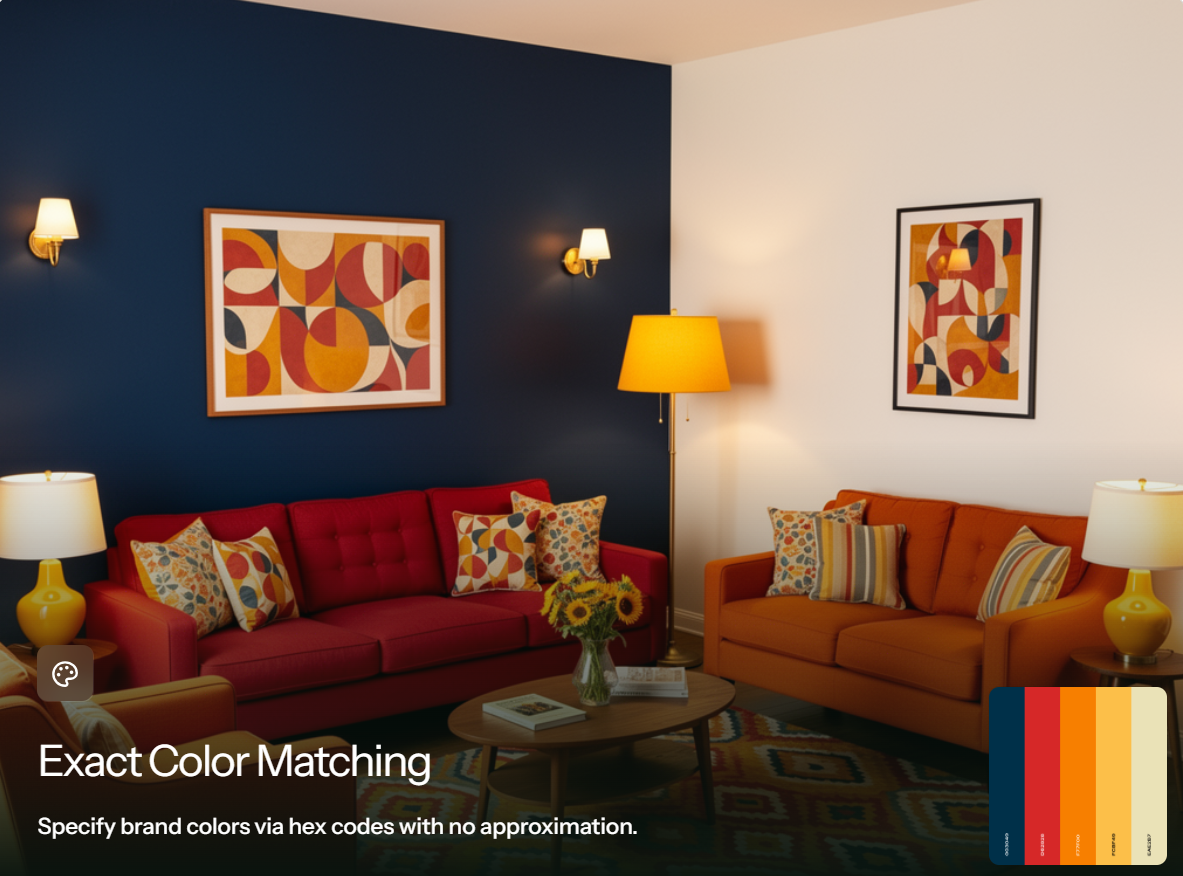
For enterprises with strict brand standards, hex code specification ensures generated assets match corporate identity without deviation. Marketing materials, product renders, and brand campaigns maintain color consistency across all outputs.
The system applies specified colors accurately across different lighting conditions and material properties. A brand's signature color appears correctly whether on fabric, metal, plastic, or paper surfaces within the generated image.
Text Rendering and Typography
FLUX.2 generates complex typography reliably. UI mockups, infographics, memes, and design systems render with legible text at production quality.
Previous generation models struggled with text, producing garbled characters or inconsistent letterforms. FLUX.2 handles multi line layouts, varied font weights, small text sizes, and complex typographic compositions.
For UI/UX designers creating interface mockups or marketing teams generating infographic content, text rendering capability eliminates manual text overlay work. Generated images include properly formatted, readable text as part of the composition.
The model understands typographic hierarchy, alignment principles, and spacing conventions. Generated designs follow professional layout standards without requiring typographic expertise in prompt writing.
Model Variants
The FLUX.2 family includes four variants addressing different use cases:
| Variant | Licence | Inference steps | Best for |
|---|---|---|---|
| FLUX.2 [Pro] | Proprietary commercial endpoint | Fixed | Highest fidelity production output |
| FLUX.2 [Flex] | Proprietary commercial endpoint | 6 to 50, adjustable | Trading detail against speed |
| FLUX.2 [Dev] | Open weight, non commercial | Fixed | Research and development |
| FLUX.2 VAE | Apache 2.0, fully open source | Not applicable | Self hosted pipelines, 4MP editing |
FLUX.2 [Pro]: Proprietary commercial endpoint delivering highest quality outputs. Optimized for production workflows requiring maximum fidelity and control.
FLUX.2 [Flex]: Variable step model trading off detail and speed. Supports 6 to 50 inference steps, enabling users to balance generation speed against output quality based on use case requirements.
FLUX.2 [Dev]: Open weight model under non commercial license. Provides leading performance across text-to-image generation, single reference editing, and multi reference editing for research and development purposes.
FLUX.2 VAE: Fully open source variational autoencoder released under Apache 2.0 license. Compresses images into latent space and reconstructs high resolution outputs. Enables 4-megapixel editing and provides shared foundation for multiple model variants.
The open VAE allows enterprises to adopt the same latent space used by commercial models in self hosted pipelines, avoiding vendor lock in while maintaining interoperability.
For a different architectural approach, HiDream-O1-Image eliminates the VAE step entirely, operating directly in pixel space across generation, editing, and personalization from a single 8B MIT licensed checkpoint.
Performance and Speed
FLUX.2 generates images in under 10 seconds across supported resolutions. This speed enables rapid iteration during creative workflows and practical production scale asset generation.
The FLUX.2 [Flex] variant provides adjustable inference steps. Six step generation produces usable drafts quickly. Twenty-step generation balances speed and quality. Fifty step generation maximizes detail and typography accuracy.
For enterprises generating hundreds of product visualization images or marketing assets, sub 10 second speeds make AI generation practical for production timelines rather than experimental exploration.
Prompt Following and World Knowledge
FLUX.2 demonstrates improved adherence to complex, structured instructions. Multi part prompts with compositional constraints execute reliably. The model understands spatial relationships, maintains logical object interactions, and respects specified layouts.
Enhanced world knowledge grounds outputs in realistic physics and lighting behavior. Generated scenes show coherent spatial logic, expected material properties, and natural lighting that matches described environments.
This improvement reduces prompt engineering complexity. Users achieve desired results with straightforward descriptions rather than elaborate prompt optimization techniques.
NVIDIA RTX Optimization
NVIDIA collaborated with Black Forest Labs to optimize FLUX.2 for RTX GPUs. FP8 quantization reduces VRAM requirements by 40 percent and improves performance by 40 percent.
Standard FLUX.2 requires 90GB VRAM to load completely. Even in lowVRAM mode, memory requirements reach 64GB. FP8 quantization makes the model accessible on consumer RTX GPUs.
The optimization includes improved weight streaming in local node based workflows, enabling deployment on hardware previously unable to run 32 billion parameter models effectively.
Use Cases and Applications
Marketing and advertising: Character consistent campaigns across multiple touchpoints. Product placement in varied contexts. Brand accurate color matching for all assets.
Product visualization: Photorealistic product renders in different environments. Context variations for e commerce. Lifestyle imagery generation at scale.
Creative production: Concept development with consistent visual identity. Style exploration maintaining character coherence. Rapid iteration with preserved brand elements.
Design and UI/UX: Interface mockups with readable text. Infographic generation with complex typography. Visual design system development.
Entertainment and media: Character consistency across scenes. Environment generation with coherent spatial logic. Style consistent asset creation for productions.
E commerce: Product photography at scale. Contextual lifestyle shots without physical photoshoots. Variant generation maintaining product identity.
Deployment Options
In June 2026, Martin Scorsese adopted FLUX for AI assisted storyboarding during pre production, becoming an advisor to Black Forest Labs and marking the technology's arrival at the top tier of Hollywood filmmaking.
BFL Playground: Browser based testing environment for experimentation and prompt iteration. Zero setup required for immediate access to FLUX.2 models.
BFL API: Simple integration for production workloads at any scale. Handles enterprise requirements with reliability and customization options.
Self hosted deployment: Open weight models run on user infrastructure. Full control over deployment, finetuning, and customization. Requires commercial license from Black Forest Labs for commercial use.
Third party platforms: Integration available through Replicate, FAL, Cloudflare, Together AI, and other inference platforms.
Licensing Structure
FLUX.2 [Pro]: Proprietary commercial model available via API subscription.
FLUX.2 [Flex]: Proprietary commercial model available via API subscription.
FLUX.2 [Dev]: Open weight model under non commercial license. Commercial use requires license obtained directly from Black Forest Labs.
FLUX.2 VAE: Apache 2.0 license. Fully opensource with no restrictions on commercial use.
The licensing structure balances open research with sustainable commercial development. Enterprises can experiment with Dev models before committing to commercial licensing for production deployment.
Market Position
FLUX.2 competes directly with Midjourney, DALL-E 3, Adobe Firefly, NAnao BAnana Pro and other commercial image generation systems. Black Forest Labs positions FLUX.2 as production ready rather than experimental, emphasizing reliability and integration into existing creative pipelines.
The multi reference control capability differentiates FLUX.2 from competitors. While other systems handle single image reference or style transfer, FLUX.2's 10-image composition with maintained identity addresses production workflow requirements.
Pricing positions FLUX.2 competitively across performance tiers. Black Forest Labs emphasizes value proposition: SOTA quality at accessible pricing with transparent cost structure.
Technical Limitations
FLUX.2 requires significant computational resources. The 32 billion parameter model demands substantial VRAM even with FP8 optimization. Local deployment requires highend hardware or cloud infrastructure.
Open weight models require commercial licensing for production use. Organizations must negotiate terms directly with Black Forest Labs, adding procurement complexity compared to simple API subscriptions.
The model's training data details remain undisclosed. Black Forest Labs has not published detailed information about dataset composition, raising questions about data provenance and potential copyright issues similar to other large scale image models.
Generation speed, while improved, still requires several seconds per image. Realtime generation or interactive editing experiences face latency constraints.
Company Background
Black Forest Labs launched in 2024, founded by Robin Rombach, Andreas Blattmann, and Patrick Esser. All three previously worked at Stability AI and researched AI image generation at Ludwig Maximilian University of Munich under Björn Ommer.
Their research published in 2022 contributed to Stable Diffusion's development. The founding team brings expertise from creating one of the most widely adopted opensource image generation models.
Investors include Andreessen Horowitz, Brendan Iribe, Michael Ovitz, Garry Tan, and Vladlen Koltun. Initial funding reached $31 million. October 2025 fundraising plans target $300 million at $3.25 billion valuation.
September 2025 saw a multi year $140 million partnership with Meta, granting access to FLUX technology for large scale applications like Instagram filters and Facebook ad creatives.
Integration and Availability
FLUX models integrate with major creative platforms. Adobe Photoshop Beta includes FLUX.1 Kontext [Pro] for Generative Fill, enabling prop additions, background modifications, and element remixing.
Mistral AI's Le Chat chatbot integrated FLUX Pro as its image generation model in November 2024. xAI's Grok initially used FLUX.1 before switching to Aurora in December 2024.
Third party platform availability includes Replicate, Cloudflare, and Together AI. This accessibility lowers adoption barriers for developers and enterprises.
Future Development
Black Forest Labs confirmed development of SOTA, a text-to-video model extending FLUX capabilities into motion and storytelling. The video model builds on image generation expertise while addressing temporal coherence and motion quality.
The company emphasizes open innovation sustainability, releasing powerful open weight models alongside commercial endpoints. This strategy balances community contribution with business viability.
Enhanced finetuning capabilities announced in January 2025 enable customization for brand styles, internal visual templates, and specialized use cases beyond general image generation.
Responsible AI Considerations
Black Forest Labs published strict usage policies preventing misuse and non consensual content generation. The company emphasizes responsible development before, during, and after releases.
Dataset transparency remains limited. Like most large scale generative models, FLUX likely trained on extensive internet image collections. The legal and ethical implications of such training continue evolving as courts examine copyright questions.
The company's commitment to open research contrasts with closed commercial approaches. Open weight releases enable community inspection, academic research, and distributed development while proprietary commercial models fund continued innovation.
Practical Implications for Creators
For professional workflows, FLUX.2 enables production scale asset generation previously requiring extensive photography budgets and time. Product visualization, marketing campaigns, and creative concepts generate in minutes rather than weeks.
The multi reference control system addresses the consistency problem that plagued earlier AI generation. Character driven narratives, brand campaigns, and serialized content maintain visual identity across outputs. For teams working specifically with style references and community LoRAs, FreeStyle offers a complementary local tool: it takes a style reference image and a content reference together, using LoRA weights from the open source community as style and content clustering centers.
Exact color matching eliminates brand guideline compliance concerns. Marketing teams can generate assets knowing colors meet corporate standards without iteration or correction.
Text rendering reliability expands use cases to infographics, UI mockups, and typographic designs that previously required separate text overlay workflows.
Getting Started
For a hands on walkthrough of every FLUX model available on the platform:
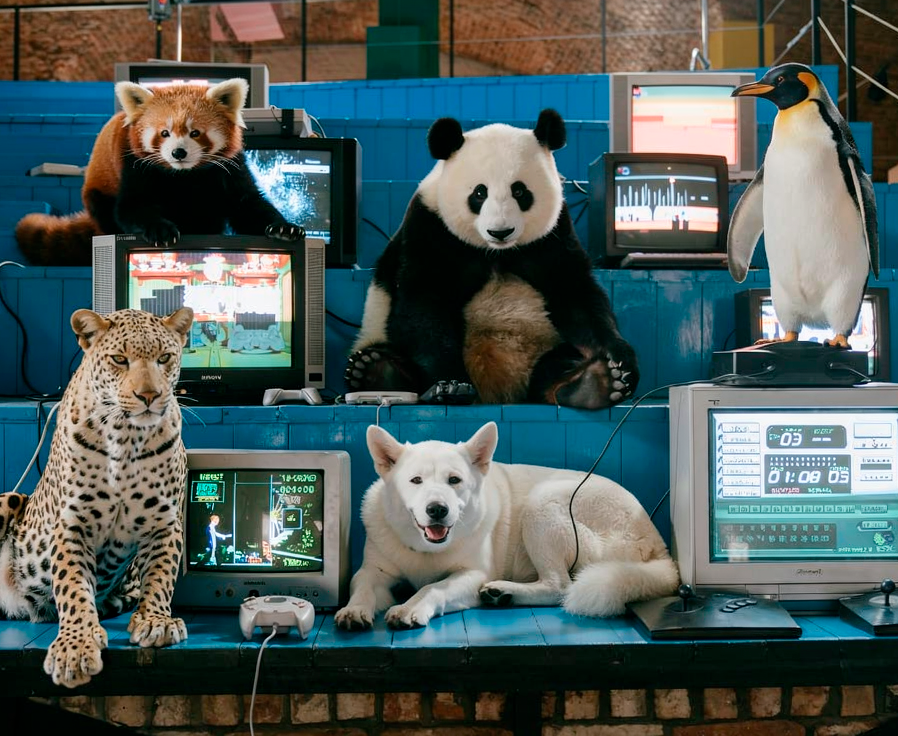
For cinematic image generation with Stylize, Chaos, and Weird controls, Midjourney 8.0 is also available in AI FILMS Studio:

For immediate experimentation, access BFL Playground at the Black Forest Labs website. No installation or setup required for browser based generation testing.
For production integration, evaluate API documentation and pricing at bfl.ai. API access provides scalability and reliability for enterprise workflows.
For self hosted deployment, download FLUX.2 [Dev] weights from Hugging Face. Review hardware requirements and commercial licensing terms before production deployment.
Local node based tools provide workflow management with FLUX.2 templates and optimizations. NVIDIA RTX users benefit from FP8 quantization and weight streaming improvements.
For filmmakers who need inpainting specifically, Moebius is a 0.22B open source model accepted at ECCV 2026 that achieves quality comparable to FLUX.1-Fill-Dev at 15x faster inference and a fraction of the parameter count.
For a larger model with a built-in commercial license, Krea 2 Raw and Turbo offer a 12B open weight option released in June 2026, with native 2K generation and free commercial use for teams under 50 seats.
Microsoft Research's July 2026 release Mage-Flow adds native resolution generation to the open source image model space. The 4B parameter model generates and edits at any target aspect ratio without resize cropping artifacts, with six variants covering both generation and instruction based editing under an MIT license.
Sources:
- Black Forest Labs: "FLUX.2: Frontier Visual Intelligence" (November 25, 2025)
- Black Forest Labs official website: https://bfl.ai/models/flux-2
- NVIDIA Blog: "FLUX.2 Image Generation Models Now Released, Optimized for NVIDIA RTX GPUs"
- VentureBeat: "Black Forest Labs launches Flux.2 AI image models"
- Testing Catalog: "Black Forest Labs launches FLUX.2 image models"
Continue Reading
.jpg?w=3840)


Video & LipSync
- Video Generator
- Text to Video
- Image to Video
- Start-End Frame to Video
- Draw to Video
- Motion Control
- Video Enhancer
- Video Upscaler
- Video Extend
- Video to Video LipSync
- Audio to Video LipSync
- Image to Video LipSync
- Video FaceSwap
- Seedance 2.5
- WAN 3.0
- Seedance 2
- FLUX 3
- Minimax H3
- Vidu Q3 Pro
- Grok Imagine Video 1.5
- Gemini Omni
- Google Veo 3.1
- Kling 3.0 Pro
- Luma Ray 3.2
- LTX 2.3
- Happy Horse 1.1
- Kling 3.0 Motion
- ByteDance Upscaler
- InfiniteTalk
- InsightFace
Image & Edit
- AI Character
- AI Actor
- Art Generator
- Text to Image
- Image to Image
- LoRA Image to Image
- Draw to Edit
- Image LoRA Training
- Remove Background
- Image Enhancer
- MidJourney 8.0
- Krea 2
- OpenAI GPT Image 2.0
- Nano Banana Pro Ultra
- Nano Banana 2 Lite
- Nano Banana Pro
- Minimax Image
- Clarity Pro
- Z-Image Turbo LoRA
- Krea 2 Turbo LoRA
- Z-Image LoRA Trainer
- Qwen Image LoRA Trainer
- Background Erase Network 2 (BEN2)