
Frame Forward AI Film Festival Announces Three Finalists for Theatrical Release
Share this post:
Frame Forward AI Film Festival Announces Three Finalists for Theatrical Release
The first international festival dedicated to AI enabled animated filmmaking has named its three finalists, with trailers screening in U.S. theaters nationwide throughout February and the winner receiving a national theatrical release in March 2026.
The Finalists
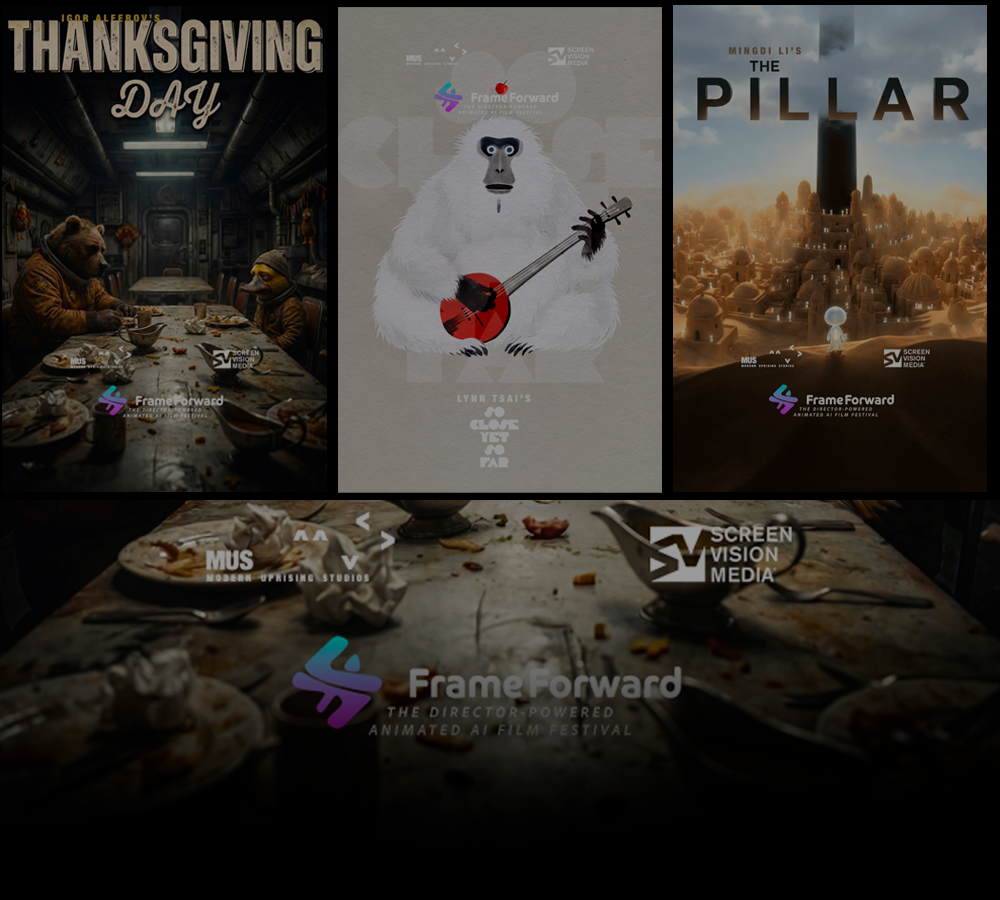
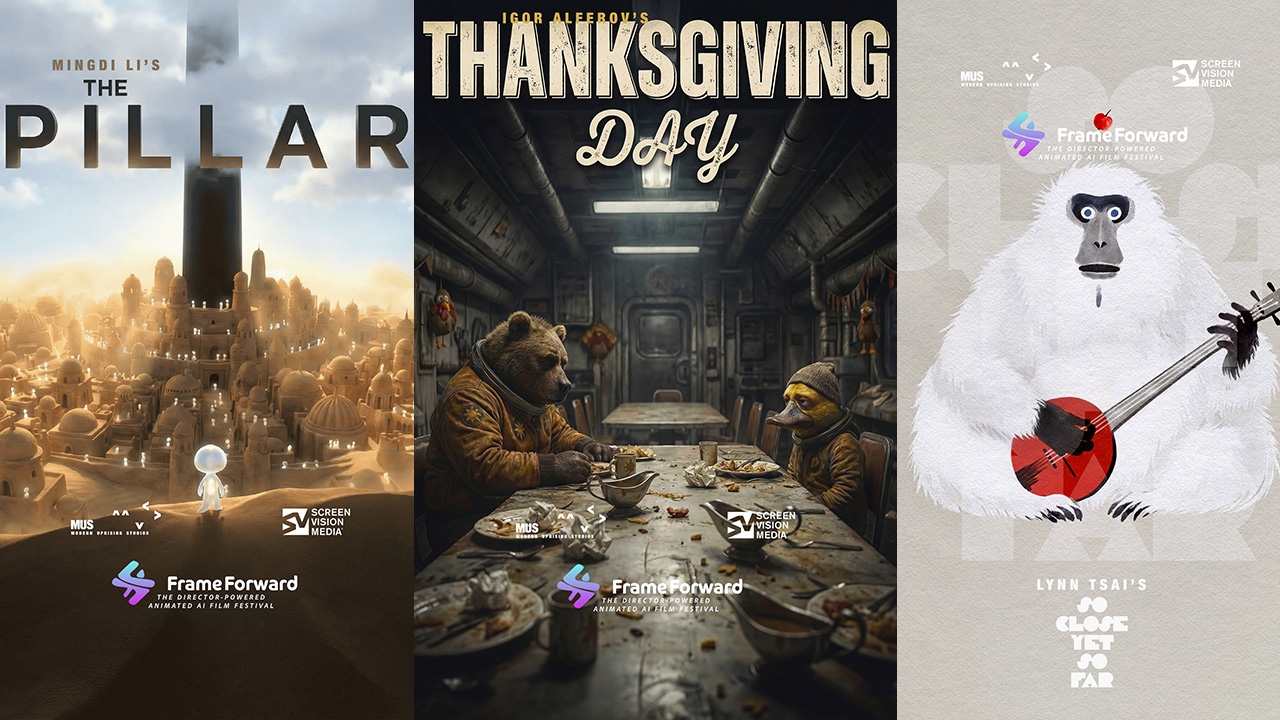
Modern Uprising Studios and Screenvision Media announced on January 30, 2026, that three animated shorts have been selected from the global submission pool. "Thanksgiving Day" by Igor Alferov, "The Pillar" by Mingdi Li, and "So Close Yet So Far" by Lynn Tsai will compete for public votes to determine which film receives a full theatrical run across 14,000 screens in 2,300 theaters.
The finalists represent what organizers describe as "art, story, and machine intelligence" working in concert. Each director utilized AI tools as part of their creative workflow while maintaining artistic vision and narrative control.
Thanksgiving Day
Igor Alferov's "Thanksgiving Day" explores themes of family, tradition, and connection through AI assisted animation. The short demonstrates how generative tools can enhance traditional storytelling techniques while preserving the director's creative intent.
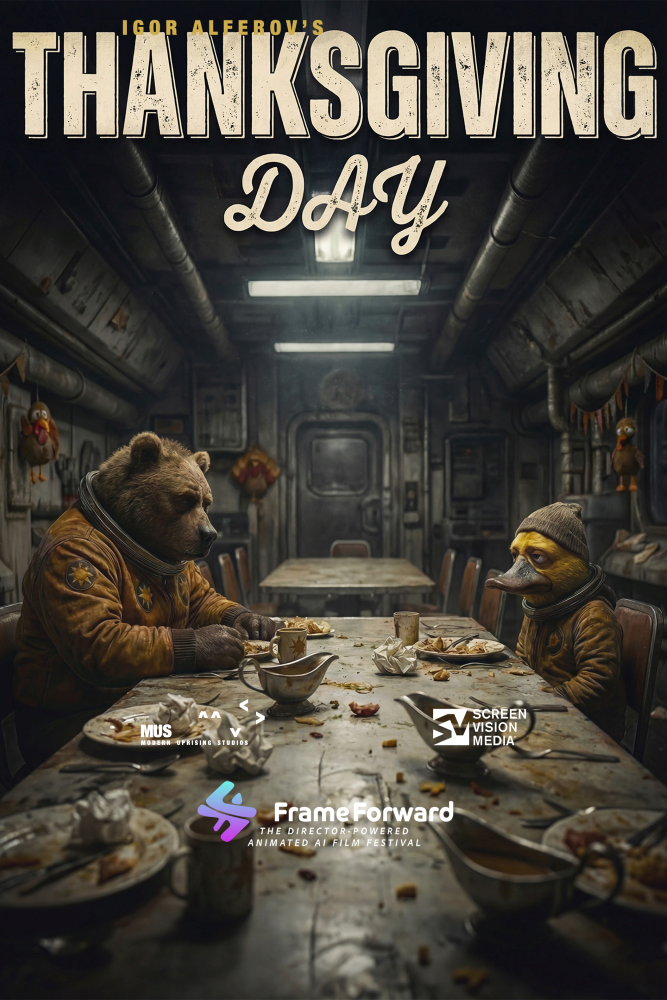
Alferov's work showcases the potential for AI animation to tackle intimate, character driven narratives rather than relying solely on spectacle or technical demonstration.
The Pillar
Mingdi Li's "The Pillar" takes a different approach, using AI generated visuals to create atmospheric storytelling. The film demonstrates how machine learning models can assist in world building and visual development.
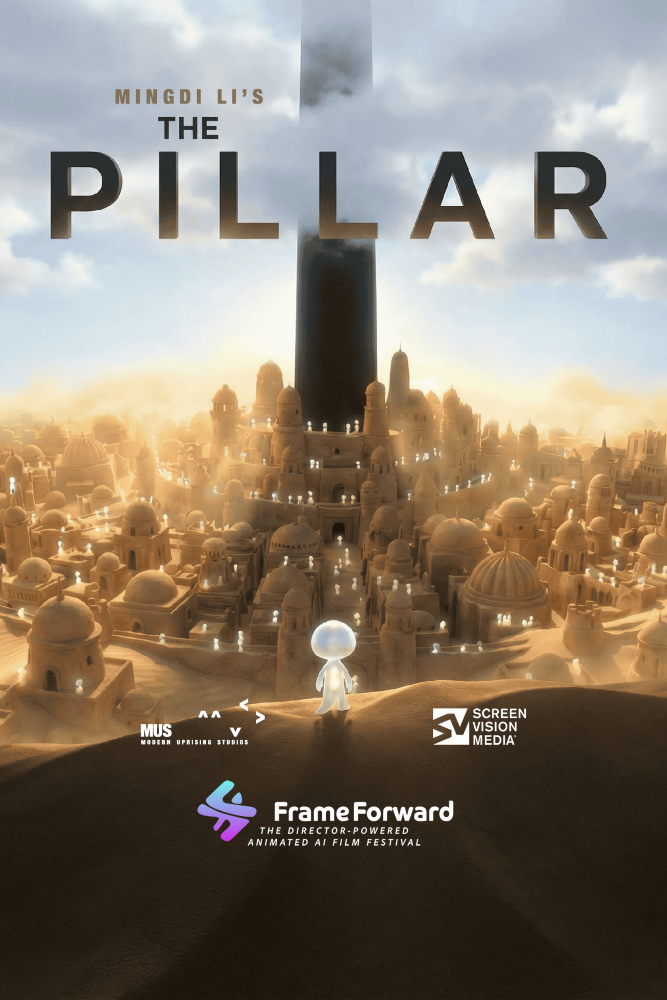
Li's finalist entry represents the growing sophistication of AI tools in handling complex lighting, composition, and mood. The short illustrates how directors can leverage these capabilities while maintaining cohesive artistic direction.
So Close Yet So Far
Lynn Tsai's "So Close Yet So Far" rounds out the finalist trio with a narrative that blends emotional storytelling with AI enhanced animation techniques. The film explores distance and connection, themes that resonate with the collaborative relationship between human creativity and machine assistance.
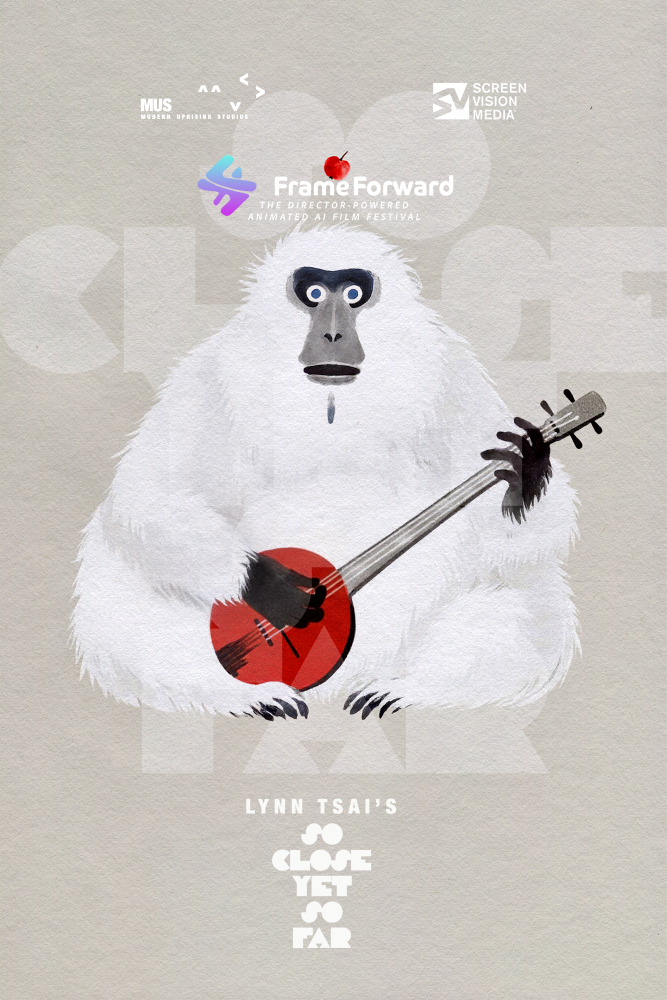
Tsai's work demonstrates the maturation of AI animation as a legitimate filmmaking approach, capable of conveying nuanced emotion and complex character dynamics.
How the Festival Works
Frame Forward launched in November 2025 as the first global festival specifically for AI integrated animated shorts. Submissions closed on December 30, 2025, after a two month open call that attracted entries from filmmakers worldwide.
A judging panel that includes Google's Neil Parris, Modern Uprising Studios' Joel Roodman, and other industry leaders selected the three finalists. The final winner will be determined by public vote through the festival's official website at frameforward.ai.
Throughout February 2026, trailers for all three finalists will screen in U.S. theaters via Screenvision Media's extensive network. This theatrical exposure represents a significant milestone for AI animation, bringing these films to mainstream audiences in traditional cinema settings.
The Prize Package
The winning filmmaker receives a comprehensive prize package designed to accelerate their career and expand their creative capabilities. The grand prize includes a national theatrical release in March 2026 across Screenvision Media's 14,000 screen network spanning 2,300 theaters.
Additional prizes include three months of access to Google Flow, an AI filmmaking tool that enables advanced video generation and editing workflows. Winners also receive production support through Modern Uprising Studios' Celeste engine, which specializes in immersive content adaptation.
The Lighthouse Academy grand scholarship provides tuition waivers and access to specialized programs for continued education in AI assisted filmmaking. Festival submission support and Weavy production packages round out the prize offerings, giving winners resources to continue developing their craft.
Industry Significance
Frame Forward represents a pivotal moment for AI animation. By partnering with Screenvision Media for theatrical distribution, the festival legitimizes AI assisted filmmaking in traditional exhibition channels. This marks a departure from AI generated content being confined to online platforms and experimental showcases.
Ben Bitonti, president of TIME Studios (a distribution partner), noted that the project demonstrates "what thoughtful, creative, artist led use of AI can look like, not replacing craft, but expanding what's possible and allowing storytellers to go places they simply couldn't before."
The festival's structure emphasizes director driven storytelling over pure technical demonstration. By requiring human creative control and narrative coherence, Frame Forward positions AI as a production tool rather than a replacement for artistic vision.
What This Means for Filmmakers
For creators exploring AI video generation, Frame Forward demonstrates that festivals and distributors are beginning to accept AI assisted work when it meets traditional standards for storytelling quality and artistic merit. The theatrical distribution component signals that exhibition networks see commercial viability in well executed AI animation.
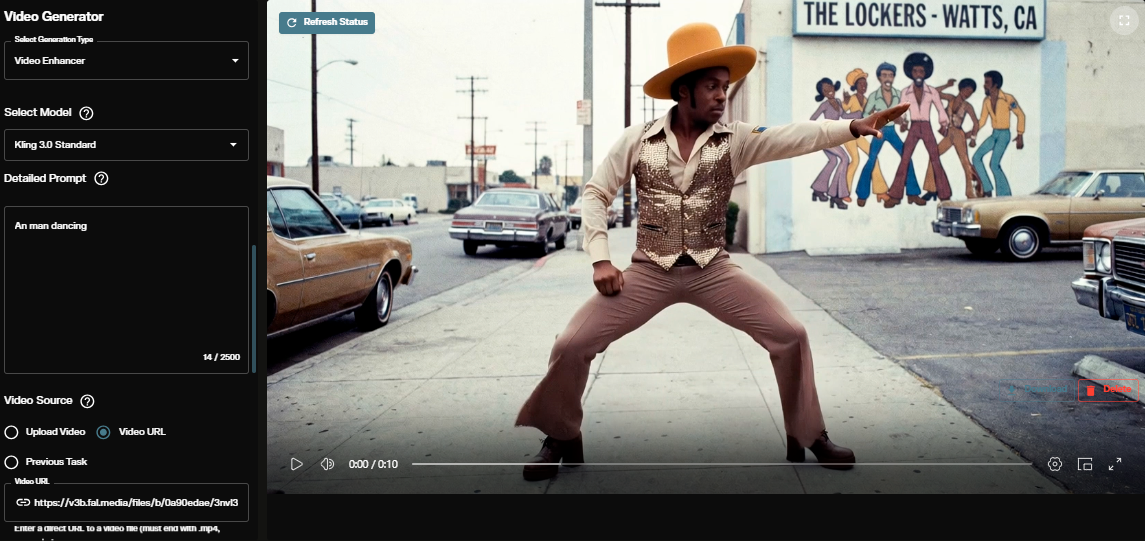
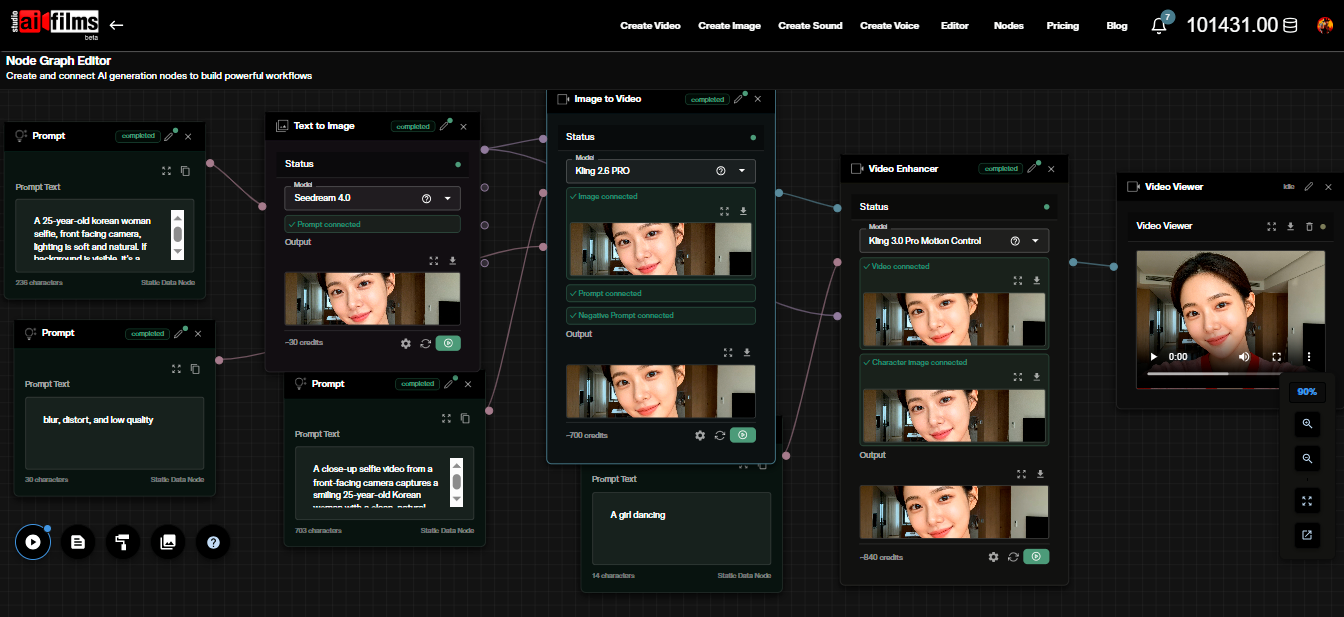
Filmmakers interested in similar techniques can experiment with AI video tools through platforms like AI FILMS Studio, which offers text to video and image to video generation capabilities. The key differentiator, as Frame Forward illustrates, lies in using these tools to serve a compelling narrative rather than showcasing technology for its own sake.
The festival also highlights the importance of hybrid workflows. All three finalists combined AI generation with traditional animation principles, human artistic direction, and narrative structure. This approach suggests that the most successful AI filmmaking integrates machine capabilities with established filmmaking craft.
The Voting Process
Public voting opened on January 30, 2026, through the Frame Forward website. Voters can watch trailers for all three finalists and cast their ballot for which film should receive the theatrical release and full prize package.
The voting period runs through February 2026, coinciding with the theatrical trailer screenings. This dual exposure strategy gives the finalists both online and in person visibility, building audience engagement before the March winner announcement.
The democratic voting structure differs from traditional festival models where jury panels make final selections. By involving the public, Frame Forward tests whether AI animation can connect with mainstream audiences beyond the tech and filmmaking communities that typically engage with experimental formats.
Looking Ahead
The winner announcement in March 2026 will mark the culmination of the first Frame Forward festival, but organizers have positioned this as an ongoing initiative. The success of the inaugural event could establish an annual platform for AI animation, providing filmmakers with a dedicated venue for this emerging format.
The theatrical release model also sets a precedent. If the winning film performs well in traditional cinema settings, it could encourage other distributors to consider AI assisted animation for commercial release. This would represent a significant shift from AI generated content being primarily a curiosity to becoming a viable production approach for mainstream distribution.
For the three finalists, the February screenings provide immediate validation. Having their work shown in thousands of theaters nationwide offers exposure that most independent animators never achieve, regardless of the final voting outcome.
The festival's emphasis on "technology and human creativity" working together, rather than AI replacing artists, may help shape industry standards for how these tools are integrated into production workflows. As more filmmakers experiment with AI generation, Frame Forward's model of combining machine capabilities with human artistic control could become a template for ethical and effective implementation.
Technical Context
Modern Uprising Studios, the festival's organizing body, operates as the immersive studio division of Toro Science. Their Celeste engine, which winners gain access to, specializes in adapting traditional content for immersive formats, suggesting potential future applications for the finalist films beyond standard theatrical exhibition.
The partnership with Google, which provides Flow tool access to winners, indicates major tech companies are investing in creative applications for their AI models. Flow represents Google's entry into AI filmmaking tools, competing with platforms like AI FILMS Studio and other generative video services.
Screenvision Media's involvement brings traditional exhibition infrastructure to an experimental format. Their network reaches mainstream moviegoers rather than niche festival audiences, testing whether AI animation can appeal beyond early adopters and technology enthusiasts.
The Broader Implications
Frame Forward arrives at a moment when the film industry is actively debating AI's role in production. While some view generative tools as threats to traditional employment, festivals like Frame Forward demonstrate how AI can enable independent creators to produce work that would be prohibitively expensive through conventional animation methods.
The three finalists likely represent a fraction of the production cost that traditional animation would require for similar visual quality. This democratization effect could lower barriers to entry for aspiring animators, though it also raises questions about how the industry will adapt to these new production economics.
The festival's success or failure will provide data on audience reception of AI animation in commercial contexts. If viewers respond positively to the theatrical screenings, it validates the artistic potential of these tools. If reception is lukewarm, it may indicate that AI animation still has technical or aesthetic hurdles to overcome before mainstream acceptance.
Frame Forward also tests whether AI filmmaking can develop its own festival circuit and distribution channels. Just as independent film festivals created pathways for non studio productions, dedicated AI film festivals could establish alternative routes to audience and industry recognition.
The March winner announcement will determine which of the three finalists receives the full prize package, but all three have already achieved significant recognition by reaching the finalist stage. Their theatrical screenings in February represent a milestone for AI animation, bringing this emerging format to traditional cinema audiences nationwide.
Sources and Further Information
Frame Forward Festival: https://frameforward.ai/
Official festival site with voting, trailers, and prize details.
Modern Uprising Studios: https://modernuprisingstudios.com/
Festival organizers and Celeste engine developers.
Continue Reading
.jpg?w=3840)


Video & LipSync
- Video Generator
- Text to Video
- Image to Video
- Start-End Frame to Video
- Draw to Video
- Motion Control
- Video Enhancer
- Video Upscaler
- Video Extend
- Video to Video LipSync
- Audio to Video LipSync
- Image to Video LipSync
- Video FaceSwap
- Seedance 2.5
- WAN 3.0
- Seedance 2
- FLUX 3
- Minimax H3
- Vidu Q3 Pro
- Grok Imagine Video 1.5
- Gemini Omni
- Google Veo 3.1
- Kling 3.0 Pro
- Luma Ray 3.2
- LTX 2.3
- Happy Horse 1.1
- Kling 3.0 Motion
- ByteDance Upscaler
- InfiniteTalk
- InsightFace
Image & Edit
- AI Character
- AI Actor
- Art Generator
- Text to Image
- Image to Image
- LoRA Image to Image
- Draw to Edit
- Image LoRA Training
- Remove Background
- Image Enhancer
- MidJourney 8.0
- Krea 2
- OpenAI GPT Image 2.0
- Nano Banana Pro Ultra
- Nano Banana 2 Lite
- Nano Banana Pro
- Minimax Image
- Clarity Pro
- Z-Image Turbo LoRA
- Krea 2 Turbo LoRA
- Z-Image LoRA Trainer
- Qwen Image LoRA Trainer
- Background Erase Network 2 (BEN2)