
Hollywood Shifts Focus from Generative AI to Decision Intelligence
Share this post:
Hollywood Shifts Focus from Generative AI to Decision Intelligence
A quieter but equally significant trend emerged on January 21, 2026, as Hollywood executives began shifting their attention from generative AI to Decision Intelligence. While headlines have focused on tools that write scripts and generate footage, studios are now prioritizing AI systems that predict which projects deserve funding.
The End of the AI Hype Cycle
According to the WrapPRO and National Research Group's "2026 In The Frame" report, the industry is entering a new phase. The report identifies "The AI Wars Intensify" as a top trend for 2026, but with a crucial distinction. Studios are moving away from experimental content generation tools toward embedded systems for production efficiency and risk assessment.
This shift marks what theCUBE Research calls the "End of the AI Hype Cycle" in their January 21 analysis. CEOs across industries, including media executives, are demanding measurable returns rather than promising demonstrations.
What is Decision Intelligence?
Decision Intelligence differs fundamentally from generative AI. Rather than creating new content, these systems analyze existing data to inform strategic choices. Studios feed decades of viewer behavior, box office performance, and market trends into platforms that calculate probability of success.
The technology focuses on answering business questions. Which script will resonate with target demographics? What budget range maximizes return on investment? Which release window offers the best competitive positioning? These are prediction problems, not creation tasks.

For independent creators, this represents a shift in how gatekeepers evaluate projects. Studios are increasingly relying on algorithmic assessments alongside traditional development processes.
From Script Writing to Risk Assessment
Studios are not using AI to write scripts. They are using it to determine which scripts to fund. This distinction matters for filmmakers seeking greenlight decisions.
The focus is on risk mitigation. In a volatile streaming and theatrical market, executives want data-backed confidence before committing budgets. Decision Intelligence platforms analyze historical performance patterns to predict audience reception and financial outcomes.
This approach prioritizes business certainty over creative experimentation. Studios are selecting "safe bets" identified through data analysis, which may impact the types of projects that receive funding.
The Platforms Powering Predictions
Several companies provide Decision Intelligence services to the film industry. Cinelytic leads the market with a platform used by Warner Bros. and other major studios.
Cinelytic's system analyzes 19 critical project attributes, including talent track records, genre performance, intellectual property strength, and market timing. According to their 2026 forecasts, the platform achieves 94-96% accuracy in predicting box office revenue. This level of precision explains why studios are integrating these tools into greenlight committees.
Vitrina AI offers complementary services focused on production workflows. Their "AI-Driven Script Audit" tool identifies potential budget overruns before filming begins. The system cross-references script drafts with historical cost data and tax incentive maps to flag EBITDA leakages. Studios use this to optimize financial planning during pre-production.
These platforms represent a category shift from creative tools to business intelligence systems.
Why January 2026 Marks the Turning Point
The timing of this shift is not coincidental. Multiple industry reports published in January 2026 document the transition.
theCUBE Research's January 21 analysis specifically identifies 2026 as the year Decision Intelligence goes mainstream. The report notes that executives are moving from strategy discussions to implementation, driven by pressure to demonstrate ROI on AI investments.
Boston Consulting Group's AI Radar 2026, released January 15, reveals that nearly all surveyed CEOs believe AI agents and Decision Intelligence will produce measurable returns this year. This creates institutional pressure to adopt predictive systems.
The confluence of these reports with market volatility in streaming and theatrical distribution has accelerated studio adoption. Executives need tools that reduce uncertainty in an unpredictable landscape.
Implications for Independent Creators
This shift affects how independent filmmakers and creators approach the industry. Decision Intelligence platforms create a new layer of algorithmic gatekeeping alongside traditional development processes.
For creators, understanding how these systems evaluate projects becomes strategically important. The 19 attributes analyzed by platforms like Cinelytic include quantifiable elements such as cast social media reach, genre performance trends, and comparable title analysis. Filmmakers can potentially optimize pitches by aligning with these data points.
However, this raises questions about creative diversity. If studios increasingly rely on historical data to predict success, projects that deviate from established patterns may face higher barriers. The balance between data-driven decision making and artistic innovation remains unresolved.
Studio executives face similar tensions. While Decision Intelligence reduces financial risk, over-reliance on predictive models may lead to conservative programming strategies. The industry will need to determine how to integrate these tools without stifling experimentation.
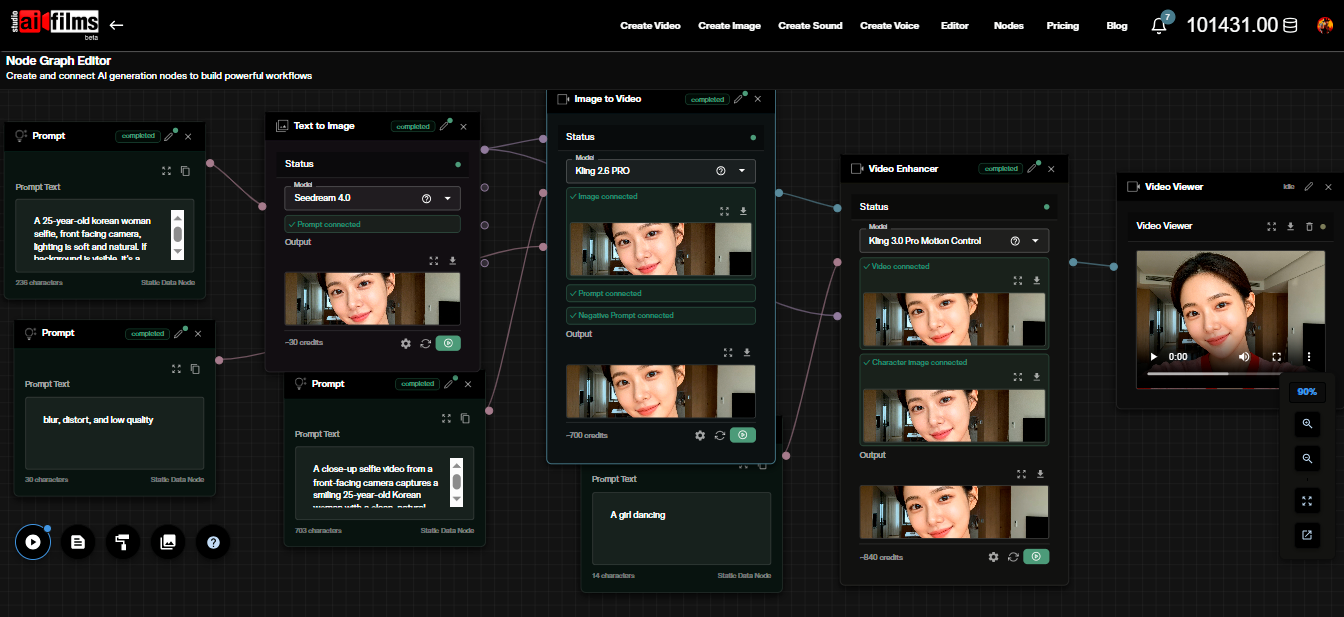
Independent creators can also access similar technology. Platforms like AI FILMS Studio provide tools for concept testing, allowing filmmakers to validate ideas before pitching to traditional gatekeepers. This democratization of analytics may help creators make data-informed decisions about which projects to develop.
Conclusion
Hollywood's shift from generative AI to Decision Intelligence represents a transition from "making things" to "choosing things." Studios are prioritizing predictive analytics over content creation tools as they seek business certainty in volatile markets.
The industry will watch how this affects creative output. Will data-driven greenlight decisions lead to more calculated programming, or will predictive tools help identify unconventional projects with hidden potential? The answer will shape filmmaking for years to come.
For more on how AI is transforming film production workflows, see our analysis of Google Veo 3's impact on professional filmmaking.
Sources
TheWrap / National Research Group (NRG): "2026 In The Frame" report on AI integration in film production
https://www.thewrap.com/wp-content/uploads/2026/01/2026-In-The-Frame_NRG_TheWrap-Pro.pdf
theCUBE Research: "Will 2026 Be The Year AI Decision Intelligence Goes Mainstream?" by Paul Nashawaty, January 21, 2026
https://thecuberesearch.com/
Cinelytic: "2026 Outlook and Forecasts" on predictive analytics for film industry
https://blog.cinelytic.com/category/uncategorized/
Vitrina AI: "15 Ways AI is Transforming Every Stage of Film Production"
https://vitrina.ai/blog/15-ways-ai-is-transforming-film-production-2026/
Boston Consulting Group (BCG): "As AI Investments Surge, CEOs Take the Lead," AI Radar 2026, January 15, 2026
https://www.bcg.com/publications/2026/as-ai-investments-surge-ceos-take-the-lead
Continue Reading
.jpg?w=3840)


Video & LipSync
- Video Generator
- Text to Video
- Image to Video
- Start-End Frame to Video
- Draw to Video
- Motion Control
- Video Enhancer
- Video Upscaler
- Video Extend
- Video to Video LipSync
- Audio to Video LipSync
- Image to Video LipSync
- Video FaceSwap
- Seedance 2.5
- WAN 3.0
- Seedance 2
- FLUX 3
- Minimax H3
- Vidu Q3 Pro
- Grok Imagine Video 1.5
- Gemini Omni
- Google Veo 3.1
- Kling 3.0 Pro
- Luma Ray 3.2
- LTX 2.3
- Happy Horse 1.1
- Kling 3.0 Motion
- ByteDance Upscaler
- InfiniteTalk
- InsightFace
Image & Edit
- AI Character
- AI Actor
- Art Generator
- Text to Image
- Image to Image
- LoRA Image to Image
- Draw to Edit
- Image LoRA Training
- Remove Background
- Image Enhancer
- MidJourney 8.0
- Krea 2
- OpenAI GPT Image 2.0
- Nano Banana Pro Ultra
- Nano Banana 2 Lite
- Nano Banana Pro
- Minimax Image
- Clarity Pro
- Z-Image Turbo LoRA
- Krea 2 Turbo LoRA
- Z-Image LoRA Trainer
- Qwen Image LoRA Trainer
- Background Erase Network 2 (BEN2)