
Odysseus: The Fall vs. The Odyssey: Same Story, Same Week, $250M Apart

Still from Odysseus: The Fall trailer, Fountain 0
Share this post:
Odysseus: The Fall vs. The Odyssey: Same Story, Same Week, $250M Apart
Two films based on Homer's Odyssey arrived in the same week of July 2026. Christopher Nolan's The Odyssey opens in universal IMAX on July 17 with a budget of approximately $250 million and Universal Pictures behind it. Ash Koosha's Odysseus: The Fall, from his studio Fountain 0, became available to rent for $9.99 the same week, produced for a budget in the mid five figures.
The gap between those two productions demonstrates what AI has made structurally possible. A solo creator with no physical crew, no studio lot, and no distributor can now produce a 135 minute narrative feature on the same source material as one of Hollywood's most expensive productions, and release it in the same calendar week.
The comparison is not about quality parity. It is about access. For the first time in the history of feature filmmaking, the capital barrier to producing a full narrative work has dropped low enough that a single creator can clear it.
The Film
Odysseus: The Fall runs 135 minutes. The budget is in the mid five figures, likely between $50,000 and $75,000 based on reporting from Variety and BusinessWire. The film is available to rent for $9.99 or to buy outright, distributed directly through Fountain 0's website with no theatrical or platform distribution involved.
Actors, sets, and cameras were replaced by AI models across the entire production. The physical infrastructure of a conventional film shoot does not appear anywhere in Odysseus: The Fall, from location costs to equipment rental to a traditional crew. What replaced it was a combination of AI generation tools, directed by Koosha from script through final delivery.
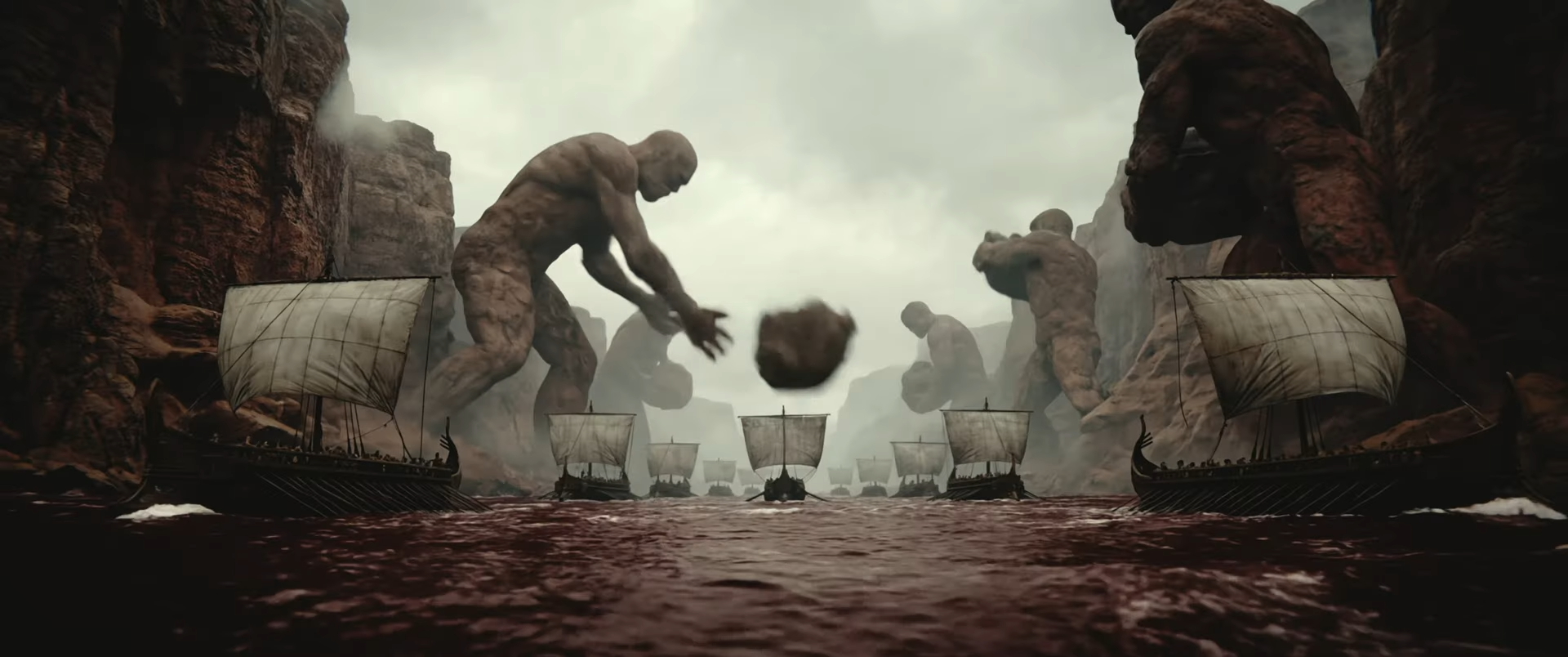
Still from Odysseus: The Fall trailer, Fountain 0
Script, images, and character voices were created by Koosha using his own creative decisions as the generative input. The film is structured as a narrative feature with a defined protagonist and a story arc drawn from Homer's epic, not as a technology demonstration or a showreel of AI capabilities.
Koosha himself appears as Odysseus. The production involves 12 people total: one professional actress, several models, and individuals with no prior entertainment industry background. The production took three months to complete, during which Koosha was also finalizing Fountain 0's first film.
The concurrent development means Odysseus: The Fall did not follow a long development cycle. Koosha was producing two full features in the same working period, which is a kind of output that is not possible with conventional film production infrastructure but becomes achievable when the tools remove the crew and location dependencies.
The film's specific visual approach is worth noting. Nothing in Odysseus: The Fall was captured by a camera. Every image the audience sees was generated. That is a different claim than most productions making AI content, where AI augments captured footage. Here the generation is total.
Ash Koosha and Fountain 0
Ash Koosha is an artist and composer born in Iran and based in London with representation in contemporary art institutions. He and Tom Rogers founded Fountain 0 as a studio built specifically for AI generated feature film production.
Koosha comes to Odysseus: The Fall having already completed a full feature. Fountain 0's previous production, Dreams of Violets, focused on the Iranian resistance movement and was produced for approximately $2,000. It had its world premiere at the Tribeca Film Festival in 2026, selected by the programming team as the first fully AI generated narrative feature in a major festival's official lineup.
The Tribeca selection changes how Odysseus: The Fall should be evaluated. Tribeca is not a festival known for technology demonstrations or novelty submissions. A world premiere at Tribeca, for a film on the Iranian resistance, establishes Fountain 0 as a studio with institutional critical recognition, not as a technology lab releasing a proof of concept.
Tom Rogers, Koosha's partner at Fountain 0, was present for the CNBC interview that accompanied the Odysseus: The Fall announcement on July 14. The studio operates as a two person production company capable of delivering full features without additional staff.
The body of work Fountain 0 has produced in its first two films covers culturally serious literary and historical subjects: the Iranian resistance movement and Homer's Odyssey. Neither is the kind of content that would appear in a technology company's demo reel. Both are works that a filmmaker chose to make because of their subject matter, using AI as the production method.
The Consent Framework
The 12 people who appear in Odysseus: The Fall all consented to their participation. That fact is not incidental. It directly addresses the question that has been at the center of AI image generation disputes: whether people have meaningful control over how their likeness appears in generated content.
Koosha's production model differs structurally from the controversy over AI models trained on artist work without consent. In those disputes, people's images were used without their knowledge. In Odysseus: The Fall, participants were asked and agreed. The distinction matters for how the film's use of AI should be understood legally and ethically.
The consent framework Fountain 0 applied is also relevant to the broader conversation about AI in production. The SAG-AFTRA provisions that directors like Shawn Levy are studying as part of their AI governance preparation require informed consent and compensation for AI synthetic performances of a performer's voice or likeness. Fountain 0 built that consent requirement into the production without being bound by the union agreement.
The decision to work with 12 real, consenting people rather than generating entirely fictional characters is also a creative choice. Koosha appears as Odysseus because he wanted a specific human presence at the center of the film, not because the tools required a real face as input. That choice says something about how he is using AI: as a production method that amplifies a creative vision, not as a generator of content that requires no human creative input.
What the Budget Gap Means
| Odysseus: The Fall | The Odyssey (Nolan) | |
|---|---|---|
| Budget | Mid five figures | ~$250 million |
| Runtime | 135 minutes | Not yet released |
| Director | Ash Koosha | Christopher Nolan |
| Studio | Fountain 0 | Universal Pictures |
| Crew | No physical crew | Hundreds |
| Cast | 12 consenting participants | Major studio cast |
| Distribution | $9.99 rental (direct) | IMAX theatrical, Universal |
| Source | Homer's Odyssey | Homer's Odyssey |
The $250 million budget for Nolan's The Odyssey covers an infrastructure that existed because it was the only viable path to a feature film for most of cinema's history. Hundreds of crew members. Location shoots across multiple countries. Practical sets. Union contracts across every department. Post production facilities. Theatrical marketing and wide distribution.
Koosha's production required none of it. The budget in the mid five figures covers AI tool costs and the operating expenses of a studio without a physical footprint.
Earlier technology shifts reduced specific costs in filmmaking without eliminating the underlying infrastructure. Digital cameras reduced the cost of capture. Nonlinear editing software reduced the cost of post production. Neither eliminated the need for a crew, a cast, or a physical production. AI generation eliminates those requirements, at least for a creator working within what the tools currently produce.
The budget ratio between the two Odyssey productions is roughly 5,000 to 1. That number is not a curiosity. It represents the distance between what filmmaking costs when it requires a studio and what it costs when it does not.
The implications extend beyond independent filmmakers. The same capability that allowed Koosha to produce a 135 minute feature for mid five figures also changes the floor for what a studio can claim as a minimum investment to produce a feature film. The infrastructure argument for requiring hundreds of millions in budget now requires a different justification than the one that held for the previous century of cinema.
Why the Timing Matters
The release of Odysseus: The Fall in the same week as The Odyssey was deliberate. Fountain 0 positioned its film against one of the year's most anticipated productions, using the attention Nolan's film was already generating to frame the comparison.
The comparison is structurally honest. Both productions adapt the same source text. Both are releasing to audiences in the same week. The differences are in production method, budget, crew, and access. Nolan's film requires a ticket to an IMAX theater. Koosha's requires a $9.99 rental on a website.
For a filmmaker without studio distribution, positioning against a $250 million production is a form of market statement that would have been unavailable before AI generation made feature production achievable at this budget level. The scale of the contrast is itself the message.
The timing also reveals something about how Fountain 0 thinks about its audience. The people most likely to rent a $9.99 AI generated feature the same week a $250 million studio film opens are not avoiding the Nolan film. They are curious about the comparison. Fountain 0 is releasing into that curiosity deliberately.
Both films are adapting Homer. Nolan's production has spent years in development, involved a production design team of hundreds, and will be seen in theaters around the world. Koosha's was produced in three months by one person. The contrast is not about which film is better. It is about what kind of activity "making a feature film" has become when AI is the production method.
Distribution Without a Distributor
Fountain 0 distributes Odysseus: The Fall directly from its own website. No distributor is involved. No streaming platform has acquired rights. No theatrical release is planned.
The $9.99 rental is a direct transaction between the production and the audience, with no distributor capturing a percentage and no platform fee applying. The studio retains full control of the terms, the pricing, and the availability.
The path from production to audience that Koosha has used collapses a distribution infrastructure that took decades and significant capital to build. Whether that infrastructure delivers things the direct model cannot, such as theatrical experience, wide marketing reach, or awards positioning, is a separate question from whether the distribution model itself requires the infrastructure to function.
The absence of a distributor also means there is no gatekeeper between Koosha and his audience. A studio distribution deal requires convincing a distributor to take the film. A direct release requires a website.
The $9.99 price point is also a signal. It is low enough that the barrier is not financial. An audience member who would pay for a streaming service subscription is already spending more per month than a rental of Odysseus: The Fall would cost. The price communicates that Fountain 0 is prioritizing access over revenue maximization.
Whether direct distribution at this price level is financially sustainable for a studio whose next film costs more than the current one remains to be seen. What it demonstrates now is that a solo creator can produce, distribute, and monetize a feature film without involving any of the infrastructure that has historically made each of those steps require its own set of gatekeepers.
Odysseus: The Fall and The Odyssey will both have audiences by the end of July 2026. One will be measured against the scale of what a $250 million studio film can produce. The other will be measured against what one person and a set of AI tools could do with the same story in three months and a budget that fits inside a line item of the other production's marketing spend.
The same week Odysseus: The Fall became available to rent, Promise AI announced it had signed veteran Hollywood writers including Doctor Who director Jamie Magnus Stone and Sharknado producer Micho Rutare to develop original AI features. The approach pairs established Hollywood writers with AI filmmakers, occupying the opposite end of the production spectrum from Fountain 0's solo creator model.
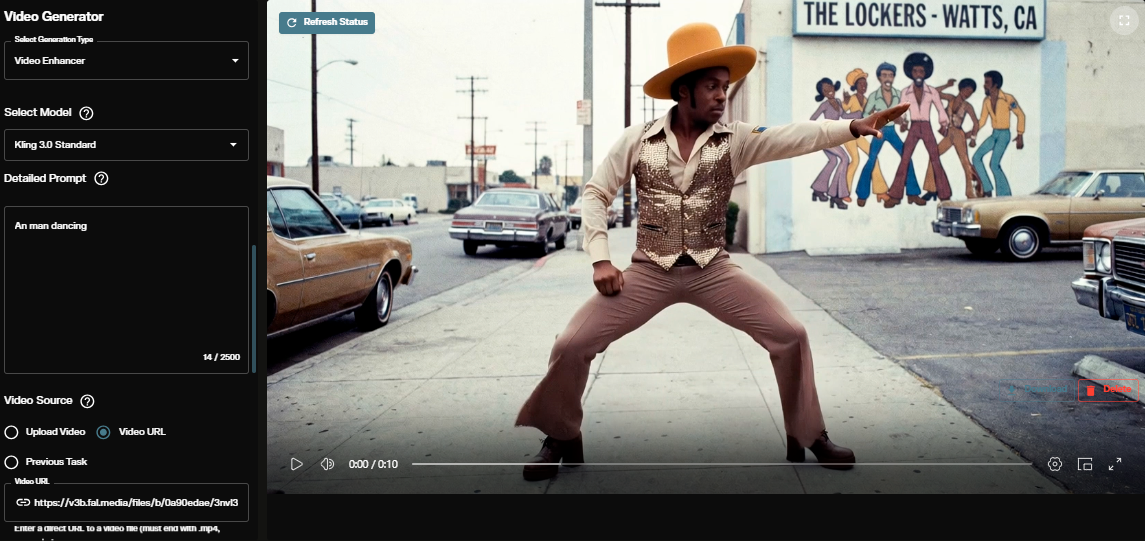
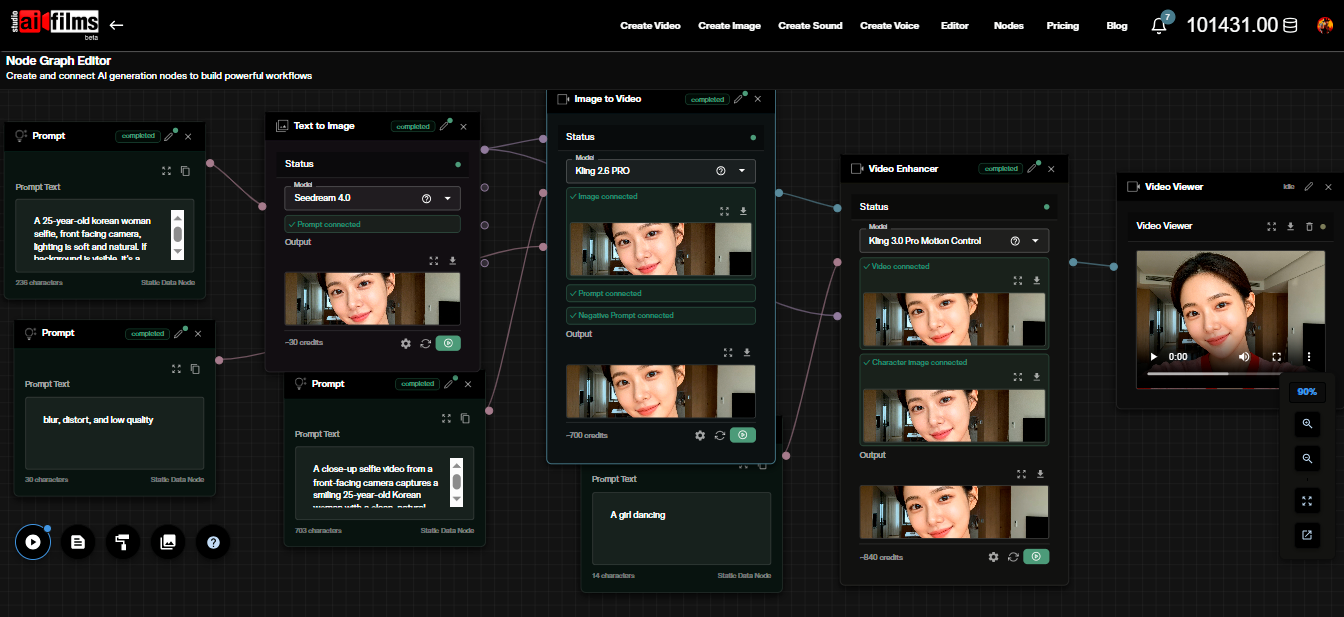
Filmmakers exploring what AI generation tools make possible at the production stage can access text-to-video and image-to-video models in the AI FILMS Studio video workspace.
Sources
Variety | The Hollywood Reporter | CNBC | Forbes | BusinessWire
Continue Reading
.jpg?w=3840)


Video & LipSync
- Video Generator
- Text to Video
- Image to Video
- Start-End Frame to Video
- Draw to Video
- Motion Control
- Video Enhancer
- Video Upscaler
- Video Extend
- Video to Video LipSync
- Audio to Video LipSync
- Image to Video LipSync
- Video FaceSwap
- Seedance 2.5
- WAN 3.0
- Seedance 2
- FLUX 3
- Minimax H3
- Vidu Q3 Pro
- Grok Imagine Video 1.5
- Gemini Omni
- Google Veo 3.1
- Kling 3.0 Pro
- Luma Ray 3.2
- LTX 2.3
- Happy Horse 1.1
- Kling 3.0 Motion
- ByteDance Upscaler
- InfiniteTalk
- InsightFace
Image & Edit
- AI Character
- AI Actor
- Art Generator
- Text to Image
- Image to Image
- LoRA Image to Image
- Draw to Edit
- Image LoRA Training
- Remove Background
- Image Enhancer
- MidJourney 8.0
- Krea 2
- OpenAI GPT Image 2.0
- Nano Banana Pro Ultra
- Nano Banana 2 Lite
- Nano Banana Pro
- Minimax Image
- Clarity Pro
- Z-Image Turbo LoRA
- Krea 2 Turbo LoRA
- Z-Image LoRA Trainer
- Qwen Image LoRA Trainer
- Background Erase Network 2 (BEN2)