Reese Witherspoon on AI | Why women should get involved

Share this post:
Reese Witherspoon on AI | why it matters now
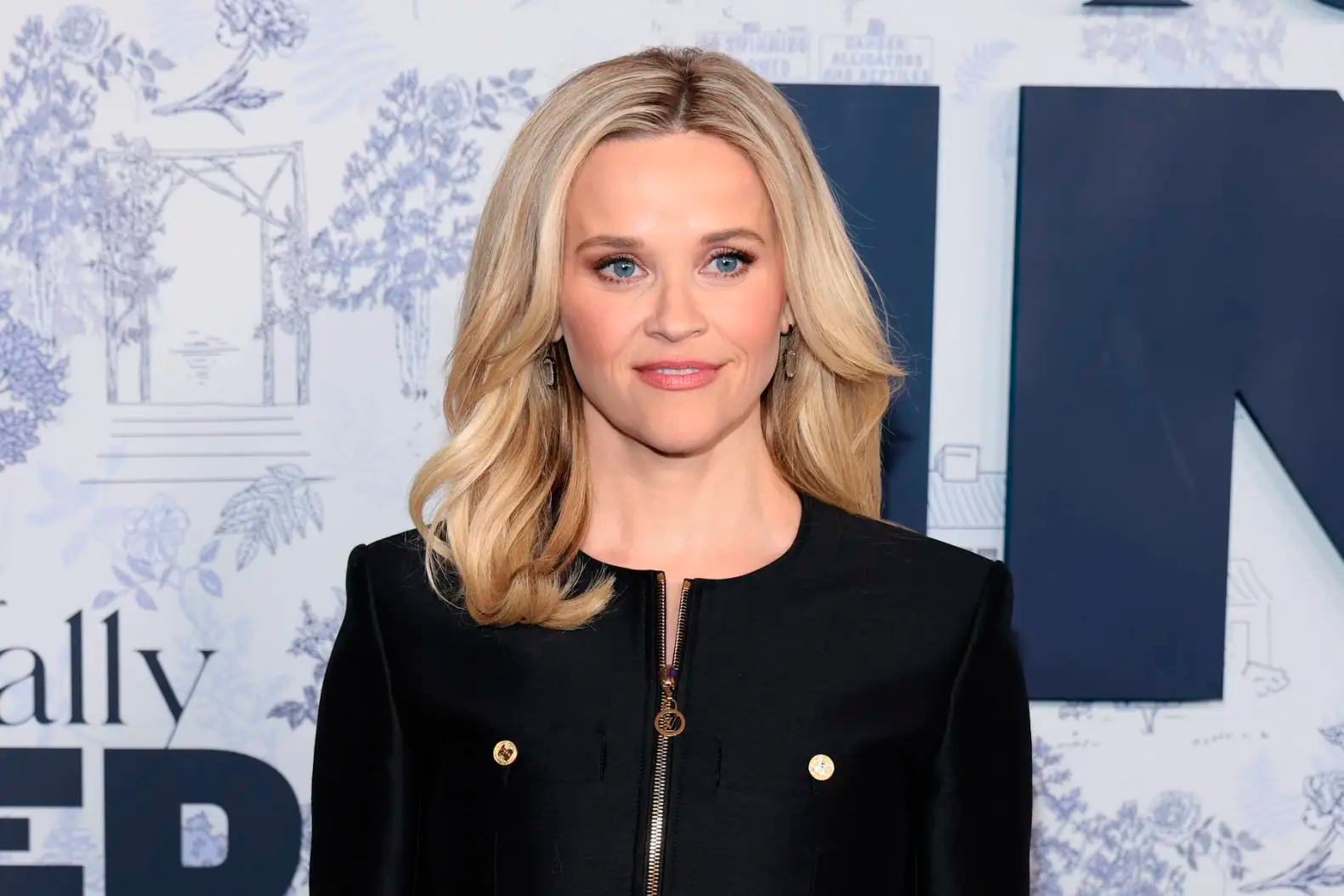
Reese Witherspoon told Glamour and Variety in September 2025 that she sees artificial intelligence as the future of filmmaking, not a distant possibility but an active force already reshaping how stories get made and seen. The statement came with a specific challenge to women to participate in building the new tools rather than waiting to use what others design.
Witherspoon's Position
Witherspoon's framing is direct: the tools are already here, they will improve, and the people who learn to use them will shape the next wave of film and television. She does not position AI as a threat to the industry or as a replacement for human creativity. She positions it as a set of instruments that expand what a small team can accomplish.
That view carries weight because it comes from someone who builds projects, hires teams, and sells to actual audiences through Hello Sunshine. Her production company has brought stories like Big Little Lies, Wild, and The Morning Show from book to screen, which gives her credibility on what the industry actually needs rather than what observers project onto it.
The Glamour cover story tied the AI comments to a broader conversation about what it takes for women to build lasting creative careers. Her argument is that avoiding the tools leaves women out of the rooms where decisions are being made.
The Call for Women in AI Filmmaking
Witherspoon's specific push is for women to participate as builders, artists, editors, and producers rather than as passive recipients of workflows designed in narrower rooms. The argument is that if the next set of production tools is built without significant input from women, those tools will reflect that absence in what they prioritize and how they perform.
This is not a new observation in the broader technology sector. Studies from the Annenberg Inclusion Initiative document persistent underrepresentation of women in directing, producing, and writing roles, and the transition to AI assisted production does not automatically correct those patterns. Without active recruitment and investment, existing imbalances carry forward.
For production companies and studios, Witherspoon's comments are a signal to take inclusion in AI training programs and AI assisted workflows seriously as an operational priority, not as a secondary consideration after implementation is underway.
What This Means for Production Teams
For working filmmakers, Witherspoon's practical takeaway is to treat AI as a set of instruments that expand what a small team can try in a short window. That can mean storyboards and animatics, temp music and Foley, look development passes, or quick language versions for sales materials.
None of these applications remove jobs in the way that critics project. They change sequencing. The teams that benefit will pair human direction with faster tools and maintain a clean chain of rights throughout. Getting fluent in the tools now, before they become requirements, is how department heads and crew position themselves for the next production cycle.
The skills most relevant to AI assisted production are not purely technical. Prompt craft builds on an understanding of camera language, lighting, and continuity. Knowing what you want visually is a prerequisite for directing a model toward useful output. Craft still leads; tools follow.
Studio and Education Response
Studios and educational programs can respond to Witherspoon's call with steps that have measurable effect. Short residencies where editors, producers, and department heads test an AI tool on an internal cut and document what worked and what did not produce institutional knowledge that spreads faster than individual self-study.
A standing rider that covers AI tool use, dataset sources, model licenses, likeness and voice consent, and reuse limits gives production teams a clear framework to operate within. Without that, each project reinvents the same legal ground, and the friction accumulates.
A curriculum that teaches camera language and lighting intent alongside AI tool operation creates practitioners who can direct the tools rather than accept their defaults. These practitioners are more valuable than either pure technicians or pure creatives who avoid the tools entirely.
Industry Echoes
Witherspoon's call has found specific echoes across the industry. Joel Edgerton and Felicity Jones shared pragmatic views on AI technology, both emphasizing craft preservation alongside adaptation.
On the competitive side, Tunisian filmmaker Zoubeir Jlassi won $1 million at Dubai's AI Film Award with a short film created entirely using Google Gemini tools, chosen from 3,500 global submissions. That result is a concrete demonstration of what participation in AI filmmaking produces.
Sandra Bullock told the CNBC Changemakers Summit that Hollywood must make AI our friend, echoing Witherspoon's position from a different angle. Together, these statements from major talent form a consistent signal to the industry about which direction established performers expect production to move.
The Backlash and Witherspoon's Response
By April 2026, Witherspoon's continued advocacy drew criticism from labor advocates, environmental groups, and industry workers concerned about the speed and terms of AI adoption. The full story of the backlash and her public response documents both the specific objections raised and how she addressed them.
Her response maintained the core position while acknowledging that the pace of adoption and the rights protections for workers are separate questions from whether the tools will be adopted at all. She distinguished between how AI enters the industry and whether it does.
That distinction reflects a more sophisticated position than either uncritical boosterism or blanket opposition. The tools are already in production pipelines at major studios and on independent productions. The question of how they are adopted, under what conditions, and with what protections for workers, is where the practical policy work happens.
Craft Still Leads the Tools
One of the more important subpoints in Witherspoon's comments is that she frames AI as something you direct, not something you submit to. The tools require taste, judgment, and creative clarity to produce useful output. A filmmaker who understands what they want from a scene will get more from an AI tool than someone who relies on the tool to generate creative direction.
This framing matters because it positions AI literacy as an extension of craft rather than a replacement for it. Learning to prompt effectively requires knowing what a shot should feel like, what the light should do, what pace serves the story. Those are the same skills that make a director, editor, or production designer good at their job.
For emerging creators, this reframes the stakes. Developing your creative voice and visual sensibility is not in competition with learning AI tools. The two compound each other. A clearer creative vision produces better direction to the tools, and working with the tools forces precision about what you actually want.
The filmmakers who get the most out of current AI generation tools are not the ones with the most technical knowledge. They are the ones who know what a scene should feel like before they open the interface.
Hello Sunshine and the Production Company Model
Witherspoon's comments carry a specific kind of credibility because Hello Sunshine operates at production company scale. The company has produced projects for Apple TV+, HBO, and Netflix and built an audience ecosystem around female-driven stories. That track record means her perspective on AI tools is grounded in actual production decisions rather than conference panel speculation.
Production companies that move early on AI literacy have a structural advantage. They can run faster on development, generate more options in pre production, and iterate on marketing materials at a cost that smaller teams could not previously reach. The companies that treat AI tools as optional extras will find that gap widening over the next production cycle.
Hello Sunshine has not publicly announced specific AI tools in its pipeline as of September 2025. Witherspoon's advocacy is focused on the broader industry adopting the tools responsibly, not on promoting specific products. The message is directional rather than prescriptive.
The Rights Infrastructure Question
One area Witherspoon touched on in follow-up coverage is the importance of building production workflows where the rights chain is clean. AI tools that use performers' likenesses, voices, or style require explicit consent frameworks that did not exist in standard production contracts until recently.
SAG-AFTRA's interim and final AI agreements from 2023 and 2024 established baseline consent and compensation requirements for synthetic performance. Those provisions are the floor, not the ceiling. Productions that build more specific agreements around the scope of AI use, the markets covered, and the downstream applications of any synthetic material are better positioned than those relying on general language.
The residuals and consent provisions in those agreements are most relevant to productions that use recognizable performances. But even productions working with entirely original digital performers need documented frameworks for who owns the IP, what uses are covered, and what happens if the production is sold or licensed beyond its initial distribution window.
For women entering AI filmmaking as producers and directors, understanding the rights infrastructure is as important as understanding the tools themselves. The projects that succeed commercially will be the ones that can demonstrate a clear consent trail and a defined scope of use when distribution deals require that documentation.
The Annenberg Data Behind the Argument
Witherspoon's call is grounded in documented industry patterns. The Annenberg Inclusion Initiative's annual report consistently finds that women direct fewer than 15 percent of the top 100 grossing films and are underrepresented in producing, writing, and department head roles across the industry. These numbers have improved slowly over the past decade despite sustained advocacy.
The same research documents that female-led productions, with a woman director or female protagonist, do not underperform male-led productions at the box office. The argument that diversity initiatives cost commercial performance is not supported by the data. What the data does support is that the pipeline for women entering above the line roles remains narrow, and AI tools do not automatically widen it.
AI assisted production workflows do not automatically improve those ratios. Without deliberate effort to include women in the development and adoption of new tools, the demographic patterns that characterize traditional production infrastructure carry forward into the next cycle of tools. Witherspoon's argument is that now, while the tools are still early, is the moment to shape who builds them and who uses them.
The comparison to the early internet or to the early days of digital film production is relevant here. The teams that got fluent in digital workflows in the late 1990s and early 2000s shaped the production paradigm for the next twenty years. Participation at the tool-building stage has compounding effects on who the tools work best for.
What Comes Next
In the months following the September 2025 coverage, Witherspoon continued to speak about AI at events and in interviews, and the industry responses ranged from aligned to critical. The backlash that developed by early 2026 was focused specifically on questions of labor protection and environmental impact, not on whether AI tools would be adopted.
The practical result of that debate is a more nuanced conversation than the initial coverage suggested. The question has shifted from whether AI belongs in filmmaking to how it should be governed, compensated, and disclosed. That shift is progress, even when it produces friction.
For filmmakers watching this play out, the most useful posture is to engage with the tools while staying current on the labor and rights conversations developing in parallel. Both things are happening simultaneously, and the practitioners who understand both will be better positioned than those who track only one.
Why the Mainstream Signal Matters
When a mainstream star with a production track record calls AI the future of filmmaking, executives and training programs move. Witherspoon's statement does not create the shift. It names what is already happening and validates action.
For filmmakers at any career stage, that signal is most useful when converted into a specific step. Learn the tools that are most applicable to your role. Document what works. Share those findings with your team. The goal is healthy adoption, not a wave of empty demos.
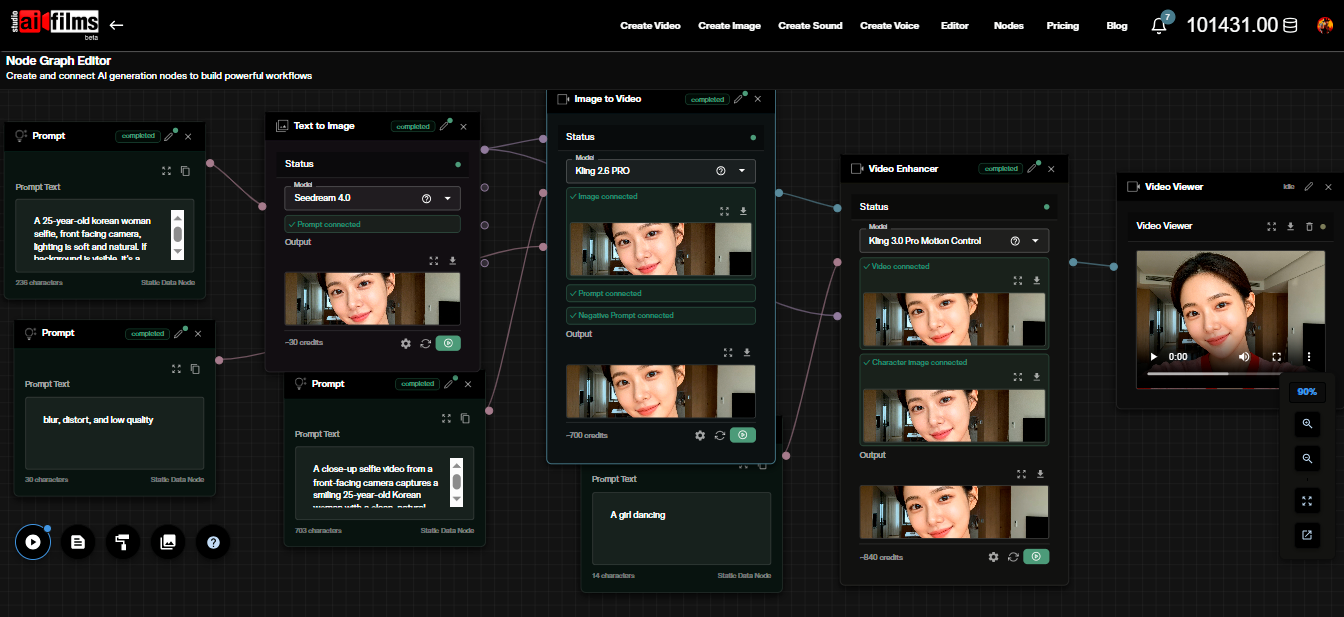
What Witherspoon is advocating for is scenes that work, rights that are respected, and jobs that become more focused on the creative choices that matter. Those goals are not in conflict with careful adoption. They are the argument for it. The AI FILMS Studio video workspace is one path for filmmakers who want to start working with AI generation tools in a professional context.
Sources
Glamour | Variety | Rolling Stone | TheWrap | Deadline
Continue Reading
Video & LipSync
- Video Generator
- Text to Video
- Image to Video
- Start-End Frame to Video
- Draw to Video
- Motion Control
- Video Enhancer
- Video Upscaler
- Video to Video LipSync
- Audio to Video LipSync
- Image to Video LipSync
- Video FaceSwap
- Seedance 2
- Vidu Q3 Pro
- Google Veo 3.1
- Kling 3.0 Pro
- LTX 2.3
- Happy Horse 1.0
- Kling 3.0 Motion
- ByteDance Upscaler
- InfiniteTalk
- InsightFace