Run to the West | Korea's first AI driven film feature (Oct 15, 2025)

Share this post:
Run to the West | Korea's first AI driven feature film
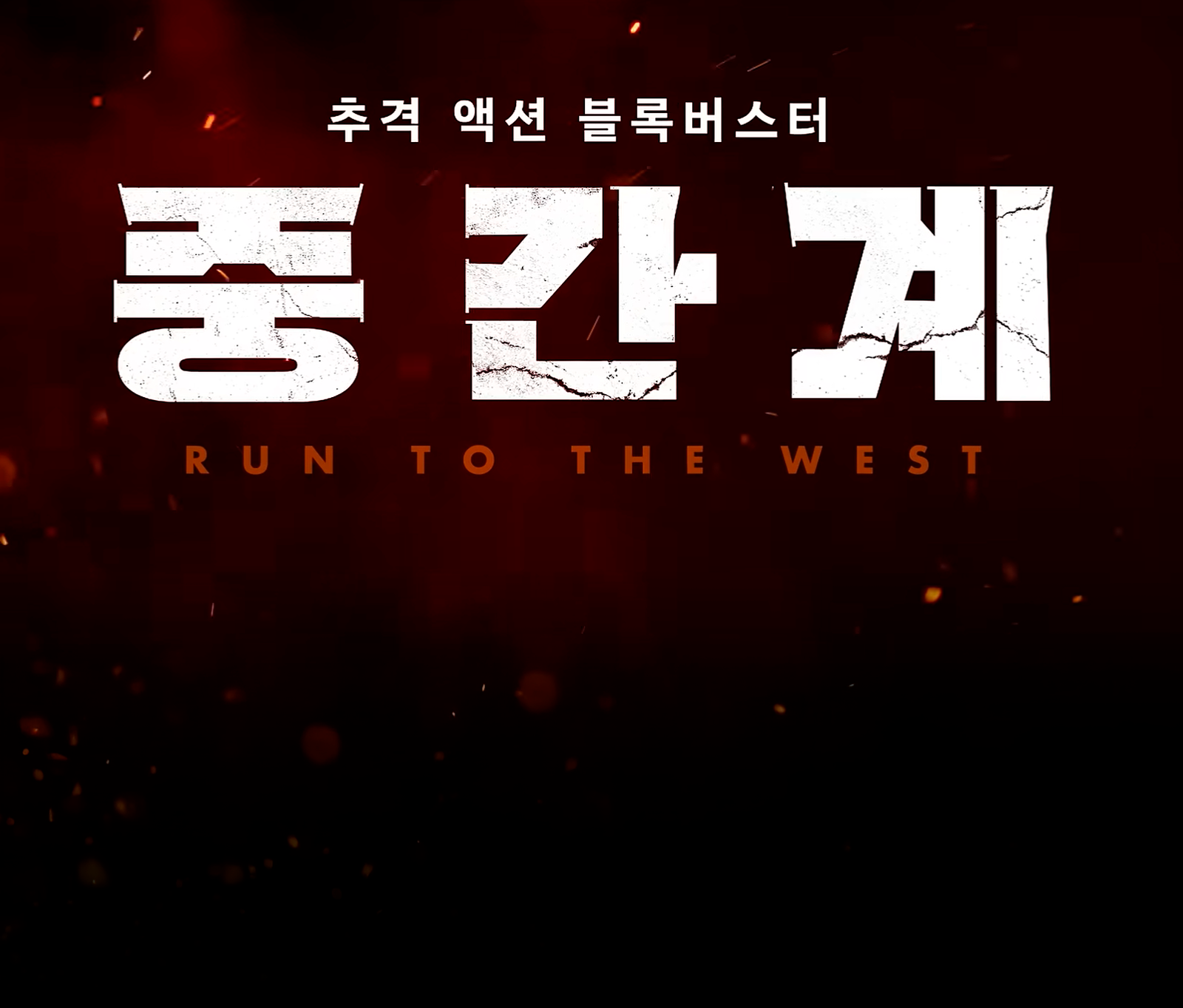
Director Kang Yun Sung's action film Run to the West opened in theaters across Korea through CGV on October 15, 2025. Its producers marketed it as the country's first AI driven feature, distinguishing it from productions that use AI as one tool among many. The film targets the commercial multiplex audience rather than a festival niche.
Synopsis and Premise
A column of fire tears open the sky above central Seoul as grim reapers sweep through streets and towers hunting souls trapped between the living world and the afterlife. Crowds flee past Gwanghwamun and other city landmarks while a figure called the King of the Grim Reapers drives the pursuit. The human story threads through that chaos: ordinary people making fast choices under extraordinary pressure while the city becomes both arena and character.
The premise is a deliberate choice for an AI production. City scale destruction, supernatural crowd scenes, and an afterlife aesthetic are exactly the visual categories where AI generation tools reduce cost and schedule compared to conventional VFX. The story justifies the production approach.
The grim reaper aesthetic in particular maps well to AI generation strengths. Supernatural entities with stylized designs, crowd populations with non realistic movement, and atmospheric environments that blend recognizable Seoul landmarks with otherworldly elements are categories where generation tools can produce outputs that are visually ambitious without requiring frame perfect photorealism. The story's premise gives the production cover to use AI generation in ways that would look artificial in a naturalistic drama but feel intentional in a supernatural action film.
The Gwanghwamun setting grounds the supernatural material in a recognizable physical and cultural location. Central Seoul as the arena for an afterlife collision scene is a visual and narrative choice that connects the film's genre elements to a specifically Korean cultural geography. That specificity is relevant to how AI generation handled environment and background work across the production.
The tone reads as high energy pursuit with supernatural beats. If the cut lets the action breathe and the music supports rhythm without overwhelming the mix, the film can play to general audiences who want spectacle with a readable spine. That readability is the test for any commercial action film, AI driven or not.
Cast and Director
Kang Yun Sung directs. His previous credits include the series Big Bet, the film Low Life, and entries in the Roundup franchise, a track record in action crime production at commercial scale.
The Roundup franchise in particular establishes Kang's commercial credentials. The series has produced multiple entries in the top tier of Korean box office performance, with The Roundup: No Way Out grossing over 9 billion Korean won in its opening week in 2023. A director with that track record choosing to make an AI driven production signals something different than an experimental filmmaker testing the tools.
The lead ensemble includes Byun Yo Han as Jang Won, Yang Se Jong as Jae Beom, Lim Hyung Jun as Seok Tae, Kim Kang Woo as Min Young, and Bang Hyo Rin as Seol Ah. CGV handles nationwide Korean theatrical distribution.
Byun Yo Han is known internationally through Sword Art Online: The Movie and has a domestic Korean television profile through hits like Mr. Sunshine. Yang Se Jong built his profile through Run On and Thirty-Nine. Kim Kang Woo has appeared in The Good Bad Weird and Obsessed, representing a different generation of Korean cinema's international emergence. The cast is not composed of AI native talent but of actors with conventional film credentials working with an AI augmented production.
For AI filmmaking discussions, the cast and director profile matters. Run to the West is not an experimental project by a filmmaker testing the technology. It is a commercial action film with known cast members and an established director. That positions it as a proof of concept for mainstream production adoption rather than for the AI film festival circuit.
The AI Production Approach
Public materials describe AI driven generation woven into creature design, environment work, and city scale destruction sequences. The stated goal is not to replace hero VFX shots or stunt work but to extend scope, fill crowd populations, and stretch geography. AI generation handles the elements where density and repetition would make bespoke shot by shot work prohibitively expensive on a Korean multiplex production budget.
The hybrid approach is the likely standard for how AI enters mainstream production. Pure AI generation, where the model creates everything, is a different use case from AI augmented production, where human supervised work handles performance, practical effects, and hero shots while generation handles scale and fill elements. Run to the West appears to be in the augmented category.
The interesting production question is the workflow. Expect a pipeline that combines conventional compositing, human supervised animation, and AI driven generation at the density and crowd scale level. If that workflow held up under schedule and if the results integrated cleanly with the live action material, the team will have produced a documented method that regional studios can evaluate.
The scope of AI involvement in Run to the West also matters for how the production positions itself in the market. Labeling a film as "AI driven" when AI handles a limited subset of VFX elements is a different claim than a production where AI generation touches the majority of screen time. The marketing position Kang's producers chose, specifically "AI driven," rather than "AI assisted" or "AI enhanced," suggests a scope of AI involvement beyond what most conventional productions with AI elements would claim.
That positioning choice carries risk. A claim of being the country's first AI driven feature sets a public benchmark. If audiences or critics conclude that the AI elements are indistinguishable from conventional VFX work, the "AI driven" label may be dismissed as marketing. If the AI elements are visible and effective in serving the story, the label becomes a useful reference point for the industry.
The CGV distribution relationship is also a relevant data point. CGV is the largest multiplex chain in Korea by screen count. A wide release through CGV represents a genuine commitment to commercial performance rather than a limited platform release where the AI framing could substitute for box office ambition. The choice to chase commercial scale is itself part of what makes Run to the West a useful industry reference.
Why the Multiplex Test Matters
Releasing an AI driven feature in mainstream Korean multiplexes is a more demanding test than releasing the same film on streaming or in a limited theatrical run. A wide theatrical release means paying audiences make a choice to see the film, critics review it at scale, and social media amplification creates a public record of how the work was received.
That public record is what the AI filmmaking community needs. Demo reels and festival presentations demonstrate what AI tools can produce under controlled conditions. A wide theatrical release tests whether the work holds together under the uncontrolled conditions of paying audiences, reviewers with no obligation to be supportive, and the inevitable social media screenshot of any composite that fails.
If the film holds together visually, producers will have evidence that AI augmented scope is viable for commercial action films at Korean multiplex scale. If specific effects falter, the documented shortcomings become a concrete checklist for what to solve before the next production attempts similar work.
The multiplex context also tests audience tolerance in a specific way. A viewer who pays for a ticket to a Korean action blockbuster is not in the same evaluative mode as a viewer who attends an AI film festival specifically to see what the technology can produce. The multiplex viewer has the full range of available genre entertainment to compare the film against. Surviving that comparison, rather than succeeding within the more forgiving context of a specifically AI curated venue, is the meaningful benchmark.
Box office performance across the first two weekends is typically the concrete metric by which multiplex releases are evaluated. Tracking that number relative to comparable Korean action releases from the same period gives the industry a data point that festival selections and streaming plays cannot provide. Whatever that number shows, it is part of the production's permanent record.
The theatrical release date of October 15, 2025 is also significant contextually. The Korean theatrical market in October is competitive, coming after the summer blockbuster season and before the year end awards window. Choosing that slot rather than a less competitive date or a streaming premiere signals confidence in the production's ability to compete for audience attention against conventional releases.
The marketing approach that led with the "AI driven feature" designation rather than with cast or director first also signals a bet that the AI angle was an audience draw rather than a point of skepticism to manage. Whether that bet paid off is part of what the theatrical run documented.
The Korean Film Industry Context
Korean cinema has an established global audience built over two decades through films like Parasite, the Roundup franchise, and numerous streaming successes. That audience is both an asset and a pressure point for an AI driven release. Viewers who have seen what Korean productions can achieve with conventional methods will apply that standard when evaluating Run to the West.
The Korean production industry has also been absorbing AI tools rapidly across pre and post production. Visual effects houses, animation studios, and production companies in Seoul and Busan have been building AI competency since 2023 as part of a broader technology adoption that the Korean government has supported through funding and policy incentives.
Run to the West is the most public expression of that investment. If it succeeds commercially, it accelerates the institutional confidence that production companies need to approve AI augmented work at scale. If it underperforms, the industry conversation shifts to what the technology still cannot handle rather than what it can.
The Korean government's involvement in supporting AI technology adoption is a structural factor that distinguishes the Korean context from markets where AI tools entered production without institutional backing. Government investment in cultural production has been a feature of the Korean film industry for decades, and the extension of that pattern into AI tools creates a different incentive environment than producers face in markets without comparable support.
That institutional context also means that Run to the West's reception feeds into a policy discussion, not just an industry one. Production companies evaluating AI tools in the Korean market are partly evaluating them in the context of what government support mechanisms exist to offset the learning curve cost. A high profile multiplex release that demonstrates viable AI production is an argument for continued policy support as much as it is a proof of concept for the specific tools used.
What Happened After Release
In March 2026, the film received its Asian premiere at HKU's AI and Filmmaking Week in Hong Kong, where its hybrid production approach served as a case study alongside sessions on AI filmmaking across the region. The inclusion at an academic and industry event signaled that the film had generated substantive interest as a production reference, not only as a commercial release.
The HKU context is worth noting. Academic and industry events that use commercial productions as case studies are selecting for productions that raise methodological questions that practitioners want answered. Run to the West's selection suggests that the production's specific approach to integrating AI generation with conventional production methods was substantive enough to merit that kind of examination, regardless of how the film performed commercially.
The Korean AI film story continued to develop rapidly after Run to the West. By May 2026, two AI theatrical features opened simultaneously in South Korea, with one made almost entirely by a single director in two months. That progression from a major production using AI for scale elements to a solo director completing a theatrical feature in weeks represents the speed at which the tools improved and the production community adapted.
At Cannes 2026, director Yeon Sang-ho's Colony used AI solely for zombie crowd generation while building a film whose central theme is the homogenizing effect of collective intelligence. The contrast between that approach and Run to the West's scale focused AI use illustrates how different directors are finding different roles for the tools within their productions.
The trajectory from Run to the West in October 2025 to Colony at Cannes 2026 covers less than a year and includes a range of production scales, use case scopes, and creative ambitions. That breadth is part of what makes Run to the West historically useful: it arrived early enough that subsequent productions can be understood as responses to and developments from the questions it raised.
For VFX Supervisors and Production Planners
Run to the West is worth tracking as a case study regardless of whether you work in Korea. The production problem it addresses, specifically stretching action scope through AI generation without compromising practical performance and hero shot quality, is common to action productions worldwide.
For productions outside Korea that face comparable scope and budget constraints, the film provides a reference point that is more relevant than US studio comparisons. Korean multiplex action films typically operate at budgets that are closer to mid range international coproductions than to Marvel scale productions. What was technically and economically viable for a Korean action film in late 2025 is a better indicator of what is viable for international action productions at similar budget levels than what a $200 million US production can do.
The specific failure modes that appear in reviews and social media clips from the Korean release are a free source of information about where the tools still fall short. Study those failures. The edge cases that appear most often in audience screenshots and critic descriptions are the same edge cases your production will encounter if you attempt similar work.
The integration challenge that Run to the West represents, connecting AI generated environmental and crowd elements with conventionally shot hero performance, is the same challenge that any hybrid AI production faces. The quality of that integration depends on how well the color science, motion character, and detail level of the generated elements match the live action material they are composited with. Productions that have seen how Run to the West handled that integration have a concrete reference for what to aim for and what to avoid.
VFX supervisors evaluating whether to incorporate AI generation into a pipeline for action or fantasy productions can also look at the film as a budget reference. Korean multiplex productions typically operate at budgets significantly lower than Hollywood studio action films. If AI generation made a specific scope of supernatural and crowd work viable at that budget level, the capability floor for comparable work in higher budget productions is substantially higher.
Monitoring the evolution of Korean AI theatrical production from Run to the West onward is also useful for tracking how quickly the toolchain improves. A production that struggled with specific edge cases in late 2025 will look different from a production using tools that have had another full year of development. The time between Run to the West and the May 2026 releases in South Korea, less than a year, already demonstrated how rapidly the tools improved and how quickly the production community adapted to using them.
Productions using AI for crowd and environment work benefit from building a shot level breakdown that separates AI generated elements from conventionally produced elements. That document serves internal review, client questions at delivery, and future productions planning similar scope without reinventing the workflow from scratch.
The documentation value extends to performance data. Productions that track generation time, tool version, and output resolution per session build a benchmark record that subsequent productions working at similar scope can use as a planning reference. Run to the West's usefulness as an ongoing industry case study depends partly on that kind of documentation becoming available over time.
Color pipeline integration is one of the most frequently underestimated costs in hybrid AI productions. AI generated elements carry color characteristics that may not match the production's primary grade or the color temperature of the live action plates they composite with. Factoring correction work for AI elements into the grade budget before post production begins prevents schedule compression during the final color pass.
Asset management for AI generation outputs requires specific attention. Generated elements do not have built in metadata, version history, and review structures that match conventional shot workflows. A production that commits AI generation to its pipeline without adapting its asset management process discovers the problem when it needs to revise a scene and cannot locate the original generation parameters.
For European and Latin American productions with budgets in the range that Korean multiplex action films operate at, Run to the West is a more applicable benchmark than US studio productions at comparable genre ambition. The scope of what AI generation made viable at that budget level maps to what is achievable at similar budgets in other markets, independent of the currency or the specific tools used.
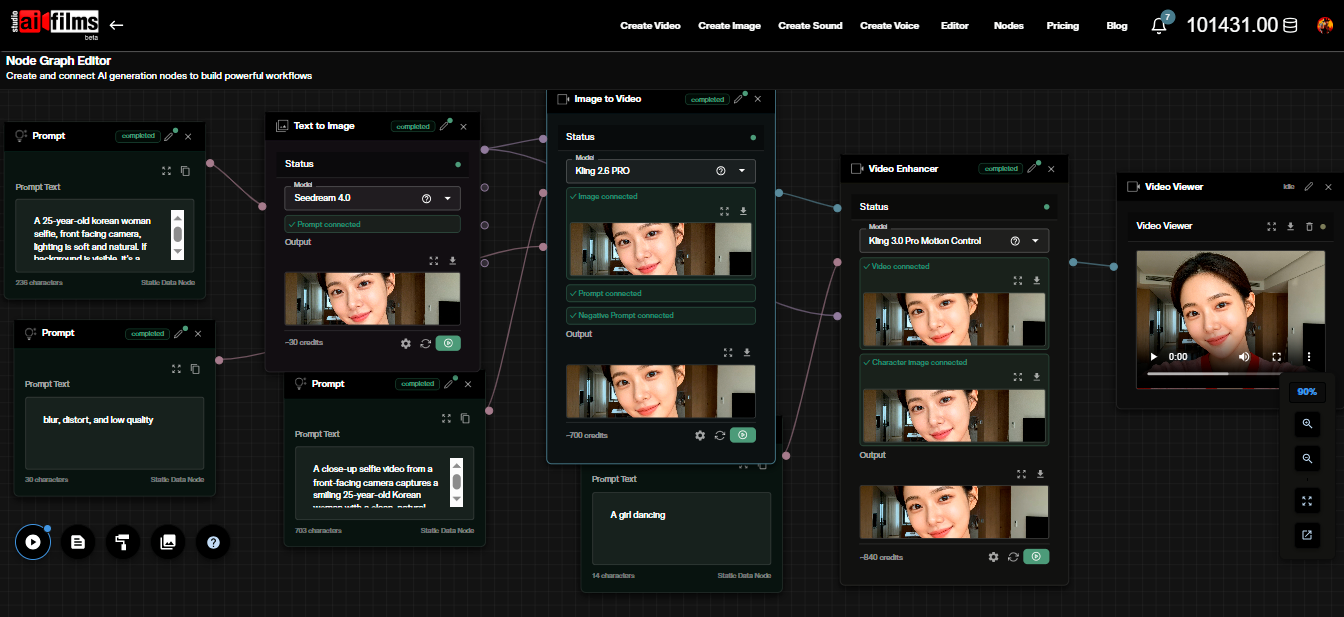
The AI FILMS Studio video workspace provides access to the video generation models that support this kind of scale work, from text-to-video for establishing shots to image-to-video for extending live action plates into larger environments.
Sources
Times of India | AllKpop | The Korea Herald | Variety | Screen Daily
Continue Reading
Video & LipSync
- Video Generator
- Text to Video
- Image to Video
- Start-End Frame to Video
- Draw to Video
- Motion Control
- Video Enhancer
- Video Upscaler
- Video to Video LipSync
- Audio to Video LipSync
- Image to Video LipSync
- Video FaceSwap
- Seedance 2
- Vidu Q3 Pro
- Google Veo 3.1
- Kling 3.0 Pro
- LTX 2.3
- Happy Horse 1.0
- Kling 3.0 Motion
- ByteDance Upscaler
- InfiniteTalk
- InsightFace