
Directors Now Actively Casting AI Actress Tilly Norwood as SAG-AFTRA Negotiations Loom
Share this post:
Directors Now Actively Casting AI Actress Tilly Norwood as SAG-AFTRA Negotiations Loom
Seven days before SAG-AFTRA contract talks begin, Eline van der Velden dropped a bombshell on Radio New Zealand's "Sunday Morning" on February 2, 2026. Directors are no longer just inquiring about synthetic performer Tilly Norwood. They are actively approaching Particle6 to cast her in projects. The timing could not be more pointed, with the actors union set to begin negotiations on February 9 that will determine whether synthetic performers like Tilly have any place in Hollywood productions.
From Inquiry to Active Casting
When we last covered Tilly Norwood in November 2025, the story was about talent agents circling and the backlash from actors unions. Van der Velden told Deadline that agents were "interested" and had "inquired" about representing the AI actress. That was exploratory. What van der Velden revealed in the February 2 RNZ interview represents a fundamental shift. Directors are now "approaching us" with casting offers, she confirmed.
What changed in three months? The technology improved. Industry attitudes softened. Or perhaps more cynically, economic pressures intensified. Van der Velden did not specify which directors or what projects. But the language shift from passive inquiry to active pursuit signals that synthetic performers have crossed a threshold from controversial concept to practical consideration.
The announcement lands exactly one week before SAG-AFTRA sits down to negotiate a new contract. That timing feels deliberate. Van der Velden is establishing market demand for synthetic performers while the union debates whether to permit, regulate, or ban them outright.
Building Tilly's "Brain"
Van der Velden's RNZ interview revealed another ambition. She is currently "building [Tilly's] brain," with a goal of enabling the AI actress to conduct her own live media interviews by late 2026. This moves beyond generating scripted performances. Van der Velden envisions autonomous interaction, where Tilly responds to questions in real time without human prompting for every word.

The technology stack combines Particle6's proprietary DeepFame engine with tools like Google Veo 3 and Luma AI. These systems handle facial expressions, temporal consistency across frames, and lip sync accuracy. But conversational AI requires different capabilities. Natural language processing, contextual memory, personality consistency, and response generation that feels human rather than robotic.
Critics have already labeled Tilly's early performances as "reality TV level acting" with noticeable uncanny valley issues. Van der Velden's claim that Tilly will become the "next Scarlett Johansson" faces skepticism from those who have seen the current output. Building a "brain" capable of live interviews by late 2026 sets an aggressive timeline for technology that does not yet exist in deployable form.
The Reskilling Question
Van der Velden also discussed a labor shift that has received less attention than the performer displacement debate. Production and costume designers are moving into what she calls the "AI realm." They are learning to design assets for synthetic environments rather than physical sets and wardrobes.
This framing presents AI as a job transformation rather than job elimination. Designers still work, van der Velden argues, but their output becomes digital templates for AI generated content instead of physical props. The skills translate. The medium changes.
That perspective glosses over a critical question: how many designers can transition versus how many simply lose work? Designing for AI environments requires technical skills in 3D modeling, game engine workflows, and prompt engineering that most traditional costume and production designers do not currently possess. Reskilling takes time and resources. Not everyone can or will make the jump.
This labor tension directly feeds into the February 9 negotiations. If AI becomes a core production tool rather than a post-production effect, unions face a choice between prohibiting it entirely or negotiating terms that protect workers through transition periods and training programs.
Seven Days Until SAG-AFTRA Negotiations
SAG-AFTRA has maintained a clear position since September 30, 2025. "Tilly Norwood is not an actor," the union stated. "It is a character generated by a computer program trained on the work of countless professional performers, without permission or compensation."
That framing rejects the premise that synthetic performers compete on equal terms with human actors. SAG-AFTRA categorizes Tilly as a derivative work built from unauthorized use of actors' data. The union wants a consent and compensation model, where performers whose work trains AI systems receive payment and control over how their digital likenesses get used.
President Sean Astin has emphasized that "consent and compensation" will be central to the February 9, 2026 negotiations. The current contract, signed after the 2023 strike, included foundational AI language but predates the widespread deployment of generative video models like Veo 3. The new negotiations will determine whether studios can use synthetic performers at all, and if so, under what restrictions.
Tilly serves as a test case. If directors are actively casting her, as van der Velden claims, SAG-AFTRA faces immediate pressure to address what happens when studios prefer a synthetic performer over a human actor. Does the union refuse to work on projects that cast AI characters? Does it demand that synthetic performers receive union-scale payments that flow to actors whose data trained the models? Or does it negotiate a carve-out that permits AI characters in certain contexts while protecting human performers in others?
The Directors Guild of America offers a potential comparison. DGA President Christopher Nolan has championed AI guardrails that preserve director authority while allowing AI to function as a creative accelerator. Mandatory disclosure, consent and compensation for training data, and human only authorship credits form the core of the DGA's proposed framework. SAG-AFTRA could adopt similar principles tailored to actor protections.
The "Identity Theft" Argument Intensifies
High profile actors have escalated their criticism as synthetic performers move from concept to casting. Abigail Breslin and Mara Wilson have both called for boycotts of the "AI Actress" model. Wilson specifically describes the creation of characters like Tilly as "identity theft" of the young women whose data trained the underlying models.
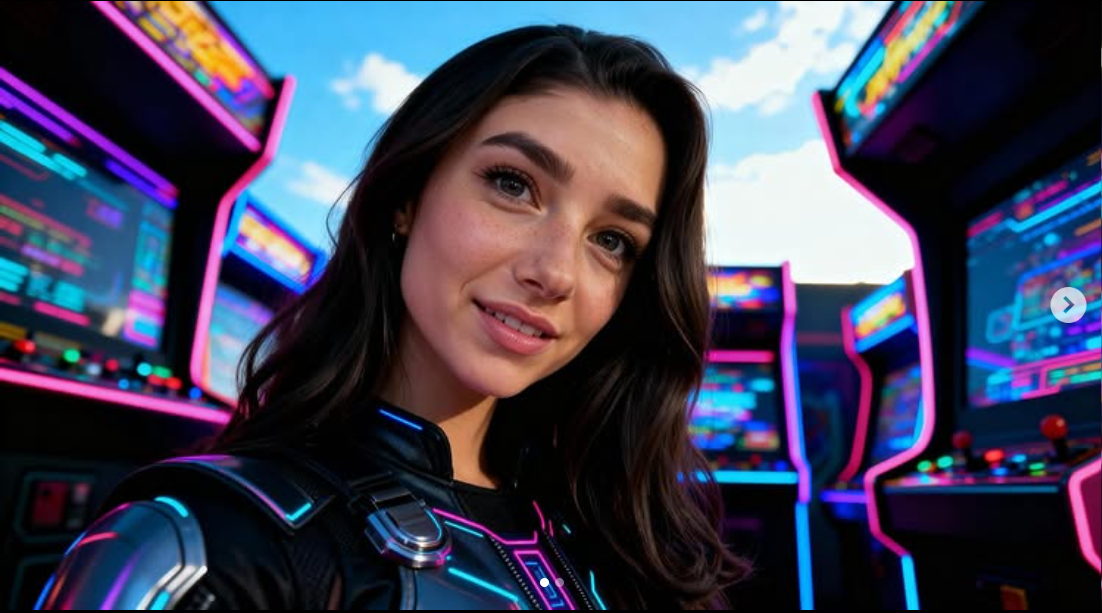
Van der Velden has countered that Tilly does not replicate any specific real person without permission. She maintains that the character is an original creation, built through iterative design over six months with a team of 15 people. The training data for the underlying AI models, however, came from somewhere. Text-to-video systems like those Particle6 uses learned from massive datasets of existing video footage, which necessarily includes performances by real actors.
The timing matters. As casting moves from hypothetical to actual, the criticism shifts from abstract concerns to concrete threats. If directors hire Tilly for roles that would otherwise go to human actors, the "identity theft" argument becomes more than rhetorical. It describes an economic reality where actors' work trains systems that then compete with them for employment.
Van der Velden's ambition to make Tilly the "next Scarlett Johansson" also highlights the gap between aspiration and execution. Johansson herself famously objected when OpenAI used a voice eerily similar to hers in a product demo. The uncanny valley issues that plague current AI generated performances only sharpen actor concerns that their likenesses, voices, and mannerisms can be approximated without consent or payment.
Legal Landscape: California's Digital Replica Law
California's AB 2602 and AB 1836 took effect January 1, 2026, establishing consent and compensation requirements for digital replicas of performers. The law defines a digital replica as a "computer generated, highly realistic electronic representation" that is readily identifiable as a specific individual's voice or visual likeness.
Does Tilly Norwood qualify as a "digital replica" under this framework? Van der Velden argues she does not, because Tilly is not modeled on any specific real person. The character is synthetic, created through AI generation rather than scanning or replicating an existing performer's features.
But the law also addresses training data. If Tilly's underlying models trained on performances by California actors without permission or compensation, those actors potentially have claims even if Tilly herself does not directly replicate any single person. The legal question becomes whether the law covers derivative works created from unauthorized training data, or only direct replicas of identifiable individuals.
California filmmakers who cast Tilly in projects face a compliance question. If the law requires consent and compensation for digital replicas, and if courts interpret that to include AI generated characters trained on actor data, then using Tilly could trigger liability. Studios might demand that Particle6 provide legal indemnification, shifting the risk back to the AI company.
This legal uncertainty adds another layer to the February 9 negotiations. SAG-AFTRA could push for contract language that treats all AI generated performers as subject to consent and compensation rules, regardless of whether they technically qualify as "digital replicas" under California law. Such language would establish a union specific standard that goes beyond state regulations.
What February 9 Could Decide
The upcoming SAG-AFTRA negotiations will likely produce one of three outcomes for synthetic performers:
Outright prohibition: The union could demand that contract language ban synthetic performers entirely in union projects. This approach treats AI actors as an existential threat to human performers and refuses to negotiate terms for coexistence. Studios would face a choice between accepting the ban or attempting to produce non-union content with AI characters.
Consent and compensation framework: SAG-AFTRA could adopt a model similar to California's digital replica law, requiring studios to obtain union approval and pay fees when using synthetic performers. These fees could flow to actors whose work trained the underlying models, creating a revenue stream that compensates performers for their contributions to AI development.
Carve-out for AI genre: Van der Velden has proposed that AI generated characters exist in a separate "AI genre" distinct from live action and animation. SAG-AFTRA could accept this framing, permitting synthetic performers in projects explicitly labeled as AI content while protecting human actors in traditional productions. This approach resembles animation, where voice actors work under different terms than live action performers.
The DGA's framework, championed by Christopher Nolan, suggests a middle path. Allow AI as a tool that amplifies director vision, but require transparency, consent, and human authorship credits. SAG-AFTRA could adopt parallel guardrails focused on actor protections rather than director authority.
Independent filmmakers face different stakes. A prohibition on synthetic performers in union projects would not affect non-union productions. But if major studios cannot use AI actors due to union contracts, the technology might remain confined to independent and low-budget content. Alternatively, if SAG-AFTRA negotiates consent and compensation terms, those standards could trickle down to non-union productions as industry norms.
Implications for AI Filmmakers
Directors actively casting Tilly Norwood signals that synthetic performers have moved from experiment to option. For independent creators, this creates both opportunities and complications.
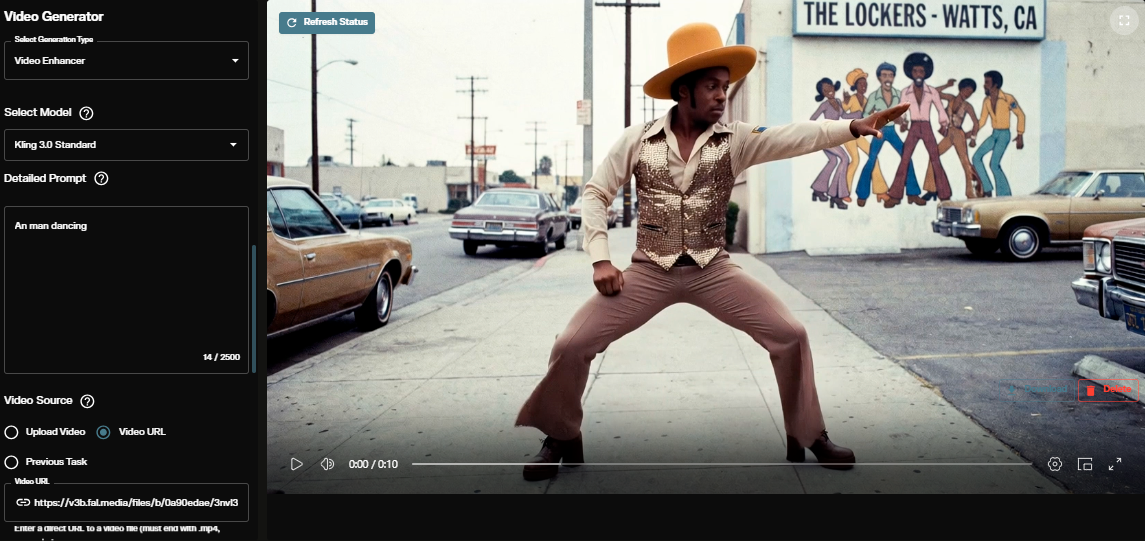
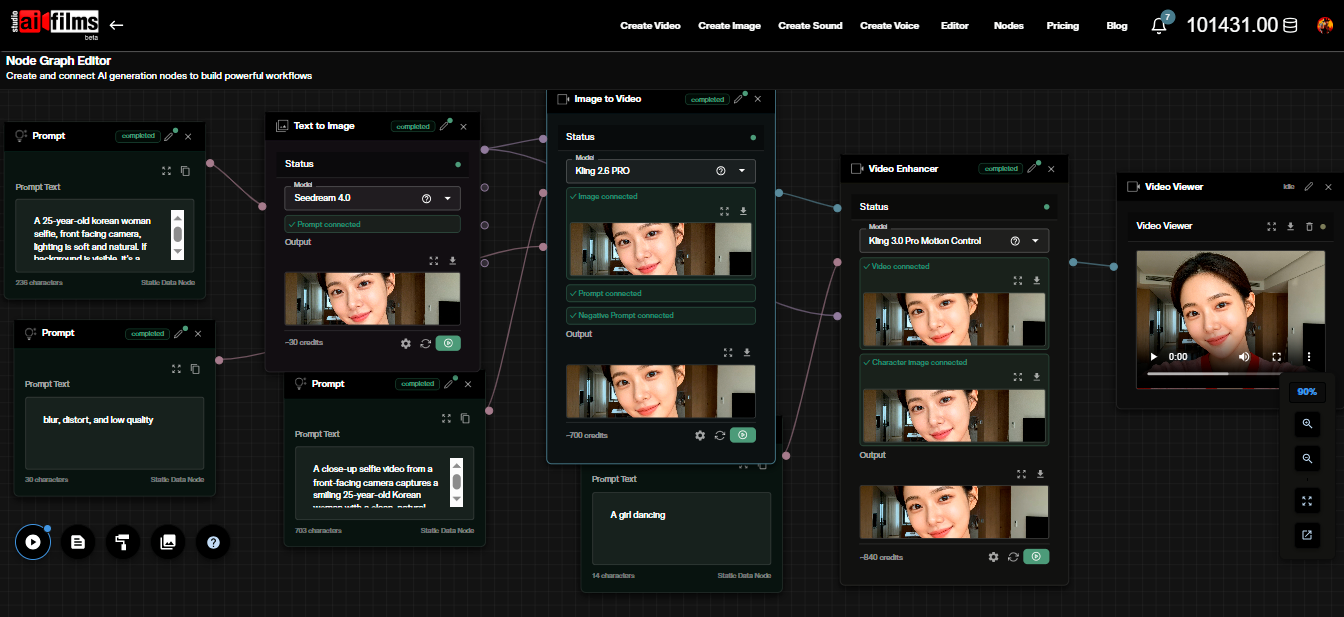
Tools like AI FILMS Studio enable filmmakers to generate synthetic characters without licensing pre-made AI actors from companies like Xicoia. Creating original characters gives filmmakers full creative control and ownership, without dependencies on third-party licensing terms. The tradeoff is consistency. Pre-made AI actors like Tilly offer recognizable features that theoretically remain stable across scenes, while generating original characters requires multiple iterations to achieve visual continuity.
The ethical considerations remain constant regardless of approach. Whether licensing Tilly or generating a custom character, filmmakers must grapple with the consent and compensation question. Did the actors whose performances trained these models receive payment or permission? If SAG-AFTRA establishes industry standards, those standards may apply to AI generated content generally, not just pre-made characters.
Transparency offers one path forward. Filmmakers who disclose the use of AI generated performers, credit the technology accurately, and avoid misleading audiences can position their work as a distinct category. This aligns with van der Velden's "AI genre" concept and the DGA's mandatory disclosure principle.
For technical details on how Particle6 creates and manages synthetic performers like Tilly, see our November 2025 coverage of the 40-character expansion plan.
What Comes Next
The February 9 SAG-AFTRA negotiations arrive at a moment of genuine uncertainty. Directors are pursuing synthetic performers. Actors unions are pushing back. State laws are establishing consent frameworks. And the technology continues improving faster than regulatory structures can adapt.
Van der Velden's revelation that directors are actively casting Tilly, not just inquiring, forces the question out of hypothetical territory. If studios want to use synthetic performers, the February 9 talks will determine whether they can, under what terms, and at what cost to human actors.
The outcome will shape the industry for years. A prohibition could halt synthetic performer development in union productions, confining the technology to independent filmmaking and non-entertainment applications. A consent and compensation framework could legitimize AI actors while protecting performer rights. A carve-out for an "AI genre" could create parallel production tracks, with human and synthetic performers occupying distinct spaces.
Both sides have valid concerns. Xicoia's vision of synthetic performers as a "new paintbrush" for directors holds creative potential. SAG-AFTRA's framing of AI actors as "identity theft" built on unauthorized use of actor data raises legitimate compensation questions. The negotiations must balance these competing interests while the technology evolves in real time.
Seven days is not long to resolve questions this complex. But the clock is ticking.
Sources
Radio New Zealand (RNZ): "AI actress Tilly Norwood could soon do her own interviews" Published: February 2, 2026 https://www.rnz.co.nz/life/screens/ai-actress-tilly-norwood-could-soon-do-her-own-interviews
SAG-AFTRA: "SAG-AFTRA Statement on Synthetic Performer" Published: September 30, 2025 https://www.sagaftra.org/sag-aftra-statement-synthetic-performer
Tilly Norwood Official Website https://www.tillynorwood.com
Xicoia Talent https://www.xicoiatalent.com/
Particle6 https://www.particle6.com/
Related Coverage:
- Creator of AI Actress Tilly Norwood Plans 40 Additional Digital Actors (November 13, 2025)
- Christopher Nolan's DGA Leadership Positions Hollywood for AI Negotiations (February 2, 2026)
- California's Digital Replica Law: What AI Filmmakers Need to Know in 2026 (January 17, 2026)
- Xicoia Taps Amazon Executive to Scale AI Actor Tillyverse (March 3, 2026)
Continue Reading
.jpg?w=3840)


Video & LipSync
- Video Generator
- Text to Video
- Image to Video
- Start-End Frame to Video
- Draw to Video
- Motion Control
- Video Enhancer
- Video Upscaler
- Video Extend
- Video to Video LipSync
- Audio to Video LipSync
- Image to Video LipSync
- Video FaceSwap
- Seedance 2.5
- WAN 3.0
- Seedance 2
- FLUX 3
- Minimax H3
- Vidu Q3 Pro
- Grok Imagine Video 1.5
- Gemini Omni
- Google Veo 3.1
- Kling 3.0 Pro
- Luma Ray 3.2
- LTX 2.3
- Happy Horse 1.1
- Kling 3.0 Motion
- ByteDance Upscaler
- InfiniteTalk
- InsightFace
Image & Edit
- AI Character
- AI Actor
- Art Generator
- Text to Image
- Image to Image
- LoRA Image to Image
- Draw to Edit
- Image LoRA Training
- Remove Background
- Image Enhancer
- MidJourney 8.0
- Krea 2
- OpenAI GPT Image 2.0
- Nano Banana Pro Ultra
- Nano Banana 2 Lite
- Nano Banana Pro
- Minimax Image
- Clarity Pro
- Z-Image Turbo LoRA
- Krea 2 Turbo LoRA
- Z-Image LoRA Trainer
- Qwen Image LoRA Trainer
- Background Erase Network 2 (BEN2)