
AI for Good Film Festival 2026: 1,300 Submissions, 10 Finalists, Geneva July 9

Share this post:
AI for Good Film Festival 2026: 1,300 Submissions, 10 Finalists, Geneva July 9
The ITU's AI for Good Film Festival received more than 1,300 submissions for its 2026 edition, selecting 10 finalists from filmmakers across Brazil, Italy, Egypt, Sudan, Japan, Thailand, Belgium, Spain, China, and South Korea. The finalist screenings take place July 9 in Geneva, during the AI for Good Global Summit.
The festival sits inside the ITU's broader AI governance agenda. Where major film festivals in 2026 debated AI authorship and disclosure, the AI for Good festival is specifically interested in cinema about AI's role in the world: healthcare, environmental monitoring, displacement, and human connection, not filmmaking technique.
The ITU and the AI for Good Initiative
The ITU, the International Telecommunication Union, was founded in 1865 as the International Telegraph Union and is the world's oldest continuously operating international organization. It became a specialized UN agency in 1947 and today manages global radio frequency allocations, satellite orbit coordination, and technical standards for telecommunications infrastructure across 193 member states.
AI for Good is a separate initiative the ITU launched in 2017, focused on identifying AI applications with potential to advance the UN Sustainable Development Goals. The initiative runs year round programs connecting AI researchers with UN agencies, government ministries, and civil society organizations. The film festival is one component of that effort, using cinema to reach audiences who would not engage with technical papers or policy documents.
The 2026 edition received submissions from every inhabited continent, with more than 1,300 filmmakers applying. The ITU's jury reviewed the full pool and notified the 10 finalists by June 1, 2026, more than a month before the screenings.
The Festival at Scale
AI for Good invites filmmakers to submit work exploring how AI is being used to address global challenges. The scope is deliberately broad: submissions can cover AI in healthcare, environmental monitoring, education, economic development, or any area where AI tools are being applied to social problems. The subject is AI in the world, not AI as a filmmaking instrument.
The 1,300+ submission figure represents the largest pool in the festival's history. Finalists were selected by a jury that evaluated films on both cinematic quality and the depth of engagement with their AI subject matter. Films that used AI as incidental background rather than a substantive focus were filtered out of consideration.
The 10 finalists represent filmmakers from every inhabited continent except Oceania and North America. That geographic distribution is consistent with the ITU's mandate to represent the full spectrum of its member states, not the markets that typically dominate major Western film festival selections.
,_Geneva,_Switzerland.jpg)
The Ten Finalists
Each film screens July 9, followed by a live director presentation and jury discussion. The finalist films, directors, and countries of origin:
| Film | Director(s) | Country |
|---|---|---|
| AVIÃO | Mohamed Beriky | Brazil |
| UNSEEN | Erika Taranto | Italy |
| Another Day | Saifeldin Hamza, Omar El-Naggar, Hadi Bakhit | Egypt / Sudan |
| UTILITY | Yuichi Ono | Japan |
| The Homo Sapiens Family | Vic Wanchana Intrasombat | Thailand |
| Cluster | Grégoire Dessy, Ben Dessy, Juan van den Branden | Belgium |
| The Star Shepherd | Xuan Li, En Lei | China |
| Plastic Erosion | Yifei Li, Zheng Bao | China |
| Gurbet | Violeta M. Valcheva | Spain |
| Between Steps | Yoona Park, Sion Kim, Minwoo Park | South Korea |
The geographic reach is notable. Another Day is a joint Egypt/Sudan production made by a three person team spanning two countries in conflict. Belgium's Cluster also brings together three directors. Two Chinese films made the selection alongside a solo filmmaker from Thailand, a three person South Korean team, and Brazil's sole representative.
No filmmaker from Europe's largest film industries, France, Germany, or the United Kingdom, made the finalist list. The selection reflects a deliberate commitment to surfaces typically underrepresented at major Western festivals.
The table also shows a pattern across production scales. AVIÃO comes from Brazil, where AI adoption in film production has moved faster in documentary than in scripted work. Plastic Erosion and The Star Shepherd both emerge from China's increasingly active AI research film sector. Between Steps is South Korea's first finalist at an AI for Good iteration, representing a country with substantial AI film investment across commercial and independent sectors.
July 9 in Geneva
The screenings take place on the third day of the AI for Good Global Summit, which runs July 7 through 10 at ITU headquarters. The summit brings together government ministers, AI researchers, technology developers, and UN agency representatives to discuss AI governance, technical standards, and applications for sustainable development.
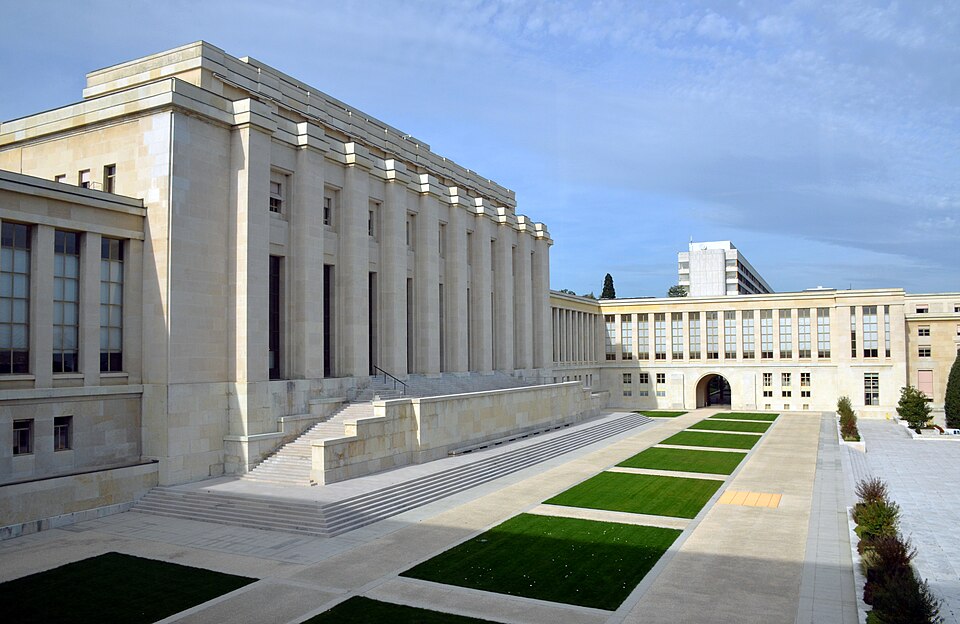
Geneva's role as the location for both events is not incidental. The city hosts the ITU headquarters, the World Health Organization, the World Trade Organization, and the UN European headquarters at the Palais des Nations. The concentration of international governance infrastructure makes it one of the primary venues for the kind of multilateral AI policy conversations the summit is designed to advance.
Each film at the festival receives a structured screening: projection, followed by a live presentation from the director, followed by jury discussion. That format gives the event the character of a symposium rather than a traditional festival program. Films function as starting points for a conversation about AI's role in society, evaluated in real time by people working in AI governance.
What the Films Examine
The finalist films span themes of accessibility, environmental change, displacement, human connection, and technological dependency. Plastic Erosion addresses AI in environmental monitoring. Another Day deals with displacement across national borders. UTILITY and The Homo Sapiens Family both examine human relationships with AI systems in different cultural contexts.
The festival's subject matter is AI in the world around people, not AI as a production instrument. A film exploring how AI is used in healthcare delivery addresses technology's social role from a completely different position than a film that uses AI to generate its visuals.
That distinction means the AI for Good finalists are engaging with AI as a political and social subject, not as a medium. The question they are asking is what AI is doing to humanity, not what humanity can do with AI as a creative tool.
Films submitted to the competition are evaluated by a jury with expertise across film, technology, and policy. The jury's brief is to identify films that demonstrate both cinematic quality and substantive engagement with AI's social role. A technically accomplished film that uses AI as a backdrop rather than a subject will not advance. A less polished film with a genuinely insightful perspective on AI's impact on a specific community may.
The Jury and Selection Criteria
The AI for Good jury operates under a brief that differs substantially from standard film festival jury criteria. At Cannes or Venice, jurors evaluate performance, direction, cinematography, writing, and overall artistic achievement. At AI for Good, jurors additionally evaluate how deeply a film engages with its AI subject matter and whether that engagement offers genuine insight rather than surface-level treatment.
That dual criterion means technically accomplished films can fail to advance if their treatment of AI is superficial or derivative. A beautifully made documentary that uses AI as a backdrop for a human interest story would be unlikely to make the finalist list. A rougher film with an original perspective on AI's role in a specific community, grounded in observed reality rather than general claims, stands a better chance.
The practical effect is a selection that skews toward documentary and observational modes over narrative or experimental work, because the evidentiary standard for the AI subject matter is easier to meet with footage of real events than with fictional reconstruction. Four of the ten finalist films, based on the titles and director profiles available, appear to be documentary in orientation. The remainder mix narrative and hybrid approaches.
Films from previous AI for Good editions have been distributed through educational institutions and public broadcast partners in their countries of origin. The ITU does not operate a commercial distribution network, so the festival functions primarily as a launchpad for filmmakers to connect with international partners who can carry the work to broader audiences. For filmmakers from countries with limited international distribution infrastructure, the AI for Good platform can serve as the primary mechanism for getting work in front of global audiences outside of major festivals.
A Different Festival Conversation
Venice's jury, led by Maggie Gyllenhaal, is approaching AI in film through questions of artistic authorship and representation. At Taormina, Gore Verbinski argued for mandatory AI disclosure in theatrical releases, a position about transparency between filmmakers and audiences.
AI for Good sidesteps both of those conversations by design. Its filmmakers are not being asked whether they used AI to make their work or how much of it was AI generated. They are being asked whether their films say something substantive about what AI means for the world.
That framing positions the festival inside a policy conversation rather than an artistic one. The ITU is an intergovernmental body that shapes how telecommunications infrastructure, including AI infrastructure, is governed globally. The film festival is one mechanism for connecting that governance work to the public audiences who will live with its outcomes.
The AI for Good program has expanded significantly since its 2017 launch. What began as a conference series now includes a film festival, a startup competition, and a network of over 100 UN agencies and partner organizations. The film festival is one of the program's most visible public-facing elements because it reaches people outside the policy and technical communities who attend the summit itself.
Attendance at the July 9 screening event is not open to the general public. The screenings take place within the summit, which is a credentialed event for government representatives, technology companies, and UN partner organizations. The films will be available for broader public access through the AI for Good platform after the event closes.
The jury's evaluation also considers how well the film works as a standalone cinematic experience for an audience without specialist knowledge of AI. A film that requires technical background to follow is limited in its reach and scores lower on the communication criterion, which evaluates how effectively the work translates complex AI subject matter into accessible narrative.
Submission deadlines for the 2027 edition have not been announced. The ITU typically opens the following year's call for entries in late Q4, with an early 2027 deadline likely based on the pattern of prior editions.
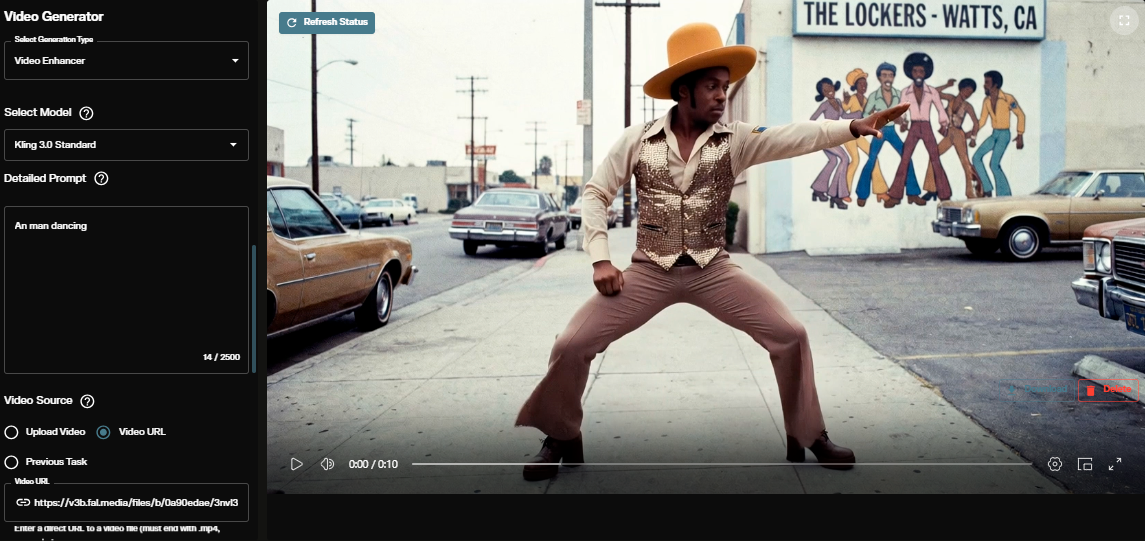
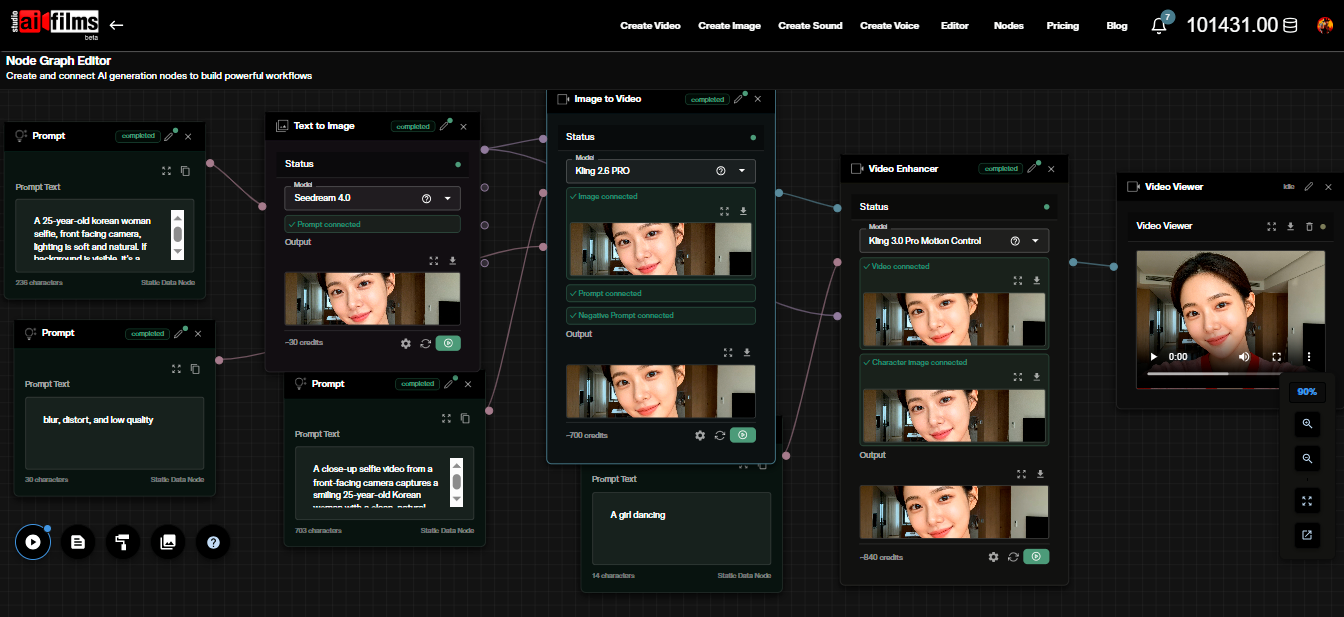
Filmmakers who want to develop AI video work can use the AI FILMS Studio video workspace to prototype and iterate before submission deadlines.
Sources
ITU / AI for Good | PR Newswire | Variety | The Guardian
Continue Reading
.jpg?w=3840)


Video & LipSync
- Video Generator
- Text to Video
- Image to Video
- Start-End Frame to Video
- Draw to Video
- Motion Control
- Video Enhancer
- Video Upscaler
- Video Extend
- Video to Video LipSync
- Audio to Video LipSync
- Image to Video LipSync
- Video FaceSwap
- Seedance 2.5
- WAN 3.0
- Seedance 2
- FLUX 3
- Minimax H3
- Vidu Q3 Pro
- Grok Imagine Video 1.5
- Gemini Omni
- Google Veo 3.1
- Kling 3.0 Pro
- Luma Ray 3.2
- LTX 2.3
- Happy Horse 1.1
- Kling 3.0 Motion
- ByteDance Upscaler
- InfiniteTalk
- InsightFace
Image & Edit
- AI Character
- AI Actor
- Art Generator
- Text to Image
- Image to Image
- LoRA Image to Image
- Draw to Edit
- Image LoRA Training
- Remove Background
- Image Enhancer
- MidJourney 8.0
- Krea 2
- OpenAI GPT Image 2.0
- Nano Banana Pro Ultra
- Nano Banana 2 Lite
- Nano Banana Pro
- Minimax Image
- Clarity Pro
- Z-Image Turbo LoRA
- Krea 2 Turbo LoRA
- Z-Image LoRA Trainer
- Qwen Image LoRA Trainer
- Background Erase Network 2 (BEN2)