
Venice 2026 Jury Announced: Maggie Gyllenhaal Presides as Festival Positions Itself for AI Film Debate

Share this post:
Venice 2026 Jury Announced: Maggie Gyllenhaal Presides as Festival Positions Itself for AI Film Debate
The Venice Film Festival announced its 2026 international jury this week, naming director Maggie Gyllenhaal as president for the 83rd edition, running September 2–12 on the Lido. The complete lineup of films in competition will be revealed on July 23, 2026.
The announcement arrives as Venice prepares to become the first major festival after Cannes to grapple with AI cinema as a concrete editorial question. Cannes 2026 excluded generative AI tools from its Palme d'Or competition, while Venice has not announced an equivalent rule. With Luca Guadagnino's $40 million film "Artificial" now acquired by Neon for an Oscar campaign and widely anticipated for a Lido premiere, the question is no longer hypothetical.
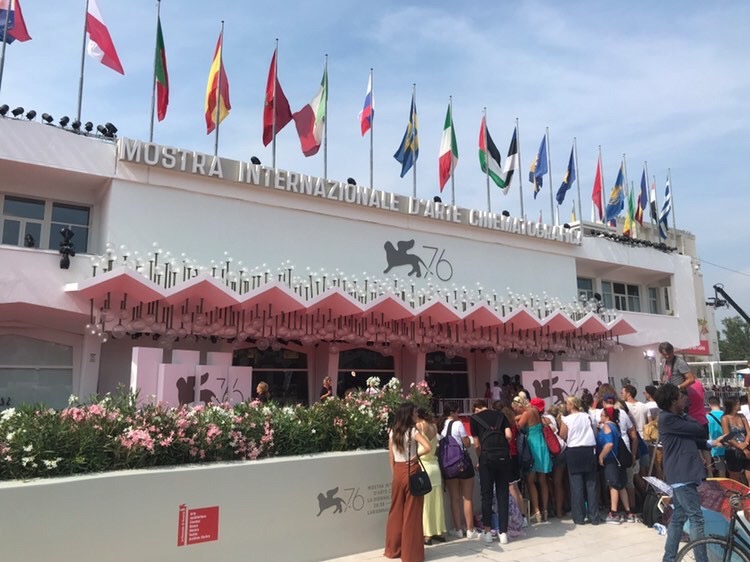
A Seven Member Jury Spanning Four Continents
Gyllenhaal leads a panel of six jurors drawn from Tunisia, Hong Kong, Afghanistan, the United Kingdom, Italy, and France:
- Kaouther Ben Hania: Tunisian director of "Four Daughters" (BAFTA winner) and "The Man Who Sold His Skin" (Oscar nomination for International Feature Film)
- Johnnie To: Hong Kong director with a four decade body of work spanning "PTU," "Drug War," and "Election"
- Shahrbanoo Sadat: Afghan director of "Wolf and Sheep" and "The Orphanage," working from exile after the 2021 Taliban takeover
- Daniel Blumberg: English composer and former frontman of indie band Yuck, who scored "The Zone of Interest" and Guadagnino's own "Queer"
- Francesco Casetti: Italian film theorist and Sterling Professor of Humanities at Yale University
- Xavier Giannoli: French director of "Illusions Perdues" and "Marguerite"
The panel spans commercial genre cinema, art house auteur work, and film theory, covering a broader tonal range than recent Cannes juries.
Maggie Gyllenhaal: From Actor to Jury President
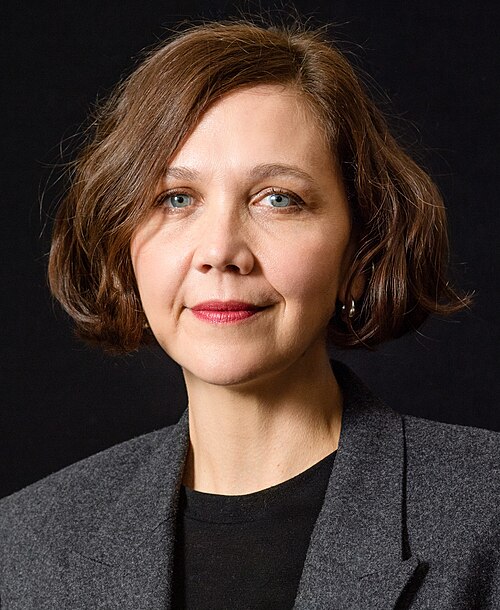
Gyllenhaal made her directorial debut with "The Lost Daughter" (2021), adapted from Elena Ferrante's novel. The film won Best Screenplay at Venice 2021, making her presidency a return to the festival that first recognized her as a filmmaker.
Her public position on AI in cinema has not been documented. That makes her presidency an open variable in how Venice approaches any AI assisted work that reaches competition.
The AI Question Venice Has Yet to Answer
Cannes 2026 excluded films made with generative AI tools from its Palme d'Or competition. Venice has not announced a comparable restriction as of late June 2026.
Guadagnino's "Artificial" is a $40 million production starring Andrew Garfield as OpenAI CEO Sam Altman. Amazon MGM dropped the film after the company's $50 billion investment in OpenAI made its critical framing commercially awkward. Neon acquired worldwide distribution rights in late June 2026 and confirmed an Oscar campaign, with a Venice Lido premiere widely anticipated as the likely debut. The film is not an AI generated work, but its subject matter would place AI at the center of Venice 2026's conversation regardless of any programming rule.
The July 23 lineup announcement will be the first concrete signal of how the festival intends to position itself relative to the debate that Cannes opened.
A Global Jury Outside the Hollywood AI Framework
Five of the seven jurors work entirely outside the United States. None are bound by the SAG-AFTRA, DGA, or WGA agreements that have defined Hollywood's AI negotiations over the past two years.
Ben Hania makes films in Tunisia and France under a production model that has no equivalent of guild contracts. To built his career in Hong Kong's independent genre tradition, outside the studio system. Sadat works from exile, with a practice shaped by displacement and survival, not distribution infrastructure.
This matters because the Hollywood labor framework assumes specific production conditions: union contracts, major studio distribution, collective bargaining over digital likenesses. A director from Afghanistan or Hong Kong evaluating an AI assisted film operates from an entirely different premise. Venice 2026 may produce the first major jury deliberation over AI cinema that takes place entirely outside the American creative economy.
That angle is one the blog has not previously explored. Earlier coverage of AI at film festivals has focused on Cannes, Tribeca, and SIFF, all of which frame AI through a largely Western industry lens. The Venice Reply AI Film Festival runs separately as a corporate competition; the main Venice competition operates on entirely different ground.
The ITU's AI for Good Film Festival, which drew more than 1,300 submissions in 2026, takes a different approach entirely: its 10 finalists are filmmakers using cinema to examine what AI is doing to the world, not to showcase AI production techniques.
Alberto Barbera Renewed Through 2028
Artistic Director Alberto Barbera has been confirmed through 2028, ensuring continuity in the festival's programming philosophy. Barbera has presided over Venice's growth as a serious Oscar platform, premiering films including "Brokeback Mountain," "Joker," and "All Quiet on the Western Front."
His renewal means Venice will not make a sharp directional shift before the competitive landscape around AI cinema has clarified. The festival's approach to AI generated content, streaming first titles, and international coproductions will develop at its own pace, under the same leadership that has guided the Lido for more than a decade.
That commitment extends beyond the main competition. In July 2026, Venice Immersive announced a 10th anniversary lineup of 68 projects featuring Margot Robbie, Andy Serkis, Daisy Ridley and Mark Ruffalo in AI and XR immersive works, the most prominent talent roster in the section's history and a direct expression of how the festival's practical stance on AI plays out across its programming.
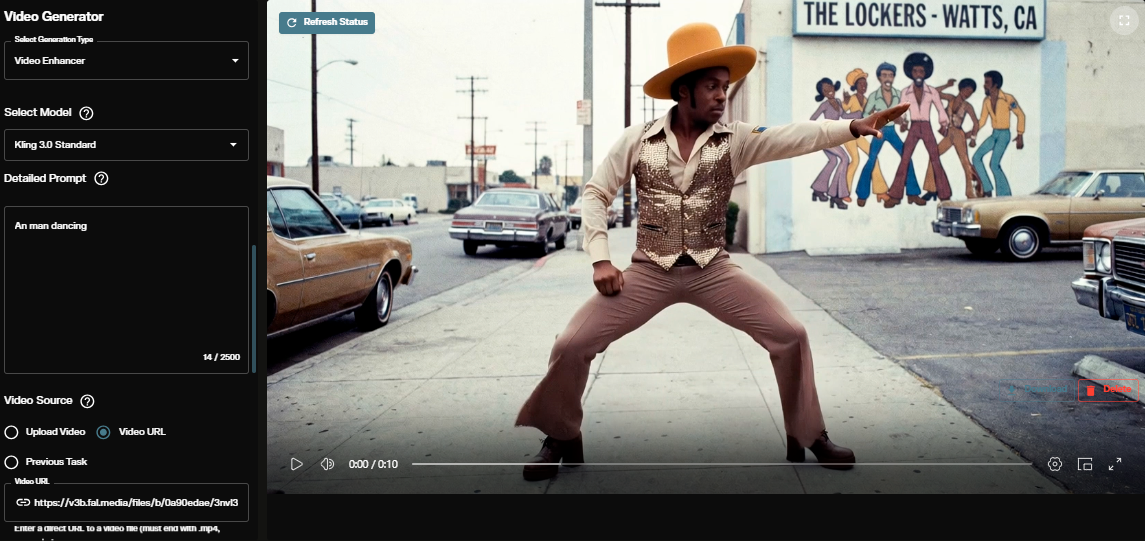
Filmmakers developing work for festival consideration can access text-to-video and image-to-video tools directly through AI FILMS Studio.
What the July 23 Lineup Will Actually Reveal
The films in competition at Venice 2026 will tell the industry more about the festival's position on AI than any statement Barbera could make before the lineup is public. Cannes excluded generative AI tools from Palme d'Or eligibility and communicated that exclusion explicitly. Venice has not announced an equivalent rule. Whether the July 23 announcement includes AI assisted works in the main competition, in sidebar sections, or not at all will define Venice's position for the year.
Guadagnino's "Artificial" is the pivot case. The film is not AI generated, but its subject matter would make any Venice programming decision involving it a statement about how the festival positions itself relative to AI as a cultural topic. A main competition slot for a $40 million film about the OpenAI CEO, arriving at a festival that has not banned AI tools, reads differently than a sidebar placement would.
The lineup announcement will also confirm whether Venice 2026 includes any works that used generative AI tools in their production. Cannes's explicit ban meant that question did not arise for the Palme d'Or competition. At Venice, it is still an open question, and the jury Barbera assembled, drawn primarily from outside the Hollywood guild framework, would evaluate any such work without the specific labor agreement context that shapes American industry attitudes toward AI cinema.
Gyllenhaal's Return to the Lido
Maggie Gyllenhaal's "The Lost Daughter" won Best Screenplay at Venice 2021, making her presidency a return to the festival that first recognized her directing work. The screenplay award was notable for adapting Elena Ferrante's novel in a way that preserved the novel's psychological interior, a technical and artistic challenge that film critics cited as the film's most significant achievement.
Her selection as jury president follows a pattern of Venice choosing jury presidents who have won there as filmmakers rather than simply as performers. The decision places a director who has made work rooted in literary adaptation and close character study at the head of a jury evaluating what may be one of the most internationally diverse AI related competition selections in festival history.
Gyllenhaal's public statements on AI in cinema are not on record. That absence of a documented position makes her presidency an open variable: the jury's decisions on AI adjacent work will be the first signal of where she stands on the question as a filmmaker and now as a juror.
The Barbera Factor
Alberto Barbera's renewal through 2028 means the festival's AI programming approach, whatever it turns out to be, will develop under consistent leadership. Barbera presided over Venice when it became an Oscar season platform with "Brokeback Mountain" in 2005 and "All Quiet on the Western Front" in 2022. He navigated the streaming debate, accepting Netflix and Amazon productions into competition at a time when Cannes was still resisting them.
Barbera has spoken about AI in cinema in general terms but has not announced a competition rule equivalent to Cannes's ban. His track record on streaming suggests he is more likely to evaluate AI cinema on a case by case basis than to adopt an exclusion policy.
When the Venice 83 competition lineup was announced on July 25, Barbera confirmed that approach directly. He told the Hollywood Reporter that AI films are welcome at Venice "under the complete control of the artist", selected an Italian AI film out of competition as an explicit experiment, and unveiled a main selection featuring Danny Boyle, Martin McDonagh, and Werner Herzog.
The Cannes ban was announced before the lineup, giving programmers a rule to apply during selection. Venice's silence is its own signal: either no AI assisted film was selected and the question is moot, or one or more were selected and Venice has decided to let the jury handle it. The lineup announcement resolves the ambiguity.
Venice as the International AI Cinema Debate Platform
Cannes 2026 set one position: generative AI tools are incompatible with the Palme d'Or competition. Venice 2026 has not set a position. That asymmetry between the two most prestigious festivals in the world means whatever Venice does in September will be read as either endorsing the Cannes approach or offering an alternative.
The jury Barbera assembled is well suited to an alternative approach. Its members collectively represent commercial genre cinema, political exile documentary, art house auteur work, music composition, film theory, and French literary adaptation. None of them are bound by Hollywood AI agreements. Their evaluation criteria for a film that used AI tools in production would emerge from their individual aesthetic values and the debate they have among themselves on the Lido, not from an advance policy decision made in Venice's administrative offices.
That structure means the jury could produce a Golden Lion result that the industry reads as a statement on AI cinema, even if Venice never articulates an official policy. A Palme at Cannes was always going to go to a film without generative AI by rule. A Golden Lion at Venice carries no such constraint. Whether one goes to an AI assisted work in 2026 is now the most consequential open question in festival programming for the year.
The two festivals now define the spectrum of institutional positions. Cannes said no to generative AI in competition before it saw what AI cinema could be in 2026. Venice is reserving judgment. For filmmakers working at the intersection of AI and cinema, Venice 2026 is where that judgment gets made in public, with a Golden Lion as the measuring stick and a global press corps on the Lido to record every frame of the deliberations.
The September 2 to 12 window will also coincide with TIFF's opening days. Toronto and Venice run simultaneously in early September and regularly share films. A film that premieres at Venice and transfers to Toronto encounters two very different press and industry audiences within days of each other. Any AI cinema controversy at Venice would travel into the North American market through Toronto coverage immediately, amplifying whatever programming decisions Barbera and the jury produce.
That media dynamic is part of why the July 23 lineup announcement carries weight beyond the films it names. Venice 2026's AI programming choices, whether by inclusion, exclusion, or deliberate silence, will be interpreted and reinterpreted through TIFF, award season, and the ongoing industry debate for the rest of 2026. Barbera knows this. The lineup he presents on July 23 is already a statement, before a single film screens on the Lido.
The commercial stakes for filmmakers are not abstract. A Golden Lion changes distribution terms, critical reception, and award season momentum in ways that directly affect budgets for subsequent projects. Filmmakers who used AI tools in a Venice competition film would set a market reference point for what AI assisted work can achieve at the highest tier of international cinema.
Distributors and platforms evaluating those films would be making decisions with that context in view. The jury Barbera has assembled, drawn primarily from outside the Hollywood guild framework, would evaluate any such work on its own merits rather than against the labor agreement terms that define the American debate. That distinction may produce the most consequential judgment on AI cinema that 2026 delivers.
Venice's September 2 opening date is six weeks after the July 23 lineup announcement, giving the industry six weeks to analyze the programming choices before the first competition screening. That window is when the serious institutional debate will begin. The October awards season calculus starts on the Lido.
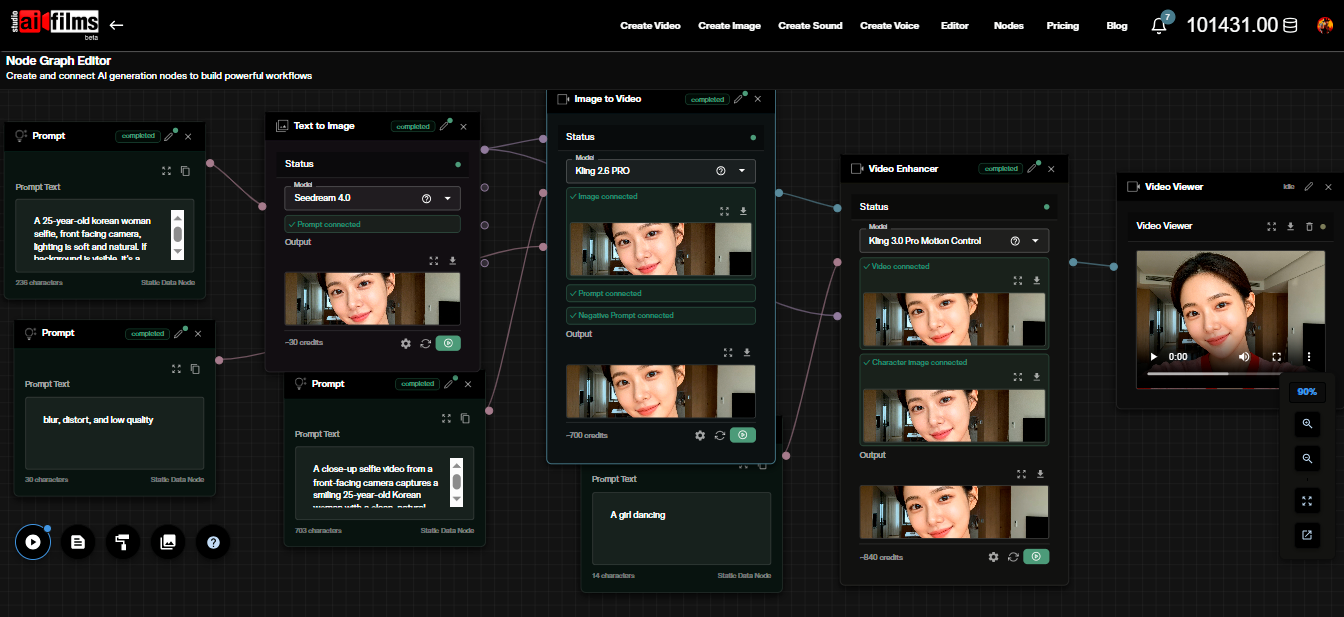
Filmmakers developing projects for festival consideration can explore text-to-video and image-to-video tools at AI FILMS Studio and build custom AI workflows in the Nodes Graph Editor.
Venice Critics' Week added another dimension to the festival's AI profile in July 2026 when it selected an AI assisted Colombian fiction documentary hybrid for its competition lineup. Critics' Week operates independently of the main competition, accepting only debut and sophomore features. The Colombian film's competition slot is the first time Critics' Week has programmed an AI assisted debut in its official selection.
Sources
Variety | Deadline | The Wrap | Screen Daily
Continue Reading
.jpg?w=3840)


Video & LipSync
- Video Generator
- Text to Video
- Image to Video
- Start-End Frame to Video
- Draw to Video
- Motion Control
- Video Enhancer
- Video Upscaler
- Video Extend
- Video to Video LipSync
- Audio to Video LipSync
- Image to Video LipSync
- Video FaceSwap
- Seedance 2.5
- WAN 3.0
- Seedance 2
- FLUX 3
- Minimax H3
- Vidu Q3 Pro
- Grok Imagine Video 1.5
- Gemini Omni
- Google Veo 3.1
- Kling 3.0 Pro
- Luma Ray 3.2
- LTX 2.3
- Happy Horse 1.1
- Kling 3.0 Motion
- ByteDance Upscaler
- InfiniteTalk
- InsightFace
Image & Edit
- AI Character
- AI Actor
- Art Generator
- Text to Image
- Image to Image
- LoRA Image to Image
- Draw to Edit
- Image LoRA Training
- Remove Background
- Image Enhancer
- MidJourney 8.0
- Krea 2
- OpenAI GPT Image 2.0
- Nano Banana Pro Ultra
- Nano Banana 2 Lite
- Nano Banana Pro
- Minimax Image
- Clarity Pro
- Z-Image Turbo LoRA
- Krea 2 Turbo LoRA
- Z-Image LoRA Trainer
- Qwen Image LoRA Trainer
- Background Erase Network 2 (BEN2)