
District 9 Director Neill Blomkamp Releases 'Nightborne', a 13-Minute AI Horror Short, and Launches Barley Studios

Frame from Nightborne (2026). Directed by Neill Blomkamp. Courtesy Barley Studios.
Share this post:
District 9 Director Neill Blomkamp Releases 'Nightborne', a 13-Minute AI Horror Short, and Launches Barley Studios
Neill Blomkamp directed District 9, Elysium, and Chappie. On July 20, 2026, he released Nightborne on YouTube. The film is a 13-minute science fiction horror short built entirely in Seedance 2.0, directed shot by shot through text prompts. With it, he announced Barley Studios, a new AI production company he describes as the successor to Oats Studios.
What Nightborne Is
Nightborne is presented in documentary style. It follows a U.S. Army pilot who is officially declared dead after being shot down. Evidence in the film points to a classified military program called Project Nightborne, designed to resurrect fallen soldiers for combat. The 13-minute runtime is structured as a test of a feature film pipeline, not as a short film statement on its own terms.
Blomkamp was direct about the purpose. "NIGHTBORNE is the first full test AI film I have made," he stated. "I've been experimenting with AI for a couple of years, and it's now at the point where I want to tackle a full feature in this format." The short is a proof of concept run before committing to a 90-minute project.
How It Was Made
Blomkamp directed Nightborne shot by shot using text prompts in Seedance 2.0. Every frame in the final film was generated by the model. The creative infrastructure around it, however, was conventional production practice.
Concept artists Nikolas Gekko and Werner Pretorius developed the visual language before generation began. Terri Tatchell, who wrote District 9 with Blomkamp, served as producer and writer on Nightborne. Steven St. Arnaud produced the project, and Austyn Daines edited. The production company is Havenhurst Entertainment in association with Barley Studios.
Thirty-two people were photographed and had their voices recorded under likeness agreements to appear in the film. Blomkamp described the project as "made with real concept artists, and features the faces and voices of 32 real people." Each participant contributed their face and voice in a controlled session. The model generated everything visible on screen.
The likeness agreement model creates a new category of performance work. It combines elements of acting, modeling, and stock licensing. The separation between creative direction and physical performance has no direct equivalent in conventional production. A director writes the shot description; a concept artist establishes the visual target; a real person's face and voice anchor the character; the model produces the output.
What Blomkamp built is a repeatable pipeline. The prompt by shot method, the concept art development phase, the pre-recorded likeness pool. Each element applies to a longer project without requiring new infrastructure. The same process runs 90 minutes.
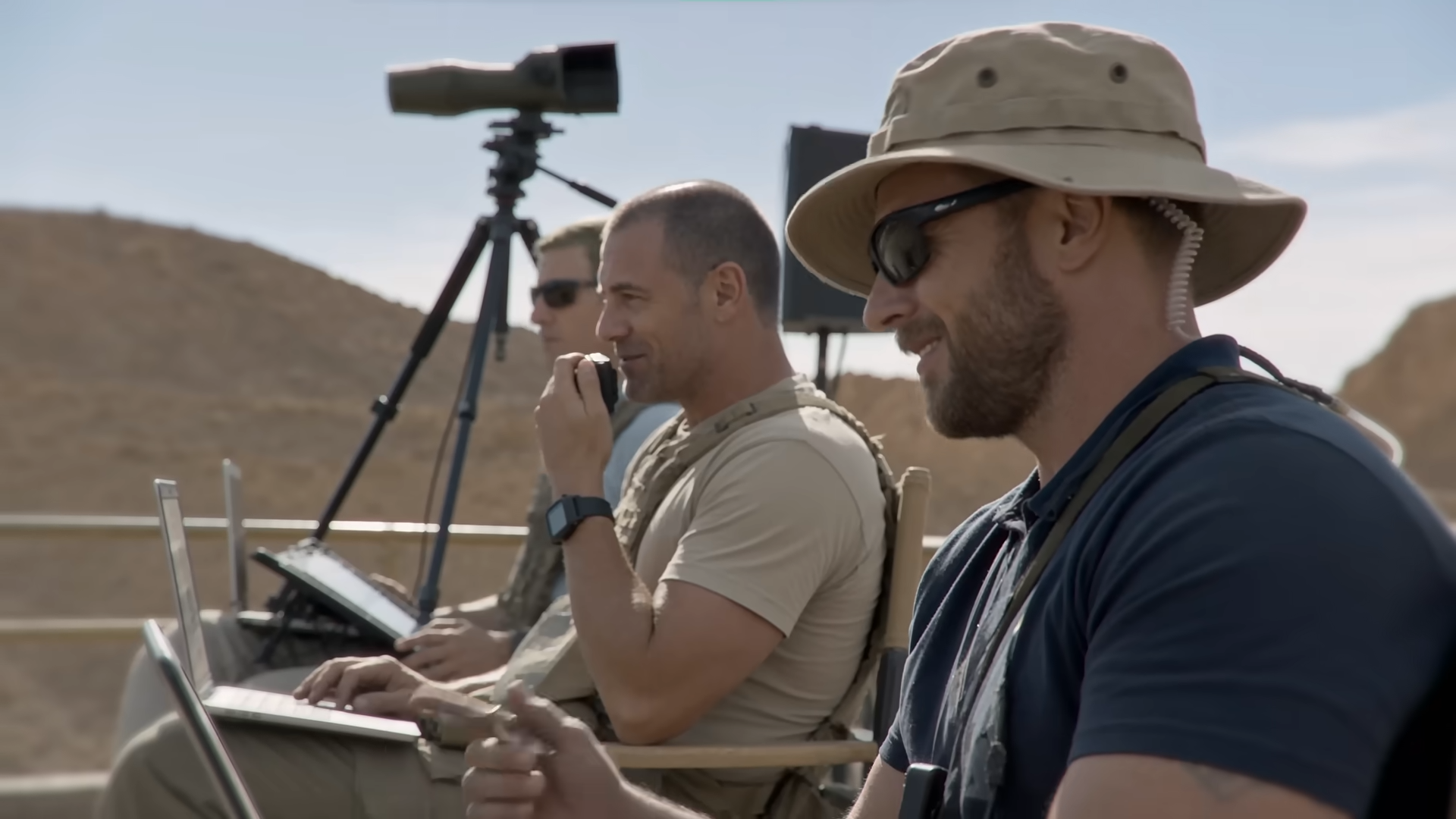
Frame from Nightborne (2026). Directed by Neill Blomkamp. Courtesy Barley Studios.
Why the Documentary Style
Nightborne is presented as found footage and documentary evidence rather than as a narrative film with conventional cinematography. That choice is not accidental. Documentary style places the camera in positions that match what AI video generation does well. Static frames, frames that move slowly, medium shots and close shots, controlled environments. A fast action sequence across multiple locations asks more from the model than a locked off interview framing or a tight close shot on a face.
The decision to set the film inside a classified military investigation also serves the format. Documentary evidence, including classified files, interview recordings, and surveillance footage, allows the film to move between visual modes without requiring smooth continuity between them. Each piece of evidence has its own visual register. Cutting between different visual registers is a creative solution to the consistency problems that affect AI generated video over long sequences.
Blomkamp has been building toward this for years. His Oats Studios shorts from 2017 onward (Rakka, Firebase, Zygote) used traditional VFX to produce work that sat outside the Hollywood development system. Nightborne applies the same instinct to a different toolset. Direct the film you want, release it independently, and treat the audience as a test of what the format can support.
Watch Nightborne
Barley Studios and What Oats Studios Was
Blomkamp founded Oats Studios in 2017 as an independent outlet for high budget experimental shorts released free on YouTube. The shorts demonstrated what a director with major studio credits could produce outside the studio system when cost was removed as a constraint. Rakka starred Sigourney Weaver. Firebase explored military horror with effects work comparable to a theatrical release. Zygote starred Dakota Fanning. None required a green light from a studio. All required a crew, physical production, and significant VFX budgets.
Barley Studios operates on different economics. "Barley Studios will be my new AI studio for creating my own films, the way Oats Studios was for traditional film and VFX," Blomkamp stated. The creative independence is identical. The production requirement is not. Oats Studios shorts required months of physical production. Barley Studios shorts require a prompt pipeline, a concept art team, and likeness agreements. A director who spent his career managing large crews and complex VFX pipelines can now produce work of comparable visual ambition with a fraction of that infrastructure.
The Oats Studios comparison also carries a commercial reading. Oats Studios shorts functioned as development vehicles. They demonstrated a filmmaker's instincts outside the studio note process. Barley Studios can serve the same function for Blomkamp's AI feature ambitions without requiring studio support to build the demonstration.
The Path to a Full Feature
Blomkamp stated his intention to tackle a full AI feature. Nightborne tests the pipeline that feature will run on. The prompt by shot method, the likeness pool, the concept art phase. All of it scales to a longer project without structural change. A 13-minute test and a 90-minute film run the same workflow. The difference is duration, not process.
The commercial path for that feature is clearer than it was two years ago. Gossip Goblin's AI anthology Gods Don't Give Gifts is opening in several hundred U.S. theaters on October 30, produced with Fable Studio. That precedent shows that theatrical distribution is available to AI filmmakers who build an audience before the film is finished. Blomkamp has a larger existing audience than most independent AI directors, which changes the distribution math considerably.
The Critical Response
Gizmodo described the footage as looking "more or less like real footage from an 8K movie camera at first glance" before concluding that the work is emotionally hollow. The technical fidelity was acknowledged. The emotional engagement was not. That gap, between visual realism and narrative feeling, is the central problem for AI narrative filmmaking in 2026 at feature length.
The optimistic reading of that review is that Blomkamp ran the test and learned what a full test reveals. A 13-minute short built on a new pipeline exposes gaps that a trailer cannot. The gaps Gizmodo identified, specifically pacing, performance cadence, and emotional register, are exactly what a feature director needs to solve before committing to 90 minutes. Nightborne does not claim to be a finished artistic statement. Blomkamp said it was a test. By that measure, a review that identifies specific failures is a useful result.
Seedance 2.0 and Established Directors
Jia Zhangke, whose A Touch of Sin and Ash Is Purest White established him as one of contemporary China's most important filmmakers, used Seedance 2.0 earlier in 2026 for an AI short presented at Filmart. Both Jia and Blomkamp follow the same pattern. A director with a long conventional filmography builds something outside the studio system with AI tools, treating the result as a test rather than a final statement.
That pattern is becoming a category. Directors who have spent decades navigating studio development are finding that AI tools remove the dependency on that system for experimental work. The model handles the production. The director handles the creative problem. The result lands directly on YouTube with no distributor, no marketing budget, and no development process between the idea and the audience.
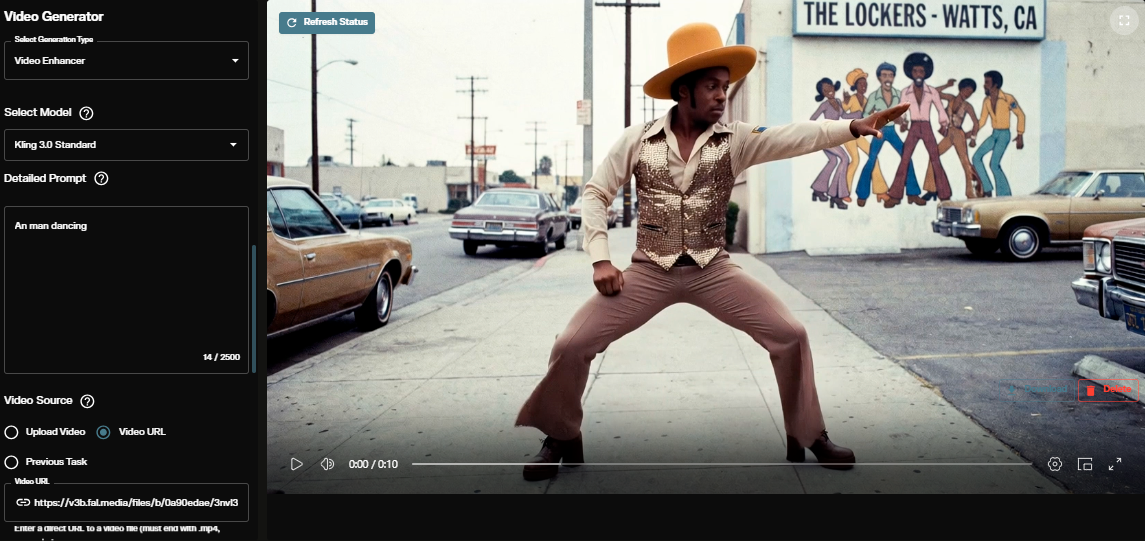
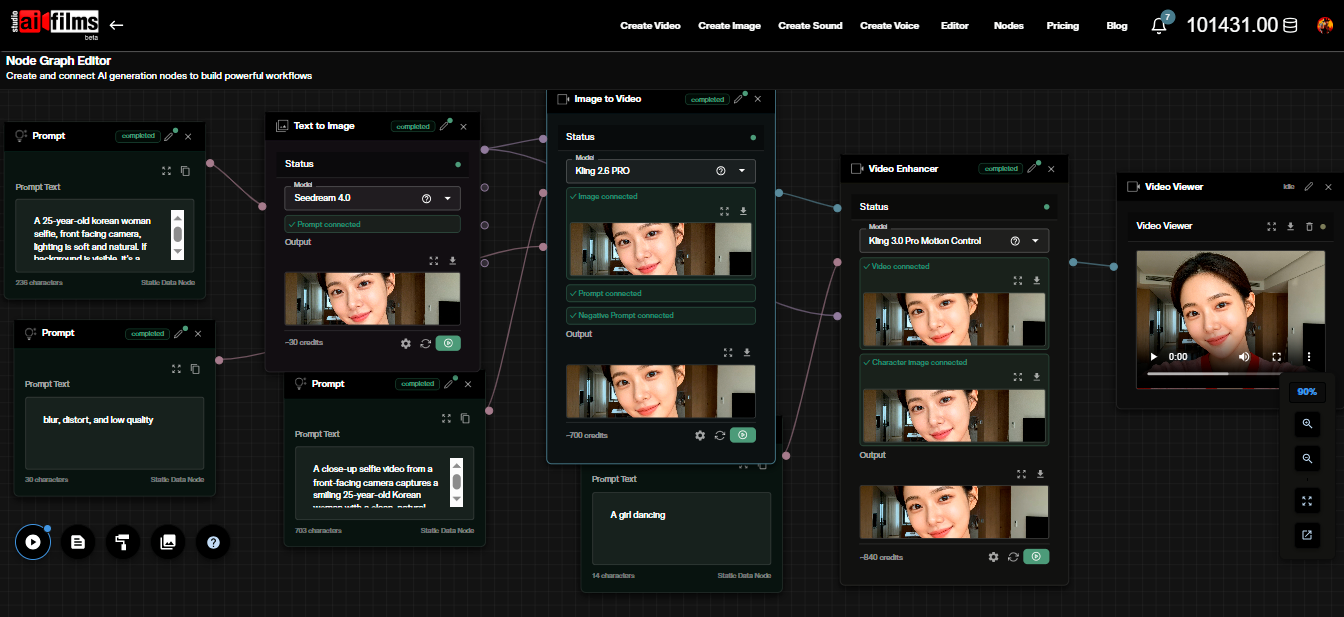
You can generate your own footage with Seedance 2.0 and the other models available in the AI FILMS Studio video workspace. The Seedance 2.0 tutorial covers the full prompt workflow, resolution options, and generation settings.
Sources
The Playlist | Dark Horizons | TechBuzz | Workman Labs | Gizmodo | Futurism | X / Neill Blomkamp
Continue Reading
.jpg?w=3840)


Video & LipSync
- Video Generator
- Text to Video
- Image to Video
- Start-End Frame to Video
- Draw to Video
- Motion Control
- Video Enhancer
- Video Upscaler
- Video Extend
- Video to Video LipSync
- Audio to Video LipSync
- Image to Video LipSync
- Video FaceSwap
- Seedance 2.5
- WAN 3.0
- Seedance 2
- FLUX 3
- Minimax H3
- Vidu Q3 Pro
- Grok Imagine Video 1.5
- Gemini Omni
- Google Veo 3.1
- Kling 3.0 Pro
- Luma Ray 3.2
- LTX 2.3
- Happy Horse 1.1
- Kling 3.0 Motion
- ByteDance Upscaler
- InfiniteTalk
- InsightFace
Image & Edit
- AI Character
- AI Actor
- Art Generator
- Text to Image
- Image to Image
- LoRA Image to Image
- Draw to Edit
- Image LoRA Training
- Remove Background
- Image Enhancer
- MidJourney 8.0
- Krea 2
- OpenAI GPT Image 2.0
- Nano Banana Pro Ultra
- Nano Banana 2 Lite
- Nano Banana Pro
- Minimax Image
- Clarity Pro
- Z-Image Turbo LoRA
- Krea 2 Turbo LoRA
- Z-Image LoRA Trainer
- Qwen Image LoRA Trainer
- Background Erase Network 2 (BEN2)