
Gore Verbinski Proposes an AI Rating System for Films at Taormina

Share this post:
Gore Verbinski Proposes an AI Rating System for Films at Taormina
Gore Verbinski called for a film industry rating system for AI disclosure at the 72nd Taormina Film Festival this week, where the Pirates of the Caribbean director was presenting "Good Luck, Have Fun, Don't Die," his science fiction film starring Sam Rockwell. "You almost need a rating system," Verbinski said. "If you use AI to write a script, you get an F."
The Taormina Film Festival
The 72nd Taormina Film Festival takes place in the Sicilian coastal city of Taormina, one of Italy's oldest film events and a consistent platform for European press coverage of Hollywood directors. Verbinski presenting there rather than at a North American event meant his remarks reached European industry press first.
The festival's location and scale put it in a different tier than Cannes or Venice, but it has a long history of hosting major American directors for retrospective conversations and new work presentations. Verbinski's AI remarks arrived in that context: as part of a career conversation, not a guild debate or policy forum.
Taormina's European context also matters for the rating system proposal specifically. The EU AI Act, which came into force in stages from August 2024, includes transparency requirements for AI generated content. European audiences and distributors are already operating in a regulatory environment that treats AI disclosure as a legal matter, not just an ethical preference. Verbinski's call for a rating system lands differently in that context than it would at a North American festival where disclosure is entirely voluntary.
The Irony of an AI Thriller Director's AI Remarks
"Good Luck, Have Fun, Don't Die" is a film in which artificial intelligence threatens humanity. Verbinski made it while simultaneously opposing AI's expansion into creative filmmaking roles. The two positions are consistent: a film critiquing AI as a threat to human agency, made without AI in the creative roles he considers central, presented at a festival where he called for AI disclosure requirements.
The film's narrative is not what drew press attention at Taormina. Verbinski's rating system proposal did. The connection between the film's premise and its director's public position is the kind of alignment between artistic statement and public argument that gets a filmmaker's remarks quoted beyond the entertainment press. He is not separating his work from his opinions on AI. He is presenting them as the same thing.
'If You Use AI to Write a Script, You Get an F'
Verbinski envisions a disclosure system modeled on the MPAA framework, applied to AI use rather than content. It would require filmmakers to declare specifically what AI was used for, with each category of use carrying a public grade visible to audiences and the industry at large.
A checkbox system already exists on some productions, requiring declarations of no AI use. Verbinski argues it is inadequate for where the technology is headed. "You're supposed to check this box to say no AI is used in your movie, and it's going to become very complicated soon," he said.
The core demand is transparency. "You have to be absolutely transparent about what it was used for," he said. "I would never try to use it to be in front of the story."
The MPAA Rating System as the Template
The MPAA ratings (G, PG, PG-13, R, NC-17) are voluntary but industry universal because theaters and platforms enforce them as a condition of distribution. Verbinski's graded AI disclosure system would require the same enforcement mechanism to function: a distributor or exhibitor requiring the disclosure grade as a condition of theatrical or streaming placement.
Without that enforcement layer, a rating system becomes a labeling convention that studios can ignore. The MPAA system worked because theater owners and streaming platforms refused to carry films without ratings. Verbinski's proposal is structurally dependent on distributors adopting the same position toward AI disclosure grades. No major distributor has indicated they would do so.
'Good Luck, Have Fun, Don't Die' Arrives at Taormina
"Good Luck, Have Fun, Don't Die" stars Sam Rockwell as a time traveling madman who recruits help to save humanity from artificial intelligence. The film premiered at the Berlin International Film Festival before Briarcliff Entertainment acquired US distribution rights and released it theatrically in February 2026.
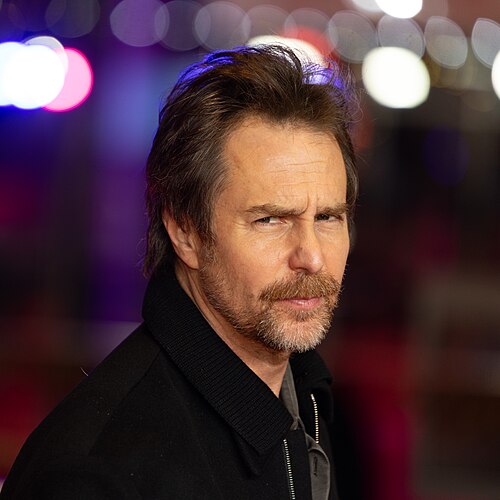
Harald Krichel, CC BY-SA 4.0, via Wikimedia Commons
Verbinski independently financed the project after running into difficulties with studio backing. The film developed a devoted following despite a modest theatrical run, with Collider naming it one of 2026's cult works.
The director's views on AI are embedded in the film itself, making his Taormina comments an extension of the work rather than a separate statement. He said he wants to make films "purely analog and just tell a movie with no visual effects."
Which Entry-Level Roles AI Has Already Displaced
Verbinski's most direct concern at Taormina was the disappearance of the entry level workforce. "The loss of apprenticeship is a major concern," he said. The tasks AI has displaced were also how the next generation of craftspeople learned the trade.
Visual development artists, background painters, digital intermediate colorists working on texture passes, and scene background generators are among the positions AI tools have absorbed in the last two years. These are not senior roles. They are the positions that people entering film production took as their first industry job. Losing them does not only affect the people displaced. It removes the mechanism by which knowledge transfers from experienced practitioners to new ones.
The apprenticeship concern distinguishes Verbinski from directors who focus primarily on creative authorship in AI debates. His argument is structural: if entry level roles disappear, the pipeline that produces the next generation of directors, cinematographers, and production designers also disappears. Senior craftspeople who trained through those entry level roles cannot be replaced by people who skipped them. The skills are cumulative, built through years of watching experienced practitioners make decisions and being corrected when wrong.
That concern is part of a critique Verbinski developed publicly before the festival. "Why is AI helping me write a song or tell a story?" he told The Hollywood Reporter in February. "I don't want it to breathe or fuck for me; I want it to solve cancer."
Where He Draws the Line
Verbinski acknowledged that AI has been part of filmmaking for roughly two decades, primarily in technical applications: color grading software, digital sharpening, and restoration tools. His opposition targets its expansion into creative roles, specifically writing, story development, and the choices that define a director's voice.
He also draws a line around economic reality. An independent filmmaker who genuinely cannot afford to realize a central creative element has, in his view, grounds to use AI. His objection is to undisclosed use and to AI displacing human creative judgment, not to every application of the technology.
"These are AI's formative years, and we're fucking with it in a way," he told THR. "What is it doing to us, and what are we doing to it?"
That question is not rhetorical. It is the central concern of a director who has watched a generation of production tools change what is possible in film and who sees AI as a different kind of change. Previous tools expanded what human decisions could produce. AI tools can produce without those decisions. What they produce without human judgment is the part Verbinski considers indefensible to leave undisclosed.
Color Grading and Restoration as the Permitted Zone
Verbinski's distinction between permitted and prohibited AI use rests on a principle: AI is acceptable where it assists a human decision rather than generating content autonomously. Color grading has used algorithmic tools since the late 1990s. Film restoration software has used machine learning since the early 2010s.
Both assist human decisions: a colorist sets the grade, the AI tool helps achieve it; a restoration artist directs the repair, the AI tool fills missing frames. Where Verbinski draws the line is where the AI tool generates content that would otherwise require a human to make creative choices. Writing a script is the clearest case. Generating a background environment without a human set designer making the visual decisions is another.
The DGA Four-Year Deal on Disclosure
The DGA four year deal ratified on June 9 requires studios to consult directors before deploying generative AI on the creative elements of a production. That requirement operates inside the production relationship, between employer and director, before release.
Verbinski's proposal extends disclosure into the public-facing distribution chain, which no guild agreement currently reaches. It would put AI disclosure in front of audiences rather than keep it inside the production process, and it goes further than any existing framework. The Art Directors Guild's formal condemnation of Martin Scorsese's advisory role at Black Forest Labs showed what institutional responses to undisclosed AI adjacency look like. Verbinski is proposing a structure that would make the question visible before a film ever reaches theaters.
A Proposal the Guild Contracts Have Not Made
A checkbox system covers whether AI was used at all. A graded rating system would disclose what it was used for, how extensively, and whether the use affected creative decisions the audience would otherwise attribute to human authorship. No guild, distributor, or major festival currently requires that level of disclosure.
What Verbinski is describing is a public accountability mechanism that would change the economics of AI production: a film disclosed as AI scripted would carry that grade into every distribution negotiation. Whether that accountability would deter undisclosed use or simply create a category of films that accepts the grade and releases anyway depends on whether distributors and audiences treat the grade as a meaningful signal.
The Human Provenance in Film Standard
A voluntary standard called Human Provenance in Film was announced at Cannes on May 12, 2026, proposing disclosure labeling for AI use in films distributed internationally. The standard is voluntary, proposed by an independent coalition of film industry professionals, and has not been adopted by any major studio, distributor, or festival as of June 2026.
Verbinski's graded rating system and the Human Provenance standard are both responses to the same absence: no mandatory public disclosure requirement for AI use in film production. Both proposals rely on industry adoption rather than legal mandate, which means both depend on the same commercial incentives that currently make undisclosed AI use attractive. Neither proposal has a mechanism for enforcement that the MPAA framework has through distributor requirements.
Verbinski's Career and What He Is Protecting
The Pirates of the Caribbean trilogy, The Ring, Rango, and Lone Ranger all involved elaborate visual worlds built through large crew productions. Verbinski's career is a record of how human craft decisions accumulate into visual environments that are recognizable as belonging to a specific filmmaker. The Rango animation is the clearest example: every character design, movement style, and environmental detail was a decision made by a person whose judgment is visible in the finished film.
Verbinski's concern about AI in production is not abstract. It is the concern of a filmmaker whose identity is expressed through the craft decisions that AI generation can now produce without those decisions. The rating system proposal is a mechanism for making visible what those decisions are and who made them.
Rango was produced at ILM with a crew of hundreds of animators, each of whom made craft decisions visible in the final film. The AI generation equivalent of Rango's environment could be produced by a team of prompt engineers. What Verbinski is asking for, through his rating system, is a way for audiences to know which of those two things they are watching. He considers that information relevant. The current system provides no mechanism for delivering it.
Where Verbinski Lands on the AI Debate
Gore Verbinski is not in the category of directors who have refused to comment or who have given qualified endorsements. His position is clear, consistent, and expressed through both his public statements and his films. He permits AI in technical production roles. He opposes it in creative ones. He wants the distinction to be legible to audiences.
That position places him between the categorical opposition of directors like Seth Rogen, who said at Cannes that using AI to write scripts disqualifies the activity from being called writing, and the pragmatic adoption framing of directors who have discussed AI tools as part of their production kits. Verbinski's graded disclosure proposal is an attempt to preserve the distinction in public, through a labeling system, rather than through categorical refusal.
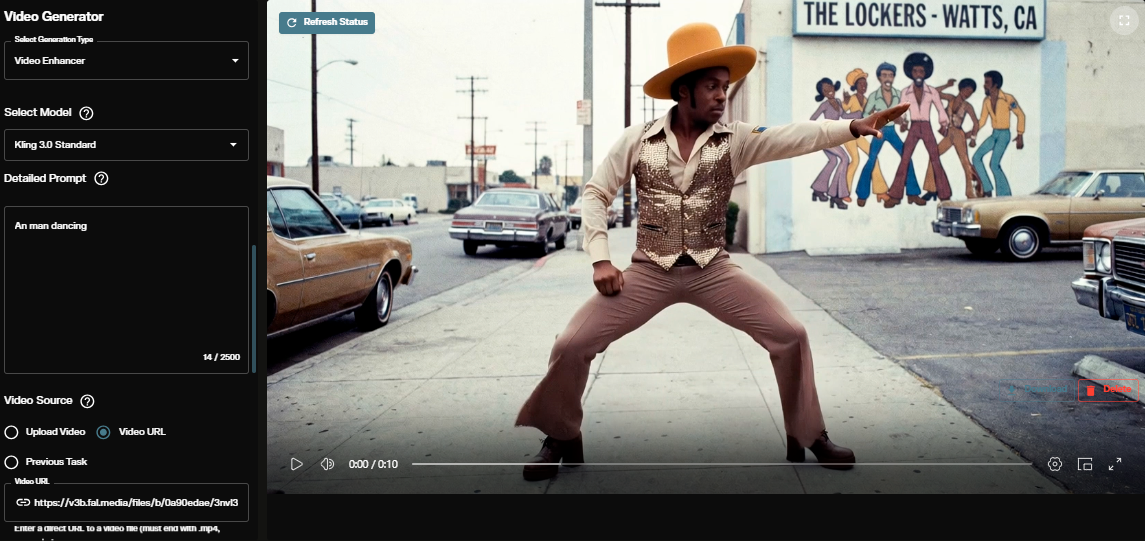
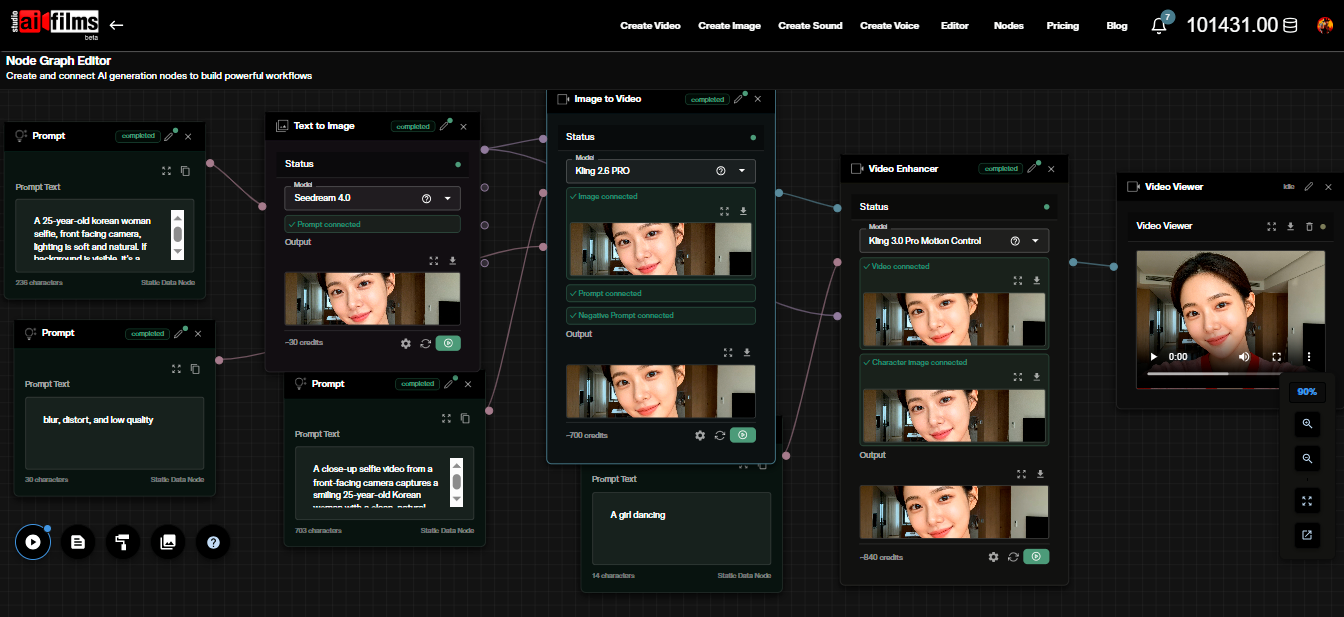
Independent filmmakers can access AI video and image generation tools through the AI FILMS Studio video workspace.
The AI disclosure question Verbinski is raising is not resolved by any existing industry framework in 2026. Guild agreements require consultation between director and studio; they do not require public disclosure to audiences. Verbinski's rating system proposal would require both. The industry has the first. It does not have the second. Whether it will is the open question his Taormina remarks place on the table.
The Broader Context at Taormina
Verbinski is one of several American directors who have spoken on AI in public forums in 2026 without being prompted by a specific film production controversy. His comments at Taormina follow Shawn Levy's remarks at the Breakthrough Prize ceremony about responsible integration, Peter Jackson's framing of AI as a tool like any other at Cannes, and Guillermo del Toro's categorical opposition to AI in art at the same festival. The divergence in positions is real, and it is being expressed in public with unusual candor. Verbinski's rating system is the most specific structural proposal any of them has made.
None of the other directors has proposed a mechanism for making their position visible to audiences at the point of distribution. That is the distinction between having an opinion on AI and proposing a system that changes the economics of how AI gets used.
Sources
Variety | The Hollywood Reporter | Deadline
Continue Reading


Video & LipSync
- Video Generator
- Text to Video
- Image to Video
- Start-End Frame to Video
- Draw to Video
- Motion Control
- Video Enhancer
- Video Upscaler
- Video Extend
- Video to Video LipSync
- Audio to Video LipSync
- Image to Video LipSync
- Video FaceSwap
- Seedance 2.5
- WAN 3.0
- Seedance 2
- FLUX 3
- Minimax H3
- Vidu Q3 Pro
- Grok Imagine Video 1.5
- Gemini Omni
- Google Veo 3.1
- Kling 3.0 Pro
- Luma Ray 3.2
- LTX 2.3
- Happy Horse 1.1
- Kling 3.0 Motion
- ByteDance Upscaler
- InfiniteTalk
- InsightFace
Image & Edit
- AI Character
- AI Actor
- Art Generator
- Text to Image
- Image to Image
- LoRA Image to Image
- Draw to Edit
- Image LoRA Training
- Remove Background
- Image Enhancer
- MidJourney 8.0
- Krea 2
- OpenAI GPT Image 2.0
- Nano Banana Pro Ultra
- Nano Banana 2 Lite
- Nano Banana Pro
- Minimax Image
- Clarity Pro
- Z-Image Turbo LoRA
- Krea 2 Turbo LoRA
- Z-Image LoRA Trainer
- Qwen Image LoRA Trainer
- Background Erase Network 2 (BEN2)