
'Apocalypse Civilizations: Rome' Uses AI to Reconstruct Battles No Camera Ever Filmed

Share this post:
'Apocalypse Civilizations: Rome' Uses AI to Reconstruct Battles No Camera Ever Filmed
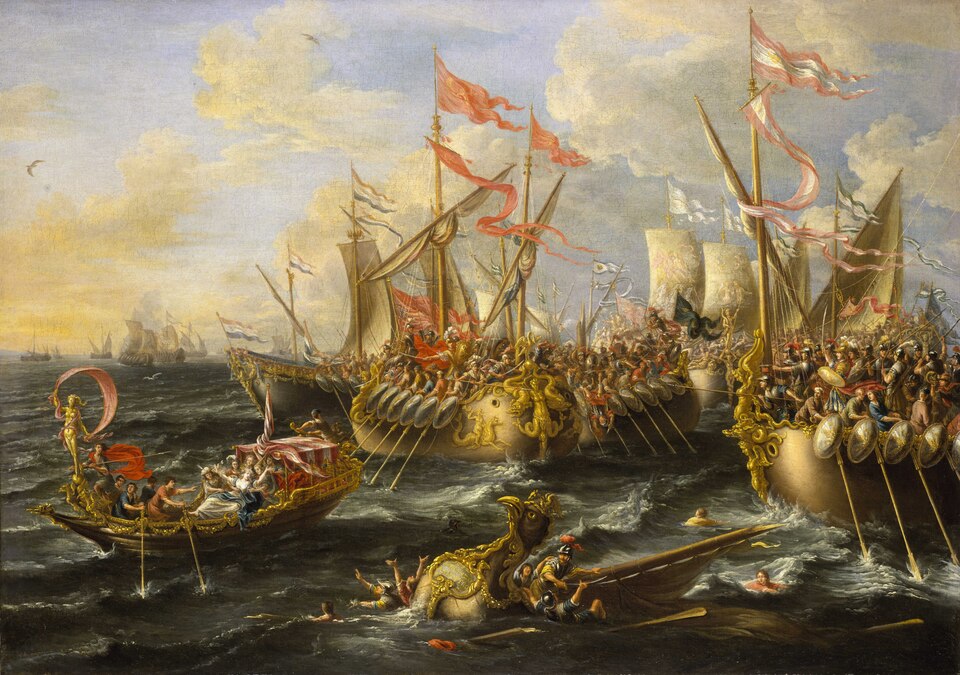
Mediawan announced at the Sunny Side of the Doc market in Brest, France on June 16, 2026 that its Apocalypse documentary franchise is producing its first ancient history installment, using AI to recreate visual material for events that predate cinema by two thousand years.
The project, Apocalypse Civilizations: Rome, centers on the Battle of Actium, fought on September 2, 31 BC. That battle determined whether Octavian or Mark Antony and Cleopatra would control the Roman world. It is among the most consequential naval engagements in Western history, and it produced no footage.
The franchise has been broadcast in 165 countries and has accumulated over 100 million viewers. Applying that editorial infrastructure to ancient Rome requires the production to solve a problem its earlier installments never faced: the archive it would normally draw on does not exist.
The Franchise's First Ancient History Episode
The Apocalypse series launched in 2009 with a focus on catastrophes of the 20th century. Its installments on World War I, World War II, and other modern conflicts built their visual authority on actual archival footage, restored and assembled into a distinctive documentary style. That foundation is what the franchise's global audience has come to expect.
Rome removes that foundation entirely. There are no newsreel cameras at Actium, no photographs, no film stock, no documentary record of any kind from the ancient world. The production must generate the visual evidence from scratch, using archaeological research, specialist consultation, and AI tools to construct what a cinematographer would have filmed if one had been standing on the water that day.
That distinction carries editorial weight. Previous Apocalypse installments invited viewers to watch what actually happened, mediated through surviving documentation. The Rome installment invites viewers to watch a reconstruction of what historians and archaeologists believe happened, rendered in a visual language borrowed from documentary filmmaking.
France TV Distribution announced it has acquired worldwide rights to the production. That acquisition by a major distribution arm signals institutional confidence well beyond an experimental project.
The franchise's scale also shapes the stakes of the AI decision. A 100 million viewer audience across 165 countries has established expectations about what Apocalypse looks like and what it claims to show. Using AI to generate visual material for the Rome installment is not a quiet experiment. It is the franchise's public commitment that AI generated reconstruction can meet the standards its global audience has built up over 16 years of broadcast history.
The production team addressed this directly in their announcement statement: "With 'Apocalypse Civilizations: Rome,' viewers are plunged into the heart of this founding moment, alongside the men and women who lived it". That claim, standard for the franchise's immersive editorial voice, carries different weight when the visuals are AI generated rather than archival. The audience that trusted the Apocalypse house style for modern history is now being asked to extend that trust to ancient Rome.
The Battle of Actium
On September 2, 31 BC, Octavian's fleet, commanded by his general Marcus Agrippa, met the combined naval forces of Mark Antony and Cleopatra at the Ionian Sea near the promontory of Actium on the western coast of Greece. Antony had approximately 500 warships. Octavian's fleet was smaller but tactically superior.
Within hours, the Antony and Cleopatra forces retreated. The two fled to Egypt, where both died within a year. Octavian returned to Rome, was renamed Augustus, and governed as the first Roman Emperor for the following 44 years. The Roman Republic ended at Actium.
The battle's historical consequence makes it a compelling subject for the franchise's methodology. Previous Apocalypse installments covered events their audiences had living relatives who remembered. The Rome installment reaches back far enough that the stakes are legible through secondary education rather than personal memory. The AI reconstruction has to do work that archival footage would have done: make the scale of the event feel present and physical.
The production's choice of Actium over other Roman subjects also reflects a specific editorial logic. Julius Caesar's assassination, the Punic Wars, and the fall of the Republic across decades are all more diffuse as narrative subjects. Actium is a single day, a single battle, a decisive turning point with clear protagonists on both sides. The Apocalypse format, built around compressed catastrophic events, fits Actium better than it would fit the slow institutional decline of a republic.
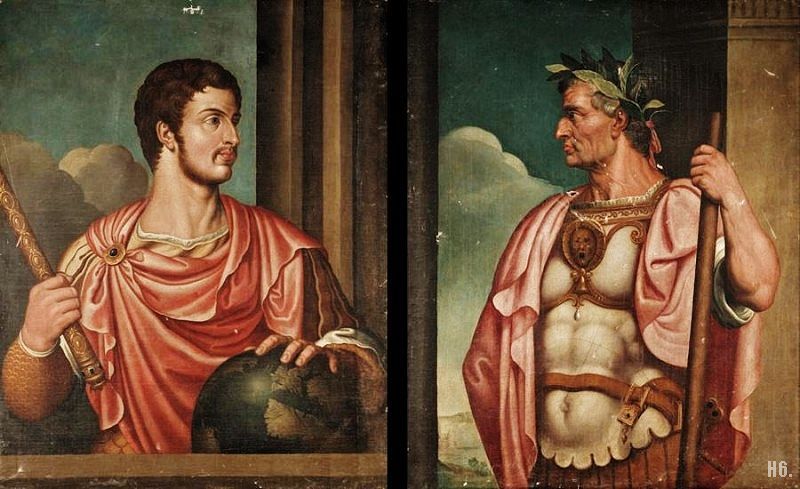
Ancient historians including Plutarch, Cassius Dio, and Velleius Paterculus described the engagement in detail. That textual record provides the documentary foundations the production team will translate into visual material, consulting specialists in Roman naval warfare, ancient geography, and archaeological evidence from the Actium site.
The archaeological record for Actium is substantial. Excavations at the site over the past three decades have recovered bronze rams from Roman warships, providing precise data on the size and construction of the vessels engaged. Ancient coins minted after the battle depict the ships and the victory monument. Portrait busts of Octavian, Antony, and Cleopatra survive in multiple versions across museum collections worldwide. The production team has more visual source material than any previous documentary on the subject, even if none of it is moving image.
The production team stated their methodology directly: "Every face, every ship and every landscape is grounded in ancient sources, the latest archaeological discoveries, and the work of leading international specialists". Their stated aim is a visual reconstruction that can withstand scrutiny from the historical community, not a dramatization trading accuracy for spectacle.
The "leading international specialists" described in the announcement are likely to include Roman naval historians, Hellenistic art historians, and archaeologists who specialize in the Actium region. The involvement of academic specialists in AI documentary production is a safeguard for the reconstruction's credibility, and a feature that distinguishes this type of project from AI generated historical content produced without scholarly oversight.
AI as Archaeological Imagination
The AI methodology Mediawan is deploying for Rome is meaningfully different from the AI work applied to colorized World War II documentaries. Colorization adds a new visual layer to real historical material that has survived to the present. The Rome project has no surviving material to process.
What the production is doing is closer to archaeological visualization than archival restoration. The team is using AI to generate what the historical record describes: specific ships matching known Roman naval designs, faces drawn from ancient portraits and busts, coastlines from established geography. The result will look like archival footage, but it is built entirely from scholarship.
Deadline's coverage framed the goal as making AI generated visuals look like found footage from 2,000 years ago. That aesthetic ambition requires the production to match the grain, contrast, and framing conventions of mid-20th century documentary film, applying them to scenes constructed from AI generation and historical research. The visual grammar of documentary authority is borrowed backward across two millennia.
The method asks a specific question the documentary form has never had to answer before: what does September 2, 31 BC look like on film? The answer the production is building comes from archaeologists, classicists, and AI tools working in combination. How audiences interpret that answer, and whether they find it adequate, is the central editorial risk the project is taking.
The ethical dimension is also distinct from the debates surrounding AI in scripted entertainment. No human performer's likeness or voice is being replicated without consent. The faces being generated are those of people who died two millennia ago. The ships being modeled come from archaeological reconstruction, not from a living designer's protected work. The consent questions that have defined the guild debates over AI do not apply here in the same way.
That distinction does not resolve all questions about AI in documentary. The credibility claim of a documentary depends partly on its audience believing that what they see reflects what actually happened. The Rome project asks viewers to accept that AI generated imagery, grounded in specialist research, can carry the same documentary authority as found footage. Whether that claim holds up as audiences watch is something no announcement can settle.
The Darren Aronofsky Precedent
Mediawan's announcement is the second major AI historical reconstruction documentary announced in 2026. In January, Darren Aronofsky revealed On This Day ... 1776, a six episode series for Time Magazine's YouTube channel. The production used a combination of traditional filmmaking tools and AI capabilities powered by Google DeepMind, with SAG-AFTRA voice actors providing all spoken performance.
Aronofsky described the project as enabling stories "that would never have gotten made in the first place" because of traditional production costs. The economic argument is direct: reconstructing Revolutionary War scenes from the 1770s through conventional methods, with period costumes, locations, and extras, costs more than documentary production budgets support.
The same logic applies to the Rome project at greater scale. A conventional production recreating the Battle of Actium with period ships, thousands of extras, and a Mediterranean sea battle would be financially impossible for a documentary. AI changes the equation for historical reconstruction in a way that extends what the form can cover.
The SAG-AFTRA involvement in the Aronofsky project provides a model for how talent unions can engage with AI historical documentary production on terms that include consent, compensation, and credited human performance. No details of union involvement in the Mediawan production have been announced publicly.
The Aronofsky project and the Mediawan project arrived at similar solutions from different starting points. Aronofsky began with a specific date, January 9, 1776, and built outward from event documentation. Marlier's team begins with the existing Apocalypse franchise methodology and applies it to a subject whose documentation is entirely textual and archaeological. Both are answering the same structural question: how do you make a documentary about something that left no images?
The answer both productions give is that AI can generate credible visual evidence from non-visual historical records. That answer, if it holds up in reception, changes what historical documentary can cover. The limiting factor for the form has always been the archive. Ancient, medieval, and pre-photographic history has been documentary-resistant for more than a century of filmmaking.
Thomas Marlier and the Production Context
Director Thomas Marlier will helm Apocalypse Civilizations: Rome. Marlier previously directed Secret Sardinia: Mysteries of the Nuraghi, a documentary about the Nuragic civilization of prehistoric Sardinia. His background in ancient history documentary work, rather than the recent history focus of previous Apocalypse installments, makes him a deliberate choice for a production grounded in archaeological evidence.
The Nuraghi documentary work is relevant beyond a biographical note. Ancient civilization documentary requires the director to work with physical evidence, specialist interpretation, and gaps in the record as primary creative materials. That discipline, building a visual narrative from objects and landscapes rather than from moving image archives, maps directly onto what the Rome project demands.
Marlier has also worked within the specific constraints of making ancient history visually compelling for a general audience. The Nuragic civilization of Sardinia is far less familiar to global audiences than Rome. That experience of making the unfamiliar legible through visual storytelling is precisely the challenge the Rome installment presents at much larger scale.
The production is a collaboration between Imagissime, a label within the Mediawan group, and Mediawan Kids and Family. Mediawan is one of France's largest independent production groups. Routing the Apocalypse Rome project through its domestic labels rather than an international coproduction reflects confidence in the national production infrastructure.
Sunny Side of the Doc, where the announcement was made, is an international documentary market held in Brest each June. The market focuses specifically on documentary coproductions and distribution deals, making it the appropriate venue for both the production announcement and the France TV Distribution acquisition.
France's film industry has moved actively toward AI in 2026. The country held its inaugural World AI Film Festival that year, with the stated goal of demonstrating that AI would not destroy creative work. Mediawan operating within that context provides institutional grounding for a decision to apply AI tools at scale to one of its flagship documentary properties.
The Mediawan group produces and distributes content across fiction, documentary, animation, and kids programming. Its decision to apply AI to the Apocalypse franchise, rather than to a new and untested property, reflects a calculation that the franchise's established credibility can carry the weight of the new methodology. If audiences trust the Apocalypse brand on WWII, the bet is that the same trust transfers to Rome.
The involvement of Mediawan Kids and Family as a coproduction partner also suggests the project may be designed to reach younger audiences who have grown up with AI generated imagery as a normal part of their media environment. That audience may have fewer established expectations about what documentary "authenticity" requires than viewers who grew up with the franchise in the 2010s.
The Sunny Side of the Doc announcement, made in the third week of June 2026, came during a week dense with AI filmmaking news from across the industry. The convergence of major filmmaker AI statements, guild contract announcements, and production revelations from several countries suggests the AI debate in filmmaking has moved from argument to execution. Productions are no longer announcing that they intend to use AI. They are announcing what they have built with it.
The AI filmmaking transformation underway in China's Hengdian studio district offers a structural parallel: major production infrastructure deploying AI on heritage and historical content at industrial scale. Historical reconstruction is where AI is demonstrating consistent practical value across multiple major film industries simultaneously.
Both the Aronofsky project and the Mediawan production chose subjects where historical consequence is not in dispute. The events themselves, the American Revolution and the fall of the Roman Republic, are accepted as turning points. The AI is asked to visualize the record, not interpret it. That constraint keeps the reconstruction within an editorial framework that audiences can evaluate against their own knowledge, which limits the risk that the AI generated material will be received as fabrication rather than illustration.
The Sunny Side of the Doc announcement gives Apocalypse Civilizations: Rome a higher public profile than most documentary AI projects receive at announcement stage. The franchise's name carries enough market weight that the AI methodology is guaranteed coverage wherever the series is sold.
Its reception, both critical and popular, will be a significant data point for how the documentary industry evaluates AI reconstruction as a production tool at scale.
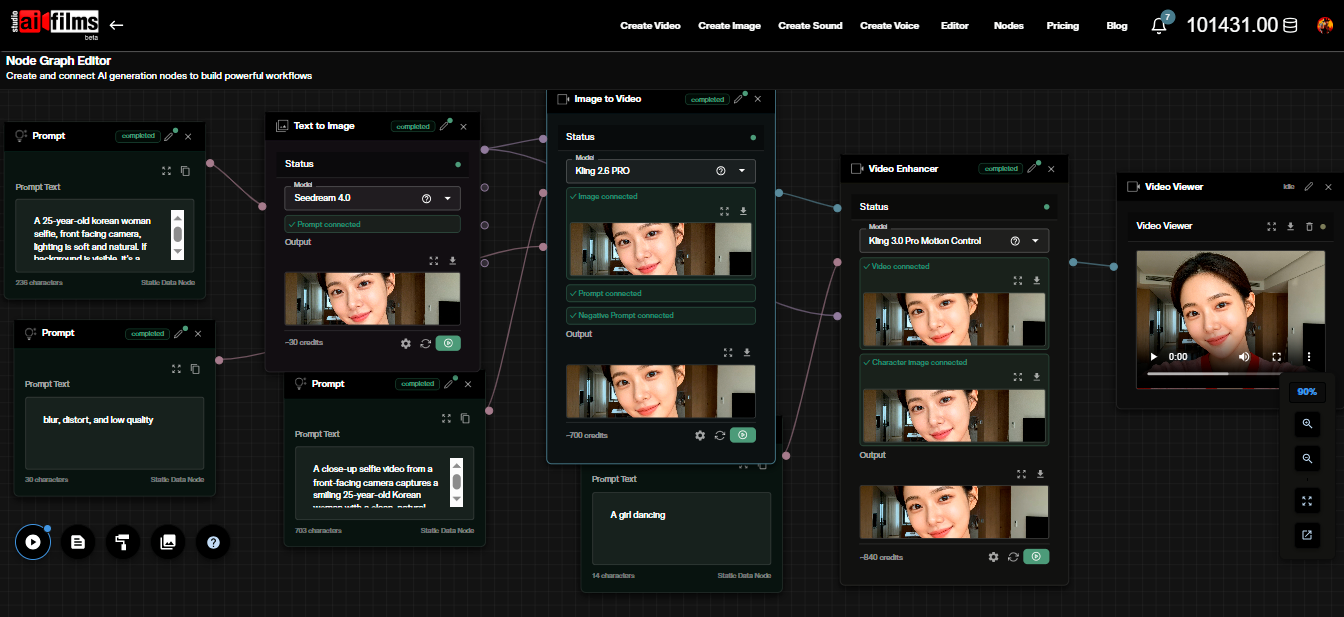
AI video generation for documentary and historical storytelling is available through AI FILMS Studio, where filmmakers can work with text-to-video and image-to-video models for visual production projects.
Sources
Variety | Deadline | The Hollywood Reporter | Screen Daily
Continue Reading
.jpg?w=3840)


Video & LipSync
- Video Generator
- Text to Video
- Image to Video
- Start-End Frame to Video
- Draw to Video
- Motion Control
- Video Enhancer
- Video Upscaler
- Video to Video LipSync
- Audio to Video LipSync
- Image to Video LipSync
- Video FaceSwap
- Seedance 2.5
- WAN 3.0
- Seedance 2
- FLUX 3
- Minimax H3
- Vidu Q3 Pro
- Grok Imagine Video 1.5
- Gemini Omni
- Google Veo 3.1
- Kling 3.0 Pro
- Luma Ray 3.2
- LTX 2.3
- Happy Horse 1.1
- Kling 3.0 Motion
- ByteDance Upscaler
- InfiniteTalk
- InsightFace
Image & Edit
- AI Character
- AI Actor
- Art Generator
- Text to Image
- Image to Image
- LoRA Image to Image
- Draw to Edit
- Image LoRA Training
- Remove Background
- Image Enhancer
- MidJourney 8.0
- Krea 2
- OpenAI GPT Image 2.0
- Nano Banana Pro Ultra
- Nano Banana 2 Lite
- Nano Banana Pro
- Minimax Image
- Clarity Pro
- Z-Image Turbo LoRA
- Krea 2 Turbo LoRA
- Z-Image LoRA Trainer
- Qwen Image LoRA Trainer
- Background Erase Network 2 (BEN2)