
$2.4M Deal Collapses After AI Authorship Questions Kill 'Call Me, I'll Hide The Body'

Share this post:
$2.4M Deal Collapses After AI Authorship Questions Kill 'Call Me, I'll Hide The Body'
A $2.4 million publishing deal for an unpublished debut thriller has collapsed after agents said they could no longer verify whether the manuscript was written by a human. The deal included film and TV adaptation rights, so when it fell apart, the entire Hollywood pipeline went with it.
The novel, "Call Me, I'll Hide The Body" by Jerry Falade, had just finished a fourteen way auction won by Minotaur, an imprint of Macmillan US. Falade's protagonist is Femi Johnson, a Nigerian chemist, age twenty-six, who runs a side career cleaning murder scenes and disposing of bodies. Agents described the manuscript as generating genuine excitement in the weeks before the deal collapsed.

Fourteen Publishers, One Afternoon
The fourteen way auction for "Call Me, I'll Hide The Body" is the backdrop against which the collapse reads as unusual. A book generating that level of competitive interest from major publishers is a commercial signal, not just a critical one. Publishers do not enter competitive auctions for manuscripts they are uncertain about.
Film and TV buyers had separately circled the property during the same window. An auction that draws fourteen major publishing houses almost always runs parallel to Hollywood interest. Agents typically work both tracks simultaneously when the source material has genre appeal, and a crime thriller with an original premise and an immediate bidding war is exactly the kind of property that generates option conversations before ink is dry.
Minotaur won. The deal was valued at $2.4 million for the novel and a second book. Publication was planned for 2028. Contracts had not yet been signed when the deal collapsed.
When Authentication Became Impossible
Agents involved in the deal said they "were no longer able to authenticate how the manuscript fully evolved from origin to completion." The statement is carefully worded. It does not say the manuscript used AI. It says the origin and development of the manuscript could not be verified to the agents' satisfaction.
No plagiarism was demonstrated. No one identified specific content that had been stolen or generated from a source without permission. The collapse was not the result of forensic proof. It was the result of agents deciding that a reputational risk, in the absence of the ability to disprove it, was commercially unacceptable.
That distinction matters. The publishing industry and the film industry are responding to a concern that no current tool can reliably confirm or rule out. AI detection software produces false positives against human writing. The results are not legally admissible. Agents acting on AI suspicion are making a commercial judgment without a factual foundation they can defend in court or in public.
The decision to retract the deal before contracts were signed suggests that whoever raised the AI concern did so at the last possible moment in the transaction. A manuscript that had completed a fourteen way auction had already been read by the acquisitions teams at fourteen major publishing houses. AI suspicion arose during the closing phase, not during the evaluation phase.
That timing raises a question no reporting on the story has answered: what specifically changed between the auction and the closing? The manuscript had been read. The deal had been won. Something happened in the final stage that led agents to conclude they could not authenticate the work's origins. What that was has not been disclosed publicly.

The Hollywood Pipeline Froze
When the book deal collapsed, the film and TV adaptation track collapsed with it. That is the dimension of this story that trade press coverage has not centered.
A novel in a fourteen way auction generates Hollywood interest before publication, not after. Option fees are paid at the manuscript stage. Screenplay commissions begin before a book has a release date. Talent agents track properties through the publishing auction circuit because the window between a major deal and an adaptation offer is often measured in weeks, not months.
When agents could no longer authenticate "Call Me, I'll Hide The Body," every conversation in that pipeline ended. No option was signed. No screenplay commission was paid. No talent attachment was made. The Hollywood revenue that would have accompanied a $2.4 million publishing deal disappeared at the same moment the publishing deal did.
That parallel collapse is what makes this story relevant to the film industry specifically. The AI authorship questions that killed the book deal did not stop at the publishing rights. They removed a property from the adaptation market entirely, before a single option contract existed.
No Detection Standard, No Legal Proof
The publishing and film industries are operating in an environment where AI authorship suspicion can destroy a deal without any standard for what constitutes proof. The "Call Me, I'll Hide The Body" situation is the clearest example yet of what that looks like in practice.
No AI detection tool currently meets the bar required to serve as evidence in a commercial dispute. Detection software is trained to find statistical patterns associated with machine generated text. It produces false positives against human authors who write in certain registers, who edit heavily, or who use research sources in ways that resemble patterns the detector associates with AI. The results are probabilistic, not forensic.
The agents who retracted the deal did not claim they had forensic proof. They claimed they could not authenticate the manuscript's origin. That is a reputational judgment, not a legal one. It ends a deal without establishing any fact that could be challenged in court.
The situation the publishing industry now faces is identical to the one the film industry encountered with AI generated images: a tool exists to raise suspicion, but no tool exists to resolve it definitively. The cost of failing to establish content authentication standards falls first on the authors and filmmakers who cannot prove a negative, not on the institutions that withdrew the deal.
A New Kind of Pipeline Risk
The "Call Me, I'll Hide The Body" collapse establishes a pattern that did not exist three years ago. A debut author whose manuscript generates significant commercial interest can now have that interest withdrawn before contracts are signed, based on AI authorship suspicion that cannot be confirmed or disproven, with no legal recourse and no public accounting of what evidence was considered.
For Hollywood, the implication extends beyond books. Any source material, a short story, a spec script, a pitch document, that enters the market without verifiable provenance now carries the same risk. An option can be withdrawn. A screenplay commission can be cancelled. The question "did a human write this?" now has the power to terminate transactions that were otherwise complete.
The Human Provenance in Film standard, which launched at the Cannes Film Market in May 2026, addresses exactly this gap. Its tier taxonomy distinguishes between work where no AI was used, work where AI assisted a human author, and work where AI generated substantial content. The "Call Me, I'll Hide The Body" deal collapsed because there was no agreed standard for what authentication looks like. A provenance framework applied at the manuscript stage would have given agents and publishers something concrete to evaluate rather than a suspicion they could not resolve.
The deal also demonstrates the cost of operating without that infrastructure before it becomes mandatory. AI disclosure litigation is shaping what studios and publishers will eventually be required to reveal. But in July 2026, a $2.4 million deal disappeared because a question no tool could answer got raised at the wrong moment in the closing process.
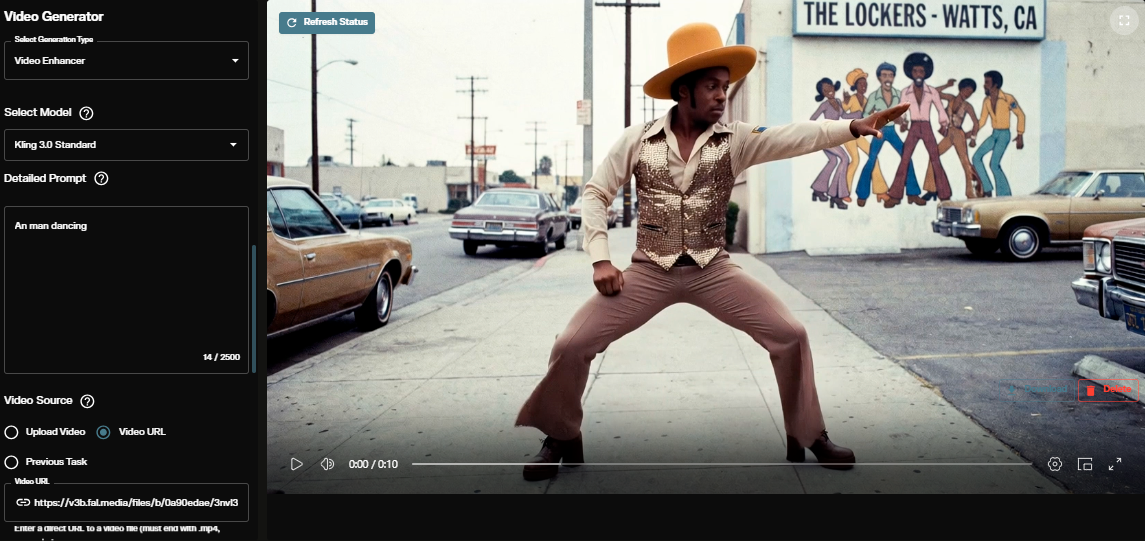
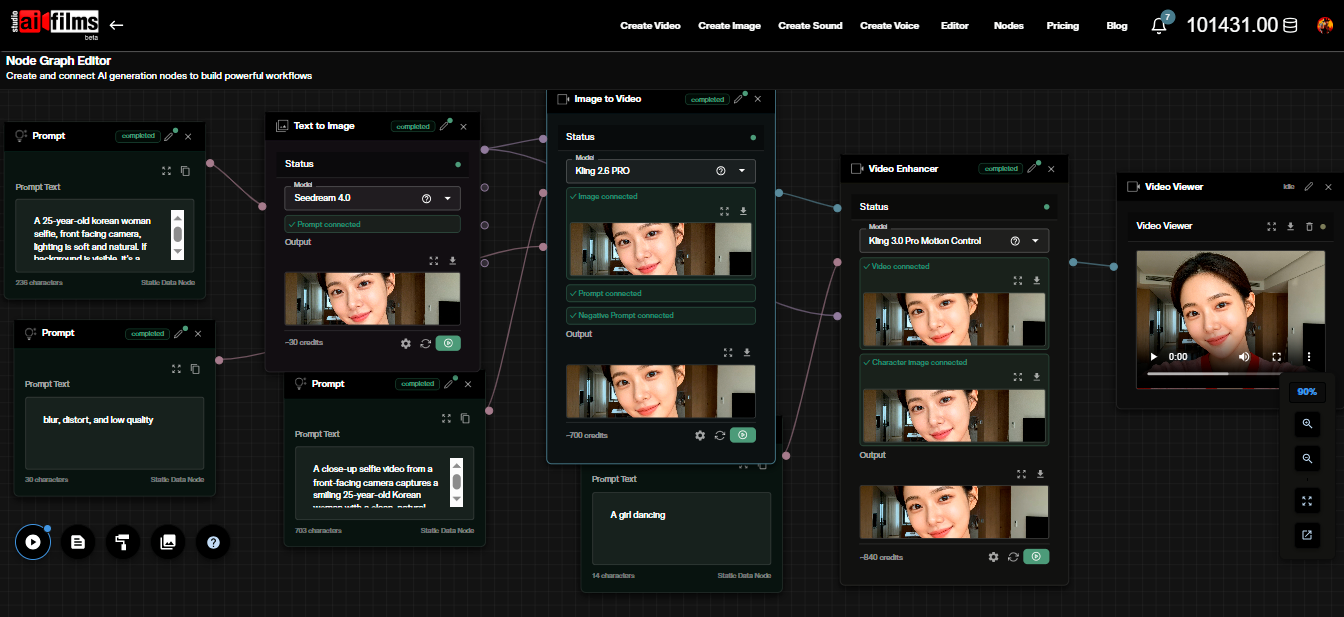
Filmmakers working on fiction for screen, including crime thrillers with the kind of premise that drives a fourteen way publishing auction, can generate video from their own unambiguously human written projects through AI FILMS Studio's video workspace.
Sources
Deadline | Yahoo Entertainment | InsideAI | Literary Scout
Continue Reading
.jpg?w=3840)


Video & LipSync
- Video Generator
- Text to Video
- Image to Video
- Start-End Frame to Video
- Draw to Video
- Motion Control
- Video Enhancer
- Video Upscaler
- Video to Video LipSync
- Audio to Video LipSync
- Image to Video LipSync
- Video FaceSwap
- Seedance 2.5
- WAN 3.0
- Seedance 2
- FLUX 3
- Minimax H3
- Vidu Q3 Pro
- Grok Imagine Video 1.5
- Gemini Omni
- Google Veo 3.1
- Kling 3.0 Pro
- Luma Ray 3.2
- LTX 2.3
- Happy Horse 1.1
- Kling 3.0 Motion
- ByteDance Upscaler
- InfiniteTalk
- InsightFace
Image & Edit
- AI Character
- AI Actor
- Art Generator
- Text to Image
- Image to Image
- LoRA Image to Image
- Draw to Edit
- Image LoRA Training
- Remove Background
- Image Enhancer
- MidJourney 8.0
- Krea 2
- OpenAI GPT Image 2.0
- Nano Banana Pro Ultra
- Nano Banana 2 Lite
- Nano Banana Pro
- Minimax Image
- Clarity Pro
- Z-Image Turbo LoRA
- Krea 2 Turbo LoRA
- Z-Image LoRA Trainer
- Qwen Image LoRA Trainer
- Background Erase Network 2 (BEN2)