
George Lucas: AI Makes Filmmaking 'Much Easier,' and He Has 50 Years of Evidence

Kevin Payravi, CC BY-SA 4.0, via Wikimedia Commons
Share this post:
George Lucas: AI Makes Filmmaking "Much Easier," and He Has 50 Years of Evidence
George Lucas said this week that AI makes filmmaking "much easier" and described resistance to it as misguided as defending the horse and buggy. The remarks came at the opening of the Lucas Museum of Narrative Art in Los Angeles and were reported on July 14 by Variety, Gizmodo, Coming Soon, and World of Reel, among others.
The museum, which opened in Exposition Park in spring 2026, houses more than 10,000 works spanning illustration, comics, concept art, and production design from Lucas's personal collection. It was built to argue, through its collection and structure, that narrative art is a continuous tradition that evolves through new tools and new mediums. Lucas made his AI comments in a space constructed around exactly that premise.
What separates this from the ambient noise of industry commentary on AI is who is saying it. Lucas did not come to this view from the outside. He spent 50 years building the tools that every director in Hollywood now takes for granted, and he made each of those decisions against the same kind of resistance he is now calling pointless.
The film industry is split on AI as sharply as it has been on any technology in recent memory. That split is not new to Lucas. He was on the same side of the same argument over CGI, digital cinema, and digital editing, and the historical record from those disputes is what his current position rests on.
The practical implication of that record clarifies what Lucas's statement actually is. He is not claiming AI will make every film better. He is observing that the same argument was made against CGI, against digital cameras, against digital projection, and against digital editing. The people who made that argument are now working with all four of those technologies. His AI position is that observation applied to the current moment.
His comments at the museum opening covered AI, test screenings, and the nature of creative control. The occasion gave him a platform to articulate a philosophy about filmmaker authority and technology that he has held consistently across his career. The museum itself, as an argument about the evolution of storytelling tools, gave those comments an appropriate setting.
The Horse and the Buggy
Lucas put his position plainly. "Artificial intelligence means it's much easier for us to make movies," he told reporters at the museum opening. The remark applies across the production chain. Pre production benefits through faster generation of visual references, storyboards, and environment concepts. Production reduces the physical infrastructure previously required to build sets or find locations. Post production workflows for VFX, color grading, and sound design have all compressed substantially through AI tools.
When asked about the persistence of skepticism surrounding AI, he offered an analogy. "It's very much like sitting here saying, 'Well, I believe the horse and the buggy is really where it's at.' There's nothing you can do about it. That's progress, it's the future."
He addressed concerns about AI accuracy and disclosure in the same conversation. "If you want AI that tells you when something is fake and where it came from, AI can do that," he said. For Lucas, the question of whether AI can be governed is entirely separate from whether it will be adopted.
The horse and buggy framing is an argument about adoption inevitability, not about quality. Lucas is not claiming that all AI filmmaking will be excellent or that the transition will be clean. The argument is narrower. The industry will adopt AI regardless of whether individual filmmakers choose to engage with it, and the directors who engage with it earlier will be better positioned than those who engage with it later, or not at all.
Made at the opening of a museum about how narrative tools evolve, that statement has a specific resonance. Lucas did not say this at a panel on AI regulation or at a studio press event. He said it surrounded by a collection that argues, across centuries of illustration and film, that storytelling has always absorbed and transformed the technologies of its moment.
Fifty Years of the Same Argument
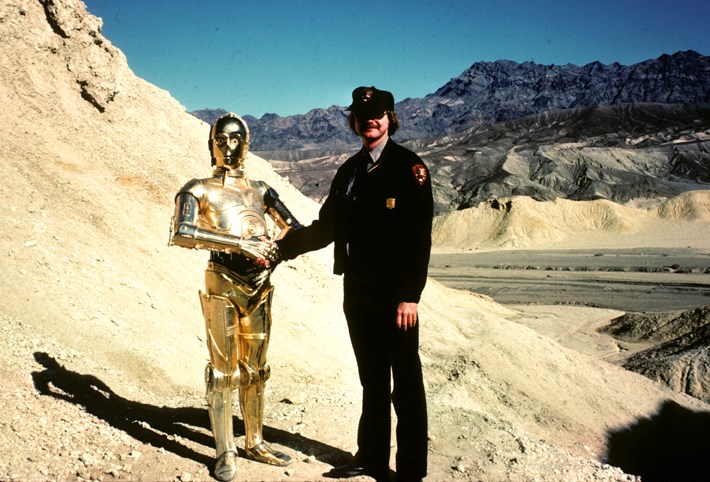
See page for author, Public domain, via Wikimedia Commons
Lucas founded Industrial Light and Magic in 1975 because no vendor in the industry could produce what his first Star Wars film required. That decision was not a bet on an existing technology. It was a rejection of everything available and the construction of something new from scratch. ILM went on to create the first fully computer generated sequence in a feature film, the Genesis effect in Star Trek II: The Wrath of Khan, in 1982, working for Paramount rather than for a Lucasfilm production.
The Genesis sequence produced for Paramount was a specific demonstration. ILM's capabilities exceeded what any single studio could develop independently, and the technology would serve whoever was willing to use it, not just the company that built it. In 1989, ILM produced the first fully digital character sequence in a live action feature with the pseudopod in The Abyss. Jurassic Park in 1993 introduced CGI creatures capable of replacing practical effects in audience perception. Forrest Gump in 1994 placed the title character inside historical footage, establishing digital compositing as a narrative tool rather than a spectacle.
Lucas also reshaped how films are heard. The first Star Wars film in 1977 was the inaugural release in Dolby Stereo, a format audiences had no reference for before they heard it in a theater. Wide theatrical adoption followed within three years. THX, the certification program Lucas launched in 1983, established performance standards for theater sound systems that studios and exhibitors still reference today, defining what a cinema playback environment should deliver before any standards body had set that benchmark.
His directorial work continued the pattern of adoption ahead of industry consensus. He shot Star Wars: Episode II Attack of the Clones entirely on digital cameras in 2002, making it among the first major studio productions to abandon film stock for a theatrical release. That same year, Lucas helped found the Digital Cinema Initiatives consortium, which developed the specifications for digital cinema projection and delivery. The DCI standard the group published in 2005 became the global standard, and theater owners adopted it based partly on the commitment of major directors including Lucas to releasing content through digital systems.
Lucasfilm's work on digital intermediates shaped the color pipeline that major studio films use today. The digital intermediate process allows an entire color grade to be handled digitally rather than through chemical optical printing, giving directors control over the final image that had not been possible before. EditDroid, developed by Lucasfilm in the early 1980s, was among the first digital nonlinear editing systems and a direct predecessor of Avid and Final Cut Pro.
| Year | Technology | Lucas's position | Industry adoption |
|---|---|---|---|
| 1975 | ILM founded | Built own VFX studio | Studios expanded CGI investment |
| 1977 | Dolby Stereo | Inaugural theatrical release | Industry standard within 3 years |
| 1982 | First CGI film sequence | Produced through ILM for Paramount | CGI became standard within a decade |
| 1983 | THX sound certification | Launched own standard | Global cinema standard |
| 1989 | First digital film character | ILM pseudopod in The Abyss | Led to full CGI characters by 1993 |
| 2002 | Digital cameras for features | Shot Episode II entirely digitally | Film stock largely phased out by 2013 |
| 2005 | DCI specification | Founded specification consortium | Became global theatrical digital standard |
| 2026 | AI | "Much easier" and "the future" | Industry divided |
The table above contains no contested entries. Each decision that was once argued against is now standard practice. The interval between adoption and consensus shortened with each successive technology. Dolby Stereo took roughly three years. The DCI digital cinema standard took eight years from consortium founding to full major studio compliance. AI tools are being adopted at the enterprise level now, three years into their widespread availability.
Industrial Light and Magic, now owned by Disney following the 2012 Lucasfilm acquisition, has become one of Hollywood's leading adopters of AI tools in post production. ILM's AI work is focused on character relighting, background generation, and VFX cleanup that previously required large teams of artists working frame by frame. Lucas no longer controls ILM, but the company he founded is among the most aggressive current adopters of the technology he is now calling inevitable.
The table above contains no contested entries. Each decision that was once argued against is now standard practice. The interval between adoption and consensus shortened with each successive technology. Dolby Stereo took roughly three years from the Star Wars release to wide theatrical adoption. The DCI digital cinema standard took eight years from consortium founding to full major studio compliance. AI tools are being adopted at the enterprise level now, three years into their widespread availability.
Industrial Light and Magic, now owned by Disney following the 2012 Lucasfilm acquisition, has become one of Hollywood's leading adopters of AI tools in post production. ILM's AI work covers character relighting, background generation, and VFX cleanup that previously required large teams of artists working frame by frame. Lucas no longer controls ILM, but the company he founded is among the most aggressive current adopters of the technology he is now calling the future.
The Infrastructure Problem AI Addresses
Every major technology decision Lucas made was solving the same underlying problem. The story he wanted to tell required capabilities that did not yet exist, at a cost and speed that production could not support. He solved each version of that problem by building or adopting a new tool. ILM existed to solve it for visual effects. THX and Skywalker Sound solved it for theatrical audio. Digital cameras and digital intermediates solved it for the image itself.
Skywalker Sound, built at Lucas's Marin County facility, became one of the premier film sound post production facilities in the world. Lucas built it as a dedicated sound operation before the industry had consensus that directors should control their own post production sound infrastructure rather than contracting to facilities owned by the studios. The decision reflected the same logic as ILM. If the existing infrastructure was not adequate for what the stories required, build the infrastructure. That reasoning applies to AI tools with equal directness.
AI represents the first technology since digital compositing to address multiple versions of that problem simultaneously. It reduces the cost and time of environment creation, character generation, and post production work across a single set of tools rather than requiring a separate specialized company for each capability.
The practical consequence differs significantly by production scale. At Lucas's level, AI compresses what takes weeks into what takes hours, and allows a director to iterate on visual choices during pre production rather than committing to them before a set is built. At the level of a filmmaker without his infrastructure, the effect is different in kind. It provides access to capabilities that previously required specialized vendors most productions could not afford.
Each technology Lucas championed eventually reached the independent film level, though with a lag. THX certification began as a standard for premium venues and spread to smaller theaters over a decade. Digital cinema projectors deployed first at major multiplexes before reaching independent screens. AI tools are following a different trajectory. They are available to individual creators now, before the infrastructure expansion has fully happened at the major studio level. The democratization pattern is running in reverse.
Why He Connects AI to Focus Groups
Lucas addressed test screenings and audience feedback in the same interview, and the logic runs parallel to his AI position. "I don't like focus groups," he said. "The audience doesn't know what they want to see. If they don't like a character, that's interesting, and as a filmmaker I want to find out why."
Both arguments rest on the same underlying premise. The judgment of people who cannot picture what a technology or story can become is not a reliable guide to whether it has value. That premise has a specific origin in Lucas's experience. When studio executives and others saw an early cut of Star Wars in 1977, the response was largely skeptical. The film went on to gross more than $775 million globally and change the commercial and technical trajectory of Hollywood filmmaking.
Lucas sold Lucasfilm to Disney in 2012. He has spoken publicly about the sequel trilogy diverging from his own plans for Episodes VII through IX, which he described as more experimental in storytelling direction. The Disney version relied more heavily on audience research and focus group response to shape creative decisions. The focus group critique Lucas articulated at the museum opening connects directly to that experience. The same worldview that makes him skeptical of audience feedback during production makes him skeptical of resistance to AI.
Critics of AI filmmaking who argue that audiences will reject AI generated content on principle are making, in Lucas's framing, the same error as the studio executives who previewed Star Wars and predicted it would fail. The audience experienced the dinosaurs in Jurassic Park as animals, not as demonstrations of ILM software. Lucas's position implies that when the story works, the tool disappears.
That said, the prequels complicate this. The Star Wars prequels were shot at the leading edge of digital cinema technology and attracted some of the sharpest criticism the franchise has ever received. Lucas is arguing about the arc of adoption, not about what adoption guarantees. The horse and buggy observation describes which direction the industry moves. It says nothing about the quality of whatever replaces the horse and buggy.
His position on test screenings is, in that sense, more nuanced than it appears. "I want to find out why" an audience dislikes a character is a statement about curiosity and craft, not about dismissing audience response entirely. The focus group critique is about using audience uncertainty during production as creative direction. It is not a claim that audiences will accept anything a filmmaker produces simply because the filmmaker has conviction.
Two Voices, One Argument About Craft
Lucas's remarks landed three days after Christopher Nolan spoke about Gen Z audiences developing the literacy to identify and reject AI generated content, comments that circulated widely on July 11. On the surface the two directors are on opposite sides. Nolan believes audiences will hold AI filmmakers accountable for poor work. Lucas believes the question of whether to adopt AI is already settled by the history of every other technology transition the industry has faced.
Both positions converge on craft. Nolan's concern is that bad uses of AI produce bad films and audiences will notice. Lucas's argument is that the technology itself is not what determines quality. The disagreement is about what role AI should play in a filmmaker's practice.
That divide maps onto the split over CGI in the early 1990s, when some directors embraced it as an expansion of what was expressible on screen and others argued it would replace craft with technical display. The dispute resolved not through a theoretical consensus but through the release of films that worked. Jurassic Park in 1993, The Mask in 1994, and Toy Story in 1995 settled the argument for most of the industry by demonstrating that the technology served the story when the story was good. Lucas's position implies AI will resolve the same way.
Several major directors are already acting on that question directly. Shawn Levy, who is directing Star Wars: Starfighter for a May 2027 release, told Variety in May that he has not yet incorporated AI into any production but considers its integration inevitable and that refusing to engage would be "naive and foolish". Martin Scorsese made a more direct move in June, joining Black Forest Labs as an advisor and using FLUX to generate storyboards during pre production on a current project.
Lucas's position is the least hedged of the three. For Lucas, the risk is not in adopting AI but in being the director who still believes the horse and buggy is the right approach when the rest of the industry has moved on. That distinction, between those who engage early and those who engage late, is the same distinction he drew about CGI, digital cinema, and digital editing over the previous five decades.
What the Resistance Looks Like
The organized opposition to AI in filmmaking has real institutional weight. The Creators Coalition, formed by Oscar winners and counting del Toro, Cate Blanchett, and Aaron Sorkin among its members, represents more than 500 signatories who have argued publicly against the use of AI tools in creative production. Guillermo del Toro told The Hollywood Reporter that AI in filmmaking would be "like spitting on God." These are not fringe positions.
What the opposition has not confronted directly is a technology adoption argument coming from Lucas specifically. Lucas is not a tech entrepreneur or a studio executive. He is the person who built ILM, who built Skywalker Sound, who helped found the Digital Cinema Initiatives consortium, and who has been right about every major technology transition in Hollywood filmmaking for 50 years. That background changes the weight of his AI position compared to most AI endorsements from within the industry.
Both sides of the debate agree that the story and craft matter. Neither the Creators Coalition nor Lucas is arguing that bad filmmaking is acceptable. The disagreement is about AI's role in the process of making good films. Lucas's answer, drawn from five decades of building the tools that filmmakers use, is that the technology serves the craft rather than replacing it, and that the people arguing against it are arguing against the direction of history.
The weight of Lucas's specific position is difficult to replicate with other AI endorsements from within the industry. A studio executive endorsing AI is making a business argument. A tech entrepreneur endorsing AI is promoting a product. Lucas endorsing AI is the person who founded ILM, built Skywalker Sound, and launched the Digital Cinema Initiatives specification consortium, making a statement about what the next generation of filmmaking tools will look like based on having built the previous four generations.
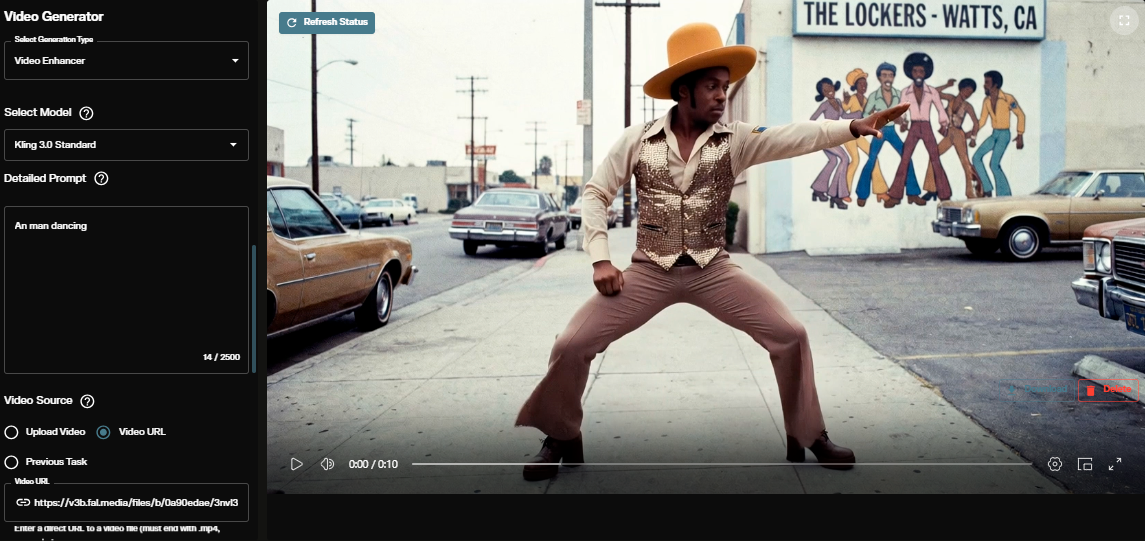
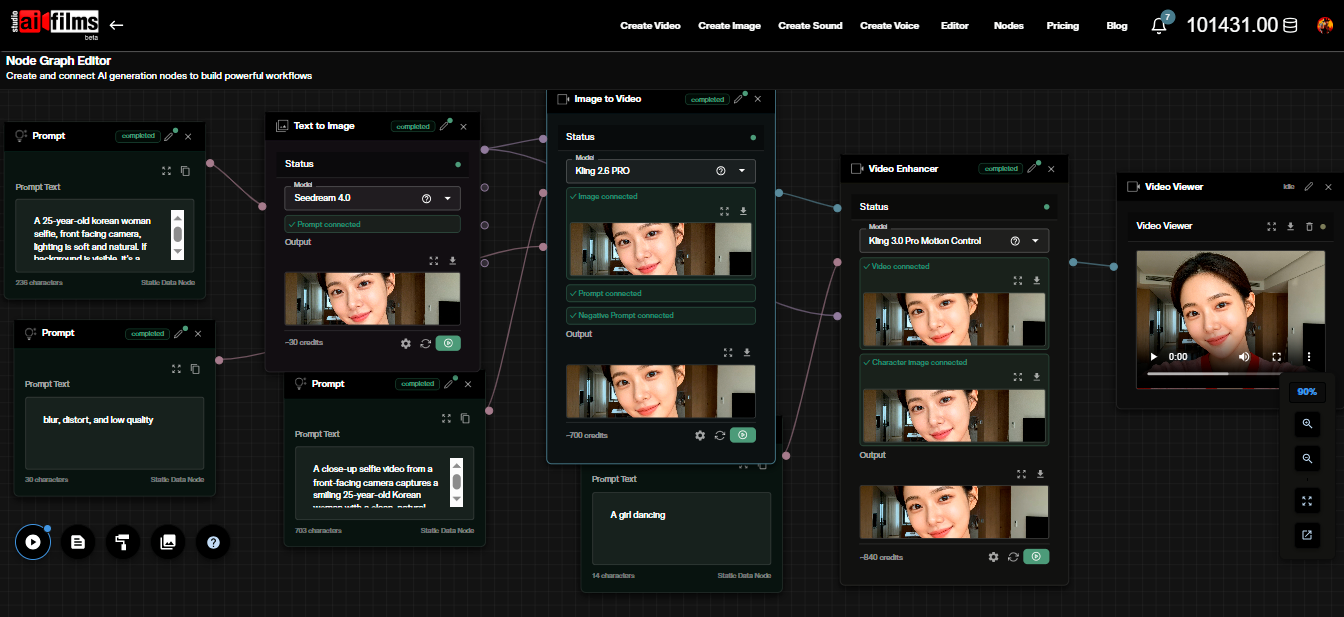
Filmmakers who want to work with the generation tools Lucas is describing can access them through the AI FILMS Studio video workspace, where text-to-video and image-to-video production runs on the latest AI models.
Sources
Variety | Washington Times | Gizmodo | Coming Soon | World of Reel | Dark Horizons
Continue Reading
.jpg?w=3840)


Video & LipSync
- Video Generator
- Text to Video
- Image to Video
- Start-End Frame to Video
- Draw to Video
- Motion Control
- Video Enhancer
- Video Upscaler
- Video Extend
- Video to Video LipSync
- Audio to Video LipSync
- Image to Video LipSync
- Video FaceSwap
- Seedance 2.5
- WAN 3.0
- Seedance 2
- FLUX 3
- Minimax H3
- Vidu Q3 Pro
- Grok Imagine Video 1.5
- Gemini Omni
- Google Veo 3.1
- Kling 3.0 Pro
- Luma Ray 3.2
- LTX 2.3
- Happy Horse 1.1
- Kling 3.0 Motion
- ByteDance Upscaler
- InfiniteTalk
- InsightFace
Image & Edit
- AI Character
- AI Actor
- Art Generator
- Text to Image
- Image to Image
- LoRA Image to Image
- Draw to Edit
- Image LoRA Training
- Remove Background
- Image Enhancer
- MidJourney 8.0
- Krea 2
- OpenAI GPT Image 2.0
- Nano Banana Pro Ultra
- Nano Banana 2 Lite
- Nano Banana Pro
- Minimax Image
- Clarity Pro
- Z-Image Turbo LoRA
- Krea 2 Turbo LoRA
- Z-Image LoRA Trainer
- Qwen Image LoRA Trainer
- Background Erase Network 2 (BEN2)