
Be Brave: Francesco Carrozzini's AI Documentary Is the First Italian AI Film at Venice 83

Share this post:
Be Brave: Francesco Carrozzini's AI Documentary Is the First Italian AI Film at Venice 83
Venice Film Festival director Alberto Barbera has selected "Be Brave" for an out of competition slot at Venice 83, running September 2–12, 2026. The film is a 90 minute documentary portrait of Renzo Rosso, founder of Diesel and the OTB fashion group, directed by Francesco Carrozzini. It was produced over 18 months using AI tools across the production process and is the first Italian feature documentary created primarily with AI to screen at Venice.
Barbera has described the selection as an experiment. By placing the film out of competition rather than in the Golden Lion program, Venice can engage with AI feature filmmaking as a curatorial act rather than a competitive judgment. The selection makes "Be Brave" one of the first feature documentaries produced with AI to receive a premiere at a major international film festival.
The context matters: Venice is the world's oldest film festival and carries institutional weight that a competition built specifically for AI films cannot replicate. When a festival with 83 editions behind it programs an AI documentary and calls it an experiment, it is a statement that the field has reached a point where major institutions can no longer treat it as a niche category.
Francesco Carrozzini's Background
Francesco Carrozzini's career before "Be Brave" is not in independent film or experimental production. He has directed music videos for Lady Gaga, Beyoncé, and Madonna, and has worked at the premium end of fashion filmmaking throughout his career. He is the son of the late Franca Sozzani, the longtime editor of Italian Vogue, and is closely connected to the fashion publishing world that Renzo Rosso's brands occupy.
That professional background changes the institutional read of "Be Brave" considerably. Carrozzini is not approaching AI as a first medium or testing a generative tool for the first time. He is a director with an established commercial body of work who chose AI production methods for a specific long form project on a specific subject. The decision is creative and strategic.
Music video direction for global pop acts sets specific craft expectations: precise visual control, strong timing, and the ability to operate at the premium end of image production. Bringing those standards to a documentary over 18 months with AI tools suggests a project where the AI was subordinate to a clear creative vision rather than generative novelty for its own sake.
Carrozzini also directed "Franca: Chaos and Creation," a 2015 documentary about his mother Franca Sozzani's career at Italian Vogue, which premiered at Toronto and played internationally. "Be Brave" is his second feature documentary. The comparison point is direct: same director, same subject type (authorized portrait of a fashion figure), different production technology.
"Franca: Chaos and Creation" was well received by festival audiences and critics in the fashion documentary space. Using that project as a reference point for "Be Brave" gives Carrozzini a creative baseline from which to measure what AI production methods change and what they preserve in the documentary form. He is in a position to evaluate the differences across two projects with comparable creative intent.
Renzo Rosso and the OTB Group
Renzo Rosso founded Diesel in Breganze, Italy in 1978. Over the following decades he built OTB Group, a privately held luxury holding company whose portfolio now includes Maison Margiela, Viktor & Rolf, Marni, and Jil Sander alongside Diesel. OTB is one of Europe's larger mid-tier luxury groups, operating outside the LVMH and Kering consolidation model that defines most of the sector.
Diesel built much of its cultural reputation in the 1990s through advertising campaigns that were unconventional for fashion at the time, often working with outside creative directors on conceptually ambitious projects. Commissioning a documentary portrait of its founder made with AI fits inside that established creative tradition.
Rosso has been publicly vocal about his interests in the intersection of fashion, culture, and technology. OTB has maintained art patronage programs in northern Italy and positioned itself as a group with cultural commitments beyond its commercial operations. An AI documentary chosen for Venice is consistent with that institutional identity.
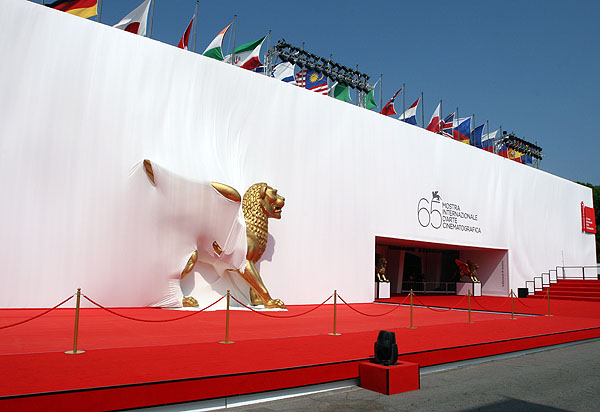
Mansour Nasiri, CC BY-SA 3.0, via Wikimedia Commons
OTB Group's decision to commission a feature documentary made with AI rather than a conventionally shot one represents a specific corporate arts patronage choice. The company is a fashion holding group. Its funding of a production selected for Venice indicates that the commercial case for documentary content made with AI is being made in sectors outside traditional film finance.
Authorized documentaries about fashion founders typically follow a conventional production model. A crew travels with the subject, archive footage is licensed, talking heads are recorded. "Be Brave" replaced that model with AI production over 18 months. The subject and the distribution outcome are the same. The production method is fundamentally different.
Eighteen Months of AI Production
"Be Brave" took 18 months to produce. That timeline places it well above the rapid turnaround that characterizes most current AI content production and suggests the project was not a demonstration of AI speed but a considered use of AI tools within a conventional documentary development schedule.
The film is described as made "almost entirely" with AI tools across the production process. Specific tools and workflows have not been disclosed. Whether that means generative image and video, AI assisted editing, audio synthesis, archival reconstruction, or some combination is not yet known.
An 18 month production for a 90 minute documentary is in the normal range for the form. Documentary production involving archival research, subject access, and post production editing typically runs at least that long. If "Be Brave" used AI throughout rather than conventional production methods, the timeline suggests the AI production process carries comparable workload. The tools are different. The time invested is similar.
The schedule also indicates something about the production's creative intent. Documentary makers who deploy AI tools to dramatically shorten production timelines are making a different creative choice than those who spend 18 months with those tools. Carrozzini's extended schedule aligns with how his conventional projects, including "Franca: Chaos and Creation," were developed and refined.
The film also has not disclosed production costs, which is typical for independently financed documentary work. An 18 month production with AI tools could represent lower spending than a conventional shoot of comparable scope, higher spending on iterative AI development, or comparable spending reached through different line items. Without cost disclosure, the production's economics remain private.
The Out of Competition Track at Venice
Out of competition selections at Venice sit outside the jury's evaluative framework. Films in this track are not eligible for the Golden Lion or any of Venice's competitive prizes. The festival screens them for international press and industry without a competitive outcome attached.
The out of competition track is Venice's standard placement for films the director considers significant but that the festival is not ready to submit to competitive judgment. It has historically been used for films by major directors outside a competition cycle, for world premieres with direct commercial distribution attached, and for programmatic statements about where cinema is going.
By selecting "Be Brave" out of competition and framing the inclusion as an experiment, Barbera has signaled that Venice is watching AI documentary filmmaking without yet concluding that it belongs in competition with conventionally produced work. That distinction is precise and intentional. It positions Venice as engaged without committed.
Past out of competition selections at Venice have included films that later entered the critical canon and films that generated interest without subsequent impact. Barbera's description of "Be Brave" as an experiment applies to both possibilities equally. The experiment is the act of screening, not a prediction about the outcome.
Barbera's Curatorial Framing
Alberto Barbera's language around the selection is careful. He called the inclusion an experiment. He did not call "Be Brave" a good film, a successful AI production, or a template for what Venice will program in future years. "Experiment" signals that Venice is gathering information about what feature cinema produced with AI looks like in a theatrical context.
Venice 83's AI policy and Barbera's full curatorial framework are analyzed in the competition lineup report, which documents how Barbera's standard, requiring the artist to maintain complete creative control over any AI in the work, compares to the Academy's categorical restrictions and BAFTA's disclosure approach.
The "complete control of the artist" standard Barbera has described applies to "Be Brave" as to any other Venice selection. The evaluation is whether the human director maintained authorial control over the work. Barbera's inclusion of an acknowledged AI documentary is consistent with his stated standard.
The outcome of the September screening will produce publicly available critical responses, audience reactions, and industry assessments. A successful experiment in Barbera's terms is one that generates useful information for future programming decisions, regardless of the film's critical reception.
Venice does not publish audience data or formal critical assessments as part of its programming infrastructure. The experiment's results will come from press coverage, social media response, and whatever distribution conversations the film generates in the Lido market during the same week as the screening.
Corporate Patronage and AI Production
Corporate patronage has historically funded documentary work when the subject was the corporation itself or its leadership. OTB Group's funding of "Be Brave" fits that pattern. What is less typical is choosing AI production methods when a conventionally shot authorized documentary was available as an alternative.
Luxury brands have been cautious about AI production at the visible end of their creative output. Marketing campaigns using AI generated imagery have faced audience skepticism in the premium segment, where craft and human provenance are part of the product's perceived value. OTB Group choosing AI for a 90 minute documentary portrait of its founder is a different kind of commitment.
The corporate patronage angle is significant because it does not originate in the entertainment industry's technology departments. OTB Group is a fashion holding company. Its decision to fund an AI documentary selected for Venice suggests that the commercial case for feature AI production is reaching patrons who were not previously part of the AI filmmaking conversation.
EU Regulatory Context
The EU AI Act's provisions on synthetic media disclosure are relevant for any AI-produced feature screening in European markets. Films that use AI to generate substantial portions of their content may face disclosure requirements in Italian theatrical distribution.
Venice's out of competition programming does not resolve the regulatory question. The EU regulatory timeline runs independently of festival programming decisions. "Be Brave" premiering at Venice does not determine whether the film meets or falls outside the disclosure requirements that would apply in subsequent Italian theatrical release.
Italy is a significant EU market. The Italian film industry's response to "Be Brave" at Venice will provide an early signal of how Italian cultural institutions, audiences, and regulators approach AI documentary work in the near term.
The film's production did not involve Italian public funding mechanisms, as far as is publicly known. Films that receive Italian tax credits or public investment have different disclosure obligations than privately funded productions. "Be Brave" as a privately financed work avoids those regulatory entanglements, at least for the Venice premiere.
Italy's First AI Feature at a Major Festival
Italian cinema has a specific identity at Venice. The festival was created partly to support Italian film production, and Italian directors have won the Golden Lion multiple times in recent decades. Barbera operates within that context. The first Italian AI feature at Venice is an authorized portrait of a fashion industry figure funded by that figure's corporate group, which says something about where AI production investment is currently coming from in Italy.
Italy has not been a center of institutional AI film investment. There is no Italian equivalent of the festival programs built specifically for AI that have emerged in other markets. The country's film council has not issued specific AI production guidelines. "Be Brave" arrives at Venice as a privately funded production without any institutional framework behind it.
The film's existence in this slot suggests that the first wave of AI feature production in Italy is coming from the fashion and luxury sector rather than from the film industry's own institutional programs. That origin shapes what kind of film gets made first and who funds it.
Whether Italian film institutions respond to "Be Brave" at Venice by developing their own AI production policies, funding programs, or regulatory positions will be one of the notable follow-on questions from the September screening. A first film at a major festival often prompts institutional responses that would not have come without the concrete example.
What This Premiere Signals
"Be Brave" is a specific film in a specific slot at one festival. Its selection does not indicate that Barbera will program additional AI documentaries in future editions, or that Venice will establish a dedicated AI section, or that the out of competition framing will become AI cinema's default route into major festivals.
What it does indicate is a convergence of three independent decisions. A director with an established commercial reputation chose AI production methods for a long form project. Venice's director chose the result worthy of inclusion. The corporate patron behind the subject chose to fund an AI documentary when a conventional production was available as an option. All three choices moved in the same direction independently.
The September screening will be the first substantial public evaluation of a 90 minute documentary produced with AI at a major international film festival. Critical response, audience reaction, and buyer interest will produce assessments that inform how the festival, the distribution market, and the Italian film industry approach documentary produced with AI work going forward.
The distribution path after Venice will be equally significant. If "Be Brave" secures international distribution, the terms of that deal will indicate whether buyers view documentary content produced with AI as commercially equivalent to conventionally shot work, or whether the production method affects how they price and position the film.
Venice provides the premiere. Distribution provides the commercial answer.
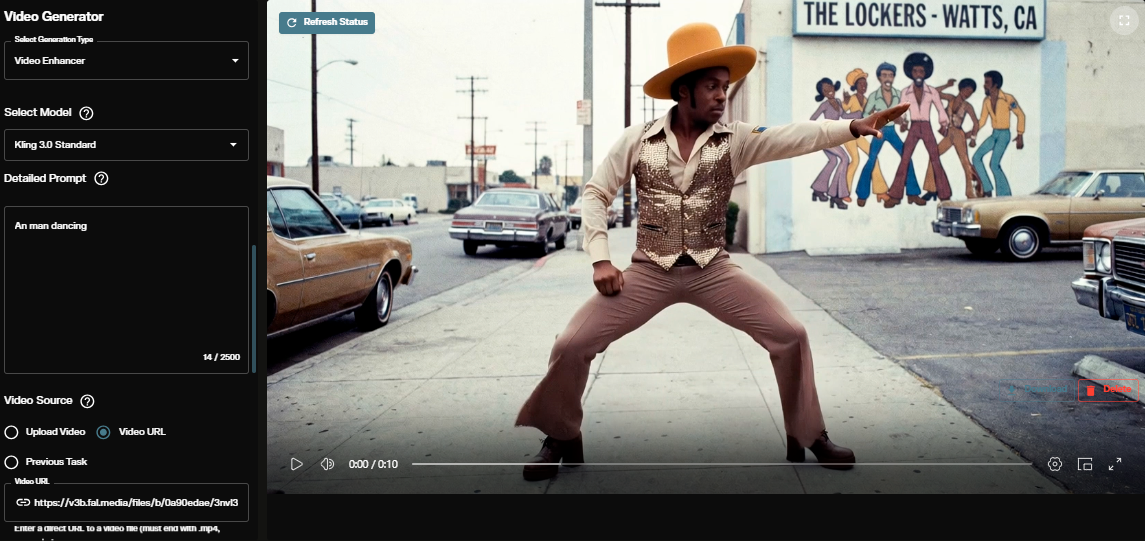
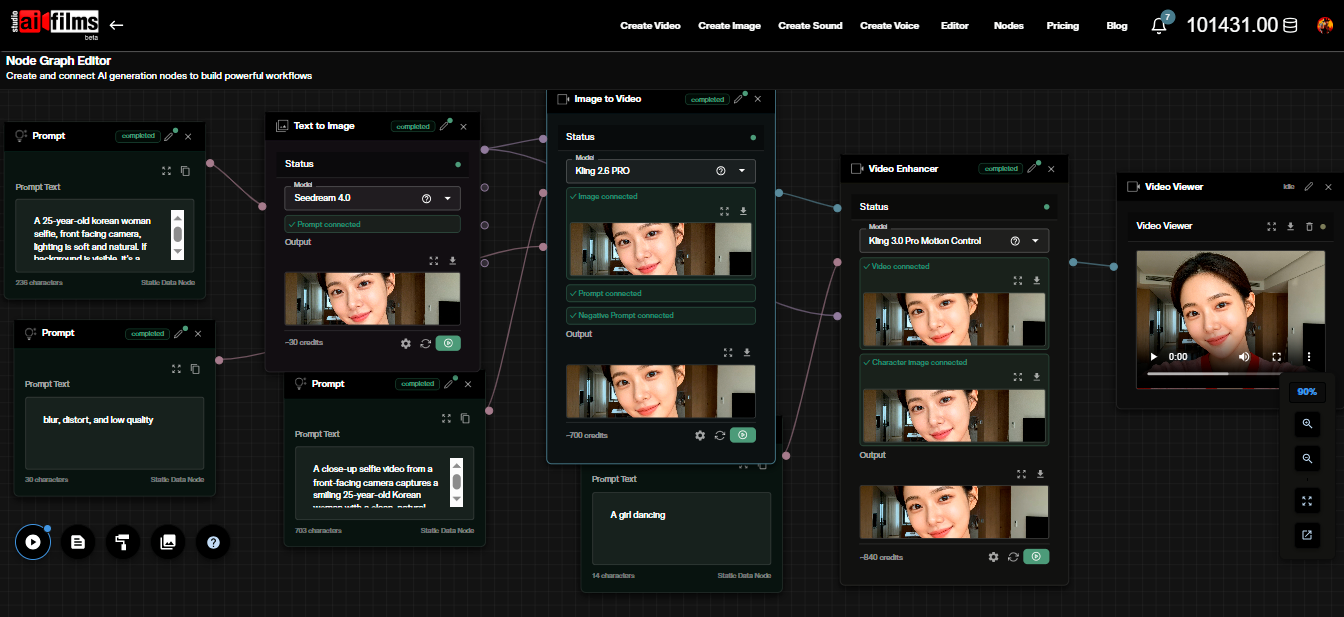
AI filmmakers building documentary and narrative work can access text-to-video and image-to-video tools at AI FILMS Studio's video workspace.
Sources
Hollywood Reporter | WWD | FashionUnited | Deadline | Variety
Continue Reading


Video & LipSync
- Video Generator
- Text to Video
- Image to Video
- Start-End Frame to Video
- Draw to Video
- Motion Control
- Video Enhancer
- Video Upscaler
- Video Extend
- Video to Video LipSync
- Audio to Video LipSync
- Image to Video LipSync
- Video FaceSwap
- Seedance 2.5
- WAN 3.0
- Seedance 2
- FLUX 3
- Minimax H3
- Vidu Q3 Pro
- Grok Imagine Video 1.5
- Gemini Omni
- Google Veo 3.1
- Kling 3.0 Pro
- Luma Ray 3.2
- LTX 2.3
- Happy Horse 1.1
- Kling 3.0 Motion
- ByteDance Upscaler
- InfiniteTalk
- InsightFace
Image & Edit
- AI Character
- AI Actor
- Art Generator
- Text to Image
- Image to Image
- LoRA Image to Image
- Draw to Edit
- Image LoRA Training
- Remove Background
- Image Enhancer
- MidJourney 8.0
- Krea 2
- OpenAI GPT Image 2.0
- Nano Banana Pro Ultra
- Nano Banana 2 Lite
- Nano Banana Pro
- Minimax Image
- Clarity Pro
- Z-Image Turbo LoRA
- Krea 2 Turbo LoRA
- Z-Image LoRA Trainer
- Qwen Image LoRA Trainer
- Background Erase Network 2 (BEN2)