
European Creators Slam EU AI Act Implementation
Share this post:
European Creators Slam EU AI Act Implementation
A coalition representing European writers, actors, journalists, film producers, musicians, translators, and visual artists issued a joint statement in July 2025 rejecting the EU AI Act's implementation as inadequate. "The result is not a balanced compromise; it is a missed opportunity to provide meaningful protection of intellectual property", the statement read.
The coalition's verdict on where the failure landed was unambiguous: European creative sectors had been "sold out in favor of those GenAI model providers".
The statement arrived after two years of implementation code negotiations in which the creative sector had participated directly. The condemnation was not a reaction to the law's passage but to the specific outcome of those negotiations.
The Organizations Behind the Statement
GESAC (the umbrella body for European authors' societies), the Society of Audiovisual Authors, the European Film Agencies Directors Association, the Federation of European Screen Directors, and the European Writers' Council all signed. The combined membership represents millions of individual creators across the EU.
The statement's release timing was deliberate. By July 2025, the first phase of EU AI Act implementation had been in force long enough to evaluate. The coalition waited for real implementation evidence before issuing a verdict, which meant their criticism arrived with specifics rather than projections.
The breadth of the coalition was designed to signal industry unity rather than a single sector complaint. Writers, directors, actors, musicians, journalists, translators, and visual artists spoke in a single statement rather than in separate sectoral positions, which was itself a strategic choice. The negotiation over AI Act implementation had fragmented creators by sector, and the joint statement was an attempt to reassemble that coalition at the point of failure.
GESAC alone represents over 160 authors' societies across Europe, including the largest collecting societies in France, Germany, Italy, and Spain. Its participation means the statement carries the formal endorsement of the organizations that actually collect and distribute royalties on behalf of millions of European creators.
What the Act Was Supposed to Do
The EU AI Act entered force in August 2024 with staggered implementation, applying transparency and governance requirements to AI systems in phases over two years. For synthetic media, the law includes disclosure obligations: deployers of AI systems that generate or manipulate video, audio, or image content must label that content as artificially generated.
The law created an exception for creative and fictional works, limiting disclosure requirements where they might interfere with "the display or enjoyment of the work". That exception is now a focal point of the backlash.
The disclosure obligation applies to deployers, not to model developers during training. That distinction is significant. A model developer who trains on copyrighted material has no disclosure obligation under the deployment provisions. A production company that uses that model to generate content has the disclosure obligation for outputs, but the training process that extracted value from the original works is not the layer the law reaches directly.
What the Text Mining Exception Actually Says
The EU AI Act's general purpose AI provisions include a text and data mining exception that permits AI companies to train on publicly accessible content unless rights holders have opted out. The creators' coalition argues the opt out mechanism is impractical at scale because individual creators cannot realistically monitor and enforce it against every AI company operating in the EU.
The exception was included to allow AI research and development to proceed without requiring permission from every rights holder before training begins. The European Commission's position is that requiring prior authorization for text and data mining would impose costs that would drive AI development outside the EU, weakening European competitiveness in a sector where US and Chinese companies have a head start. The argument for the exception is that requiring prior authorization would make training data assembly so expensive that it would happen outside the EU entirely. The creators' coalition's counterargument is that an opt out mechanism only functions if rights holders know who is using their work and have a practical way to request removal.
Enforcement of an opt out system at the scale of EU creative output is practically impossible for individual creators. A novelist cannot monitor every AI company operating in the EU to verify whether their work was scraped and used for training. Collective management through organizations like GESAC is the only practical mechanism, which means the coalition's advocacy for a centralized authorization and remuneration system reflects a realistic assessment of what individual enforcement can accomplish.
Three Requirements, None Delivered
Cecile Despringre, Secretary General of the Society of Audiovisual Authors, stated at an August 2025 panel at the Sarajevo Film Festival's CineLink industry event that the implementation "doesn't really create a concrete obligation to respect copyrights, and it's very limited in terms of transparency, which should be the basis of any discussion".
Despringre named three requirements she considers essential for any workable system: authorization, remuneration, and transparency for copyrighted content used to train AI systems. The act, as implemented, addresses none of the three at the level creators say is necessary.
The broader coalition described the law as "very much in favor of AI companies", calling the outcome a "very small result" despite years of negotiation over implementation codes.
The Implementation Codes and Why They Fell Short
Article 95 of the EU AI Act called for voluntary codes of practice to be developed by AI companies, representing organizations, and member states. The resulting codes addressed transparency in broad terms without creating quantifiable obligations for disclosure of specific training works.
What Despringre called "very limited in terms of transparency" is the gap between stating that a model was trained on publicly available data and disclosing which specific works were used. A general statement about training data sources does not allow a rights holder to verify whether their work was included, negotiate remuneration, or request removal. The implementation codes stopped short of requiring that level of granularity.
Authorization, Remuneration, Transparency: The Three Part Test
Despringre's three requirements are connected in sequence: authorization comes first, asking whether the AI company had permission to use a given work. Remuneration follows from authorization. If permission is given under a licensing agreement, what is the payment structure? Transparency is what makes both verifiable, asking whether rights holders can audit what was used.
The act as implemented addresses none of the three at the level creators consider necessary. Authorization is replaced by an opt out mechanism. Remuneration is not required because the opt out mechanism operates without requiring the AI company to seek permission in advance. Transparency is addressed at the level of summary disclosure rather than specific work disclosure.
Scale of the Sector
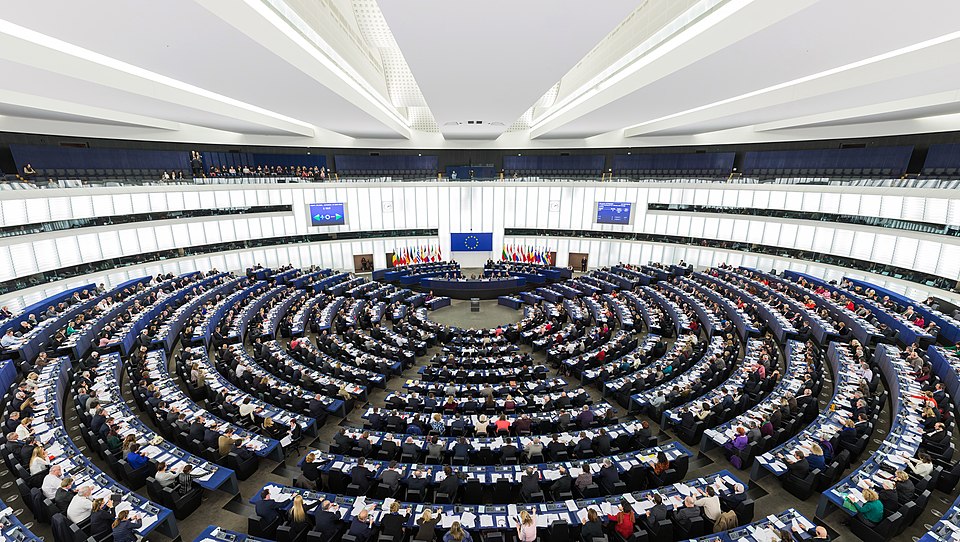
.jpg)
Paasikivi, CC BY-SA 4.0, via Wikimedia Commons
The coalition grounded its criticism in economic terms. Europe's creative industries contribute nearly 7% of EU GDP and employ approximately 17 million professionals. That output exceeds the pharmaceutical, automotive, and high tech industries combined.
A sector of that size, arguing that its intellectual property is being extracted without authorization or payment, is describing a structural transfer from European creators to AI companies whose headquarters sit outside the EU.
The 7 Percent GDP Figure in Context
The European creative industries contribute approximately 7 percent of EU GDP. The pharmaceutical sector contributes roughly 2 percent. That disparity means creative industry IP protection is both a cultural and an economic issue for the EU, not only an artistic one.
When the coalition says the act favors AI companies over creators, it is describing a structural transfer from a sector that contributes more to EU GDP than pharmaceuticals to AI companies headquartered primarily outside the EU. The economic framing is a deliberate rhetorical choice: it positions the argument in terms that trade ministers and finance committees respond to, not only arts councils.
Filmmakers at Sarajevo
The CineLink panel, titled "Artificial Intelligence, Authors' Rights and Guild Solidarity", brought together four speakers from major European creative organizations. Marta Krzeptowska, a producer at Orka and president of the Polish Postproduction Society, put it directly: AI models were "already fed with all the material" and "they are stealing artists' work".
Sevara Irgacheva, Secretary General of the European Film Agencies Directors Association, identified the core structural problem: "legislation seems to always be behind" technological advancement. Klemen Dvornik, a board member of the Federation of European Screen Directors, represented the director community alongside authors.
The Sarajevo CineLink panel is one of the most important industry events for European independent cinema. Its focus on AI rights rather than on AI production tools reflected the European independent sector's dominant concern at that moment: not whether to use AI, but whether AI use of their work would ever be compensated.
What the Act's Defenders Say
Supporters of the EU AI Act argue it is the most detailed AI regulatory framework yet produced, requiring general purpose AI model providers to publish summaries of training data and comply with European copyright law. The creators' coalition does not dispute that the act exists.
Their argument is that implementation has produced real obligations which fall short of the transparency and remuneration standards the law implied it would enforce. The gap between what the law says and what it produces when applied is exactly the territory creators have been contesting since the implementation codes were finalized.
The act's defenders include AI companies that participated in the code of practice development and argue the resulting framework represents a genuine negotiated balance between innovation and protection. The creators' coalition's position is that a balance struck without meaningful authorization or remuneration is not a balance at all, but a capitulation framed as compromise.
What the US Comparison Reveals
California AB 2602 and AB 1836 restrict AI generated digital replicas of performers in specific contractual contexts. The NO FAKES Act in the US Senate targets unauthorized voice and likeness replication. These provisions are narrower than what European creators sought, but they create specific enforcement rights that the EU AI Act's general transparency requirements do not provide.
The gap shows that both systems have failed to create the authorization and remuneration framework the creative sector asked for, but through different mechanisms. The EU approach is regulatory and broad: it sets general obligations for all AI systems. The US approach is targeted and contractual: it creates individual rights that performers can enforce in specific situations. Neither has produced the complete protection European creators described as the minimum necessary standard.
The practical question for a European filmmaker in 2026 is not whether the law is adequate but what it requires of them now. The disclosure obligations for AI generated content in commercial distribution are clearer than the training data obligations. A production company deploying AI tools must label AI generated outputs in marketing and promotional materials. What they cannot yet require is that the AI system they used was trained on licensed material.
The GDPR Precedent and What It Suggests
European creative sector advocacy produced GDPR in 2018, a framework that changed how every technology company handles personal data globally. GDPR took years to implement and enforce, but its enforcement mechanism is functioning: major US technology companies have paid billions in fines under GDPR provisions.
The coalition's position is that the AI Act will need a similar enforcement correction after initial implementation falls short. The Sarajevo panel happened in August 2025 before the European Parliament vote in March 2026 that signaled a legislative response taking shape. The GDPR parallel suggests the process will be long but not static.
GDPR enforcement took roughly three years to produce the first major fines. AI Act enforcement at the scale of copyright protection will require rights holders to bring cases, regulators to investigate, and courts to establish precedent. The coalition understands this timeline. Their July 2025 statement was not an expectation of immediate remedy, but a documented position filed before the enforcement phase begins.
Two Responses Taking Shape
The European Parliament moved in March 2026 to address part of the gap: MEPs voted on a report calling for AI developers to disclose which copyrighted works were used in training, pay rightsholders fair compensation, and create an opt out mechanism for individual creators. That EU Parliament copyright vote is a direct legislative response to the implementation failure the coalition named in 2025.
Separately, the film industry produced its own alternative. Human Provenance in Film, launched at the Cannes Film Market in May 2026 by The Mise En Scène Company, offers a three tier disclosure taxonomy for AI use in any production, available at no cost under a Creative Commons license. Industry led standards gain traction when the regulatory floor stays low.
California approached the same territory from a different angle: AB 2602 and AB 1836 restrict AI generated digital replicas of actors in ways the EU AI Act does not reach, adding performer side protections the EU framework leaves to negotiation. Filmmakers working across both jurisdictions are building practices around disclosure and authorization now, before either framework settles.
The European creative sector's July 2025 statement was timed to arrive before the legislative cycle that produced the March 2026 Parliament vote. That sequence, the statement preceding and informing the vote, is how the coalition intended its advocacy to function: document the failure, force a legislative response, and hold the response to the standard the original statement named. AI FILMS Studio's video workspace offers AI generation tools within that still evolving context.

Sources
The Hollywood Reporter | TechCrunch
Continue Reading
.jpg?w=3840)


Video & LipSync
- Video Generator
- Text to Video
- Image to Video
- Start-End Frame to Video
- Draw to Video
- Motion Control
- Video Enhancer
- Video Upscaler
- Video Extend
- Video to Video LipSync
- Audio to Video LipSync
- Image to Video LipSync
- Video FaceSwap
- Seedance 2.5
- WAN 3.0
- Seedance 2
- FLUX 3
- Minimax H3
- Vidu Q3 Pro
- Grok Imagine Video 1.5
- Gemini Omni
- Google Veo 3.1
- Kling 3.0 Pro
- Luma Ray 3.2
- LTX 2.3
- Happy Horse 1.1
- Kling 3.0 Motion
- ByteDance Upscaler
- InfiniteTalk
- InsightFace
Image & Edit
- AI Character
- AI Actor
- Art Generator
- Text to Image
- Image to Image
- LoRA Image to Image
- Draw to Edit
- Image LoRA Training
- Remove Background
- Image Enhancer
- MidJourney 8.0
- Krea 2
- OpenAI GPT Image 2.0
- Nano Banana Pro Ultra
- Nano Banana 2 Lite
- Nano Banana Pro
- Minimax Image
- Clarity Pro
- Z-Image Turbo LoRA
- Krea 2 Turbo LoRA
- Z-Image LoRA Trainer
- Qwen Image LoRA Trainer
- Background Erase Network 2 (BEN2)