
Doug Liman's 'Bitcoin' Recreates Bezos, Zuckerberg and Putin Using AI
.jpg?w=3840&q=90)
Share this post:
Doug Liman's 'Bitcoin' Recreates Bezos, Zuckerberg and Putin Using AI
A May 22, 2026 Deadline exclusive confirmed that Doug Liman's feature Bitcoin uses AI to recreate Jeff Bezos, Mark Zuckerberg, Vladimir Putin, Kim Jong Un, and Eric Trump as on-screen characters. It is the first public confirmation of which specific living public figures appear in a guild aligned Hollywood feature, and the first time a production of this scale has named the AI methodology used to put them on screen.
The film stars Casey Affleck, Pete Davidson, Gal Gadot, and Isla Fisher. It was previously known as Killing Satoshi before a title change ahead of its Cannes market run.
Who Appears and How
Mark Zuckerberg has the most dialogue of any AI recreated figure in the film. Jeff Bezos, Vladimir Putin, Kim Jong Un, and Eric Trump all appear as characters. Eric Trump is depicted promoting "Trump coin" in scenes that also involve a stripper. Elon Musk has a fleeting reference.
The performers on camera undergo AI enhancement to resemble the specific public figures. According to Deadline's coverage, approvals for AI alterations "had already been agreed" per prior casting notices. That is the legal basis the production is working from: agreements secured during casting rather than clearances negotiated portrait by portrait after the fact.
The Technology Stack
The production uses a markerless performative capture stage, which means no location shooting. Performers act on the stage and the environment and character likeness are applied in post. The technology combines Ryan Kavanaugh's ACME AI with Liman's own proprietary PECAN process, short for Performance Capture Animation.
There are no suits or tracking markers. The system reads performer movement and facial expression directly, then maps the AI generated likeness on top. The result is a complete separation of performance from appearance: the cast performs, the AI produces the faces.
How Markerless Capture Works in Practice
Traditional performance capture requires a performer to wear a suit covered in reflective tracking markers. Computer systems track those markers' positions through space and use the data to animate a digital character. PECAN eliminates the markers entirely. The system uses computer vision to identify body landmarks and facial features directly from camera footage, reconstructing spatial data from visual information rather than from physical markers.
The practical advantage is that performers can work in their natural physical state and interact with other cast members without the interference of capture suits. For a production that requires actors to portray recognizable public figures, markerless capture allows Affleck, Davidson, and others to deliver performances that the AI system then transforms into the appearances of Bezos, Zuckerberg, and Putin. The performance capture infrastructure was built by ACME AI, whose prior work includes industrial markerless motion tracking applications.
The Cannes 2026 Market Announcement
The Deadline story broke during the Cannes 2026 Marché du Film, where Bitcoin was being sold to international distributors. The timing was deliberate: attaching the film's AI methodology to a market announcement reached buyers and press simultaneously. Industry response at Cannes was divided between interest in the production model and questions about the legal exposure the film carries.
Screen Daily described the announcement as one of the more closely watched developments in the Marché, given that no previous feature had combined a recognized cast, a nine figure budget scale, and AI recreations of multiple sitting and former heads of state. The combination of elements created a story that trade press could not ignore, which served the film's pre-sales positioning.
Guild Compliance and the Public Figures Question
The film "is understood to align with the AI guidelines of the Hollywood guilds", per Deadline. The SAG-AFTRA 2026 studios deal requires an "articulable business reason" before a producer can scan a performer to create a digital replica, and it forbids using those replicas to replace workers during a strike.
But those protections cover guild members: the cast. Bezos, Zuckerberg, Putin, and Kim Jong Un are not SAG-AFTRA members. Their recreations sit in a different legal category, governed by right of publicity laws, defamation law, and the specific contractual language from the casting notices. California's digital replica statutes address some of this for state residents, but the laws are untested at the scale of a $70 million feature deploying AI recreations of multiple named sitting and former heads of state and global business figures simultaneously.
The production's position is that the casting notice agreements provide the necessary authorization. Whether that holds is a question no court has answered, because no comparable production has existed before.
The Casting Notice as Legal Architecture
Casting notices for Bitcoin included language requiring performers to consent to AI alteration of their appearance as a condition of the role. That consent mechanism is the foundation of the production's legal position on the AI transformation of cast members into public figures.
The consent covers the transformation of a consenting cast member's performance into a likeness. It does not independently address the rights of the public figures being depicted. Bezos and Zuckerberg, as private individuals rather than performers, have right of publicity claims that operate independently of what cast members agreed to. The production's working assumption is that the transformative nature of the satire and the consent obtained from performers provides sufficient legal basis. Intellectual property attorneys following the case have noted that this assumption has not been tested in court at this scale.
Right of Publicity Law and What It Leaves Uncovered
Right of publicity statutes protect individuals against unauthorized commercial use of their name, likeness, or identity. California's statute is among the broadest in the United States, covering both living and deceased persons. New York's statute, updated in 2021, extends protections to digital replicas specifically.
The transformative use defense is the most commonly cited protection for works that depict real people in fictional contexts. Courts have held that a work that adds significant creative elements transforming the original likeness into something new can qualify for this defense. Whether a $70 million AI produced feature depicting Zuckerberg with dialogue meets the transformative use threshold is the central unresolved legal question the film will carry into distribution.
Zuckerberg's Narrative Function in the Film
Mark Zuckerberg appears with more dialogue than any other AI recreated figure in Bitcoin, which positions him as a substantive character rather than a cameo. Deadline's coverage described his role without releasing plot details, but the volume of dialogue indicates the script treats him as a character with an arc rather than as background visual texture.
The choice to give Zuckerberg the most prominent AI recreated role is consistent with the film's title and subject. The Bitcoin and cryptocurrency world has intersected with Zuckerberg's public profile through the Facebook digital currency project and Meta's subsequent blockchain initiatives. His narrative function in the film appears to connect those associations to the film's central story.
The $70 Million Budget and What It Buys
At $70 million, Bitcoin sits at the upper end of what independent studio productions budget for mid-range commercial features. That budget level is notable in the AI production context because it indicates the PECAN and ACME AI pipeline is being deployed not as a budget reduction tool but as a capability expansion. Liman is spending at mid-major budget levels to produce a film that could not exist at any budget using traditional production methods.
The comparison with Critterz, the $30 million AI animated feature using the Woven pipeline, illustrates the range of budget contexts in which AI production tools are being used. Critterz uses AI to reduce animation costs below the conventional $100-200 million floor. Bitcoin uses AI to achieve things that were not achievable at any traditional production budget because they were not legally or practically feasible, not because the budget was too low.
Liman's Track Record With Challenging Material
Liman's previous work includes The Bourne Identity, Mr. and Mrs. Smith, Edge of Tomorrow, and American Made, the Tom Hanks film about drug smuggling and arms dealing in the 1980s. His directing career spans both commercial action franchises and films that deal directly with illegal activity and government overreach.
American Made depicted a real person, Barry Seal, in a narrative that involved CIA operations and drug trafficking. That film's legal framework, which relied on docudrama conventions and transformative treatment of documented events, provides a partial precedent for Bitcoin's approach. The difference is that American Made depicted a deceased person, whose right of publicity claims are handled differently than those of living individuals.
The pattern across Liman's career suggests a director who selects material where the legal, ethical, or production complexity is part of the project's identity rather than a risk to be managed around. Bitcoin fits that pattern. The film's most significant attribute is not its cast or its budget but its willingness to test a legal and technical framework that has not been tested at this scale before. That characteristic, applied consistently across his career, defines his specific contribution to Bitcoin beyond the craft of directing.
The Bitcoin Cryptocurrency Connection
The film's subject is the cryptocurrency world, not Doug Liman's previous thriller or action material. The combination of a cryptocurrency narrative with an AI production methodology that allows the film to feature Bezos, Zuckerberg, and other technology sector figures as characters is not incidental. The story requires those specific figures because they are actors in the cryptocurrency and technology sector story the film tells.
That narrative need is the "articulable business reason" the SAG-AFTRA 2026 deal requires for digital replica use: the film genuinely needs those specific people in those specific roles, not because the production wanted to use AI for its own sake but because the story demands those characters. Whether that framing survives scrutiny from the figures being depicted is a separate question from whether it satisfies the guild compliance standard.
The intersection of AI production technology and a cryptocurrency narrative also reflects a specific moment in the culture. The figures at the center of the film, Bezos, Zuckerberg, and others, became their current level of public presence during the same period that AI production tools were being developed. A film that uses AI to recreate the technology sector's most prominent figures to tell a story about the technology sector's most contested financial product is not a coincidence of casting. It is a deliberate compression of the period's defining tensions into a single production.
The Film Without Physical Locations
The markerless capture stage means Bitcoin has no traditional location photography. Every scene, including those depicting boardrooms, government offices, and public settings associated with figures like Bezos and Zuckerberg, is generated or composited around performer capture data. That production model is not unique to AI productions; virtual production stages have been used in major studio productions for years.
What distinguishes Bitcoin is the combination of a fully location free production at significant budget scale with AI generated faces rather than digital characters. The cast performs as themselves within a capture environment. The AI pipeline transforms those performances into the public figures they are depicting. The result is a film that required no travel to real locations, no period or contemporary set construction, and no practical locations for any depicted figure's environment.
The ACME AI System and Ryan Kavanaugh
Ryan Kavanaugh is the founder and CEO of ACME AI, the company providing the markerless performance capture component of Bitcoin's technology stack. Kavanaugh is also the founder of Relativity Media, the film finance and production company that handled over $17 billion in film financing before a series of financial and legal difficulties. His return to film technology through ACME AI marks a pivot from traditional studio financing toward AI production infrastructure.
ACME AI's system is designed to operate at production scale, not as a research demonstration. The company has positioned it for exactly the kind of commercial feature that Bitcoin represents: high-budget productions where the economic case for AI transformation of physical performance into AI generated appearances is strongest. Kavanaugh's existing relationships in the film financing world give ACME AI distribution access to major productions that a purely research-oriented AI company would not have.
Liman's Production Model and Its Replicability
The PECAN pipeline that Liman developed represents a proprietary approach that is not publicly available. Productions that want to replicate Bitcoin's methodology would need to either license from Liman, license from ACME AI separately, or develop their own markerless capture system. The technology stack is not a collection of open source tools assembled into a workflow but a specifically developed system that reflects years of development by a director with both the creative motivation and the budget to develop it.
That proprietary nature is relevant for understanding what Bitcoin establishes as a precedent. It demonstrates that the end product is achievable. It does not provide a replicable template that other productions can immediately follow. The legal framework the film is testing, built from casting notice consent, is more portable than the PECAN technology itself. Other productions can adapt consent based legal architecture more easily than they can replicate a proprietary markerless capture system.
Distribution Outlook and Legal Exposure
No distributor announcement accompanied the Cannes market run for Bitcoin, which is unusual for a feature at this budget level with a cast of this profile. The absence of a distribution announcement at Cannes may reflect ongoing negotiations, may reflect distributing parties waiting for legal clarity on the public figures question, or may reflect a strategy of self-distribution.
The film's legal exposure runs in two directions. The guild compliance question applies to the cast and the production's use of AI transformation of their performances. The right of publicity question applies to the depicted public figures who have not consented to the production. Studios that would otherwise bid on worldwide rights at this budget level may be holding back pending clarity on whether the production's legal position on the non-consenting figures holds.
What This Establishes for Future Productions
Bitcoin is the clearest signal yet that the economic and technical conditions for AI recreation of living public figures in commercial features now exist. The PECAN and ACME AI pipeline is a documented, working system at a $70 million budget scale. The casting notice consent model is an emerging legal framework that the film is testing in production rather than in court.
If the film reaches distribution without successful legal challenge, it will establish a precedent that other productions will use as a reference point. The combination of elements here, a recognizable director, a major cast, a specific AI methodology, and named public figures with dialogue, sets a benchmark that future productions will be measured against regardless of how the legal questions ultimately resolve.
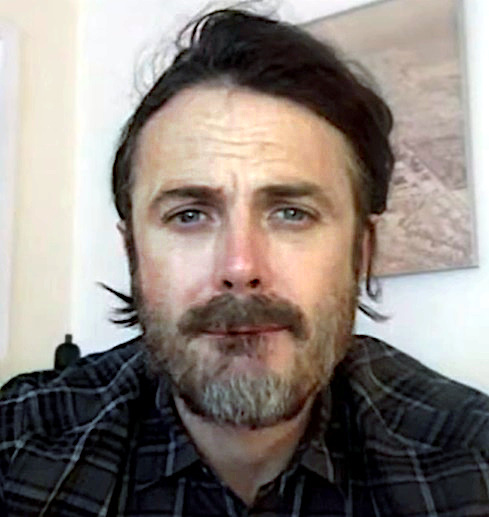
Margaret Gardiner, CC BY 3.0, via Wikimedia Commons
Filmmakers exploring AI production tools at any scale can access current video and image generation models through AI FILMS Studio.

Sources
Deadline | The Wrap | Variety | The Hollywood Reporter | IndieWire
Continue Reading
.jpg?w=3840)


Video & LipSync
- Video Generator
- Text to Video
- Image to Video
- Start-End Frame to Video
- Draw to Video
- Motion Control
- Video Enhancer
- Video Upscaler
- Video Extend
- Video to Video LipSync
- Audio to Video LipSync
- Image to Video LipSync
- Video FaceSwap
- Seedance 2.5
- WAN 3.0
- Seedance 2
- FLUX 3
- Minimax H3
- Vidu Q3 Pro
- Grok Imagine Video 1.5
- Gemini Omni
- Google Veo 3.1
- Kling 3.0 Pro
- Luma Ray 3.2
- LTX 2.3
- Happy Horse 1.1
- Kling 3.0 Motion
- ByteDance Upscaler
- InfiniteTalk
- InsightFace
Image & Edit
- AI Character
- AI Actor
- Art Generator
- Text to Image
- Image to Image
- LoRA Image to Image
- Draw to Edit
- Image LoRA Training
- Remove Background
- Image Enhancer
- MidJourney 8.0
- Krea 2
- OpenAI GPT Image 2.0
- Nano Banana Pro Ultra
- Nano Banana 2 Lite
- Nano Banana Pro
- Minimax Image
- Clarity Pro
- Z-Image Turbo LoRA
- Krea 2 Turbo LoRA
- Z-Image LoRA Trainer
- Qwen Image LoRA Trainer
- Background Erase Network 2 (BEN2)