
SAG-AFTRA Reaches Four Year Deal on AI Protections
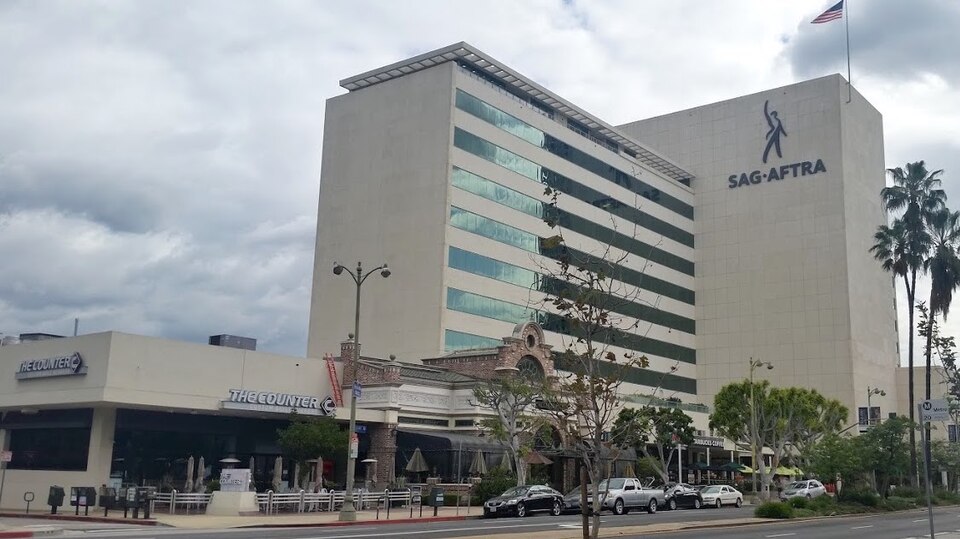
Shaunti Griffin, CC BY-SA 4.0, via Wikimedia Commons
Share this post:
SAG-AFTRA Reaches Four Year Deal on AI Protections
SAG-AFTRA and the major studios reached a tentative four year labor agreement on May 2, 2026, Deadline reported exclusively. The deal expands on AI protections first won in the guild's 2023 contract, which established consent and compensation rules for digital replicas.
Expanded Restrictions on Synthetic Performers
The new contract imposes "greater restrictions on synthetic characters", according to Variety. Full terms won't be released until the SAG-AFTRA National Board reviews the agreement, but the union confirmed AI guardrails are a central element.
Duncan Crabtree-Ireland, SAG-AFTRA's Executive Director, made AI protections a condition he refused to drop from any agreement. The four year term, longer than the guild's typical three year contract cycle, was the concession studios sought in return for those protections.
What the 2023 Deal Established
The 2023 SAG-AFTRA TV/Theatrical contract was the first industry wide agreement requiring studios to obtain consent and pay actors for digital replica use. It guaranteed compensation for background performers and restricted AI generated likeness without actor approval.
Critics identified gaps in that deal: studios could obtain consent at the point of hiring rather than on a per project basis, and higher paid performers above certain thresholds were excluded from core protections. The 2026 contract targets those weaknesses, though specific changes remain confidential until after board ratification.
.jpg)
How the Deal Came Together
SAG-AFTRA President Sean Astin and Executive Director Duncan Crabtree-Ireland led the guild's side of the talks, which resumed April 27, according to Deadline. After several days without a breakthrough, the AMPTP sweetened its offer on Saturday, May 2, closing the gap that had stalled negotiations.
The deal also includes a sizable contribution to the guild's pension and health fund. Streaming residuals and bonuses for hit shows were additional priorities, with actors pushing for higher payouts from streaming than the 2023 contract delivered.
The agreement follows a four year WGA contract ratified in April that also included AI provisions, establishing a consistent pattern across the industry's major guilds in this contract cycle. That deal secured $321 million for writer health plans and new AI licensing requirements, though studios did not agree to pay writers for training data use.
The four year term is longer than SAG-AFTRA's standard three year contract cycle. The studios sought that extended term in exchange for the expanded AI protections the guild required. It means the current AI rules are locked in until 2030, giving productions and performers a stable framework for the next cycle of AI tool development. It also means that whatever gaps or ambiguities remain in the current language will not be renegotiated until the AI landscape has changed significantly from its state in May 2026.
Pension and health fund contributions, along with streaming residuals, were the other major elements of the agreement. Actors who work in streaming productions have historically received residuals that fell short of what theatrical contracts provided, a disparity that widened as major studios shifted content investment toward their own platforms after 2019. The 2026 deal sought larger payouts from streaming than the 2023 contract delivered, though specific residual rates remain part of the confidential terms pending board ratification review.
Road to Ratification
The agreement is tentative pending review by the SAG-AFTRA National Board and a membership ratification vote. Terms will not be disclosed publicly until the board completes its review. The current SAG-AFTRA TV/Theatrical contract does not expire until June 30, 2026.
On May 11, the National Board voted 89% to recommend ratification, opening a member vote running through June 4, 2026.
SAG-AFTRA and the WGA both now have new contracts. The Directors Guild of America remains the only major Hollywood guild without a 2026 agreement, with AMPTP negotiations scheduled to open May 11, with AI protections at the top of its agenda.
What This Means for AI Performers
The debate over AI digital performers has accelerated faster than the 2023 framework anticipated. AI generated synthetic characters can now be produced at a fraction of the cost of hiring actors, creating commercial pressure studios had not fully anticipated when the last contract was written.
The UK Equity pact from March 2026 established a parallel consent and compensation framework for British performers. The expanded SAG-AFTRA restrictions on synthetic characters set a benchmark that other markets may now follow. Awards bodies followed with their own standards. The Golden Globes set rules that differ from the Academy's stricter Oscars ban, permitting AI in production while maintaining the ban on AI generated performances in acting categories.
Also at Cannes, the International Casting Directors Association launched AI guidelines for casting platforms, the first formal industry framework opposing AI systems that automate creative casting decisions. The guidelines apply at the stage before talent is hired, extending performer protection into the hiring workflow itself.
A separate initiative launched at Cannes on May 12, 2026: Cate Blanchett started RSL Media, a nonprofit building an open consent standard for AI use of likenesses, backed by George Clooney, Meryl Streep, Tom Hanks, and Steven Soderbergh. Unlike a union contract, RSL Media applies globally to anyone, with no union membership required. A parallel disclosure initiative also launched at Cannes that week: Human Provenance in Film's three tier taxonomy classifies what kind of AI was used in production and embeds the information in every sales and distribution agreement.
The consent model the deal codified found a real-world test in Val Kilmer's posthumous AI performance, which his daughter defended as a template for proactive actor IP licensing.
The distinction between a synthetic character and an AI modification of a real performance matters for how the restrictions apply. A fully synthetic character, one generated entirely from AI without being based on a specific performer's captured likeness, falls under "synthetic character" restrictions. An AI modification of a captured performance, such as adjusting facial expressions or body movement after the original capture, falls under the digital replica and performance modification provisions.
Productions using gray stage methods like Arcana Labs' approach deal primarily with the second category: real performers, captured in physical space, whose surrounding environment is AI generated. The consent requirements are different for each category, and productions that understand the distinction can build the right compliance structure from the start.
The line between those categories is where most of the active legal interpretation is happening. A production that generates a fully synthetic character and later uses a real performer's movement as a training reference for that character may cross from one category into the other. The 2026 deal's "greater restrictions" language is expected to apply to precisely those edge cases, though the specific definitions remain confidential pending ratification review.
The guild framework was applied in practice when Doug Liman's 'Bitcoin' used AI to recreate Bezos, Zuckerberg, and Putin with explicit compliance confirmation.
The limits of contract-based protection became visible in July 2026, when SAG-AFTRA issued a member advisory urging Instagram users to opt out of Meta's Muse Image tool. Because Muse Image is a consumer social media product rather than a studio production, the 2026 contract's consent protections provide no mechanism for addressing it.
How the Deal Has Been Applied Since Ratification
The two months since ratification show the deal operating on two levels simultaneously. At the studio level, it established a consent and compensation standard that major productions are now required to meet. At the independent level, it created a framework that smaller productions have used voluntarily to build credibility with performers, distributors, and audiences.
Jon Erwin's Young Washington, which opened July 4 to $20.8 million as the first wide AI assisted theatrical release to demonstrate holiday box office viability, credited five AI artists and one AI producer in official production documentation. Erwin's disclosure format voluntarily exceeded what the deal technically requires, naming each AI contributor explicitly rather than absorbing their work into existing technical credits. The format he chose gives guilds, agents, and future productions a practical reference for how AI use can be acknowledged without requiring itemized breakdowns of each contributor's specific shots.
The deal's consent requirements also enabled productions operating well below studio budget levels. Arcana Labs, cofounded by former Millennium Media president Jonathan Yunger, secured a SAG-AFTRA contract on Echo Hunter, a short film that cost under $50,000. The production used the gray stage method: performers worked on minimally dressed physical sets while AI generated all environmental elements. The union contract on a $50,000 production demonstrates that the consent and compensation framework the 2026 deal codified is not limited to studio productions with dedicated legal teams. Smaller productions can meet the standard if they build the compliance into the production structure from the start.
The difference between these two productions illustrates the range over which the deal now applies. Young Washington used AI to extend a conventionally shot film beyond what the physical production could achieve. Echo Hunter used AI as the primary production method with human performance preserved in the center. Both achieved union compliance. Both reached audiences. Neither fit the scenario the deal's critics described when they warned that AI would make performer contracts economically unviable for productions below a certain budget threshold.
Doug Liman's Killing Satoshi, confirmed at the 2026 Cannes Film Market with a $70 million budget and 55 AI artists across 30 weeks of post production, represents the high end of what the deal's provisions cover. The production is eliminating location shoots entirely, using a markerless capture stage and AI generated environments across a full feature runtime. The performance modification clause in its casting notice reflects exactly the kind of producer AI latitude the union negotiated consent requirements around.
The pattern that has emerged across these productions is consistent. The 2026 deal did not slow AI adoption in film production. It established conditions under which AI adoption and performer protection can coexist. The productions that have operated under those conditions since ratification represent three different budget levels, three different production models, and three different distribution strategies. What they share is that human performance sits at the center of each one, and the deal's consent framework applies to all three.
The membership vote that completed ratification in June produced an unusually clear result: 89 percent of the board recommended the deal, and the membership vote cleared comfortably. That level of internal support, after three years in which AI protections dominated every guild negotiation, signals that SAG-AFTRA's leadership successfully communicated what the deal actually prevents versus what it permits. The margin matters because close ratification votes signal internal division that producers can exploit in future negotiations. A nine in ten board recommendation signals the opposite.
One measure of the deal's practical effect that has gone underreported is what did not happen. Critics of the 2023 framework predicted that studios would accelerate synthetic performer use during the gap between deals, produce content with AI generated likenesses without consent, and present the guild with a fait accompli in negotiations. The 2026 contract included expanded restrictions rather than retreated ones, which suggests the gap period did not produce the abuse pattern critics anticipated.
The independent production pipeline has applied the deal in ways that differ structurally from the studio applications. Arcana Labs' Echo Hunter was produced at a budget level where guild contracts have historically required a studio or broadcaster mandate to be financially viable. The gray stage method, which preserves human performance at the center while generating environments through AI, reduces production costs enough that union compliance becomes achievable for producers who could not previously meet the deal's financial floor.
That development complicates the argument that AI will reduce union coverage by moving production to budget levels below what guild contracts cover. The data from the first two months after ratification suggests the opposite dynamic. AI tools are reducing the cost floor for productions that operate within guild standards, not creating a parallel production pipeline outside them. Whether that pattern holds as AI tools become more powerful, and as the cost floor continues to fall, is the question the next contract cycle will need to address.
The synthetic character restrictions in the 2026 deal also affect productions differently depending on scale. A studio with a legal team can negotiate consent terms that meet the new standard while maximizing flexibility in the edit. An independent production needs the consent structure built into the production design from day one, before any performers are cast. Echo Hunter demonstrates what that looks like: a gray stage approach where the performer's contribution is clearly defined, the environment is AI generated rather than captured, and the consent question applies to a finite set of participants rather than a sprawling production company's rights catalogue.
Productions that ignored or deferred the consent question are now operating under different conditions than they were before ratification. Studios that obtained consent at hiring for a prior project may need to revisit that consent if the 2026 provisions require more specific per project agreements. The board's 89 percent recommendation signals the guild was confident the deal had closed the per project consent gap. Producers' acceptance of those terms will become visible as productions that began development before ratification move through post production under the new rules.
For independent productions, the practical question is simpler. A production that begins development after ratification and builds consent into every performer agreement from day one does not need to navigate the gap between old and new provisions. Echo Hunter, which reached its SAG-AFTRA contract and 500,000 YouTube views under production conditions that cost under $50,000 total, is the most concrete demonstration that this compliance path is achievable at budget levels where guild contracts were previously rare. The production did not need to navigate a legacy consent structure. It was built for the 2026 framework from the start.
The next visible test of the framework will be the productions that were in development during the ratification period and are now entering post. Those projects will be the first to operate under the 2026 terms from start to finish, with cast and crew who were hired under contracts that reflect the new consent requirements rather than those inherited from the 2023 deal. How studios interpret the "greater restrictions on synthetic characters" language in practice, and how the guild responds when specific cases test the interpretation, will define what the deal actually means for working performers over the next four years.
The first two months of evidence since ratification support a more optimistic reading than the contract's critics expected. Union contracts were achieved at budget levels previously unavailable to them. Major productions operated within the consent framework and reached audiences without incident. The mechanism the deal built, consent requirements combined with compensation standards for AI use of performer likenesses, has proven workable across a wider range of production types than any single negotiation in Hollywood history has previously addressed.
Four years is a long time in AI development. The tools available to productions in 2030 will be substantially more capable than those that exist today. The deal's provisions were written to address the current landscape and anticipated near term developments. Whether the consent and compensation framework holds as AI generation capabilities extend into areas the 2026 negotiators could not fully model will be the defining question of the 2030 contract cycle.
What the current deal establishes is that performers and studios found ground to stand on together, at a moment when the technology's pace of change was more apparent than at any prior point in the guild's history. For productions working under those terms today, the framework is clear enough to build from. The next four years will show whether that foundation holds.
The consent and negotiation framework is also extending beyond the three major guilds. In July 2026, on set VFX workers on three Star Wars productions voted to join IATSE, with IATSE AI provisions requiring Lucasfilm to negotiate before deploying any AI systems that affect those workers. The same fundamental right to negotiate AI deployment that SAG-AFTRA secured for performers now covers the on set technical crew at ILM.
Update (August 19, 2026): Brad Pitt told Esquire in August 2026 that his contracts have required the destruction of his body scans for twenty years, which predates every provision in this agreement. Full story here.
Sources
Deadline | Variety | The Hollywood Reporter
Continue Reading
.jpg?w=3840)


Video & LipSync
- Video Generator
- Text to Video
- Image to Video
- Start-End Frame to Video
- Draw to Video
- Motion Control
- Video Enhancer
- Video Upscaler
- Video to Video LipSync
- Audio to Video LipSync
- Image to Video LipSync
- Video FaceSwap
- Seedance 2.5
- WAN 3.0
- Seedance 2
- FLUX 3
- Minimax H3
- Vidu Q3 Pro
- Grok Imagine Video 1.5
- Gemini Omni
- Google Veo 3.1
- Kling 3.0 Pro
- Luma Ray 3.2
- LTX 2.3
- Happy Horse 1.1
- Kling 3.0 Motion
- ByteDance Upscaler
- InfiniteTalk
- InsightFace
Image & Edit
- AI Character
- AI Actor
- Art Generator
- Text to Image
- Image to Image
- LoRA Image to Image
- Draw to Edit
- Image LoRA Training
- Remove Background
- Image Enhancer
- MidJourney 8.0
- Krea 2
- OpenAI GPT Image 2.0
- Nano Banana Pro Ultra
- Nano Banana 2 Lite
- Nano Banana Pro
- Minimax Image
- Clarity Pro
- Z-Image Turbo LoRA
- Krea 2 Turbo LoRA
- Z-Image LoRA Trainer
- Qwen Image LoRA Trainer
- Background Erase Network 2 (BEN2)