
Joseph Gordon-Levitt's Netflix AI Thriller Adds Jeff Daniels and Joel Edgerton
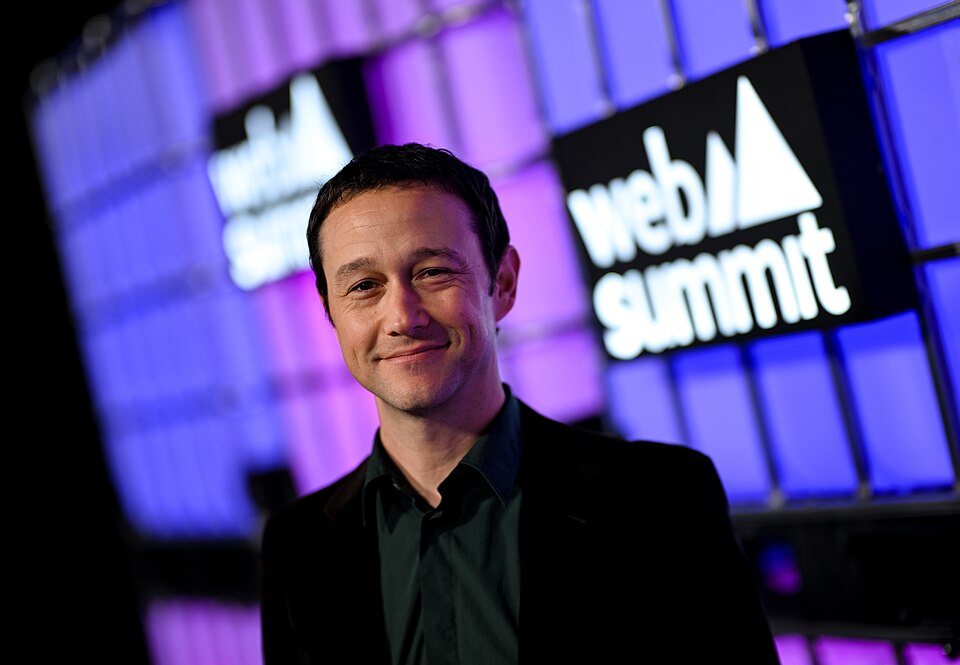
Web Summit, CC BY 4.0, via Wikimedia Commons
Share this post:
Joseph Gordon-Levitt's Netflix AI Thriller Adds Jeff Daniels and Joel Edgerton
Jeff Daniels, Joel Edgerton, Caleb McLaughlin, and Nnamdi Asomugha have joined the cast of the untitled Netflix AI thriller directed by Joseph Gordon-Levitt. They join Rachel McAdams, who was announced when Netflix acquired the project in October 2025.
The Full Cast
Daniels, known for "The Newsroom" and "Dumb and Dumber," brings decades of dramatic range to the ensemble. Edgerton, who has spent the past decade alternating between leading roles and character work in titles including "Loving" and "The Great Gatsby," adds another internationally recognized name. McLaughlin, who played Lucas Sinclair across all four seasons of "Stranger Things," is one of the highest profile Netflix alumni rejoining the platform. Asomugha appeared in "Sylvie's Love" and "Bruised" before becoming one of the more distinctive dramatic actors working in independent film.
.jpg)
Montclair Film, CC BY 2.0, via Wikimedia Commons
Daniels has built a career that moves between broad comedy and serious dramatic work without being fixed to either mode. His Emmy-winning performance as Will McAvoy on "The Newsroom" established him as a lead capable of carrying extended dramatic arcs. His participation in an ensemble with this cast places him alongside actors whose recent work has been primarily prestige drama.
At 69, Daniels brings a generational perspective to a project about AI's impact on creative labor. His career spans the period from pre-digital Hollywood through the streaming era, which gives him a direct experiential frame for what the film's subject matter describes.
Behind the Script
Gordon-Levitt wrote the screenplay with Kieran Fitzgerald. Story credit is shared by both writers alongside Natasha Lyonne, whose own AI film studio Asteria is built around licensed training data. Rian Johnson and Ram Bergman produce through their T-Street banner, the same company behind "Knives Out" and its sequels.
Gordon-Levitt also produces alongside Fitzgerald. The film was developed within the T-Street pipeline before Netflix entered as buyer.
What Netflix Acquired
Netflix paid for a fully assembled package: director, script, and lead talent in place. That structure is described by trade publications as a studio package acquisition, a category Netflix reserves for projects where the creative team and financing arrive together rather than in stages.
Edgerton has alternated between studio productions and independent features throughout his career, giving him one of the broader ranges in the ensemble. He directed and starred in "The Gift" in 2015, produced and wrote his own projects, and taken supporting roles in major franchise films. That range makes him one of the few ensemble members with experience on both sides of a production.
His collaboration with Gordon-Levitt on a film about AI's threat to creative labor places him alongside a director who has been making that argument in policy contexts for years. Edgerton's character has not been disclosed, but his placement in the announcement alongside Daniels suggests a significant role in the film's dramatic architecture. At a press tour in November 2025, Edgerton described himself as ["terrified of the future" when discussing AI](/blog/joel-edgerton-felicity-jones-ai-filmmaking), making his casting in an AI critical thriller seven months later a coherent arc rather than a contradiction.
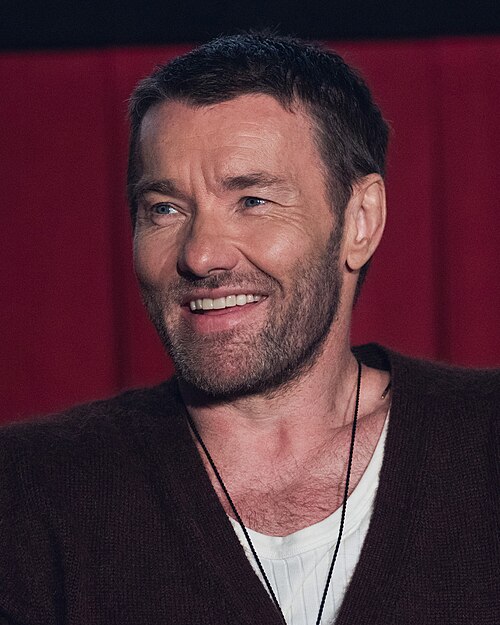
Kevin Paul, CC BY 4.0, via Wikimedia Commons
Production is set for summer 2026. The plot remains undisclosed. Filming will take place in Belgrade, Serbia, and Montenegro.
Gordon-Levitt on the Subject He Is Filming
Gordon-Levitt has spent several years building a documented public argument about AI and creative labor. He has testified before state legislatures, spoken at the UN Internet Governance Forum, and written for major publications on the need for compensation frameworks that pay creators when their work trains AI models. His position is that AI draws on human generated material and the people behind that material deserve a share of the revenue.
Belgrade and Montenegro as Production Locations
The film will shoot in Belgrade, Serbia, and Montenegro during summer 2026. Both locations have established themselves as European production destinations over the past decade, offering a combination of location variety, lower production costs compared to Western European cities, and developed local crew infrastructure.
Belgrade in particular has hosted major productions from US and UK studios, building a track record as a stand-in for multiple period and contemporary settings. The choice reflects the practical considerations of a Netflix production working across international locations while keeping the overall budget within the package acquisition range.
Montenegro's coastline and mountain terrain give the production access to a range of visual environments within a compact geography. The specific scenes to be shot in each location have not been disclosed.
The T-Street Banner and Its Production Record
Rian Johnson and Ram Bergman produce through T-Street, the company behind "Knives Out" and its sequels "Glass Onion" and the third Benoit Blanc film currently in production. T-Street built its identity around Johnson's whodunit franchise before expanding to other projects.
The banner's involvement in this project reflects a production relationship with Gordon-Levitt that predates the Netflix acquisition. The package arrived at Netflix with T-Street already attached, which is standard for productions where the producers have a direct relationship with the director and script.
T-Street's track record at Netflix is specifically relevant. "Glass Onion" was produced for Netflix and released in 2022 to strong streaming numbers. The relationship between the banner and the platform is established and functional, which reduces execution risk on a production with a complex cast assembly.
Caleb McLaughlin's Career Step
Caleb McLaughlin played Lucas Sinclair across all four seasons of "Stranger Things," appearing in more than 40 episodes of one of Netflix's most watched original series. His addition to this cast places him in a radically different production context: a adult thriller with an ensemble of established dramatic actors rather than a genre series with a large ensemble of young performers.
That transition is a significant career step. McLaughlin spent the years between 2016 and 2025 building a profile as a Netflix original series lead. Moving from that context into an adult thriller with Daniels, Edgerton, and McAdams changes the register entirely.
His casting also gives the film a connection to Netflix's existing audience base. Viewers who followed "Stranger Things" through its four seasons represent a substantial group who already know McLaughlin's work, even if they have not seen him in a dramatic context like the one this film is likely to provide.
The Natasha Lyonne Story Credit
Natasha Lyonne shares story credit with Gordon-Levitt and Fitzgerald. Lyonne founded Asteria Film, an AI film studio built around licensed training data that treats creator compensation as a structural requirement rather than an afterthought.
Her story credit on a film about AI's threat to creative labor reflects a specific perspective on the subject. Asteria's model attempts to show that AI production can be built on compensation frameworks rather than unauthorized data use. Her contribution to this film's story brings that experience into the script's development.
The collaboration between Gordon-Levitt, whose advocacy has focused on policy and legislation, and Lyonne, whose Asteria work represents a practical model for how AI production can be structured differently, gives the film's conceptual foundation a range of approaches to its own subject matter.
What Netflix's Acquisition Structure Means
Netflix paid for a fully assembled package with director, script, producers, and lead talent already committed. That acquisition model, which trade publications describe as a studio package deal, reflects Netflix's current approach to reducing development risk on prestige drama.
A package acquisition means Netflix is buying a project where the creative decisions are already made. The script exists, the director is committed, and the cast is in place. Netflix is not developing the film. It is financing and distributing a project that arrived complete.
That structure is increasingly common for projects with established creative teams. For Gordon-Levitt, it means the film will reach an audience through one of the world's largest streaming platforms without requiring the film to pass through a traditional studio development process that might have reshaped its subject matter.
Rachel McAdams and the Lead Role
Rachel McAdams was the first cast member announced when Netflix acquired the project in October 2025. Her lead role has not been described in trade coverage, but her presence at the top of the announcement placed her as the film's central character rather than as part of an ensemble.
McAdams has built a career that moves between genre films and prestige drama. She appeared in "Midnight in Paris," "Spotlight," and the "Sherlock Holmes" franchise. Her range across tonal registers makes her a practical choice for a thriller where the dramatic and the conceptual need to operate in the same film.
The gap between her October 2025 announcement and the May 2026 cast additions describes the standard packaging timeline for a prestige Netflix drama. The lead is announced first, then the ensemble builds around that anchor.
Nnamdi Asomugha in Dramatic Film
Nnamdi Asomugha is a former NFL cornerback who has built a second career as a film producer and actor. He produced "Sylvie's Love," the 2020 Amazon Studios period romance he also starred in alongside Tessa Thompson. "Bruised" followed as an acting credit.
His transition from professional football to independent film, specifically to projects centered on Black American stories and experiences, gives him a production background that most actors in the ensemble do not share. He understands the producing side of the work from direct experience.
His addition to this cast follows a pattern of casting actors who have demonstrated range across format and context rather than actors identified with a single type of role. The film's ensemble appears designed for dramatic flexibility rather than recognizable franchise identity.
The Film's Position in Gordon-Levitt's Work
Gordon-Levitt conceived the film's story nearly a decade before AI became a central Hollywood concern. His advocacy work, which includes congressional testimony, coalition building, and UN advisory roles, grew up alongside the film's development. The two tracks ran in parallel rather than one producing the other.
The result is a production where the director's public record on the subject is more extensive than almost any film's subject matter documentation. Most directors bring research and point of view to a subject. Gordon-Levitt brings years of active engagement with the policy, labor, and cultural dimensions of the exact question the film dramatizes.
Whether that depth produces a more resonant film or a more thesis-driven one is the creative question that summer 2026 production will answer. His prior directorial work on "Don Jon" and "HitRECord on TV" demonstrated a range that goes beyond advocacy, which is a relevant data point for a film that needs to work dramatically as well as conceptually.
The ensemble's composition, combining stage-trained actors, franchise veterans, and independent film regulars, gives the production the raw material for that balance. The film's commercial and critical result will be a significant data point in the broader debate about whether Hollywood's AI conversation produces meaningful art or only argument.
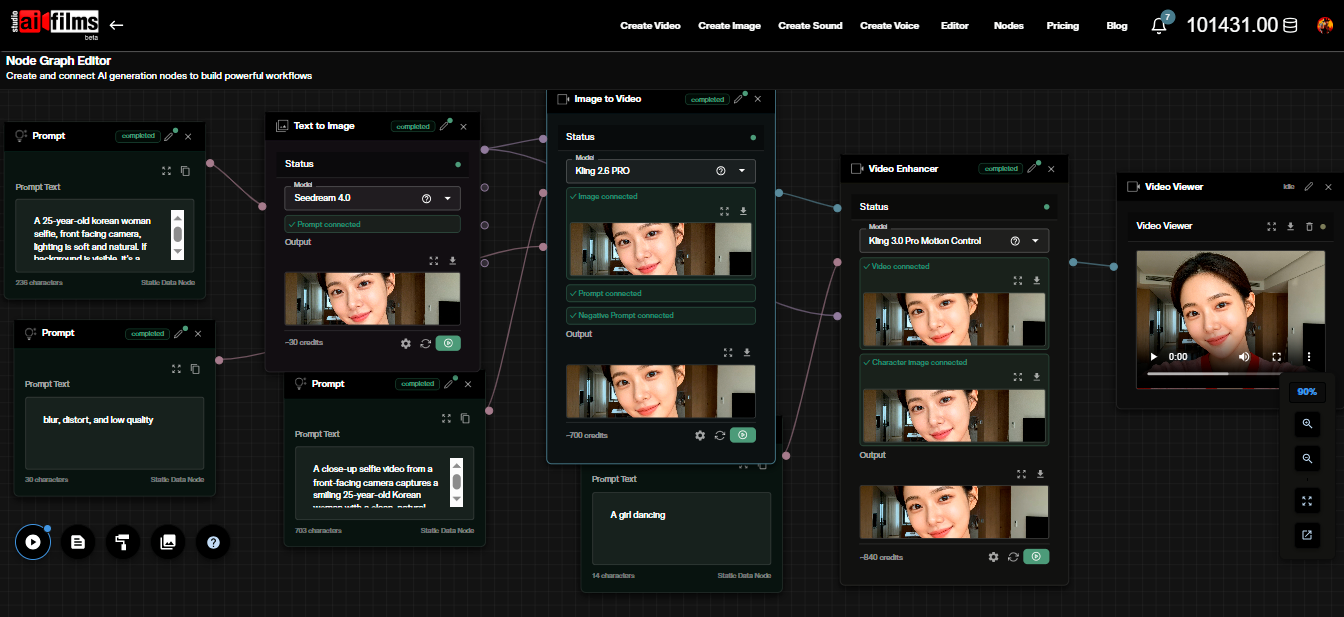
His full record of AI advocacy dates to at least 2023, when he proposed a "residual economy" model for AI training compensation. The untitled film is, in that sense, a continuation of the same argument by different means. Filmmakers working with AI tools today can access generation and image-to-video capabilities through AI FILMS Studio, independent of the industry negotiations the film's subject matter touches.
Sources
Deadline | The Hollywood Reporter | Variety
Continue Reading
.jpg?w=3840)


Video & LipSync
- Video Generator
- Text to Video
- Image to Video
- Start-End Frame to Video
- Draw to Video
- Motion Control
- Video Enhancer
- Video Upscaler
- Video Extend
- Video to Video LipSync
- Audio to Video LipSync
- Image to Video LipSync
- Video FaceSwap
- Seedance 2.5
- WAN 3.0
- Seedance 2
- FLUX 3
- Minimax H3
- Vidu Q3 Pro
- Grok Imagine Video 1.5
- Gemini Omni
- Google Veo 3.1
- Kling 3.0 Pro
- Luma Ray 3.2
- LTX 2.3
- Happy Horse 1.1
- Kling 3.0 Motion
- ByteDance Upscaler
- InfiniteTalk
- InsightFace
Image & Edit
- AI Character
- AI Actor
- Art Generator
- Text to Image
- Image to Image
- LoRA Image to Image
- Draw to Edit
- Image LoRA Training
- Remove Background
- Image Enhancer
- MidJourney 8.0
- Krea 2
- OpenAI GPT Image 2.0
- Nano Banana Pro Ultra
- Nano Banana 2 Lite
- Nano Banana Pro
- Minimax Image
- Clarity Pro
- Z-Image Turbo LoRA
- Krea 2 Turbo LoRA
- Z-Image LoRA Trainer
- Qwen Image LoRA Trainer
- Background Erase Network 2 (BEN2)