
Natasha Lyonne Co-Founds Ethical AI Film Studio Asteria
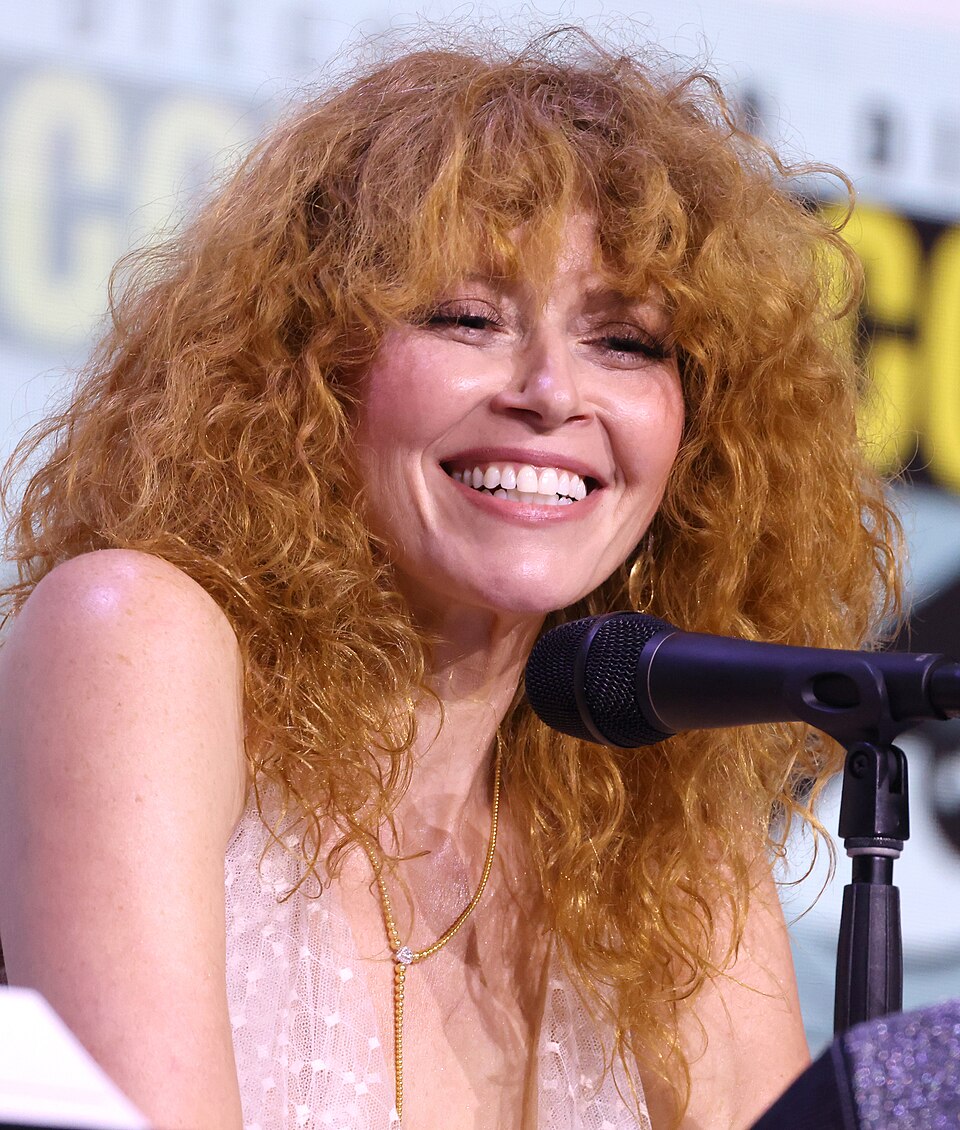
Gage Skidmore, CC BY-SA 3.0, via Wikimedia Commons
Share this post:
Natasha Lyonne Co-Founds Ethical AI Film Studio Asteria
Natasha Lyonne has founded Asteria alongside Bryn Mooser, a generative AI film and animation studio built around a single constraint: every model it uses is trained on licensed content only. Her feature directorial debut, Uncanny Valley, will be the studio's first major production, using Moonvalley's Marey foundational model and a script she wrote with Brit Marling.
Asteria and Marey
Lyonne and Mooser launched Asteria as a partner studio to Moonvalley, whose Marey AI video model is built on licensed datasets rather than content scraped from the web without creator consent.
That licensing model is Asteria's defining position. Lyonne has been direct about the distinction. She wants to demonstrate that AI film production can work without taking creators' material without permission or payment. The studio's commercial argument is that licensed foundation models represent both a legal and a reputational advantage as enforcement pressure on unlicensed training data mounts.
Asteria is also structured as an artist led studio rather than a technology company. Lyonne chairs the company's creative direction. That organizational structure matters for how the studio recruits talent: cinematographers, production designers, and costume designers who would hesitate to work on an AI production operated by an AI company may be more willing to collaborate with a studio where a working director is the creative authority and the technology is the tool.
Bryn Mooser's Production Background
Mooser founded RYOT Films, a production and technology company that worked at the intersection of immersive journalism and social impact storytelling. RYOT produced VR journalism and non fiction content before being acquired by Verizon Media. His experience building technology native production infrastructure is what he brings to Asteria alongside Lyonne's creative standing.
That background is specific. Mooser is not a studio executive who moved into AI. He built a company that merged journalism, VR production, and distribution technology, which produced direct familiarity with how immersive formats are technically built and commercially distributed. That combination of production and platform experience is the organizational complement to Lyonne's creative and industry profile.
RYOT Films also gave Mooser experience with technology adoption cycles in media. VR journalism peaked as a format and then contracted before finding its stable place in specialized contexts. That cycle, of early adoption followed by recalibration, is the same cycle generative AI film production is in. A founder who has lived through one version of it is better positioned to build a sustainable studio than someone experiencing it for the first time.
Moonvalley's Licensed Foundation
Moonvalley raised approximately $70 million in 2025 specifically to license content from creators. The funding built a dataset of licensed audio, video, and image content. Marey, the foundational model produced from that dataset, is the only major commercial AI video generation model built on a fully licensed corpus.
The $70 million licensing investment is a structural moat. Building a comparable licensed dataset from scratch requires the same capital outlay. Any competitor entering the licensed model space cannot shortcut the cost of the rights clearance process. That makes Moonvalley's position difficult to replicate quickly and gives Asteria a production partner whose competitive advantage compounds over time as rights are cleared for more content types and genres.
What this means for Asteria's productions: the copyright risk that affects other AI film projects is structurally removed at the training data level. A production built on Marey does not carry the liability exposure that productions using scraped models face as Hollywood studios pursue copyright enforcement against AI companies.
Uncanny Valley
Uncanny Valley follows Mila, a teenage girl who becomes unmoored by a wildly popular augmented reality video game set in a parallel present. Lyonne and Brit Marling wrote the script together and both will star in the film.
The project includes an open world video game component created alongside VR pioneer Jaron Lanier. Lyonne described the film as something that only makes sense to attempt now, when the tools to build it at this scale actually exist. The combination of AI generated visuals, a playable VR game, and a theatrical narrative in a single work requires AI generation at a quality level and a VR platform accessible to independent production, both conditions that became viable around 2025.
Brit Marling as Co Writer and Star
Marling wrote and starred in The OA (Netflix), Sound of My Voice, and I Origins. Her work consistently engages with questions of consciousness, alternate reality, and the relationship between human identity and scientific or technological systems.
Uncanny Valley's premise, a teenager whose reality is unmoored by an augmented reality game set in a parallel present, is directly continuous with the questions her previous work has explored. The collaboration with Lyonne combines a director approaching the material as a technical and creative argument about AI with a writer who has spent a career building narrative frameworks for the same themes. Their shared script is the reason the film's production method and subject matter are the same argument rather than a coincidence.
Marling's prior work also has a track record with unconventional distribution. The OA ran two seasons on Netflix. Sound of My Voice and I Origins found festival and theatrical distribution for work that operates well outside genre expectations. She brings proven experience getting difficult, formally experimental material in front of audiences through multiple distribution channels.
Jaron Lanier and the Open World Component
Lanier coined the term "virtual reality" in the 1980s and wrote Who Owns the Future in 2013, arguing that the tech industry's data extraction practices would hollow out the middle class. His presence on Uncanny Valley as a creator of the open world game component brings both the technical credibility to build interactive XR and the philosophical position that has made him a critic of extractive AI practices.
Asteria is positioned against the same extractive practices Lanier described. His involvement is not celebrity endorsement of a technology he has criticized. His argument in Who Owns the Future was that creators should be paid when their work trains systems that generate value. Moonvalley's licensing model is a practical implementation of that argument. Lanier's collaboration with Lyonne and Asteria is a coherent extension of his own position into production practice.
The open world game component Lanier is building for Uncanny Valley is not a promotional companion piece. It is a narrative layer of the film. Players in the game experience the same parallel present that Mila inhabits in the linear story. How the game and the film reflect each other determines whether the combined work holds together as a single artistic statement or fragments into two separate products. Lanier's VR experience is what makes that integration technically credible.
The Case for Licensed Training Data
Lyonne's "ethical AI" framing targets the central dispute running through every guild negotiation and legal challenge in Hollywood: who controls how a creator's work is used to train models, and who gets paid when it is.
The approach Asteria takes, building on Marey's licensed foundation, is Lyonne's answer to that question in practice rather than in principle. Most generative AI video models on the market were trained on material gathered without licensing agreements. Marey was not, and Asteria's productions are built to stay within that boundary.
.jpg)
Peabody Awards, CC BY 2.0, via Wikimedia Commons
The Licensed Model as a Legal Risk Management Strategy
Productions using unlicensed AI models face potential liability as Hollywood studios pursue copyright enforcement against AI companies. Asteria's Marey constraint is simultaneously an ethical position and a business risk management decision.
A theatrical or streaming production built on licensed generation tools has a defensible IP position that productions using scraped models do not. As enforcement pressure mounts, Asteria's approach may shift from principled to pragmatically necessary for productions seeking major distribution. Theatrical distributors and streaming platforms are beginning to require documentation of AI tool provenance as part of the delivery process, which is the commercial mechanism that will make Asteria's founding constraint a production industry standard rather than an outlier position.
The E&O insurance question is a practical accelerant. Entertainment lawyers advising productions on AI tool selection increasingly flag unlicensed training data as an E&O underwriting risk. A production that cannot document its AI tool's training provenance may find its E&O policy excludes AI derived content or requires additional riders. Asteria's Marey foundation addresses the E&O question before it becomes a distribution bottleneck.
ChikaBOOM! as the Studio's First Public Proof
Asteria's first film premiered at the 25th Tribeca Festival in June 2026. The 10 minute short featured the voices of Yara Shahidi and Daveed Diggs, production design by Hanna Beachler, and costumes by Ruth E. Carter, both Oscar winners for Black Panther.
The decision to involve two of the most celebrated craft practitioners in recent Hollywood cinema demonstrates Asteria's argument directly: ethical AI and serious craft are not in conflict. Beachler and Carter's participation is a signal that working with Asteria's licensed model does not require conceding on production value or creative ambition. The Tribeca premiere placed the work in front of the festival's industry audience at the moment when the AI debate in independent film is most concentrated.
ChikaBOOM! functioned as Asteria's proof of concept at the institutional level. A 10 minute short with Oscar winning craft heads and the voices of Diggs and Shahidi is not an experimental proof of concept. It is a production with the same talent profile as a prestige short eligible for Academy consideration. If the work is submitted and reviewed on those terms, it moves the question from whether ethical AI can produce technically adequate content to whether it can produce work that the industry's own institutions recognize as excellent.
Baby Rambo
Lyonne has described Baby Rambo as the next feature she is writing and directing, named as a priority for 2026 in a Hollywood Reporter interview. The project is separate from Uncanny Valley and from the Asteria AI workflow. She is approaching it as a more conventional production.
The two project trajectory demonstrates that Lyonne's commitment to AI production through Asteria is not a bet the career move. She is running a conventional directorial career and an AI production studio simultaneously. That parallel development is strategically sensible. If Uncanny Valley encounters distribution resistance due to its AI production method, her conventional work with Baby Rambo maintains her directorial standing. If Uncanny Valley succeeds, it establishes Asteria as a production entity with a track record.
The first feature from a new studio is always a test. For Asteria, the test has two layers. The first is whether Uncanny Valley works as a film. The second is whether it works as a demonstration of what licensed AI production can achieve at the level of theatrical quality. Both outcomes matter, and they are not independent: a film that is technically distinguished but narratively weak proves the tool without proving the studio, and vice versa.
Asteria's founding year, 2026, is early in the theatrical AI production cycle. The studio's decisions about tools, distribution, and craft partnerships are being made before any established norms exist. That means Lyonne and Mooser are not executing a known playbook but writing it as they go, which is the condition that every film studio that became foundational to a new wave of cinema started under.
Part of a Broader Industry Push
Lyonne also holds a story credit on the untitled Netflix AI thriller directed by Joseph Gordon-Levitt, alongside Gordon-Levitt and Kieran Fitzgerald. Her involvement in a Netflix AI thriller while simultaneously building an ethical AI production studio is not a contradiction. It is the same position she holds at Asteria: AI is the tool, consent and licensing are the requirement, and the work that results is judged on its own terms. She is also a founding member of the Creators Coalition on AI, the 500 member industry group launched in December 2025 with Oscar winners Daniel Kwan and Sian Heder. The coalition's demands around compensation when creators' work trains AI models align directly with what Asteria's licensing model attempts to resolve in production.
Where the Frankenstein VFX controversy showed how AI can enter a production pipeline without a director's knowledge, Lyonne's approach goes in the opposite direction: building a studio where the sourcing of every model in the chain is the founding principle. Steven Soderbergh has described AI used for enhancement as "just another tool" in his current production workflow. Lyonne is making the same argument about generative AI, with the added requirement that the tool has to be built on a foundation the industry can accept.
The Creators Coalition on AI that Lyonne helped found is also the organizational infrastructure for building the audience and industry constituency that Asteria's business model needs. A studio whose competitive advantage is ethical training data provenance requires buyers and distributors who care about that provenance. The coalition's advocacy work and Asteria's production work are building the supply and demand sides of the same market simultaneously.
Lyonne's network spans the entertainment industry's current power structure in a way that few AI native founders can match. Orange Is the New Black ran seven seasons on Netflix, giving her a direct working relationship with the platform most likely to distribute Uncanny Valley. Her Peabody, Emmy, and Golden Globe nominations across Russian Doll and OITNB translate into the institutional credibility that makes a first time feature director at an AI studio a serious conversation at the studio level rather than a novelty pitch.
Lyonne's career as a performer and showrunner gives her a specific kind of credibility that a technology founder cannot acquire. She has been the subject of the industry's AI debates, as a performer whose likeness and voice are among the kinds of data that AI training pipelines scrape. That personal position as a potential data subject, combined with her position as an AI studio founder, means her advocacy for licensed training is not abstract. She is describing practices that would have applied to her own work.
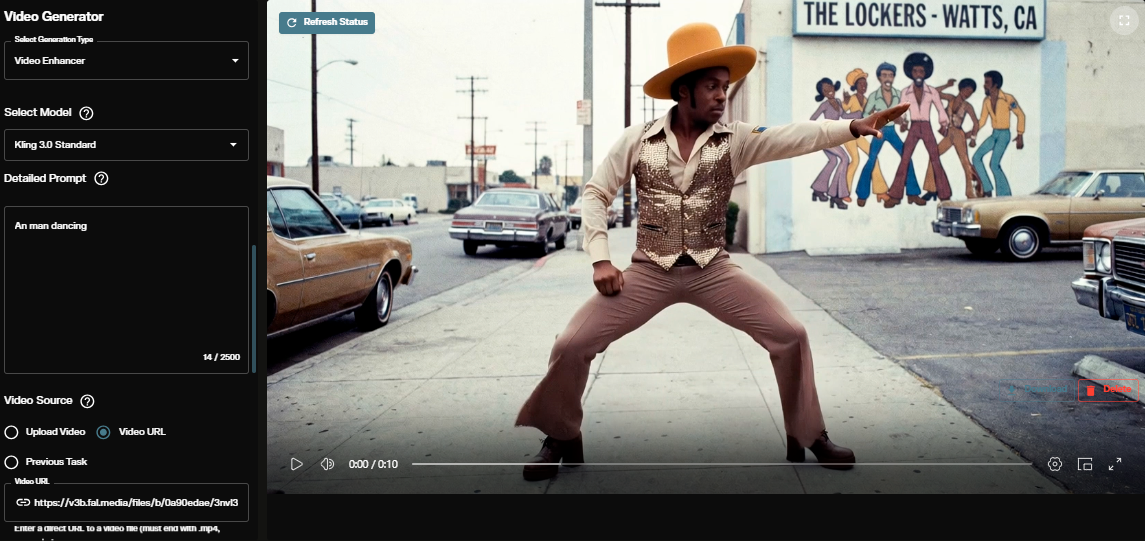
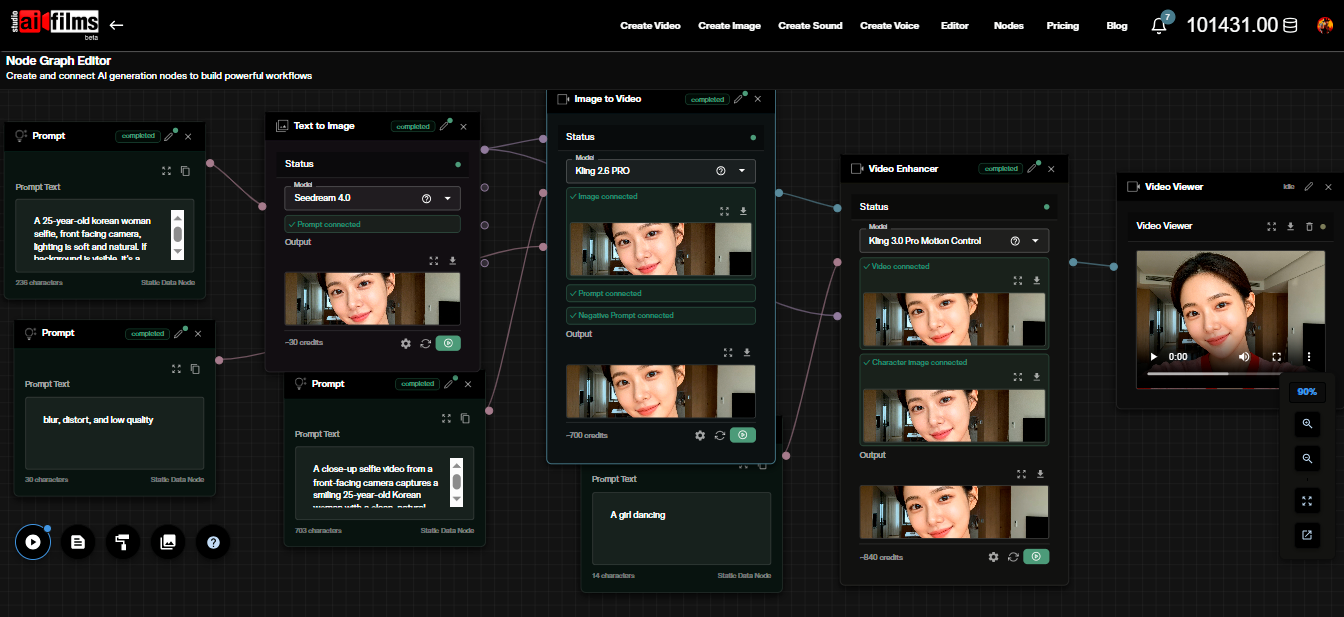
Filmmakers exploring what AI generation looks like in practice can access generation and enhancement tools through the AI FILMS Studio video workspace.
Sources
The Hollywood Reporter | Variety | Rolling Stone | NME | AV Club
Continue Reading
.jpg?w=3840)


.jpg)
Video & LipSync
- Video Generator
- Text to Video
- Image to Video
- Start-End Frame to Video
- Draw to Video
- Motion Control
- Video Enhancer
- Video Upscaler
- Video to Video LipSync
- Audio to Video LipSync
- Image to Video LipSync
- Video FaceSwap
- Seedance 2.5
- WAN 3.0
- Seedance 2
- FLUX 3
- Minimax H3
- Vidu Q3 Pro
- Grok Imagine Video 1.5
- Gemini Omni
- Google Veo 3.1
- Kling 3.0 Pro
- Luma Ray 3.2
- LTX 2.3
- Happy Horse 1.1
- Kling 3.0 Motion
- ByteDance Upscaler
- InfiniteTalk
- InsightFace
Image & Edit
- AI Character
- AI Actor
- Art Generator
- Text to Image
- Image to Image
- LoRA Image to Image
- Draw to Edit
- Image LoRA Training
- Remove Background
- Image Enhancer
- MidJourney 8.0
- Krea 2
- OpenAI GPT Image 2.0
- Nano Banana Pro Ultra
- Nano Banana 2 Lite
- Nano Banana Pro
- Minimax Image
- Clarity Pro
- Z-Image Turbo LoRA
- Krea 2 Turbo LoRA
- Z-Image LoRA Trainer
- Qwen Image LoRA Trainer
- Background Erase Network 2 (BEN2)