
Art Directors Guild Condemns Scorsese for Black Forest Labs Role: 'The Business Is Not in Flux'
.jpg?w=3840&q=90)
Share this post:
Art Directors Guild Condemns Scorsese for Black Forest Labs Role: 'The Business Is Not in Flux'
The Art Directors Guild (IATSE Local 800) issued a formal statement on June 9, 2026 condemning Martin Scorsese for his advisory role at Black Forest Labs, the maker of the FLUX generative AI image model. The guild said Scorsese's promotion of the tool "circumvents the input" of its 2,966 members and called his position "a betrayal of the collaborative nature of cinema".
The statement landed on the same day the Directors Guild of America concluded its four year deal with the AMPTP. The DGA deal includes language requiring studios to consult directors before using generative AI on the creative elements of a production. The ADG's separate IATSE Basic Agreement contains no equivalent provision.
'The Business Is Not in Flux'
The statement's opening line: "Mr. Scorsese, The Business is not in flux". The word "flux" is a deliberate pun on the name of the Black Forest Labs product Scorsese publicly endorsed. The guild did not bury it.
The full text accuses Scorsese of "turning his back on the human artists who throughout his career have helped him create his most memorable works". It then quotes directly from Scorsese's June 2 promotional video, in which he asks, "How do you communicate what you see in your head to your cast and crew?" The ADG's position is that question has been answered by its members for decades.
"Mr. Scorsese's promotion of a generative AI product circumvents the input of Art Directors Guild Local 800 art directors, graphic artists, illustrators, production designers, scenic artists, set designers, and other talented Union professionals", the statement reads.
The guild also addressed the source material behind the model: "Generative AI is only capable of producing this type of 'cinematic intelligence' by ingesting large swaths of copyrighted work, likely scraped from the internet without consent, credit, compensation, or transparency".
Who the ADG Represents, and What It Has Been Losing
The Art Directors Guild covers four craft classifications: art directors and production designers; scenic, title and graphic artists; illustrators and matte artists; and set designers and model makers. The classifications also include storyboard artists, concept artists, previs artists, and model makers.
ADG membership stood at 3,492 in 2022. By 2025 it had dropped to 2,966, a 15% decline in three years, according to membership data published by The Hollywood Reporter. The guild is in the middle of its IATSE Basic Agreement, which runs through approximately July 2027. It cannot call a strike or reopen negotiations. The June 9 statement is the only formal instrument available to it.
The June 9 statement is not the guild's first confrontation with AI. In July 2024, the ADG's Illustrators and Matte Artists Council recommended members vote against IATSE's tentative agreement because of weak AI language. The Council's statement read: "Writers won the right to choose to use AI or not. We have no such autonomy". Members ratified the agreement anyway. The WGA secured the right for writers to opt out in its April 2026 deal, alongside $321 million for writer health plans.
Scorsese Has Not Responded
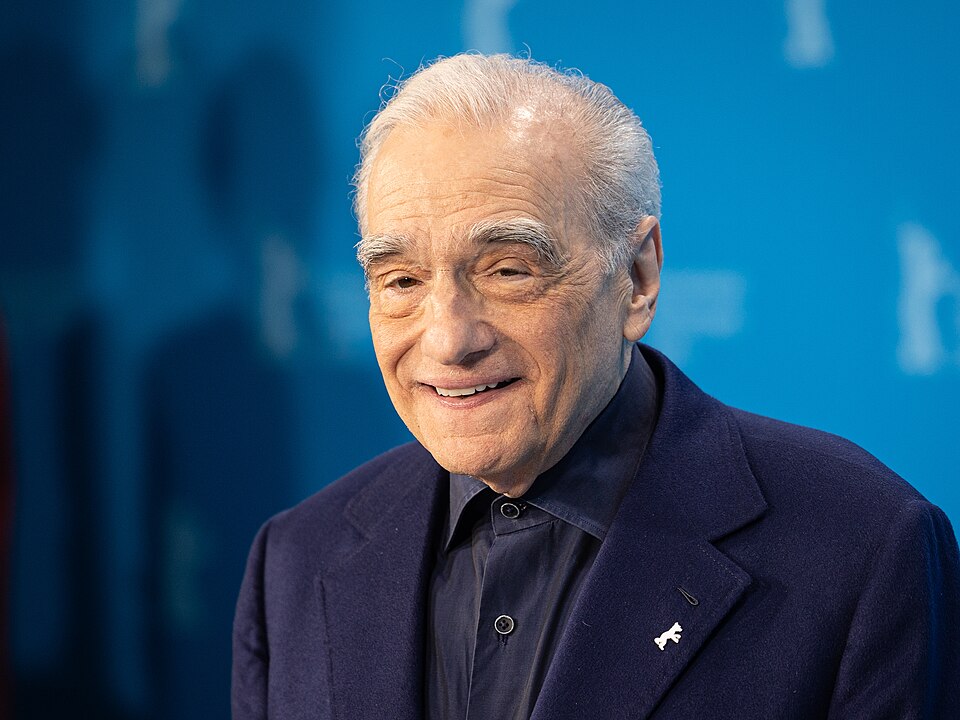
Harald Krichel, CC BY-SA 4.0, via Wikimedia Commons
Variety, The Hollywood Reporter, and The Wrap all reported that Scorsese's representatives did not respond to comment requests following the ADG statement.
Scorsese's stated use case, described in detail in his June 2 Black Forest Labs announcement, is generating storyboards to share his visual intentions with "the production designer, art designer, and cinematographer". Those job titles map directly onto ADG covered classifications. His described use case is the workflow the guild was built to protect, and that alignment has not been addressed publicly by either side.
Scorsese is currently directing "What Happens at Night" with Leonardo DiCaprio and Jennifer Lawrence. Principal photography began February 24, 2026.
When the Director's Manager Is an Investor
BroadLight Capital, a Black Forest Labs Series A investor, was founded in part by Rick Yorn, Scorsese's longtime personal manager. TechCrunch confirmed the BroadLight connection in its June 2 coverage of the partnership announcement. None of the trade press coverage of the ADG statement has noted that Scorsese's advisory role at Black Forest Labs runs through a chain in which his own manager holds a financial stake.
Black Forest Labs completed a $300 million Series B in December 2025 at a $3.25 billion valuation. The investor base includes Andreessen Horowitz, NVIDIA, Salesforce Ventures, Temasek, Bain Capital Ventures, and General Catalyst. Adobe, Canva, Microsoft, and Meta have all built products on the FLUX API.
Two Guild Deals, One Day Apart in Spirit
On June 9, 2026, the ADG published its statement and the DGA closed its four year deal with studios. The DGA agreement, which covers Scorsese as a member, includes a provision stating that employers "may not use GAI in connection with the creative elements of a picture without consulting the Director or other DGA-covered employees".
Scorsese now operates under a consultation requirement giving him a formal voice when studios deploy generative AI on his projects. The illustrators, art directors, and storyboard artists the ADG represents do not have that voice. The WGA secured the right for writers to opt out. The ADG, whose members' work appears in the training data the ADG statement references, was not at the table for any of those agreements.
Individual filmmaker criticism of Scorsese's partnership, from Boots Riley and Kane Parsons, put the endorsement question on the record five days earlier. The ADG's June 9 statement adds an institutional layer: a guild formally on the record that the advisory role circumvents its members' work, published the same day Scorsese's own guild secured the protections it had been fighting for.
Gore Verbinski offered a distinct response four days later at Taormina, where he called for a film industry AI rating system modeled on the MPAA framework, proposing that AI use be graded publicly rather than handled through guild consultation requirements alone.
What Black Forest Labs Makes
FLUX is an open weights image model whose API is integrated into Adobe, Canva, Microsoft, and Meta products. Black Forest Labs closed a $300 million Series B in December 2025 at a $3.25 billion valuation, with investors including a16z, NVIDIA, and General Catalyst. The ADG condemnation targets a company that has achieved mainstream creative industry integration, not a startup at the experimental fringe.
The open weights aspect matters for the guild's training data argument. Open weights models publish the model files publicly, but they do not publish the training data used to produce them. The FLUX model's training set is not disclosed. ADG members' concept art, production design renders, and storyboard illustrations are precisely the category of material that text to image models ingest. That ingestion without compensation is the premise of the guild's statement, and Black Forest Labs' mainstream integration amplifies its stakes.
The Storyboard Workflow Scorsese Described
In his June 2 promotional video, Scorsese described using FLUX to generate storyboard images that communicate his visual intent to his production designer, art director, and cinematographer. Those three roles map exactly onto ADG covered classifications. The guild's condemnation is a response to a specific stated use case, not a generalized objection to AI tools.
Scorsese's workflow, as he described it, has two steps. He generates images in FLUX that capture the visual quality he is pursuing. He then shares those images with his creative team as reference. That reference function replaces, in part, what a storyboard artist or concept illustrator would produce in a traditional prep workflow. The ADG statement identifies that replacement directly.
IATSE Basic Agreement vs. the DGA and WGA Deals
The DGA deal closed on June 9, 2026 and requires director consultation before any generative AI use on the creative elements of a production. The WGA deal prohibits AI written scripts and requires notification before studios use members' work for AI training. The ADG's IATSE Basic Agreement contains no equivalent AI provisions. That governance gap is what the condemnation statement is calling out, not a general objection to the technology.
The ADG's current agreement runs through approximately July 2027. The guild cannot reopen it to add AI language before then. That timeline means the ADG is watching the DGA and WGA establish precedents it will not be able to build on until its next contract cycle. The June 9 statement is partly a political act directed at that future negotiation, not just a response to Scorsese's specific role.
The 15% Membership Decline in Context
The ADG's reported decline from 3,492 members in 2022 to 2,966 in 2025 is not presented as caused by AI. The timing correlates with the period when AI image tools reached mainstream production use. The guild made the membership number central to its statement as a labor displacement metric, and the correlation is the argument even if causation is not established.
The 15% drop covers three years during which concept art generation went from experimental to commercially available, and during which major studios began integrating AI tools into their pre production pipelines. Whether those tools displaced ADG covered work directly is not documented in the guild's statement. The number is a signal, not a proof, and the guild is using it as one.
Scorsese's Production and Why It Matters
"What Happens at Night" began principal photography on February 24, 2026 with Leonardo DiCaprio and Jennifer Lawrence. The film operates under DGA and SAG-AFTRA contracts that contain AI provisions. The ADG condemnation addresses Scorsese's advisory role at Black Forest Labs, not AI use on his own production, which is why the DGA contract does not resolve the tension the ADG statement identifies.
The practical question the ADG is raising is narrow: should a director who has spent decades working with art directors, production designers, and storyboard artists publicly endorse a tool that the guild says circumvents their contributions? Scorsese's use of FLUX for personal pre production communication is separate from any question about staffing his actual film. But the advisory role at Black Forest Labs places him inside the company developing the tool, which is where the guild's objection focuses.
The ADG's June 2024 Precedent
The Art Directors Guild's June 9 statement was not its first public position on AI. In July 2024, the guild's Illustrators and Matte Artists Council recommended members vote against IATSE's tentative agreement, citing what it called inadequate AI protections. The Council compared the ADG's position unfavorably to the WGA's 2023 deal, which gave writers the right to choose whether to use AI. ADG members voted to ratify the agreement anyway.
That history matters for reading the June 9 statement. The guild is not new to this argument. Its members voted for a contract the council warned was insufficient, and the Scorsese statement arrives after that contract is in force and cannot be reopened. The escalation to naming a specific individual, and a specific company, reflects the limits of what the existing contract provides.
The Illustrators and Matte Artists Council's 2024 dissent is also the institutional voice for the ADG classifications most directly exposed to FLUX. Concept artists and illustrators are the members whose work most directly overlaps with what an image generation model like FLUX produces. Their council recommended against the agreement. Their director, now an advisor to Black Forest Labs, is publicly endorsing the technology that competes with their services.
What "Ingesting Copyrighted Work" Means in Practice
The ADG statement charges that FLUX is "only capable of producing this type of cinematic intelligence by ingesting large swaths of copyrighted work, likely scraped from the internet without consent, credit, compensation, or transparency". Black Forest Labs has not published its training data. The model's LAION based origins are documented in research from the original Stable Diffusion team, several of whom founded Black Forest Labs.
LAION datasets are compiled from internet-scraped image and text pairs. Professional work by illustrators, concept artists, and production designers is indexed by search engines and therefore present in those datasets. The question of whether that presence constitutes copyright infringement is active litigation. Several of the ADG's member illustrators are named plaintiffs in ongoing AI image model copyright cases.
The Pre Production Economy the ADG Is Defending
Storyboard artists, concept artists, previs artists, and illustrators are the ADG classifications most directly exposed to AI image generation. Their work is produced at the pre production stage, before a single frame is photographed. Pre production is where AI image tools have the deepest functional overlap with human professionals.
The pre production economy for art directors includes concept art packages, design bible development, animatic production, and location visualization. Each of these categories can be partially or substantially addressed by current AI image generation tools. Whether studios will reduce headcount in these categories as a result of AI availability is the operational question the membership decline figure is circling.
The DGA Consultation Requirement and Its Limits
The DGA deal's AI consultation provision requires employers to consult directors before using generative AI on a production's creative elements. The word "consult" does not mean approve or veto. A studio can consult a director, receive a negative response, and proceed. The requirement creates a formal conversation, not a control mechanism.
Even that limited protection is not available to ADG members. The conversation the DGA now has a contractual right to enter, the ADG does not. Art directors working on Scorsese's productions operate under the same IATSE Basic Agreement that the guild's illustrators council called inadequate in 2024. The DGA deal closing on the same day as the ADG statement is not coincidental in the guild's framing.
The juxtaposition is the news: on the same calendar day, Scorsese's own guild secured a formal consultation right over AI use on productions where he directs, while the guild representing the artists who have supported his productions for decades received no equivalent right and instead published a formal condemnation of his advisory role at the company producing the tool.
Filmmakers working with AI image generation tools, including FLUX, can access the AI FILMS Studio image workspace directly.
The ADG's statement represents one institutional position in an industry dispute that will continue beyond Scorsese's specific advisory role. Black Forest Labs will continue developing FLUX. The ADG will continue operating under an agreement that does not address AI generation tools. The two trajectories will intersect again before the guild's next contract opens in 2027.
Sources
Variety | The Hollywood Reporter | Deadline | The Wrap | Consequence of Sound | TechCrunch | IndieWire
Continue Reading


Video & LipSync
- Video Generator
- Text to Video
- Image to Video
- Start-End Frame to Video
- Draw to Video
- Motion Control
- Video Enhancer
- Video Upscaler
- Video Extend
- Video to Video LipSync
- Audio to Video LipSync
- Image to Video LipSync
- Video FaceSwap
- Seedance 2.5
- WAN 3.0
- Seedance 2
- FLUX 3
- Minimax H3
- Vidu Q3 Pro
- Grok Imagine Video 1.5
- Gemini Omni
- Google Veo 3.1
- Kling 3.0 Pro
- Luma Ray 3.2
- LTX 2.3
- Happy Horse 1.1
- Kling 3.0 Motion
- ByteDance Upscaler
- InfiniteTalk
- InsightFace
Image & Edit
- AI Character
- AI Actor
- Art Generator
- Text to Image
- Image to Image
- LoRA Image to Image
- Draw to Edit
- Image LoRA Training
- Remove Background
- Image Enhancer
- MidJourney 8.0
- Krea 2
- OpenAI GPT Image 2.0
- Nano Banana Pro Ultra
- Nano Banana 2 Lite
- Nano Banana Pro
- Minimax Image
- Clarity Pro
- Z-Image Turbo LoRA
- Krea 2 Turbo LoRA
- Z-Image LoRA Trainer
- Qwen Image LoRA Trainer
- Background Erase Network 2 (BEN2)