
Seth Rogen Tells Cannes: If You Use AI to Write Scripts, You Shouldn't Be a Writer
Share this post:
Seth Rogen Tells Cannes: If You Use AI to Write Scripts, You Shouldn't Be a Writer
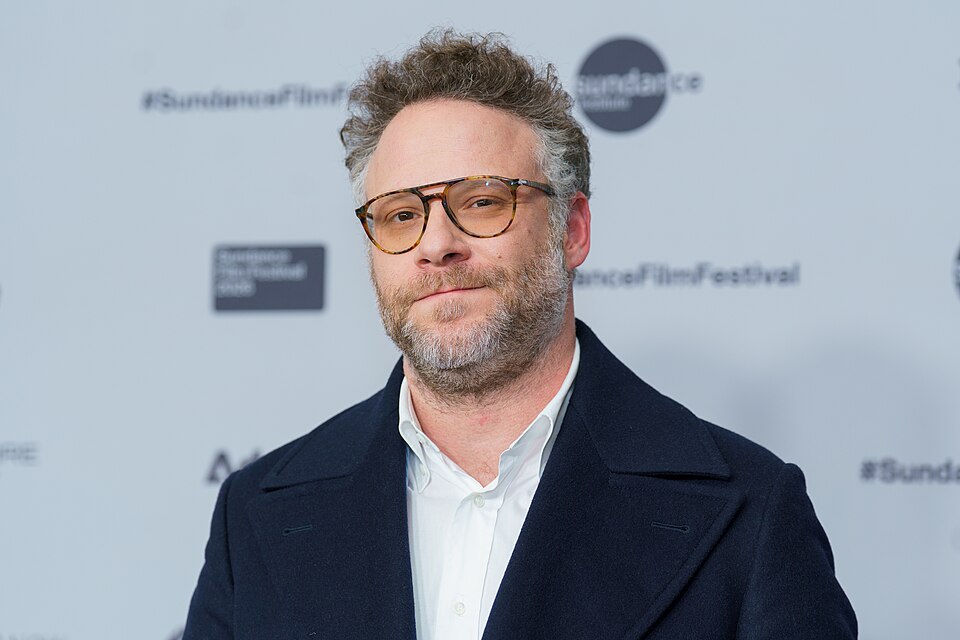
Seth Rogen arrived at the 2026 Cannes Film Festival promoting "Tangles," a hand drawn animated film he described as having a human touch on every single frame. He left as the festival's most categorical voice against AI in the writing room.
Speaking to reporters on the Croisette, Rogen delivered a direct verdict on writers who turn to AI for their scripts: "If your instinct is to use AI and not go through that process. You shouldn't be a writer. Because you're not writing."
Rogen's Identity as a Writer
Seth Rogen's filmmaking career is built on the writing process. He co-wrote Superbad with Evan Goldberg at 14. Knocked Up, This Is the End, Pineapple Express, and Neighbors all came from the same collaborative writing practice: two people in a room, generating material through conversation and revision over months or years.
His position on AI in screenwriting is not a political statement. It is a craft identity statement made by someone whose entire career depends on the experience of sitting with the difficulty of writing and choosing to push through it. The process, in his framework, is the point. What it produces is inseparable from having gone through it.
That is also why his remark is more specific than broader AI criticism. He is not saying AI cannot generate text. He is saying that a person who uses AI to generate their script has not done the thing that makes them a writer. The disqualification is definitional, not moral.
His history with the WGA is also relevant context. Rogen was a working writer during both the 2007-2008 strike and the 2023 strike. He understands what writers' professional identity looks like when it is under structural pressure. His Cannes statement is consistent with how he has talked about writing his entire career: as the central thing, not as a means to an output.
Writing Means Doing the Work
Rogen's position rests on a specific premise: the value of writing is in the process of generating it, not only the product. "The idea of a tool that makes me write less is not appealing to me, because I like writing", he said.
Writing requires a human being to sit with difficulty, generate ideas, and make choices. Using AI to skip that work disqualifies the activity from being called writing, in his view. He told reporters that writers who default to AI should "go do something else."
Rogen was equally direct about the viral AI short films that regularly circulate online as evidence that Hollywood is obsolete. "Every time I see a video on Instagram that's like, 'Hollywood is cooked,' what follows is the most stupid dog shit I've ever seen in my life."
The "Stupid Dog Shit" Remark
The category of AI content Rogen is describing is specific: short clips that circulate on social platforms with captions claiming Hollywood is finished or that one person can now make feature films alone. These clips typically demonstrate visual generation capabilities while making implicit or explicit claims about what they replace.
Rogen's dismissal covers both the quality claim and the industry-ending prediction. On quality: the clips he describes are, in his view, technically unimpressive by the standard of what professional filmmaking produces. On the industry claim: the history of film is full of technologies that were predicted to end the profession and did not.
His framing positions AI generation as one more iteration of a recurring announcement that never arrives as described. That argument has a long history in Hollywood. Every significant production technology introduced since sound, including color, widescreen, television, digital video, and CGI, prompted similar predictions. All of them changed the industry without replacing it.
The Context at Cannes 2026
The Croisette was unusually frank in 2026 about AI, with major filmmakers speaking directly rather than deflecting to their publicists. Variety, Deadline, and The Hollywood Reporter each reported multiple AI statements per day from the festival's opening week through closing.
That concentration of candid statements from A-list figures was not accidental. The Screen Actors Guild agreement, the WGA agreement, and the DGA agreement had all addressed AI in their most recent negotiations. Every director and actor at Cannes had been in a room where AI was discussed as a labor issue, not just a creative one. The statements on the Croisette reflected conversations that had been happening privately for two years in guild halls and studio conference rooms.
Rogen's remarks were distinctive in that category because they were not about labor protections. They were about craft identity. Most guild AI discussions are about who gets paid, who owns what, and what requires consent. Rogen was making a claim about what kind of person a writer is. That is a different argument, and it is one the guild framework does not address.
A Festival Divided on the Question
.jpg)
Mike is Michi, CC BY-SA 4.0, via Wikimedia Commons
Cannes 2026 became the defining venue for the Hollywood AI debate this year, with major filmmakers and actors staking out positions across a single week. [Demi Moore said fighting AI is "a battle we will lose"](/blog/demi-moore-cannes-ai-fight-battle-lose) and urged colleagues to find ways to work with it. [Peter Jackson called AI "just a tool like any other tool"](/blog/peter-jackson-ai-filmmaking-cannes-2026), placing it alongside other production techniques in the filmmaker's kit.
[Guillermo del Toro rejected the premise that art can emerge from an app](/blog/guillermo-del-toro-cannes-ai-pans-labyrinth-2026), making him the closest in spirit to Rogen's position. But del Toro addressed AI in art broadly. Rogen's remarks are narrower and more personal: a claim about a single profession and whether reaching for AI to generate a script is compatible with being a writer.
The 2026 WGA Position vs. Rogen's Position
The WGA agreement ratified in 2023 and extended in 2026 permits writers to use AI tools with disclosure. The guild did not ban AI from the writing process. It established consent and compensation frameworks for AI use in specific scenarios, and required studios to disclose when AI material was used in development.
Rogen's personal position is stricter than what the guild permits. He is not bound by the guild to avoid AI. He is choosing to avoid it as a matter of craft identity. The gap between guild permission and individual practice is significant: the WGA established a floor, not a ceiling, for how seriously writers take the question.
For writers who share Rogen's position, the guild agreement is the minimum standard. Their actual practice is defined by a higher threshold that the guild could not compel everyone to meet.
"Tangles" Makes the Argument Visible
"Tangles" is a hand drawn animated feature based on Aimee Gramblin's graphic memoir. Rogen described it as a production where every frame carries "a human touch to it," meaning every image was drawn by a person.
In a production climate where AI tools can generate animation at scale, that choice is deliberate. The film is the argument made physical: a feature where human authorship is present in every line, and visible.
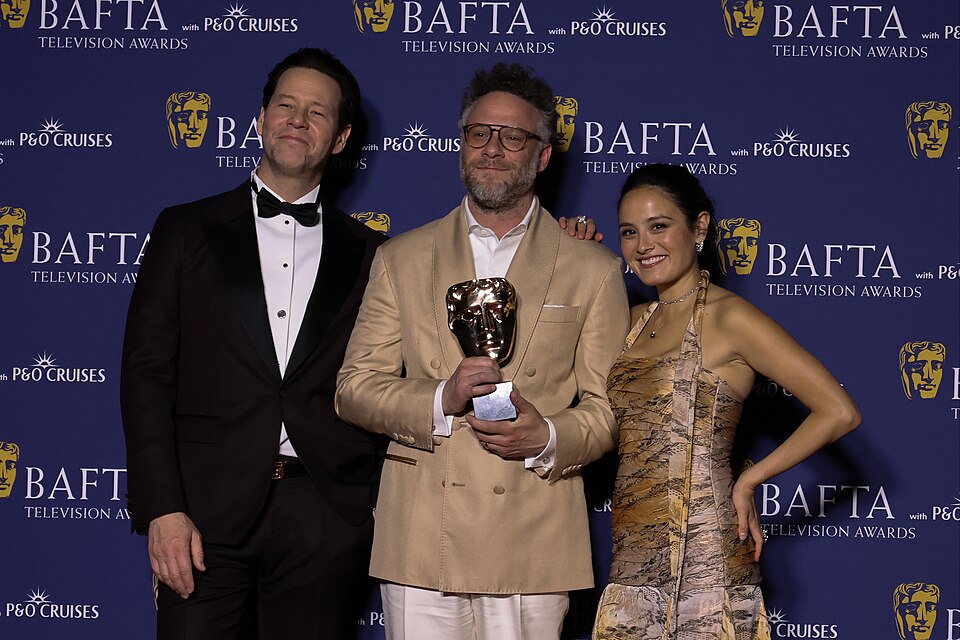
Rogen also stars in "The Studio," Apple TV+'s Hollywood satire, which received multiple awards at BAFTA 2026. The show follows the head of a film studio navigating the creative and commercial pressures reshaping the industry. His Cannes remarks arrive with that context in view: both "Tangles" and "The Studio" are productions built around the premise that human craft and human judgment produce something specific that cannot be automated.
JaceMerlyn, CC BY-SA 4.0, via Wikimedia Commons
Why Animation Tests the Argument Most Clearly
Hand-drawn animation requires a human decision at every frame. Every line is drawn by a person. Every color choice, every expression, every movement arc is the result of a human artist making dozens of micro decisions across the production.
AI animation can generate frames without those decisions. A prompt can produce movement that no animator designed. The visual result may be comparable to what a human animator produces, or better, or worse. What it lacks is the accumulated human judgment visible in every frame of a hand-drawn production.
Rogen chose hand-drawn animation as the vehicle for a Cannes premiere in 2026, the same year AI animation tools have reached the level of feature quality output. That is not a coincidence. The form and the argument are the same thing. "Tangles" does not argue for human animation. It is human animation, and its existence at Cannes is the argument.
Demi Moore's Opposite Position
Moore, appearing at the same festival, said fighting AI is a battle the industry will lose. Her framing is pragmatic: resistance is futile, so engagement is the only viable response.
Rogen's framing is definitional: AI use in screenwriting is not a question of tactics. It is a question of what writing means. Two Americans at the same festival in the same week, arriving at diametrically opposed positions through the same premise: that AI changes something fundamental about creative production.
The Cannes divide of 2026 is not between those who understand AI and those who do not. Both positions are held by people who have clearly thought about what the technology does. The divide is between people who think engagement is the only viable response and people who think the category of work being discussed should not be engaged with at all.
Moore's position is strategic: join the thing that is winning. Rogen's position is definitional: the thing that is winning in writing is not winning at the game he is playing. Those two responses are not in conflict. They are directed at different questions.
Guillermo del Toro at the Same Festival
Del Toro made the broader version of Rogen's argument at Cannes 2026: that art cannot emerge from an app. His position covers visual art, music, and film as a whole. Rogen's is narrower: writing specifically, and the process of writing specifically.
The narrowness is actually more powerful. Del Toro's claim is philosophical and broad enough to be disputed. Rogen's claim is practical and specific: if you want to call yourself a writer, you have to do the writing. That is a claim about professional identity, not about AI's capabilities. It is harder to argue against because it is not primarily an empirical claim. It is a definition.
Del Toro and Rogen would reach the same conclusion about a writer who used AI for their script. The difference is in how they get there: del Toro through a claim about what art requires, Rogen through a claim about what writing is.
Tilda Swinton's Version of the Same Argument
Swinton, at a masterclass the same week, made a structurally similar argument from a different position. She argued that AI cannot compete with adventurous cinema because AI tends toward the statistical average. Rogen's argument is about the writing process; Swinton's is about the output tendency. Both arrive at the same conclusion: what AI produces is distinct from what human creative practice produces, and the distinction matters.
Yeon Sang-ho's Colony, premiering at Midnight Screenings the same week, made the same argument as a zombie film: collective intelligence that subsumes individual thought is the horror the film depicts. Three filmmakers, three traditions, the same claim.
Rogen's specific contribution to the Cannes 2026 AI debate is the professional identity frame. The others argued about what AI produces. He argued about what using AI does to the person using it. In his account, a writer who defaults to AI for their scripts has not changed what they make. They have changed what they are.
Whether that claim resonates depends entirely on whether you think professional identity is constituted by the process or the output. Rogen clearly thinks it is the process. The Cannes 2026 festival presented both answers simultaneously.
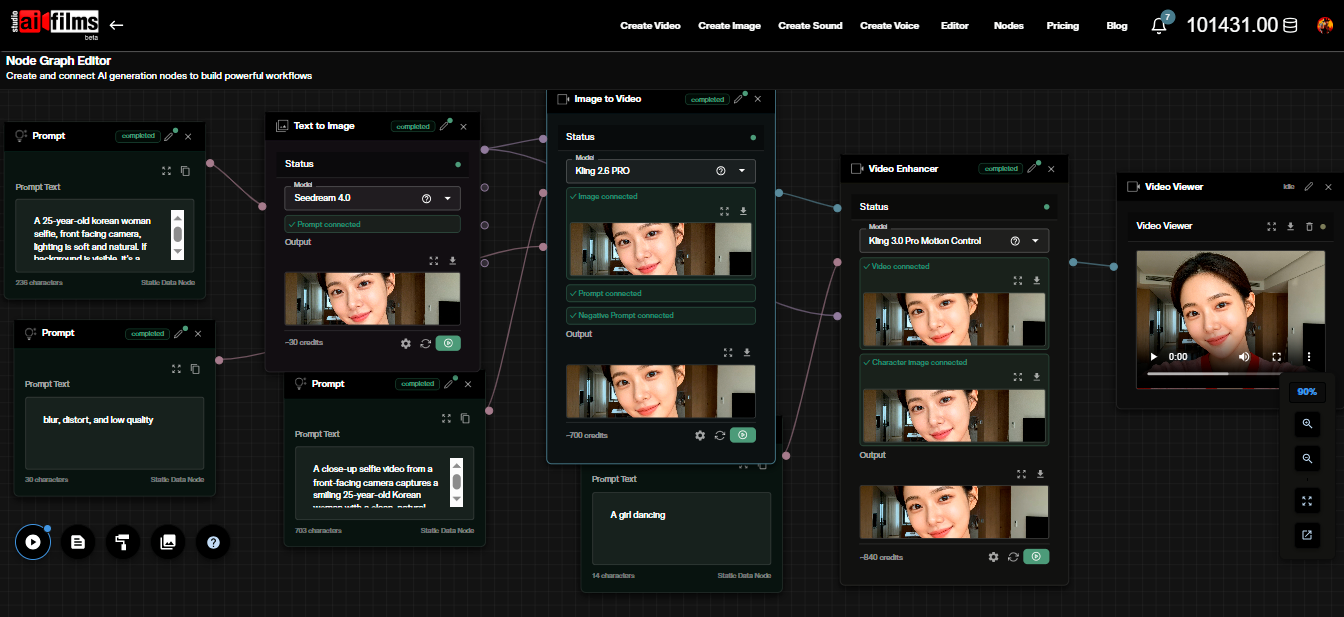
Filmmakers working with AI in their own productions can explore the latest text-to-video and image-to-video models through the AI FILMS Studio workspace.
Sources
Variety | The Wrap | Deadline | The Hollywood Reporter
Continue Reading
.jpg?w=3840)


.jpg)

Video & LipSync
- Video Generator
- Text to Video
- Image to Video
- Start-End Frame to Video
- Draw to Video
- Motion Control
- Video Enhancer
- Video Upscaler
- Video Extend
- Video to Video LipSync
- Audio to Video LipSync
- Image to Video LipSync
- Video FaceSwap
- Seedance 2.5
- WAN 3.0
- Seedance 2
- FLUX 3
- Minimax H3
- Vidu Q3 Pro
- Grok Imagine Video 1.5
- Gemini Omni
- Google Veo 3.1
- Kling 3.0 Pro
- Luma Ray 3.2
- LTX 2.3
- Happy Horse 1.1
- Kling 3.0 Motion
- ByteDance Upscaler
- InfiniteTalk
- InsightFace
Image & Edit
- AI Character
- AI Actor
- Art Generator
- Text to Image
- Image to Image
- LoRA Image to Image
- Draw to Edit
- Image LoRA Training
- Remove Background
- Image Enhancer
- MidJourney 8.0
- Krea 2
- OpenAI GPT Image 2.0
- Nano Banana Pro Ultra
- Nano Banana 2 Lite
- Nano Banana Pro
- Minimax Image
- Clarity Pro
- Z-Image Turbo LoRA
- Krea 2 Turbo LoRA
- Z-Image LoRA Trainer
- Qwen Image LoRA Trainer
- Background Erase Network 2 (BEN2)