

Kandinsky Lab (MIT License)
Share this post:
Kandinsky 6.0 VSR 2.0: Open Source 2 Step Video Upscaler
Kandinsky Lab published Kandinsky 6.0 VSR 2.0 on November 23, 2026 as a single MIT licensed Diffusers bundle for tiled video super resolution. The distilled 1.41B Diffusion Transformer upgrades low resolution 5 second clips by 2x, 2.25x, or 4x using just 2 model evaluations per tile. You can test Kandinsky 6.0 VSR 2.0 free in the embedded browser demo below with zero login.
Studio availability. Try the public Hugging Face demo below; Kandinsky 6.0 VSR 2.0 is not part of a paid AI FILMS Studio plan (use SeedVR2 Video Upscaler in the video workspace for example instead).
Try Kandinsky 6.0 VSR 2.0 Live
Upload a short 480p or 720p clip into the official Kandinsky Lab Space below to preview 2 step tiled latent super resolution directly in your browser.
Architecture and Technical Design
Kandinsky 6.0 VSR 2.0 operates completely inside the KVAE video latent space rather than running heavy pixel diffusion across every frame. Input footage passes through four tightly coupled stages inside Kandinsky6SRPipeline. First, the 1.74B Kandinsky6SRVAE encodes the source clip into spatiotemporal latents. Next, the 3.65B Kandinsky6SRLatentUpscalerBank scales those latents by 2x or 4x before denoising even begins.
The core restoration runs on Kandinsky6SRTransformer3DModel, a 1.41B super resolution DiT distilled with pi Flow DX down to 2 evaluations per tile. The PiflowScheduler executes 10 grid points and 128 policy substeps with a shift value of 5. Compared with VSR 1.0 (which used a sampler shift of 3.5), VSR 2.0 ships updated SR DiT weights that preserve natural skin texture and deliver cleaner 4x standard definition to 2K upscaling.
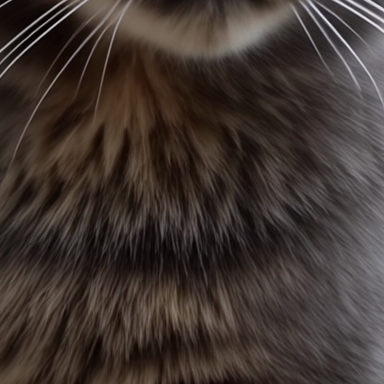
Official 2x VSR 2.0 output crop by Kandinsky Lab (MIT)
In 2x and 2.25x modes, the learned latent upscaler lifts 480p or 854 x 480 generative video drafts straight to Full HD 1920 x 1080 plates. Temporal attention inside the 3D transformer keeps fine edges locked across consecutive frames so foliage and hair do not shimmer.
Because the KVAE and latent upscaler bank remain unchanged from VSR 1.0, teams already running Kandinsky 6.0 pipelines can drop in the VSR 2.0 bundle with a single repository ID swap.
At 4x scale, VSR 2.0 pushes standard definition archival footage or fast proxy renders up to 2K resolution. The raised sampler shift of 5 reduces oversharpened halos around high contrast edges while keeping micro texture intact across moving subjects.
The Diffusers pipeline outputs video frames only. If your source clip includes dialogue or foley, remux the original audio stream back into the upscaled container with FFmpeg.
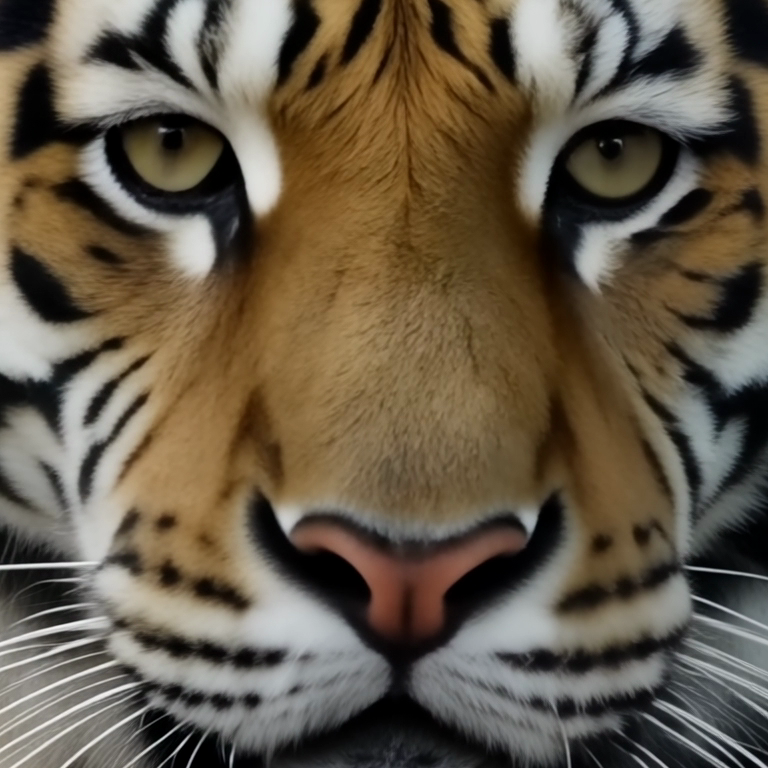
Official 4x VSR 2.0 output crop by Kandinsky Lab (MIT)
Component and Hardware Matrix
| Bundle Component | Class Name | Parameters | Role |
|---|---|---|---|
transformer/ |
Kandinsky6SRTransformer3DModel |
1.41B | pi Flow DX distilled SR DiT (2 NFE per tile) |
vae/ |
Kandinsky6SRVAE |
1.74B | Spatiotemporal video encoder and decoder |
latent_upscaler/ |
Kandinsky6SRLatentUpscalerBank |
3.65B | Learned 2x and 4x latent upscalers |
scheduler/ |
PiflowScheduler |
0 | Policy rollout (nfe=2, shift=5, 128 substeps) |
| Attribute | Specification |
|---|---|
| Release date | November 23, 2026 |
| Technical report | arXiv:2610.05608 |
| License | MIT License (commercial use permitted) |
| Supported scale factors | 2, 2.25, and 4 |
| Target clip window | 5 second clips (24 fps) |
| Memory saving mode | pipe.enable_model_cpu_offload() supported |
| Inference runtimes | Diffusers, vLLM Omni, SGLang, FastVideo |
Parameter Reference
| Parameter | Valid Values | Default / Required | Filmmaker Effect |
|---|---|---|---|
resolution_scale |
2, 2.25, or 4 |
2.25 |
Use 2.25 to lift 480p directly to 1080p Full HD |
num_inference_steps |
2 (mandatory for distilled checkpoint) |
2 |
Pipeline defaults to 4 if omitted, which breaks schedule |
set_attention_backend |
"flex" |
"flex" |
Enables PyTorch FlexAttention for SR block masks |
torch._inductor.config.max_autotune |
True |
True |
Lets Inductor pick optimal FlexAttention tile sizes |
generator |
torch.Generator("cuda").manual_seed(...) |
Any integer | Locks grain and micro texture across rerenders |
Local Python and Diffusers Setup
Always pass num_inference_steps=2 explicitly. Kandinsky6SRPipeline defaults to 4 steps for the flow matching base checkpoint and does not read the distilled step count from the bundle automatically.
import torch
from diffusers import Kandinsky6SRPipeline
from diffusers.utils import export_to_video, load_video

torch._inductor.config.max_autotune = True

pipe = Kandinsky6SRPipeline.from_pretrained(
    "kandinskylab/Kandinsky-6.0-VSR-2.0-distilled2steps-Diffusers",
    torch_dtype=torch.bfloat16,
)
pipe.enable_model_cpu_offload()
pipe.transformer.set_attention_backend("flex")
pipe.transformer.compile_repeated_blocks(fullgraph=True)

video = load_video("lq.mp4")
output = pipe(
    video=video,
    resolution_scale=2.25,
    num_inference_steps=2,
    generator=torch.Generator("cuda").manual_seed(1137),
)
export_to_video(output.frames[0], "lq_sr.mp4", fps=24)
Remux the original soundtrack onto the upscaled video with FFmpeg.
ffmpeg -i lq_sr.mp4 -i lq.mp4 -c:v copy -c:a copy -map 0:v:0 -map 1:a:0? final_sr.mp4
Filmmaker Production Playbook
Finishing 480p Generative Drafts to Full HD 1080p
Generating camera blocking and performance tests at 480p saves GPU hours during editorial assembly. Once the cut locks, run every approved 5 second shot through Kandinsky 6.0 VSR 2.0 with resolution_scale=2.25 to reach 1080p in 2 steps per tile.
Restoring Archival SD Plates to 2K
Documentary editors and VFX supervisors often receive 480p archival clips that look soft next to modern 4K A cam footage. The 4x mode in VSR 2.0 reconstructs crisp detail up to 2K while avoiding the plastic smoothing seen in single frame upscalers.
Combining With Kandinsky 6.0 Audio-Video Generation
Kandinsky 6.0 Video Lite (3B) and Pro (29B) output 5 second clips with synchronized 44 kHz audio. Running VSR 2.0 as a finishing pass and remuxing the 44 kHz track produces broadcast ready 1080p deliverables with synchronized lip sync intact.
Known Limitations and FAQ
Why does my upscaled output look soft or corrupted if I omit num_inference_steps?
The Diffusers pipeline defaults to 4 steps for the base model. You must pass num_inference_steps=2 so PiflowScheduler executes the distilled 2 evaluation schedule correctly.
Does the pipeline preserve audio tracks automatically?
No. Kandinsky6SRPipeline processes visual frames only. Keep your original file and copy its audio stream into the output MP4 using FFmpeg.
Can I use Kandinsky 6.0 VSR 2.0 in commercial film projects? Yes. The repository and Diffusers weights are published under the MIT License, which permits commercial studio use without royalties.
Related Reading
- Kandinsky 6.0: Open Source Audio Video Generation
- Kandinsky ImageSR 2.0: Open Source 1 Step Image Upscaler
- FlashVSR: Open Source Real Time 4K Video Upscaler AI
- AI Video Upscaler

Sources
Continue Reading


Video & LipSync
- Video Generator
- Text to Video
- Image to Video
- Start-End Frame to Video
- Draw to Video
- Motion Control
- Video Enhancer
- Video Upscaler
- Video Extend
- Video to Video LipSync
- Audio to Video LipSync
- Image to Video LipSync
- Video FaceSwap
- Seedance 2.5
- WAN 3.0
- Seedance 2
- FLUX 3
- Minimax H3
- Vidu Q3 Pro
- Grok Imagine Video 1.5
- Gemini Omni
- Google Veo 3.1
- Kling 3.0 Pro
- Luma Ray 3.2
- LTX 2.3
- Happy Horse 1.1
- Kling 3.0 Motion
- ByteDance Upscaler
- InfiniteTalk
- InsightFace
Image & Edit
- AI Character
- AI Actor
- Art Generator
- Text to Image
- Image to Image
- LoRA Image to Image
- Draw to Edit
- Image LoRA Training
- Remove Background
- Image Enhancer
- MidJourney 8.0
- Krea 2
- OpenAI GPT Image 2.0
- Nano Banana Pro Ultra
- Nano Banana 2 Lite
- Nano Banana Pro
- Minimax Image
- Clarity Pro
- Z-Image Turbo LoRA
- Krea 2 Turbo LoRA
- Z-Image LoRA Trainer
- Qwen Image LoRA Trainer
- Background Erase Network 2 (BEN2)