
Kling AI Launches Filmmaker Initiative at Cannes, Partners on 'Minibots' Animated Feature
Share this post:
Kling AI Launches Filmmaker Initiative at Cannes, Partners on 'Minibots' Animated Feature
Kling AI announced its Filmmaker Initiative and signed as exclusive global technology partner on the animated feature "Minibots" at the Cannes Marché du Film on May 18, 2026. The dual announcement came alongside a panel where three international directors presented verified production data from their own AI assisted films.
The Filmmaker Initiative
The initiative launched during the panel "From Creative Possibility to Production Reality: Kling AI in Cinematic Workflow" at the Palais des Festivals Main Stage. Kling AI, owned by Chinese technology firm Kuaishou, offers qualifying productions cash incentives and compute resources to advance AI use in filmmaking. Head of operations Yushen Zeng confirmed the program at the event.

Official Kling AI Logo
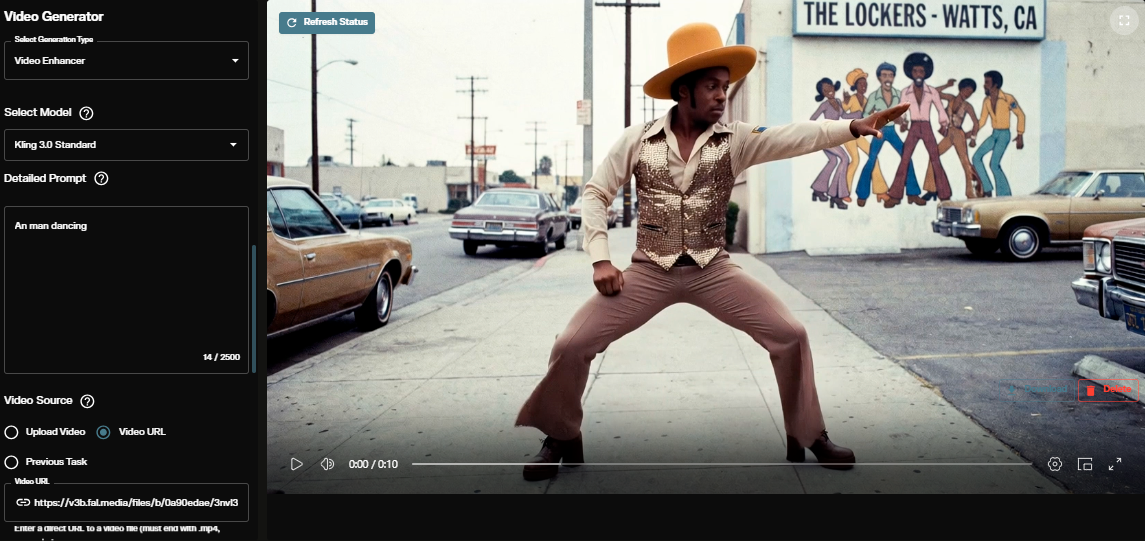
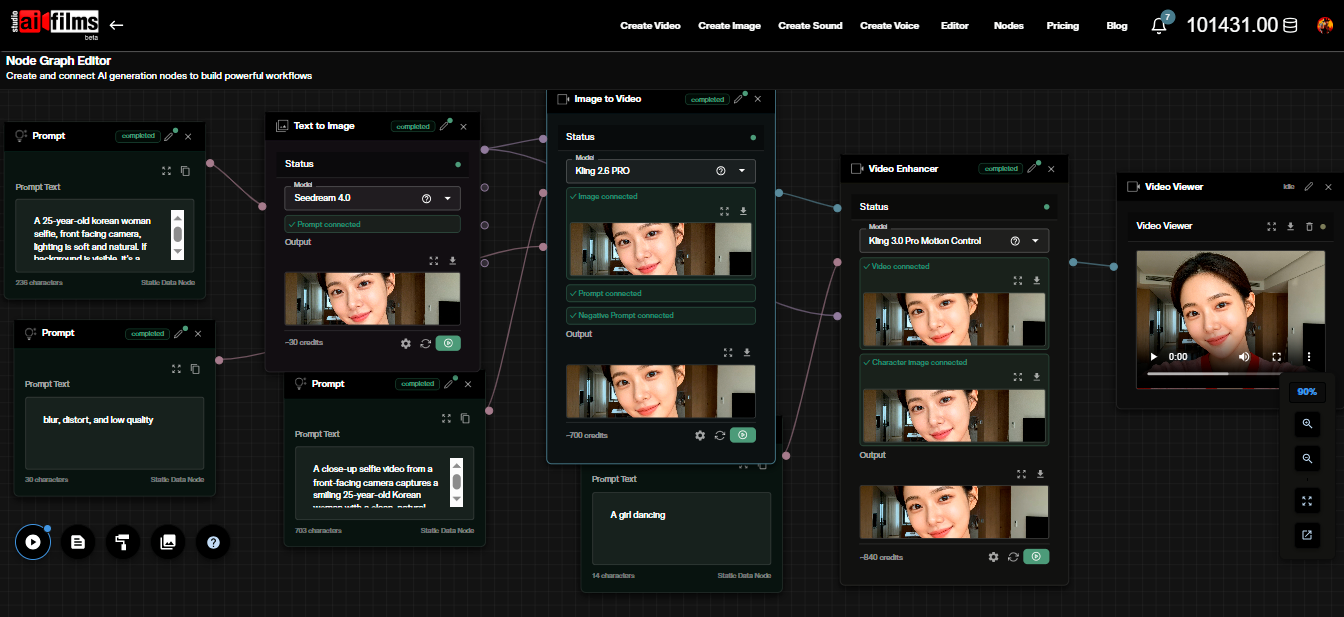
Kling AI's tools, including the 3.0 model, are available in the AI FILMS Studio video workspace. The Filmmaker Initiative provides cash incentives and compute access to productions that integrate Kling's models into their workflows, with the goal of building a documented body of work demonstrating AI at theatrical and streaming release standards.
Kling 3.0 and Broadcast Ready Standards
Kling's 3.0 model was cited at the Cannes panel as the version enabling streaming and theatrical release standards, with native 4K output built in. That specification matters because earlier generations of AI video models produced output that required significant upscaling and cleanup before meeting broadcast requirements. Native 4K changes the post production equation.
Kuaishou, Kling's parent company, is one of China's largest short video platforms with over 700 million monthly active users. The model development behind Kling has been driven by commercial requirements for high volume video generation at quality levels that satisfy consumer expectations. Theatrical grade output is a direct extension of that development track.
Minibots: The Consent Model for AI Animation
Kling AI is signed as the exclusive global technology partner on "Minibots", an animated feature produced by Evolutionary Films. Evolutionary Films founders John Adams and Diane Shorthouse, a BAFTA nominee, built a consent framework into the production: all performances are created by humans and owned by actors, regardless of what AI handles in post production. Shorthouse and Adams call this their "performance first AI charter".
"Minibots is not about replacing artists. It's about empowering exciting new creative voices", Adams said. Yushen Zeng added: "Minibots represents exactly the kind of creative collaboration we believe AI should enable". The film follows teenage geniuses whose sentient miniature robots escape a robotics summer camp into human society. Writers include Michael Ferris (Terminator 3), Alistair Audsley, and Scott Christian Sava (Animal Crackers).
The Consent Framework in Practice
Shorthouse and Adams built the "performance first AI charter" as an explicit response to the consent debate around AI in animation. The framework places legal ownership of performances with the actors who create them, regardless of how AI processes those performances in subsequent production stages.
That structure differs from most current AI production arrangements, where consent terms are negotiated case by case or left unresolved. Building consent and ownership into the production's foundational charter makes it auditable rather than asserted. For a film being presented to international buyers at Cannes, that documentation is commercially relevant.
Three Directors, Three Sets of Production Numbers
The Cannes panel presented three directors with specific data from active projects. Each reported confirmed savings in time, cost, or both across different production types: a streaming prestige series, a literary animated feature, and a low budget theatrical film. No other tool announcement at Cannes 2026 paired a filmmaker incentive program with this density of verified production data from live projects.
.jpg)
Abxbay, CC0, via Wikimedia Commons
Jon Erwin's Five-Month Pipeline
Jon Erwin, whose Amazon Prime series "House of David" drew over 50 million viewers in its first season, is using Kling AI for "Moses", starring Oscar winner Ben Kingsley. He moved from concept to a broadcast ready first episode in approximately five months. "The normal cycle of time at a streamer is three years", Erwin said on the panel.
That compression is the specific claim the Kling Filmmaker Initiative is built around. A five month cycle for a broadcast ready episode, compared to a three year streamer pipeline, represents a structural change in how prestige productions can be developed and tested. The full House of David hybrid workflow breakdown covers Erwin's broader approach to AI in the production pipeline.
Wei Li's Hand Drawing and AI Hybrid
Wei Li, associate director on the animated film "Big Fish and Begonia", used AI on "Born of the Tide" and cut both production time and budget by roughly one third compared to his previous features. He drew approximately 80 percent of the storyboards by hand. AI handled the remainder.
The 80/20 split is the specific detail that makes Wei Li's data point useful to other filmmakers. He did not use AI to replace the drawing process. He used it to complete the portion of the storyboard that would have created a bottleneck in the production schedule. The full Born of the Tide production breakdown covers Wei Li's hybrid pipeline argument and the project's Tanka community subject matter.
Eekjun Yang and the Access Argument
South Korean director Eekjun Yang and his team of seven completed "Raphael", a science fiction feature targeting Korean theatrical release, on a budget between $700,000 and $2 million. A conventional production of comparable scope would require 150 to 300 crew members and $150 to $300 million. Yang's team won the Grand Prize at the 2024 Korea International AI Film Festival with "Mateo", which drew more than 2,000 entries.
Yang's numbers are the clearest statement of AI filmmaking's access argument. The gap between $700,000 and $150 million is not an efficiency gain. It is the difference between a film that gets made and one that does not. The full Raphael production breakdown covers Yang's access argument and the project's September Korean release.
What Kuaishou's Scale Means for Model Development
Kuaishou, Kling's parent company, operates one of China's largest short video platforms with over 700 million monthly active users. That scale means Kling's model has been developed under commercial demands for high volume video generation at quality levels that satisfy a mass audience. The model has had to meet real performance requirements rather than research benchmarks alone.
The consequence for filmmakers is that Kling 3.0 carries a quality floor derived from consumer deployment at scale. Models developed primarily in research settings have different optimization targets. Kling has been tested across hundreds of millions of user interactions, which shapes the failure modes the team has identified and fixed over successive versions.
The "Minibots" Writers and the Franchise Potential
The "Minibots" writing team includes Michael Ferris, whose screenplay credits include Terminator 3 and The Game Plan; Alistair Audsley, whose credits include the Highlander reboot and The Commuter; and Scott Christian Sava, creator of Animal Crackers and The Dreamland Chronicles. That combination of science fiction franchise experience and family animation marks the project as aiming for broad theatrical distribution rather than a festival circuit film.
John Adams described the property as a "prebuilt franchise", citing the multiple characters and world scale as features that could sustain sequels and spinoff series. If the production model, AI pipeline built on a consent framework, can produce a film that reaches theatrical distribution, it becomes a proof of concept for the broader industry.
What the Panel Format Demonstrated
Bringing three directors with live project data to a Cannes panel is different from announcing a filmmaker fund and citing intended recipients. Erwin, Wei Li, and Yang were on stage because their projects were real and their numbers were verifiable. The production data they shared, Erwin's five month cycle, Wei Li's one third cost reduction, Yang's $700,000 budget for a feature that would conventionally cost $150 million or more, is the kind of evidence that changes how industry professionals evaluate the tool.
The panel format also allowed for audience questions that press release announcements do not. The Marché du Film audience for that session included buyers, producers, and festival programmers who could probe the claims directly. The fact that the session ran as planned, rather than collapsing under follow up questions, is itself part of the data.
Cash Incentives and What They Signal
The Filmmaker Initiative's combination of cash incentives and compute resources addresses the two primary barriers independent filmmakers face when integrating AI into productions. Cash offsets the production cost of adopting a new workflow during a period when the productivity gains are not yet predictable. Compute access removes the hardware barrier for filmmakers who cannot afford dedicated GPU infrastructure.
Yushen Zeng described the initiative as a commitment to advance AI use in professional filmmaking rather than a marketing program. The distinction matters because it signals that Kling is measuring success by what gets made, not just by who signs up. Productions that receive incentives are expected to produce films using the models, creating a documented body of work that demonstrates what the tools can do at professional scale.
For filmmakers who want to test the same workflows, the Kling 3.0 tutorial on AI FILMS Studio covers the model's core generation capabilities.
Kling AI's video generation tools also powered Dreams of Violets, the first fully AI generated feature accepted into Tribeca's official lineup, made for $2,000 by a director in exile.
What the Cannes Panel Selected For
The panel format selected for the Marché du Film is significant. Curated programming at the Marché reflects choices made by the festival's market team about what buyers, producers, and financiers need to understand about the current production environment. A panel headlined by a tool company would not be selected unless the market team judged the subject matter commercially relevant to the attending professionals.
Kling AI's invitation to present on the Palais des Festivals Main Stage, one of the higher profile panel spaces at the Marché, signals that the festival's commercial arm has concluded that AI tools in professional production are now a mainstream topic for the buyers and sellers doing business during the festival. That is a different kind of validation than critical coverage or award recognition. It is market recognition.
Three Production Types, One Consistent Finding
The Erwin, Wei Li, and Yang case studies cover different production types and different cultural contexts: an American streaming series, a Chinese literary animation, and a Korean science fiction feature. All three reported confirmed savings in time, cost, or both.
That consistency across production type and geography is the finding that generalizes. If AI production efficiencies applied only to American studio productions, or only to animation, or only to low budget independents, the data would be instructive but narrow. Finding consistent savings across all three types suggests the efficiencies are structural rather than context dependent.
What the Filmmaker Initiative Requires
The specific requirements for qualifying productions under the Kling Filmmaker Initiative have not been published in full. Zeng described cash incentives and compute resources as the two components, with eligibility tied to advancing AI use in professional filmmaking rather than to a specific genre or budget range.
That openness makes the initiative functionally available to the range of productions the Cannes panel represented. A streamer series, a literary animation, and a low budget theatrical feature could all qualify under the described criteria. The commercial logic for Kling is that each production that completes using its models generates documented evidence of what the tools can do at professional scale, which serves the company's broader positioning in the filmmaking market.
Qualifying productions also receive access to Kling's team during production, which means the initiative functions as a direct feedback channel as well as a marketing program. Productions that encounter limitations in the 3.0 model and communicate them directly to the development team create a development relationship that pure API access does not provide. For a model competing with other AI video generators across the same professional market, that direct production feedback is the kind of real world test data that research benchmarks cannot replicate.
Kling AI's announcement at Cannes followed by only a few days the festival's own ban on generative AI in the Official Competition. The market and the competition programs operate with different logics. While the competition defines what cinema means at a festival, the Marché defines what productions are getting made. Kling's presence on the Main Stage during the Marché reflects where the commercial production world stands regardless of what the artistic program rules.
The Filmmaker Initiative's structure, cash plus compute plus direct team access, is designed to make adoption of a new production tool less risky for independent filmmakers than it would otherwise be. Kling is subsidizing the transition because it benefits from the documented output those productions generate.
Sources
Variety | Deadline | The Wrap | The Hollywood Reporter
Continue Reading
.jpg?w=3840)


Video & LipSync
- Video Generator
- Text to Video
- Image to Video
- Start-End Frame to Video
- Draw to Video
- Motion Control
- Video Enhancer
- Video Upscaler
- Video Extend
- Video to Video LipSync
- Audio to Video LipSync
- Image to Video LipSync
- Video FaceSwap
- Seedance 2.5
- WAN 3.0
- Seedance 2
- FLUX 3
- Minimax H3
- Vidu Q3 Pro
- Grok Imagine Video 1.5
- Gemini Omni
- Google Veo 3.1
- Kling 3.0 Pro
- Luma Ray 3.2
- LTX 2.3
- Happy Horse 1.1
- Kling 3.0 Motion
- ByteDance Upscaler
- InfiniteTalk
- InsightFace
Image & Edit
- AI Character
- AI Actor
- Art Generator
- Text to Image
- Image to Image
- LoRA Image to Image
- Draw to Edit
- Image LoRA Training
- Remove Background
- Image Enhancer
- MidJourney 8.0
- Krea 2
- OpenAI GPT Image 2.0
- Nano Banana Pro Ultra
- Nano Banana 2 Lite
- Nano Banana Pro
- Minimax Image
- Clarity Pro
- Z-Image Turbo LoRA
- Krea 2 Turbo LoRA
- Z-Image LoRA Trainer
- Qwen Image LoRA Trainer
- Background Erase Network 2 (BEN2)