
Lionsgate Takes Equity Stake in AI Video Platform as Burns Projects Tens of Millions in Annual Savings
.jpg?w=3840&q=90)
Share this post:
Lionsgate Takes Equity Stake in AI Video Platform as Burns Projects Tens of Millions in Annual Savings
Lionsgate Vice Chairman Michael Burns said the studio will save "tens and tens of millions of dollars a year" through AI across production and FAST channel curation. Burns made the statement at the Gabelli Sports and Media Symposium in New York on June 12, the same day Lionsgate confirmed it has taken an equity stake in a generative AI video platform it has partnered with since 2024.
.jpg)
ajay_suresh, CC BY 2.0, via Wikimedia Commons
Lionsgate's Great Point Studios in Yonkers, New York is one of the studio's primary production facilities. Burns made his financial projection at the Gabelli Symposium on June 12, the same day Lionsgate disclosed the equity stake, indicating the two announcements were coordinated to deliver a unified message to the investment community about the studio's AI strategy.
From Content Deal to Equity Stake
The move marks a shift in how Lionsgate has structured its AI relationship. A 2024 training agreement gave the platform rights to the studio's library for model development. Taking an equity position makes Lionsgate a financial stakeholder in the platform's growth, not just a content supplier.
The platform is valued at $5.3 billion. For a studio of Lionsgate's scale, an equity position at that valuation represents a meaningful financial commitment beyond the operational savings Burns outlined.
The $5.3 Billion Valuation Context
The $5.3 billion figure places the AI platform among the more highly valued private AI companies in the content technology space. For Lionsgate, whose own market capitalization has fluctuated significantly in recent years, an equity position in a platform at that valuation represents a bet on the platform's growth rather than a hedge against AI risk.
The 2024 training agreement that preceded the equity stake was structured as a content deal: the studio licensed its library for model training in exchange for access to the technology. The equity conversion reflects a judgment that the platform's financial upside is worth taking a stake in, not just extracting value from as a licensor. That distinction matters for how investors read the relationship.
What "Tens and Tens of Millions" Breaks Down To
Burns's "tens and tens of millions" projection covers two distinct cost categories. The first is production: using AI to reduce the labor and time cost of content creation across Lionsgate's slate. The second is FAST channel curation, where volume and variety matter more than per title production value.
The FAST channel figure is where AI cost reduction compounds most directly. Lionsgate distributes across multiple FAST channels simultaneously, each requiring regular content refresh. AI tools that reduce the cost of producing or repurposing content for those channels deliver savings that multiply across the full distribution footprint rather than applying to a single production.
Burns has been one of the most publicly specific studio executives about AI's financial impact. His Gabelli Symposium statement is the first time Lionsgate has attached a concrete range to that impact rather than speaking in general terms about efficiency gains and competitive positioning. That specificity is notable because it gives analysts and investors a benchmark against which to measure actual performance.
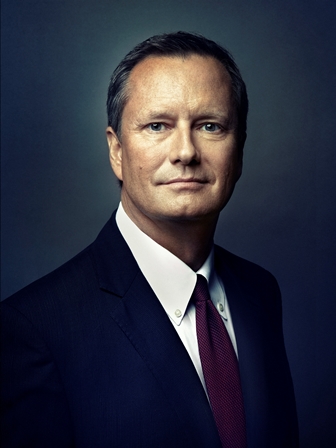
Robert Maxwell, CC BY-SA 3.0, via Wikimedia Commons
IP Library as Content Engine
Lionsgate plans to use its existing catalogue to generate short form video series for streaming and FAST markets. The studio also announced a new development program to generate original IP using AI, separate from any existing library titles.
The original IP program is a different kind of bet. Most studio AI announcements focus on using AI to cut costs on productions already in development by human writers and directors. Generating net new intellectual property is a more fundamental use of the technology.
Generating Original IP: A Different Bet
The difference between cost reduction and IP generation is the difference between efficiency and creation. Using AI to cut post production costs leaves the creative pipeline intact but cheaper. Using AI to generate original IP replaces part of that pipeline.
Lionsgate's willingness to announce both programs simultaneously, cost reduction and original IP generation, suggests the studio is treating AI as a production tool at the operational level and as a creative tool at the development level. Whether the IP generation program produces content that audiences respond to is the question that cannot be answered by announcing the program, but the announcement signals where the studio is placing long term bets.
The FAST Channel Case
Burns specifically named FAST channel curation alongside production savings as a primary AI cost reduction target. FAST channels operate on volume, often distributing across dozens of individual channels simultaneously, which makes per hour production cost a direct margin constraint.
The economics differ from theatrical or premium streaming. A tool that cuts the cost of producing 100 hours of content delivers savings that compound across the full volume, not just a single title.
Two Years of AI Commitment
The equity stake is the latest step in a strategy Lionsgate has built openly over two years. At CES 2026, the studio laid out its AI production roadmap, and earlier this year it named Kathleen Grace as Chief AI Officer, one of the first such appointments at a major studio.
Burns' statement at the Gabelli Symposium is the first time Lionsgate has attached a specific financial projection to that strategy. Moving from a licensing deal to an equity position signals the studio is treating its AI partnership as a long term financial asset, not just a production shortcut.
The projection also sets a public benchmark. A studio executive who states a specific savings range creates a number that investors and analysts will track. If actual savings fall short, the gap becomes a credibility problem. Burns' willingness to commit to that range in front of an investment audience suggests he has already seen supporting data from two years of production integration.
At the same time, the equity stake changes how Lionsgate measures success. A cost reduction strategy succeeds when it reduces costs. An equity investment succeeds when the platform grows in value. Those two success metrics do not always point in the same direction, and the Gabelli announcement was structured to address both simultaneously.
The Library That Started the Relationship
Lionsgate's 2024 training agreement gave the AI platform access to one of the most commercially diverse film libraries in Hollywood. Lionsgate's catalogue includes the Hunger Games franchise, the John Wick series, the Saw franchise, and several thousand additional titles across genre, budget range, and production era. That breadth of content represents a significant training asset for a video generation platform.
The commercial logic of the 2024 deal was that the studio's library had value to an AI company building a generative model, and that the studio could extract value from it without producing additional content. The equity conversion means Lionsgate is now betting that the value it extracted from the library deal will compound through the platform's commercial success rather than being fixed at the licensing fee.
The Independent Studio Advantage
Lionsgate occupies a different structural position than the major Hollywood studios when it comes to AI strategy. As an independent studio, it is not subject to the same scale of guild oversight as a studio that employs thousands of union members across multiple productions. That relative flexibility allows Lionsgate to move faster on AI integration than Disney, Warner, or Universal without triggering the same level of union scrutiny.
Burns' willingness to project specific savings figures publicly reflects that structural position. A major studio executive making the same statement would create an immediate negotiating target for SAG-AFTRA and the WGA. Lionsgate's AI strategy announcement, while still politically sensitive, carries less immediate labor relations risk than it would at a larger studio. That advantage is temporary: as AI adoption spreads across the industry, guild attention will broaden to cover independent studios as well.
What AI Curation Means for FAST in Practice
FAST channel curation currently requires human editors to select, sequence, and schedule content across channel playlists, often managing dozens of channels simultaneously for a studio with a large enough library. AI tools that can analyze content and generate optimal channel configurations reduce the labor cost of that process significantly.
For Lionsgate, which has been building out FAST distribution through Lionsgate+, the curation cost reduction Burns described is directly related to the volume of channels and content the studio manages. Every percentage point reduction in per hour curation cost compounds across the full distribution footprint. Burns' "tens and tens of millions" figure almost certainly includes this category, which is less visible externally than production savings but potentially as large.
How Lionsgate Compares to Other Major Studios
Lionsgate's public specificity about AI savings and its equity position are unusual among major studios. Most of the larger Hollywood players have announced AI partnerships or initiatives without attaching financial projections or equity structures to those announcements.
The reasons for that reticence are partly legal and partly political. Studios in active SAG-AFTRA and WGA negotiations are reluctant to quantify AI savings publicly because those savings can become negotiating targets. Lionsgate's decision to project specific savings at a public symposium suggests the studio is more comfortable absorbing that negotiating visibility than its larger competitors. Burns' projection is a competitive signal as much as a financial disclosure.
The Training Deal Structure and What It Allows
The 2024 Lionsgate training deal gave the AI platform access to the studio's library for model development. That arrangement, trading content access for technology access, became a template that several other studios and streamers explored in the same period. Lionsgate was among the earlier major content holders to complete such a deal, which gave the platform data that shaped its model before competitors had access.
The equity conversion means Lionsgate now holds a financial stake in how the model it helped train performs commercially. If the platform's video generation capability improves substantially because of the Lionsgate library contribution, the studio participates in that upside rather than having received a fixed licensing fee for the content that enabled the improvement.
What the Announcement Signals to the Market
Studios that have not yet taken equity positions in AI platforms are watching Lionsgate's move as a precedent. If the platform delivers on the "tens and tens of millions" savings projection and the equity stake grows in value, it demonstrates a model for AI partnerships that captures more of the economic benefit than a licensing agreement alone.
The Gabelli Sports and Media Symposium audience includes institutional investors who track entertainment company strategy. Burns made his statement to that audience deliberately, not in a trade press interview. The combination of a specific savings projection and an equity stake announcement was structured to address investor concerns about how studios will capture value from AI rather than simply bear its disruption costs. That framing is as much investor relations as it is production strategy.
The Three Year Track Record Behind the Claim
Burns' financial projection is not a prediction without evidence. Lionsgate has been integrating AI into its production workflows since the 2024 training agreement. The "tens and tens of millions" figure reflects observed cost reductions from those integrations rather than a projected benefit from future deployment.
That grounding makes the claim different from most AI savings projections made by studio executives, which describe anticipated benefits from technology not yet in production use. Lionsgate has been running these workflows for two years. Burns is reporting what he has already measured, not what he expects to save once the technology matures. That distinction is what makes the Gabelli Symposium statement newsworthy beyond its headline figure.
The equity stake announcement, made on the same day as the savings projection, converts the relationship from a cost reduction strategy into a financial position. Lionsgate is not just saving money using the platform. It is betting that the platform is worth more in the future than it is today. Those two things can both be true at the same time, but they represent different kinds of commitment. Burns presented both simultaneously to an investment audience, which is the correct venue for announcing a financial position alongside an operational result. A studio that only reported cost savings would be describing a vendor relationship. Adding the equity stake transforms the narrative into a strategy about where value in the media industry will accumulate over the next decade, and Lionsgate's positioning within it.
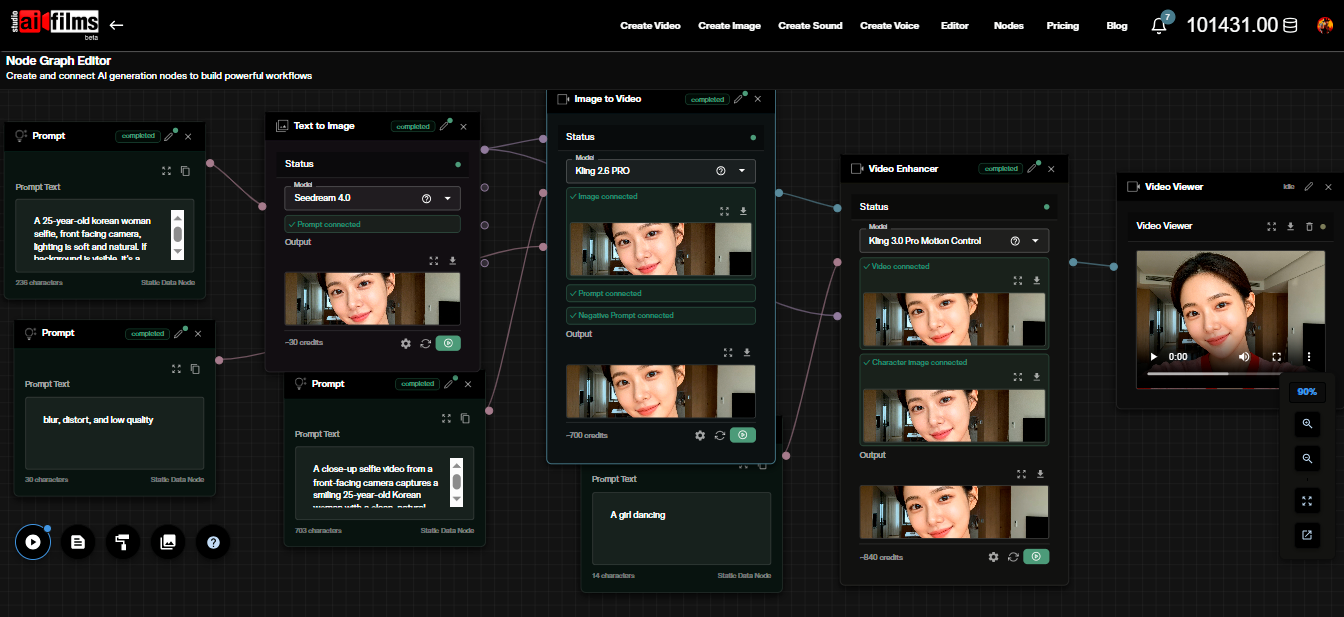
Filmmakers can access text to video and image to video tools today through AI FILMS Studio.
Burns made that case in front of the investors most likely to reward it. If the numbers hold over the next year, the Lionsgate announcement becomes one of the first documented cases of a major studio treating AI as a financial asset rather than just a production efficiency play.
In August 2026, activist investor Anson Funds argued these moves fell short of what the AI era demands, urging Lionsgate's board to monetize its 20,000-title library at scale or explore a sale.
Sources
Variety | Deadline | The Hollywood Reporter
Continue Reading
.jpg?w=3840)


.jpg)

Video & LipSync
- Video Generator
- Text to Video
- Image to Video
- Start-End Frame to Video
- Draw to Video
- Motion Control
- Video Enhancer
- Video Upscaler
- Video to Video LipSync
- Audio to Video LipSync
- Image to Video LipSync
- Video FaceSwap
- Seedance 2.5
- WAN 3.0
- Seedance 2
- FLUX 3
- Minimax H3
- Vidu Q3 Pro
- Grok Imagine Video 1.5
- Gemini Omni
- Google Veo 3.1
- Kling 3.0 Pro
- Luma Ray 3.2
- LTX 2.3
- Happy Horse 1.1
- Kling 3.0 Motion
- ByteDance Upscaler
- InfiniteTalk
- InsightFace
Image & Edit
- AI Character
- AI Actor
- Art Generator
- Text to Image
- Image to Image
- LoRA Image to Image
- Draw to Edit
- Image LoRA Training
- Remove Background
- Image Enhancer
- MidJourney 8.0
- Krea 2
- OpenAI GPT Image 2.0
- Nano Banana Pro Ultra
- Nano Banana 2 Lite
- Nano Banana Pro
- Minimax Image
- Clarity Pro
- Z-Image Turbo LoRA
- Krea 2 Turbo LoRA
- Z-Image LoRA Trainer
- Qwen Image LoRA Trainer
- Background Erase Network 2 (BEN2)