
Reply AI Film Festival: Salvatores to Jury 10 Finalists at Venice

Share this post:
Reply AI Film Festival: Salvatores to Jury 10 Finalists at Venice
The third Reply AI Film Festival has named Oscar winner Gabriele Salvatores as jury president and selected 10 finalists from over 3,000 entries submitted across 76 countries. The awards ceremony takes place September 6 at the Match Point Arena, Tennis Club Venezia, on the Lido, running alongside the 83rd Venice International Film Festival.
The Third Edition and "Imaginatio Nova"
The 2026 competition drew more than 3,000 submissions, up from 2,181 in the second edition. That is a 37 percent increase in one year and the largest entry pool in the competition's history. Reply, the Italian technology company that organizes the festival, chose the theme "Imaginatio Nova" for this edition, describing it as a new phase where human creativity is renewed through technology to establish new artistic languages and perspectives.
An entry pool from 76 countries places AI short filmmaking well beyond the European and North American markets where most generative AI companies are headquartered. The festival has grown each year since its launch, and the third edition's geographic reach confirms that the tools and knowledge required to compete are now distributed globally.
"Imaginatio Nova" places emphasis on what AI makes newly possible rather than on what it replaces. The theme invites films that reach a visual or narrative place the filmmaker could not have reached without AI, not films that use AI to imitate an existing aesthetic or recreate a known visual style. That distinction is one way the jury will likely sort the 10 finalists.
The selection of 10 finalists from 3,000 entries represents a 0.33 percent acceptance rate, more selective than the second edition's 0.46 percent from 2,181 entries. The World AI Film Festival at Cannes 2026 drew over 5,000 entries from 80 countries on a broader submission model with minimal eligibility filtering. Venice Reply's selection process applies specific prize criteria and evaluates films across multiple dimensions, producing a smaller and more tightly curated finalist pool than open submission AI film events.
Salvatores as Jury President
Gabriele Salvatores won the Academy Award for Best Foreign Language Film in 1992 for "Mediterraneo." His subsequent work includes "Nirvana" (1997), "Siberian Education" (2013), and "Napoli – New York," spanning genre filmmaking, science fiction, and literary adaptation. His selection as jury president is the festival's highest profile appointment to date.
Salvatores said, "I am delighted to join the Reply AI Film Festival and contribute to an initiative that looks to the future of cinematic language with curiosity and openness." That framing places him among the European film establishment figures who have engaged with AI cinema as an extension of filmmaking craft rather than as a challenge to it.
The appointment carries weight in the context of Venice 83's AI programming. Festival director Alberto Barbera has stated that films made with AI tools are welcome "under the complete control of the artist." Salvatores accepting the Reply jury role, at the same time and on the same island, reinforces that institutional signal. Two of the most significant Italian voices in international cinema are publicly aligned with AI filmmaking in the same September calendar.
The September Lido calendar will be the clearest expression yet of where Italian film institutions stand on AI cinema. Barbera has selected an Italian AI film, "Be Brave," for an out of competition slot at Venice 83. Salvatores is presiding over the Reply jury at the Match Point Arena four days after the main competition opens. The Reply competition itself is organized by an Italian technology company. All three institutional positions align on the same island in the same week.
A Jury of 12: VFX, International Exhibition, and UN Governance
The jury of 12 covers Hollywood production, VFX supervision, international exhibition, UN technology governance, and film journalism. It is the largest panel the festival has assembled across its three editions.
Rob Minkoff, who directed "The Lion King" (1994) alongside Roger Allers, and who directed "Stuart Little" (1999) and "Mr. Peabody & Sherman" (2014), returns as a juror from the second edition. His background in technically demanding animation gives him direct experience evaluating where generation ends and craft begins. Catherine Hardwicke, director of "Twilight," joins the panel alongside Jed Weintrob, partner at production company 30 Ninjas.
Giacomo Mineo brings VFX supervision experience from two of the highest profile productions of the past two years. He supervised visual effects on Christopher Nolan's "Oppenheimer" and on Nolan's upcoming "The Odyssey," and received a Primetime Emmy nomination for Alex Garland's AI themed miniseries "Devs." His presence on this jury is editorially pointed. The same discipline that determines what is real and what is constructed in a major studio production applies directly to evaluating AI generation quality.
Christina Lee Storm is a former DreamWorks Animation and Netflix executive who now serves as Head of Studio, Narrative at Secret Level. Nils Hartmann is Executive Vice President of Sky Studios Italy and producer of "Gomorrah: The Series," "The Young Pope," and "ZeroZeroZero." Guillem Martinez Roura is AI and Robotics Lead at the ITU "AI for Good" program, the UN initiative that gives the festival's dedicated prize its institutional backing. Filippo Rizzante is Chief Technology Officer of Reply. Brian Welk is a film journalist and reporter at IndieWire. Denise Negri is a film journalist at Sky Italia.
The jury composition reflects a shift in the festival's positioning. Previous editions drew primarily from Hollywood directors and European television producers. This edition adds a UN technology governance voice, a streaming executive with gaming studio experience, and a Primetime Emmy nominated VFX supervisor whose credits span major studio productions and AI adjacent screen drama.
What the Jury Is Looking For
The festival evaluates submissions on three main criteria: creativity and originality of concept, production quality, and use of AI across production stages from screenplay to post production. That third criterion does not require AI at every stage. It asks jurors to assess how deliberately filmmakers integrated the technology into their process.
Salvatores and Mineo bring complementary lenses to that assessment. Salvatores evaluates from narrative and authorial direction. Mineo evaluates from visual effects production, where the question of whether AI generated imagery holds together as part of the whole production is a technical judgment his career has prepared him to make. The jury's range means a film can be evaluated both as a story and as a technical construction.
The criteria distinguish the Reply competition from AI film events that evaluate primarily on technical novelty. A film that demonstrates impressive generation but no story will not advance here. By weighting originality of concept alongside production quality, the evaluation framework rewards filmmakers who use AI tools in service of a specific creative idea rather than as a demonstration of what the tools can do in isolation.
That distinction matters for the current moment in AI short filmmaking. The second edition jury president observed a "significant leap in quality" in craft and narrative construction across the 2,181 submissions he reviewed. Salvatores presides over a competition where that higher standard is now the floor, not the ceiling.
The 10 finalists who advanced from 3,000 entries did so through a selection rate of 0.33 percent. Meeting the three criteria is the starting condition, not the destination. A finalist has to rank among the top fraction of entries that meet all three, and the jury's task is to determine which of those 10 films represents the clearest example of what "Imaginatio Nova" looks like in practice.
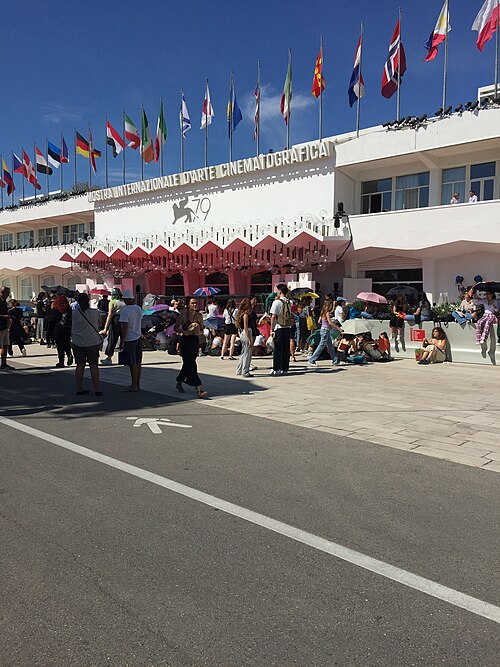
The ceremony takes place on the Venice Lido, the barrier island that hosts both the main festival screenings and the Reply competition's awards night. This is the third consecutive year the festival has staged its finale during the Venice Film Festival calendar, a placement Reply has maintained deliberately from the first edition.
The Lido setting places AI short film finalists physically adjacent to the Venice Film Market and the international press covering the Maggie Gyllenhaal-led Golden Lion jury. A winner at the Reply competition can be in conversation with acquisition executives the same week as the main festival. That week also coincides with [Locarno 79 closing August 15](/blog/locarno-79-counter-algorithm-festival-2026), meaning the three major European summer festival events, Locarno's human curation argument, Venice's main competition, and the Reply AI Film Festival, conclude in a single ten day window.
Collafilms, CC0, via Wikimedia Commons
Ten Films From Six Countries
Four of the 10 finalists were directed by filmmakers from China, more than any other single country in the selection. The full finalist list:
- A Face Only A Mother Could Love: Robert Gaudette (Canada)
- Centenarian Kindergarten: 2xLabs (China)
- GO HOME: Simone Paradiso (Italy)
- Kev: Mike Bennion (United Kingdom)
- Le Drip: Alex Naghavi & Ezra Li (Australia / United States)
- Little Mes: Salad Collective (Spain)
- Once Upon a Time on the Dnieper River: Yi Wang (China)
- Passenger: Yuanbo Song (China)
- The Child of the Sea: Ibai Abad (Spain)
- Website: Jiaze Li (China)
The second edition's finalists came from the USA, Portugal, Italy, the UK, Chile, and Germany. This edition's six countries are Canada, China, Italy, the UK, Australia, and Spain. The two editions share only Italy and the UK, which means the competition is not consolidating around a fixed set of production markets but drawing from a different geographic spread each year.
China's four finalists reflect a pattern visible across AI creative production in 2025 and 2026. Chinese research institutions and production companies released several of the most widely used open source video generation models over that period, and the finalist results suggest that infrastructure investment is producing competitive creative output at the short film level. Four finalists from a single country in a selection of 10 is a notable concentration for a competition drawing from 76 countries.
Spain places two finalists from independent collectives in the same edition. Both "Little Mes" by Salad Collective and "The Child of the Sea" by Ibai Abad advance from a country whose film industry is smaller than France, Germany, or Italy, the three major European markets that did not place any finalists in this edition.
The "Le Drip" credit lists directors from both Australia and the United States, the only entry in the selection spanning two countries. AI film production tools allow collaborators on different continents to share the same digital pipeline, and the finalist list reflects that production reality.
The 2026 finalist geography also confirms that countries with strong AI research infrastructure and countries with independent film traditions are both producing competitive AI short work. Those are different production backgrounds, and a jury that includes Hollywood directors, European exhibition executives, a UN technology governance expert, and a streaming studio head is positioned to evaluate finalists from either context.
Four Awards at the Match Point Arena
The festival awards four prizes at the September 6 ceremony:
- Best Short Film: the main competition prize awarded by the full jury
- AI for Good Award: developed in partnership with the International Telecommunication Union, honoring films aligned with UN Sustainable Development Goals
- Reply AI Studios Grand Prix: awarded by the festival organizer
- Community Award: determined by public vote
The AI for Good Award requires winning films to demonstrate alignment with the UN SDGs, which include climate action, reduced inequalities, quality education, and clean energy. Films that use AI tools to visualize environmental scenarios, document human rights conditions, or make educational content accessible in new formats are the kinds of work the award rewards. No other major film festival competition structures a prize category around development criteria of this kind. Guillem Martinez Roura, as AI and Robotics Lead at ITU "AI for Good," serves on the jury that evaluates the same award his organization co-created. The overlap between prize creator and juror is intentional. The award's criteria are interpreted by someone who helped design them, so the ITU's framework is applied as it was intended.
The Community Award introduces public voting as a second evaluation path running parallel to the professional jury. The prize structure means a single finalist film could receive recognition from four distinct constituencies: a specialist jury, a technology company organizer, a UN affiliated body, and a public audience.
For filmmakers, the Community Award creates an audience building pathway separate from the jury track. A film that wins the Community Award has demonstrated something different from a jury prize winner. It has connected with a general audience voting online rather than with industry professionals evaluating narrative craft and technical construction. Both signals have value for a filmmaker building a portfolio and a profile in AI short film production.
The four prize categories also give Reply's partners (the ITU, Sky Italia, and Reply itself) distinct channels to recognize work that aligns with their respective missions, creating multiple routes to recognition within a single ceremony.
September 6 at the Lido
The ceremony is held at the Match Point Arena, Tennis Club Venezia, on the Venice Lido. The second edition held its awards at the Hotel Excelsior. The venue change reflects the festival's growth from 2,181 to 3,000 entries and the expanded ceremony format that a jury of 12, four prize categories, and 10 competing films now requires.
September 6 falls on a Sunday during the 83rd Venice International Film Festival, which runs September 2 to 12. The placement alongside Venice's main competition, and alongside the Barbera-curated Golden Lion lineup, gives the Reply festival's awards night institutional adjacency that no standalone AI film event can replicate.
The timing also places the festival four days after the main Venice competition opens on September 2. International buyers, distributors, acquisitions executives, and press will already be on the Lido when the Reply ceremony takes place. A winning AI short film from the Match Point Arena can circulate within the Venice Film Market the following week with the institutional context of having won a jury selected by an Oscar-winning director.
That practical distribution pathway is what separates the Reply competition from AI film festivals that run independently of major industry events. Submitting to Reply's fourth edition, and to the broader AI festival circuit that has emerged in 2025 and 2026, is one way filmmakers can put AI short work in front of the same buyers and festival directors who attend Venice each September.
The third edition is the first with an entry pool above 3,000. A 37 percent increase from edition two to edition three, following growth from the first edition, suggests the competition has reached a scale where the finalist selection represents a genuinely global pool rather than a specialist early adopter circuit. What the jury selects from these 10 films will set the quality benchmark for submissions entering the fourth edition. The third edition's 37 percent entry growth over the second suggests the fourth will draw an even larger pool, which means the bar for finalist status will move again after September.
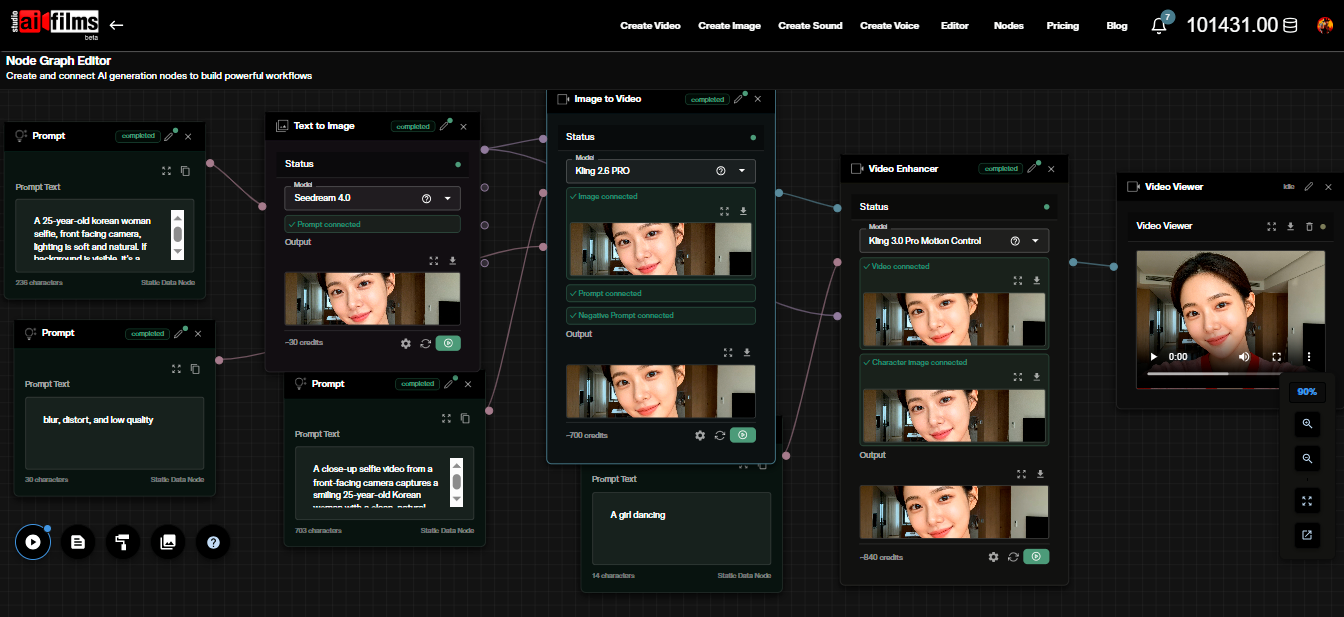
Filmmakers developing work for competitions like this can access text-to-video and image-to-video generation tools at AI FILMS Studio.
Sources
PRNewswire | BusinessWire | Variety | Deadline | Reply
Continue Reading


Video & LipSync
- Video Generator
- Text to Video
- Image to Video
- Start-End Frame to Video
- Draw to Video
- Motion Control
- Video Enhancer
- Video Upscaler
- Video Extend
- Video to Video LipSync
- Audio to Video LipSync
- Image to Video LipSync
- Video FaceSwap
- Seedance 2.5
- WAN 3.0
- Seedance 2
- FLUX 3
- Minimax H3
- Vidu Q3 Pro
- Grok Imagine Video 1.5
- Gemini Omni
- Google Veo 3.1
- Kling 3.0 Pro
- Luma Ray 3.2
- LTX 2.3
- Happy Horse 1.1
- Kling 3.0 Motion
- ByteDance Upscaler
- InfiniteTalk
- InsightFace
Image & Edit
- AI Character
- AI Actor
- Art Generator
- Text to Image
- Image to Image
- LoRA Image to Image
- Draw to Edit
- Image LoRA Training
- Remove Background
- Image Enhancer
- MidJourney 8.0
- Krea 2
- OpenAI GPT Image 2.0
- Nano Banana Pro Ultra
- Nano Banana 2 Lite
- Nano Banana Pro
- Minimax Image
- Clarity Pro
- Z-Image Turbo LoRA
- Krea 2 Turbo LoRA
- Z-Image LoRA Trainer
- Qwen Image LoRA Trainer
- Background Erase Network 2 (BEN2)