
Sam Altman: AI Will Make Hollywood Value Human Creators More
.jpg?w=3840&q=90)
Share this post:
Sam Altman: AI Will Make Hollywood Value Human Creators More
OpenAI CEO Sam Altman addressed Hollywood's core fear directly at the Breakthrough Prize Ceremony: that AI will reduce the industry's need for writers, directors, and performers. His answer was the opposite of what the industry expected.
"I think people really care about the human beings behind the stories and the art and the creative work that matters so much", Altman said. "My instinct is it's going to go the other way and people will care more about humans and more about human creators in the future, not less".
The Sora Shutdown
Altman's conciliatory message arrives in a complicated context. In early 2026, OpenAI shut down Sora, its video generation platform that had been positioning itself as a core Hollywood tool. Altman gave a frank explanation: "concentrate our compute and our product capacity into these next generation of automated researchers and companies".
OpenAI LLC, Public domain, via Wikimedia Commons
OpenAI had spent months building a direct pipeline into Hollywood through Sora, signing creative partnerships and pitching studios on AI video tools. The shutdown reversed that strategy in one decision.
The Disney Fallout
The most visible casualty was OpenAI's partnership with Disney. Altman told Variety he "felt terrible" when he had to inform Disney CEO Josh D'Amaro about the shutdown, noting that D'Amaro had not been given any advance warning. Disney had been planning a $1 billion investment in OpenAI. The deal was cancelled.
The episode revealed a structural tension in Altman's Hollywood relationships. He is simultaneously the person most studios want access to and the person most able to unilaterally pull the tools they have built plans around.
.webp)
Hollywood sign. Photo by Thomas Wolf, www.foto-tw.de, CC BY-SA 3.0, via Wikimedia Commons
Hollywood's View of Altman
The industry's ambivalence about Altman has reached the point where it is being dramatized on screen. A documentary titled "Deepfaking Sam Altman", produced by Kevin Hart's Hartbeat, received a theatrical release. Separately, Luca Guadagnino is directing "Artificial", a dramatization of Altman's story starring Andrew Garfield.
Two films examining the same tech CEO, both in production simultaneously, reflect how Hollywood has moved past treating Altman as simply a threat or a partner. He has become subject matter.
On Regulation
Altman addressed calls for government oversight of AI at the same ceremony. "I think some regulation will be important", he said. "It's obviously very important to get it right".
.jpg)
Sam Altman at the White House, September 2025. Official White House photo, Public domain
The statement aligns with positions Altman has taken in Congressional testimony but stops well short of endorsing any specific regulatory framework.
For Hollywood, where union contracts already contain AI provisions negotiated by SAG-AFTRA, the DGA, and the WGA, the question is less whether regulation will come and more whether federal rules will reinforce or override what the guilds have already won.
The Breakthrough Prize and Why Altman Spoke There
The Breakthrough Prize is funded jointly by Mark Zuckerberg, Sergey Brin, Yuri Milner, and Priscilla Chan. Its 2026 ceremony drew scientists, technology executives, and the entertainment community that hosts it annually. Remarks at the Breakthrough Prize travel from science press into entertainment trade coverage simultaneously, which made it a calculated venue for Altman to address Hollywood fears directly.
The Breakthrough Prize venue selects its guest speakers carefully. Altman appeared at the same ceremony as researchers receiving recognition for foundational scientific work. His address to Hollywood's concerns, delivered in a room that bridges academic science and entertainment industry philanthropy, carried a different register than a trade press interview.
What "Next Generation Automated Researchers" Means
Altman's stated reason for the Sora shutdown was concentrating compute on "next generation automated researchers and companies". This phrase references agentic AI that conducts scientific research autonomously rather than tools that help humans create. The pivot is from AI as a creative assistant to AI as an autonomous scientific agent, and the resource competition between those two directions is what ended Sora.
The resource competition between creative AI tools and scientific AI agents is a specific technical claim about GPU allocation. OpenAI's inference compute is finite. Running Sora at scale required hardware that Altman judged more valuable directed toward agentic research infrastructure. The Sora shutdown was a compute reallocation decision, not a change in OpenAI's view of creative applications.
The "Deepfaking Sam Altman" Documentary
Kevin Hart's Hartbeat production company produced a documentary titled "Deepfaking Sam Altman" that received theatrical release. A CEO receiving theatrical documentary treatment while still actively running the company is an indicator of how much cultural weight OpenAI carries in 2026. The title frames Altman as both subject and object of AI era identity concerns simultaneously.
The documentary's subject matter, examining what happens when an AI deepfake of Altman is created, places the CEO inside the same debate about AI identity and consent that his company's products have produced for creative professionals.
Luca Guadagnino's "Artificial"
Guadagnino, whose previous films include Call Me by Your Name and Challengers, is directing a drama about Altman's story starring Andrew Garfield. Two productions examining the same technology executive in different formats, arriving in parallel, reflect how Hollywood has processed Altman's significance. He is no longer just a business figure but a dramatic subject worthy of theatrical treatment.
Garfield's casting follows Guadagnino's practice of choosing actors who bring psychological complexity to technology adjacent roles. "Artificial" dramatizes the 2023 OpenAI board crisis from the perspective of the figures inside the company during the 100 hour period when Altman was removed and then reinstated as CEO.
The Disney Billion and What It Represented
Disney's planned $1 billion investment in OpenAI was structured as a technology investment, not a content deal. It would have embedded OpenAI tools into Disney's production pipeline while giving Disney a financial stake in the AI company. That combination of content partnership and equity investment represented how Hollywood's relationship with AI companies was expected to formalize before the Sora shutdown cancelled it.
The cancellation left Disney without either the equity stake or the production tool access it had been building around. Altman's acknowledgment that D'Amaro received no advance warning is the detail that characterizes how abruptly the decision was made.
The Guild Provisions Altman Did Not Address
SAG-AFTRA's four year AI deal, the WGA's consent and compensation provisions, and the DGA's training data disclosure requirements are the regulatory frameworks already governing AI in Hollywood production. Altman's Breakthrough Prize remarks did not engage with any of them specifically. He addressed the industry's fear but not the industry's negotiated protections.
That absence is notable because the guilds have moved faster than federal regulation on every AI question they have confronted. Whether OpenAI's tools comply with the consent provisions in SAG-AFTRA's four year deal is a contract question, not a policy one. Altman's call for "balanced regulation" addresses a different layer of governance than the one Hollywood's labor organizations are already enforcing.
What the Agentic Pivot Means for Creative Tools
The shift from creative assistance to autonomous scientific research changes OpenAI's commercial relationships with studios, not just its product lineup. Studios that integrated Sora workflows had assumed a continuing tool relationship. The pivot signals that OpenAI's commercial priority is enterprise AI and scientific research infrastructure, with creative applications as a secondary category.
That prioritization is already visible in OpenAI's product roadmap after Sora. The company's 2026 announcements have centered on agentic tools for business automation, coding assistance, and scientific research. Video generation remains in OpenAI's portfolio through residual partnerships, but the infrastructure investment that would have made Sora a long term production tool has been redirected.
Hollywood's Bet on Human Stories
Altman's claim that AI will increase demand for human storytellers rests on a historical analogy he invoked without naming directly. Earlier labor displacement predictions about creative technology, digital editing, CGI, and streaming, proved wrong because audiences continued to value human creative authorship. The argument is that AI follows the same pattern.
Hollywood's counter argument, implicit in guild contract provisions and the Cannes AI ban, is that the current AI moment is structurally different because the tool can itself generate the content audiences consume. Whether Altman's analogy holds depends on whether audiences treat AI generated narrative as equivalent to human authored narrative, a question commercial releases in 2026 and 2027 will begin to answer.
The Technology Investment Structure
Disney's planned investment was not a content licensing deal in the conventional sense. A $1 billion equity stake would have given Disney a financial interest in OpenAI's growth while formalizing access to its model outputs for production use. The structure mirrors deals OpenAI made with Microsoft, where the relationship is both operational and financial.
Hollywood studios do not typically make direct AI equity investments of that scale because their capital runs toward content and distribution. Disney's planned exception reflected how seriously the company's leadership was treating AI as a structural priority. The cancellation means that level of institutional commitment from a major studio has not been made public since.
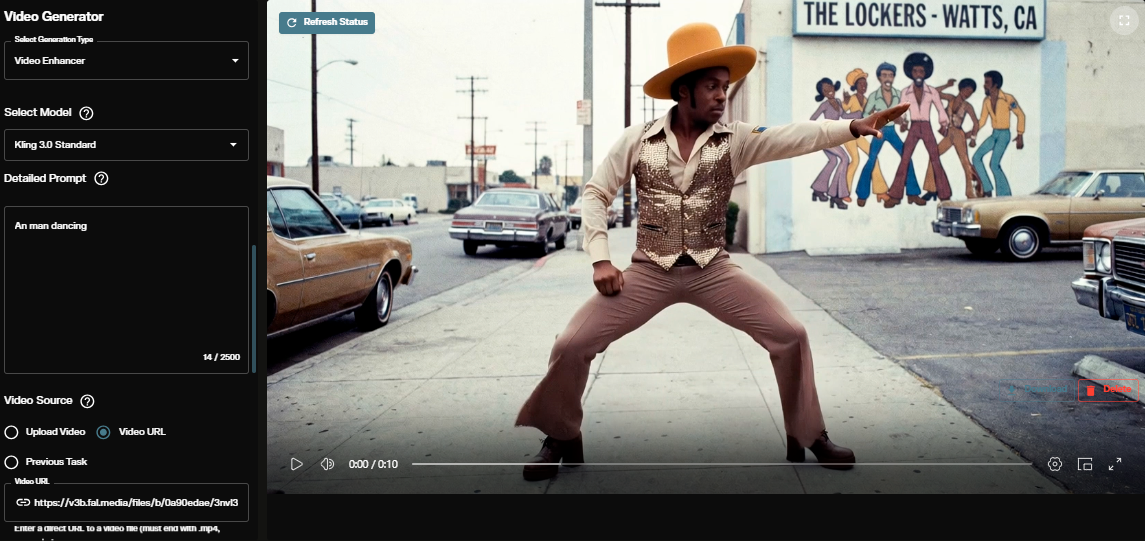
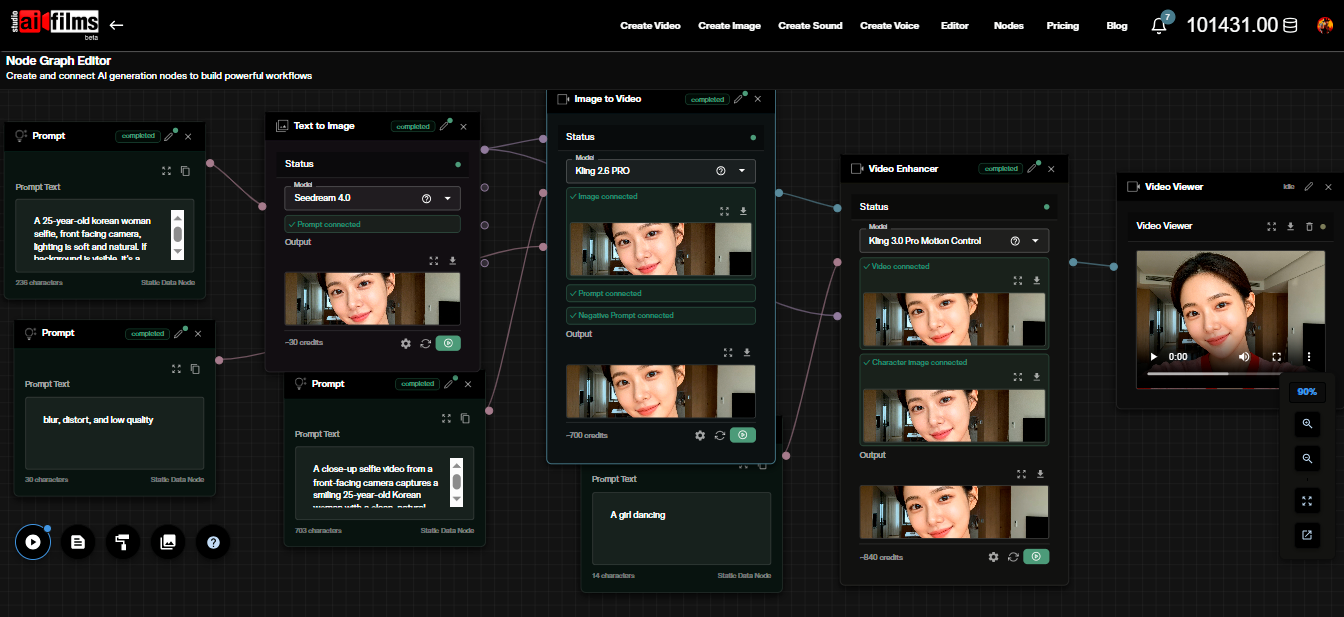
Filmmakers who want to build with AI now, before the regulatory picture settles, can generate text-to-video and image-to-video content through AI FILMS Studio.
Sources
Variety | The Hollywood Reporter
Continue Reading
.jpg?w=3840)


Video & LipSync
- Video Generator
- Text to Video
- Image to Video
- Start-End Frame to Video
- Draw to Video
- Motion Control
- Video Enhancer
- Video Upscaler
- Video Extend
- Video to Video LipSync
- Audio to Video LipSync
- Image to Video LipSync
- Video FaceSwap
- Seedance 2.5
- WAN 3.0
- Seedance 2
- FLUX 3
- Minimax H3
- Vidu Q3 Pro
- Grok Imagine Video 1.5
- Gemini Omni
- Google Veo 3.1
- Kling 3.0 Pro
- Luma Ray 3.2
- LTX 2.3
- Happy Horse 1.1
- Kling 3.0 Motion
- ByteDance Upscaler
- InfiniteTalk
- InsightFace
Image & Edit
- AI Character
- AI Actor
- Art Generator
- Text to Image
- Image to Image
- LoRA Image to Image
- Draw to Edit
- Image LoRA Training
- Remove Background
- Image Enhancer
- MidJourney 8.0
- Krea 2
- OpenAI GPT Image 2.0
- Nano Banana Pro Ultra
- Nano Banana 2 Lite
- Nano Banana Pro
- Minimax Image
- Clarity Pro
- Z-Image Turbo LoRA
- Krea 2 Turbo LoRA
- Z-Image LoRA Trainer
- Qwen Image LoRA Trainer
- Background Erase Network 2 (BEN2)