
David Mamet's Speed the Plow Uses New Hollywood AI Platform at Cannes

Share this post:
David Mamet's Speed the Plow Uses New Hollywood AI Platform at Cannes
A stage adaptation of David Mamet's "Speed the Plow" starring Anthony Mackie, Ben Mendelsohn, and Sharon Stone has been announced as the first major production to use the New Hollywood AI platform. The announcement was made at the Cannes Marché du Film on May 13, 2026, signaling a push by AI production tools into prestige theatrical territory.
"Speed the Plow" was written in 1988 as a dissection of Hollywood commercial culture. Its subject, the moral compromises made in the name of entertainment production, makes it an unusual choice for an AI production tool partnership announcement. Whether that irony was intentional or incidental to the casting and commercial calculus behind the deal is not clear from the public announcement.
The Production
"Speed the Plow" is among the most performed works in the American dramatic canon. Mamet wrote it in 1988 as a sharp dissection of Hollywood dealmaking, ambition, and moral compromise. The play has three characters and runs without an intermission, making it a demanding vehicle for the cast.
The play's plot turns on a single scene in the second half where the third character, a temporary secretary, convinces one of the two producers to greenlight a serious literary adaptation instead of a commercial blockbuster. By the final scene, her argument has been undone and the blockbuster is back in development. What Hollywood values versus what it says it values is the play's central subject, which is also the central subject of every AI adoption debate currently happening in the entertainment industry.
Mackie comes to the production with one of the highest profiles of any working American actor. His tenure as Sam Wilson in the Marvel Cinematic Universe expanded into the lead role of Captain America in "Brave New World" in 2025. Mendelsohn is known for "Bloodline", for which he won an Emmy, and for "Rogue One: A Star Wars Story". Stone's casting in the third role, which Mamet originally wrote for a secretary navigating the power dynamics of two Hollywood producers, completes a cast that brings genuine star weight to the material.
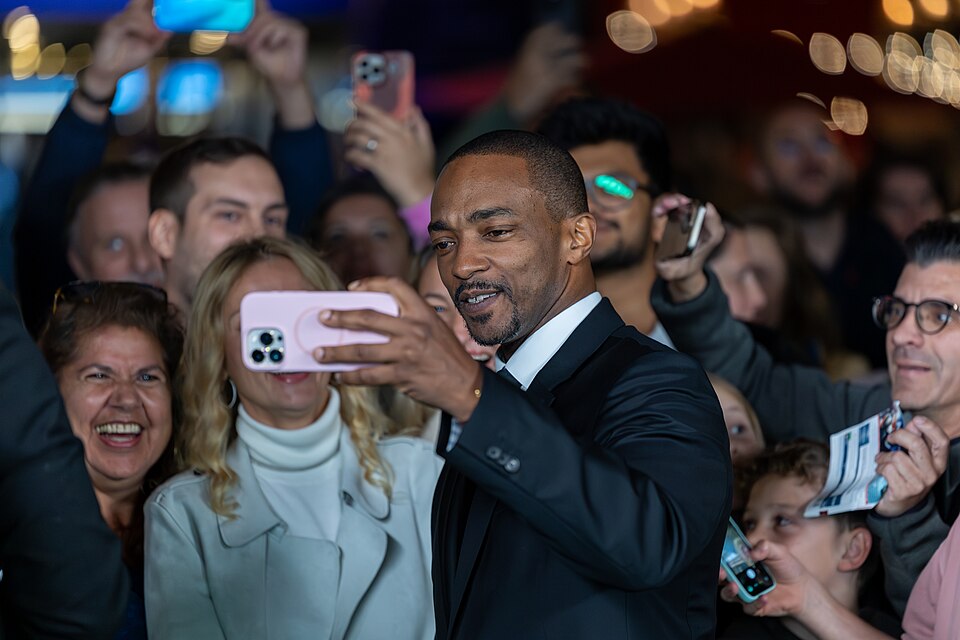
Speed the Plow's Original 1988 Run
Mamet wrote "Speed the Plow" as a direct attack on the ethics of Hollywood dealmaking. The 1988 Broadway premiere starred Joe Mantegna, Ron Silver, and Madonna, with a cast of commercial film names in a play about commercial film production that generated significant industry attention. The play's original run and subsequent revivals established it as a canonical piece of American dramatic writing about the entertainment industry.
Placing an AI production platform at the center of its 2026 revival creates a loop between the play's content and its production method. "Speed the Plow" argues that Hollywood entertainment is governed by money and social influence. The 2026 production uses tools designed to reduce the administrative cost of making entertainment, while the play on stage argues that cost reduction in entertainment has always come at a moral price.
The original production's cultural impact went beyond theater. The casting of Madonna in the third role generated press that overshadowed critical response to the play itself. The 2026 revival is repeating that pattern in a different register: the AI production announcement is generating press that the cast alone would not have produced.
The 1988 revival transferred to the West End after the Broadway run ended. Subsequent productions in London and New York have consistently attracted star casts. The 2026 production continues that tradition while adding a production tool dimension that the play's earlier revivals did not have.
The New Hollywood Platform
New Hollywood is an AI production platform that covers script development, animatics, pitch decks, self tape submissions, and automated daily cuts. The "Speed the Plow" adaptation is the first announced production to use the platform across a major theatrical project.
The company's name is a reference to the New Hollywood era of the 1970s, when a generation of directors including Coppola, Scorsese, and Altman remade the commercial film industry by placing craft above commercial formula. The name positions the platform as aligned with creative ambition rather than opposed to it, which is the framing every AI production tool company is trying to establish in 2026.
The platform's feature set targets the preproduction and production administration stages rather than the creative output itself. Automated daily cuts and self tape processing address workflow friction that productions of any size encounter. Animatics and pitch deck tools serve the earlier development phase, where the material needs to move quickly through approval and financing conversations.
The Cannes Marché du Film has positioned itself this year as a venue for exactly this kind of AI commercial announcement. The 2026 Marché du Film program includes a dedicated AI for Talent Summit and the largest virtual production stage ever assembled at a film market, creating a concentrated environment for AI deals to surface.
The Marché and the Cannes competition run concurrently but operate under different rules. The Cannes competition banned generative AI from its official selection this year. The Marché has no such restriction, which is why AI production announcements are appearing on the commercial side of the festival while the competition screen remains AI free by declaration. Thierry Frémaux extended that distinction further when he proposed labeling films made without AI like organic produce, a certification idea that drew attention on the festival's opening day.
AI production companies have responded by concentrating their most visible announcements at the Marché rather than at press events in US cities. The Speed the Plow announcement is part of a deliberate strategic shift in where AI production news is made.
Ben Mendelsohn in the Ensemble
Mendelsohn won a Primetime Emmy for his role in Bloodline. His work in Rogue One and other major productions makes him a recognizable face to both theatrical and mainstream film audiences. Together with Mackie and Stone, the cast creates the kind of institutional attention that production tool companies need their most visible announcement to generate.
A stage cast of this caliber means the production's success or failure will be visible and reviewed by critics who cover theater rather than technology. New Hollywood's team clearly decided that scrutiny was the point of the announcement rather than its risk.
Mendelsohn's stage work is less documented than his film and television output. Casting him alongside Mackie and Stone creates a production that theater critics will evaluate on the same terms as any prestige revival, not as an AI experiment with star power attached.
Why the Cannes Marché
The Cannes Marché du Film runs concurrently with the Cannes Film Festival but operates under commercial rather than artistic rules. The 2026 Marché included a dedicated AI for Talent Summit and positioned itself as the central venue for AI production announcements during the festival week. AI production companies chose the Marché precisely because the competition's generative AI ban does not apply to commercial exhibition there.
The Marché is where the entertainment industry's buyers and sellers meet: distributors, sales agents, financiers, and production platform companies. An AI production tool company announcing its first prestige production partnership at the Marché reaches exactly the decision makers whose adoption it needs.
The 2026 Marché is the largest ever assembled in terms of AI specific programming. That concentrated audience is the reason announcements of this kind are landing at Cannes rather than at separate product launches in New York or Los Angeles.
Speed the Plow and Its Audience
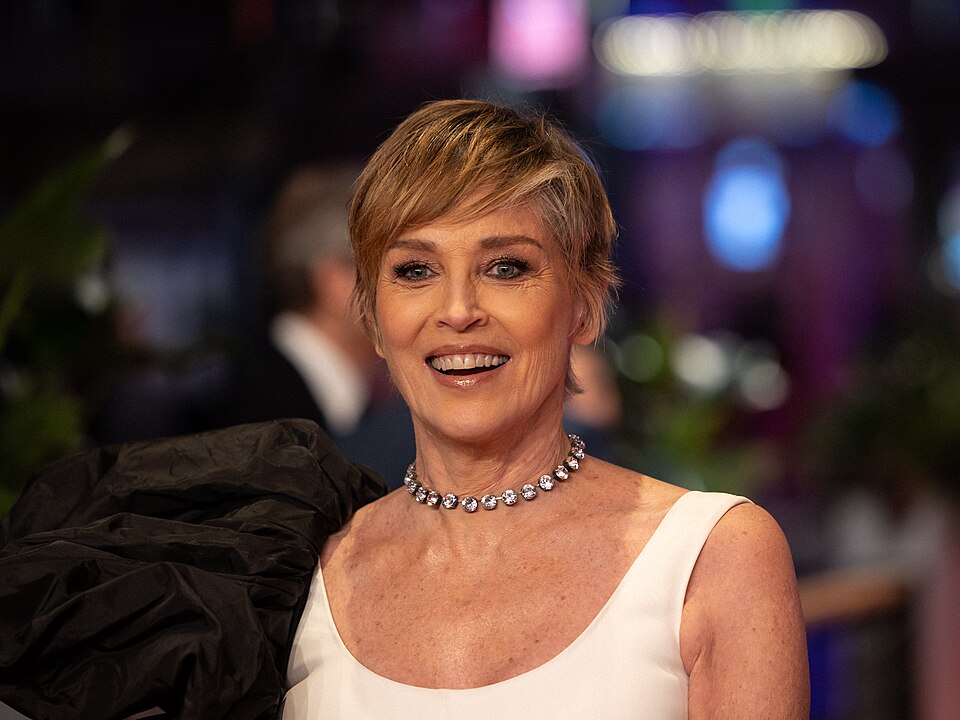
Harald Krichel, CC BY-SA 4.0, via Wikimedia Commons
Mamet's play sits at an intersection that makes it unusually well suited to a high profile AI production announcement. It is explicitly about the entertainment industry. Its three characters negotiate over a Hollywood blockbuster and a piece of serious literary fiction, with the outcome hinging on who controls the terms of a deal.
A production using AI tools to manage its pipeline while staging a play about the ethics of commercial entertainment is not without irony. Mamet has not publicly commented on the use of AI in the production.
Pre Production AI and What It Leaves Untouched
Automated daily cuts and self tape processing handle logistics, not creative decisions. The "Speed the Plow" production leaves directing, performing, and playwriting untouched by the New Hollywood platform. The tools manage the administrative infrastructure that surrounds a production rather than the production itself.
That framing has become the standard argument for AI production tools in 2026: the tools do the friction reducing work, the humans do the creative work. Whether that distinction holds in practice at every stage of production is the question that makes the framing worth watching over time.
The "Speed the Plow" production runs at an unusual level of visibility for a test of that distinction. Most AI production tool integrations happen on projects that receive limited press coverage. A Mamet revival with Mackie, Mendelsohn, and Stone will be reviewed in every major theater publication. The results will be publicly documented.
Mamet's Career and What Speed the Plow Argues
Mamet is one of a small number of American dramatists whose plays have remained in continuous production since their premieres. "Glengarry Glen Ross", "American Buffalo", and "Speed the Plow" each examine the relationship between commercial pressure and individual morality in settings Mamet drew from his own experience in real estate, theater, and film.
Mamet built his reputation on language as a weapon: the overlapping dialogue, the blunt deal talk, the characters who use speech to dominate rather than communicate. "Speed the Plow" argues that Hollywood entertainment is governed by money and social influence, not artistic merit. Whether his involvement with a New Hollywood AI announcement implies endorsement of AI's role in entertainment or simply a commercial engagement is an open question the article does not resolve.
Mamet has not made public statements about AI in film and theater production. His career as a writer and director spans both Hollywood studio work and independent theater, which means his relationship to commercial production tools is more complex than either a pure artist or a pure commercial filmmaker's position.
Mamet wrote extensively in his 2011 book "Theatre" about the mechanics of the entertainment business. His argument there, that the industry is driven by commerce and that artistic integrity is preserved through specific craft decisions, not institutional loyalty, is consistent with allowing a New Hollywood AI tool into the administrative layer while keeping creative decisions entirely separate.
AI in Prestige Stage and Film
The "Speed the Plow" announcement is the clearest example so far of AI production tools moving from independent film projects into prestige theatrical productions with major star casts. Previous AI adoption at the production level has been concentrated in documentary work, independent features, and visual effects pipelines on larger productions.
A stage adaptation with Mackie, Mendelsohn, and Stone is a different category of project. It draws attention that goes beyond the AI industry, and it places New Hollywood's platform in a context where the production's success or failure will be visible and reviewed.
The casting also signals the production is not experimental in the way solo creator AI projects are. It has the financial and institutional infrastructure of a major theatrical production. That infrastructure is what makes the AI tool adoption meaningful as industry data: these are conditions close enough to normal production that the results transfer.
The question the production will eventually answer is whether the AI assisted administrative pipeline affected the creative process in any direction. That answer will come from the production team's own accounting after the run, not from the Cannes announcement.
The Pattern at Cannes 2026
Steven Soderbergh disclosed AI use in his John Lennon documentary premiering at the festival that week, applying Meta AI tools to sequences where archival footage could not exist. Other productions announced AI production tool integrations during the same Marché week. The "Speed the Plow" announcement is part of a concentrated AI commercial push at Cannes that ran alongside the competition's AI free selection.
The concentration reflects the industry's split: the competition maintains an AI free zone as a statement about artistic value; the commercial Marché treats AI as a production tool to be announced, sold, and adopted. Both positions are represented at the same festival at the same time.
That dual presence is a useful measure of where the industry actually stands in 2026. The prohibition and the adoption are happening simultaneously, not sequentially. Productions are making AI use decisions while the policy debate continues, which is why Cannes is functioning as both a cultural statement and a commercial marketplace at the same time.
Filmmakers building AI tools into their own pre-production and development workflows can access text-to-video and image-to-video generation at the AI FILMS Studio video workspace.
Sources
Deadline
Continue Reading
.jpg?w=3840)


Video & LipSync
- Video Generator
- Text to Video
- Image to Video
- Start-End Frame to Video
- Draw to Video
- Motion Control
- Video Enhancer
- Video Upscaler
- Video Extend
- Video to Video LipSync
- Audio to Video LipSync
- Image to Video LipSync
- Video FaceSwap
- Seedance 2.5
- WAN 3.0
- Seedance 2
- FLUX 3
- Minimax H3
- Vidu Q3 Pro
- Grok Imagine Video 1.5
- Gemini Omni
- Google Veo 3.1
- Kling 3.0 Pro
- Luma Ray 3.2
- LTX 2.3
- Happy Horse 1.1
- Kling 3.0 Motion
- ByteDance Upscaler
- InfiniteTalk
- InsightFace
Image & Edit
- AI Character
- AI Actor
- Art Generator
- Text to Image
- Image to Image
- LoRA Image to Image
- Draw to Edit
- Image LoRA Training
- Remove Background
- Image Enhancer
- MidJourney 8.0
- Krea 2
- OpenAI GPT Image 2.0
- Nano Banana Pro Ultra
- Nano Banana 2 Lite
- Nano Banana Pro
- Minimax Image
- Clarity Pro
- Z-Image Turbo LoRA
- Krea 2 Turbo LoRA
- Z-Image LoRA Trainer
- Qwen Image LoRA Trainer
- Background Erase Network 2 (BEN2)