
Cate Blanchett Launches RSL Media: Open AI Consent Standard Backed by Clooney, Streep, and Hanks
.jpg?w=3840&q=90)
Share this post:
Cate Blanchett Launches RSL Media: Open AI Consent Standard Backed by Clooney, Streep, and Hanks
Cate Blanchett launched RSL Media on May 12, 2026, a nonprofit building a free, open and machine readable standard that lets any person declare whether artificial intelligence may use their likeness, voice, creative work, or identity. The announcement arrived on the opening day of the Cannes Film Festival and immediately drew backing from dozens of the biggest names in film, television, and music.
What RSL Stands For
RSL stands for "right to self-likeness". The name positions the standard around personhood and self-determination rather than intellectual property law or platform policy. RSL Media's framing is that consent over one's own likeness and voice is a personal right that exists independently of whether a legal framework currently enforces it.
That framing matters for adoption. A registry built on the concept of IP ownership requires participants to claim legal rights they may not have in every jurisdiction. A registry built on the concept of self-determination asks only that participants state their preferences, which any person in any country can do without a legal team.
.jpg)
Adam Chitayat, CC BY-SA 4.0, via Wikimedia Commons
The standard gives anyone three consent settings for how AI systems may use their likeness, voice, creative work, or identity: "allowed", "allowed with terms", or "prohibited". The public registry launches in June 2026 and is free to use for anyone, not only celebrities.
RSL Media operates under a Creative Commons open license, meaning any studio, streaming platform, distributor, or AI company can adopt it at no cost. The initiative is designed to sit beneath whatever legal frameworks individual countries develop, functioning as shared consent infrastructure.
What RSL Media Does
The three settings create a complete consent spectrum rather than a binary opt in or opt out. "Allowed" means any AI use is permitted. "Allowed with terms" means permitted under a licensing agreement that specifies use, compensation, and attribution. "Prohibited" means no AI use of that person's likeness, voice, creative work, or identity.
The "allowed with terms" setting is the pathway to licensed AI use. A performer who wants to license their likeness or voice for specific AI productions while refusing others can set terms at the registry level, making their position discoverable before any AI company approaches them. This converts a reactive enforcement posture into a proactive licensing position.
The Coalition Behind It
Blanchett started RSL Media alongside founding partners Nikki Hexum, Doug Leeds, and Eckart Walther. Public backers include George Clooney, Meryl Streep, Tom Hanks, Dame Helen Mirren, Emma Thompson, Viola Davis, Javier Bardem, Kristen Stewart, Steven Soderbergh, Creative Artists Agency, and the Music Artists Coalition.
The breadth of the coalition, spanning film, television, music, and a major talent agency, signals that AI consent concerns go well beyond any single guild or collective bargaining cycle. CAA's participation is notable: the agency represents clients on both sides of every AI deal, giving the agency a direct commercial interest in establishing consent infrastructure that reduces legal exposure for the productions its clients participate in.
.jpg)
Kevin Payravi, CC BY-SA 4.0, via Wikimedia Commons
Nikki Hexum, Doug Leeds, and Eckart Walther
Hexum, Leeds, and Walther bring digital identity infrastructure, platform governance, and international media rights experience to a project publicly fronted by a film star. That organizational capability is what distinguishes RSL Media from a celebrity letter campaign. A consent registry that functions at scale requires a technical standard, a database infrastructure, and a query mechanism that AI companies can integrate into their training and generation pipelines. Those are engineering and legal problems, not advocacy problems.
Walther's background in international media rights is specifically relevant. The RSL standard needs to function across jurisdictions with different IP frameworks, which requires mapping the consent declaration to legal categories that differ by country. A Creative Commons license covers the standard's distribution, but the alignment between the consent setting and what is legally enforceable in each jurisdiction requires legal architecture that a celebrity endorsement alone cannot build.
Leeds's platform governance experience addresses the registry's operational challenge: a public database of consent declarations for every person who chooses to register requires moderation, identity verification, and dispute resolution. A bad actor who registers a consent declaration on behalf of someone else without their knowledge is a foreseeable attack on the system. How RSL Media handles identity verification without creating barriers that exclude people without formal ID is one of the technical problems the founding team is solving before the June 2026 launch.
What the Founders Said
Blanchett pointed to the gap between AI's rate of expansion and the laws meant to govern it. "AI technologies are expanding rampantly, essentially unchecked and unregulated", she said. "RSL Media is a simple, effective and free solutions-based technology for facilitating and activating consent", she added.
Emma Thompson put the stakes in sharper terms. "Of course artists and cultural creatives will inevitably be involved with AI", she said. "At the moment, however, AI is merely stealing from us all. This is an urgent and essential initiative".
What Machine Readable Requires
A machine readable consent declaration must be formatted so that AI companies' systems can automatically check the registry before training or generating content with a person's likeness. The technical standard functions similarly to robots.txt in web indexing, which tells crawlers which pages they may and may not access.
For a machine readable registry to function as a genuine consent gate, AI companies must adopt the query mechanism voluntarily or be required to do so by regulation. RSL Media is betting on voluntary adoption backed by reputational pressure from a coalition that includes some of the most commercially valuable names in entertainment. The regulatory requirement version depends on legislation that does not yet exist at the federal level in the US.
The robots.txt analogy has a precedent problem: web crawlers mostly follow robots.txt because search engines are US companies subject to US law and because violating it carries SEO penalties. AI training pipelines have no equivalent enforcement mechanism yet. The NO FAKES Act, if passed, would create one for voice and likeness specifically. Until then, RSL Media functions as a reputational signal: companies that ignore it are choosing to proceed without consent from a registry that the most recognized people in entertainment have backed publicly.
.jpg)
Blanchett chose the Cannes Film Festival opening day for the RSL Media launch, the moment when the industry's AI debate is most concentrated. The official Cannes competition banned generative AI from its Palme d'Or selection this year, and filmmaker statements at the festival placed AI at the center of every major press conference in its first days.
The RSL standard addresses a different problem than the Cannes competition ban. The ban governs what films may compete for prizes. RSL Media governs whether AI systems may train on or generate content using a person's likeness in the first place.
A Different Tool Than a Union Contract
The SAG-AFTRA deal reached in May 2026 addresses AI protection through collective bargaining: it covers union members, in covered productions, in jurisdictions where it applies. RSL Media is designed to cover any person, anywhere, for any use of AI.
The standard does not carry legal enforcement power on its own. It creates a formal consent record that laws and contracts can reference. Protective frameworks have emerged at the state level, including the California Digital Replica Law, and through international negotiations like the UK Equity AI pact. RSL Media aims to be the open infrastructure that connects all of them.
A performer who registers a "prohibited" declaration in the RSL registry and then has their likeness used without consent is in a demonstrably stronger legal position than a performer who made no declaration. The registry creates a documented record of the consent state at a specific date. When enforcement catches up to the technology, that record becomes evidence in a jurisdiction where a right of publicity, likeness, or digital replica law applies. RSL Media is building the evidentiary infrastructure now, ahead of the enforcement mechanisms that will use it.
Creative Commons Open License and What It Enables
Releasing RSL Media's standard under Creative Commons means any studio, platform, or AI company can implement it without paying Blanchett's organization. The absence of a licensing fee for adoption removes the main friction point for commercial adoption. Studios and platforms that adopt it publicly gain a reputational benefit with no direct cost, and their adoption creates the network effect the registry requires to function.
The Creative Commons framing also means RSL Media cannot become a chokepoint. If the nonprofit were to fail or change direction, any entity that has adopted the standard can continue using it. The standard belongs to the commons, not to the organization that built it. That structural choice protects the standard's longevity in ways that a proprietary platform cannot guarantee.
The open license is also a recruitment tool for AI companies. An AI company that adopts RSL Media and announces the adoption gains public credit for voluntary consent compliance. That credit has commercial value in a year when AI companies are under increasing pressure to demonstrate responsible practices. For companies whose business model includes partnerships with talent, voluntary adoption of the standard that talent's most prominent advocates built is a signal worth more than its engineering cost.
The Timing With McConaughey's Filings
Matthew McConaughey filed eight trademark applications covering voice and likeness at Cannes on May 15, three days after Blanchett launched RSL Media. Both announcements landed during the same festival week. The two strategies address different parts of the same problem.
McConaughey is creating individual legal protection through trademark registration. Blanchett is building shared consent infrastructure that any person can use for free. The Cannes concentration meant both received global entertainment press coverage simultaneously, reinforcing each other as evidence that the industry was building a consent framework from multiple directions in parallel.
The two approaches are not competitive. A performer who registers in RSL Media and also files trademark applications has both a public consent declaration and a legal enforcement instrument. The registry is the signal; the trademark is the weapon. McConaughey's Austin advice to aspiring performers, "trademark it, whatever you gotta do," and Blanchett's free registry are targeting the same population from complementary angles: performers who can afford trademarks use them, those who cannot use RSL Media, and ideally both.
Blanchett's Two Academy Awards and Why They Matter Here
Blanchett won for Best Supporting Actress for The Aviator and Best Actress for Blue Jasmine. She has a 30 year career across theatrical film, streaming, and stage. She has the institutional standing to launch a consent registry under her name and be taken seriously by the same studios she criticizes for moving too fast on AI.
The coalition's list (Clooney, Streep, Hanks) reflects her ability to convene that peer group. When Steven Soderbergh disclosed AI use in his John Lennon documentary at the same festival, his involvement in both a Meta AI production and the RSL Media backing in the same week demonstrated the position clearly: AI use is acceptable when disclosed and conducted with consent. RSL Media is the infrastructure for making that consent verifiable at scale.
Launched at Cannes for Maximum Reach
The production side version of this consent model has existed since 2020: Deep Voodoo, Trey Parker and Matt Stone's AI studio, has refused jobs without performer authorization from its first day of operation. RSL Media scales that principle from a single studio's internal policy to an industry wide registry anyone can join.
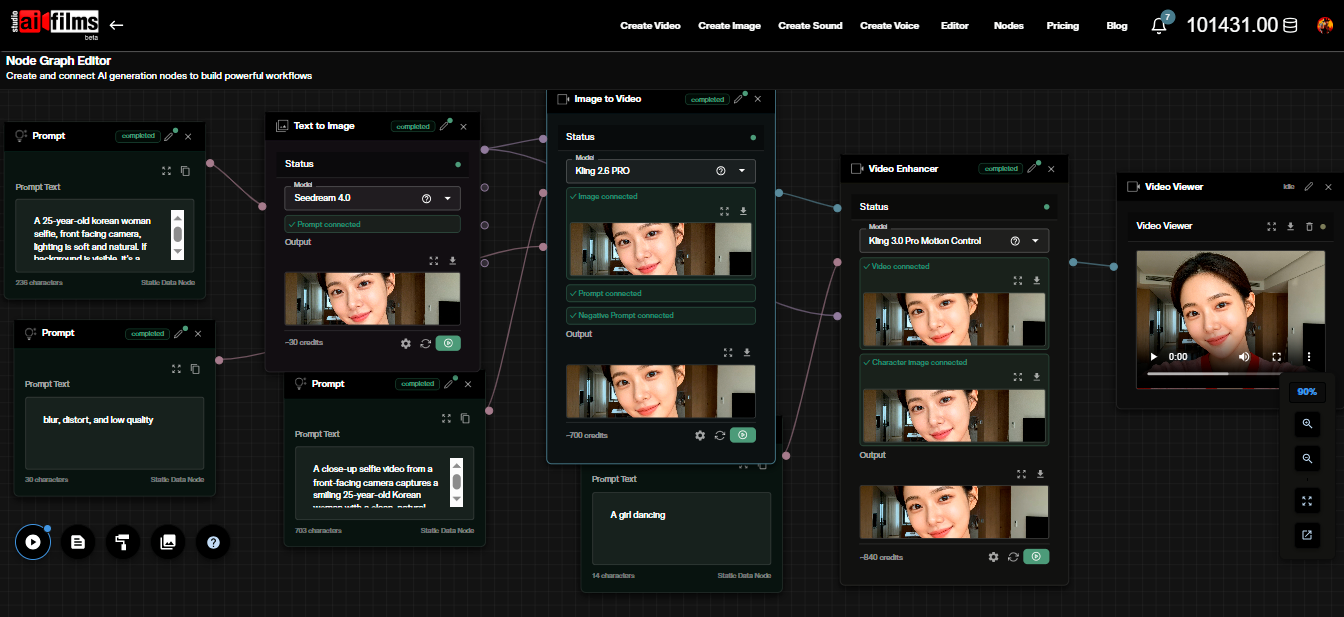
Creators working with AI video tools can generate text-to-video and image-to-video at the AI FILMS Studio video workspace alongside the consent frameworks that productions navigating RSL Media and SAG-AFTRA protections are building toward.
Sources
Variety | GlobeNewswire | The Register | Music Ally
Continue Reading
.jpg?w=3840)


Video & LipSync
- Video Generator
- Text to Video
- Image to Video
- Start-End Frame to Video
- Draw to Video
- Motion Control
- Video Enhancer
- Video Upscaler
- Video Extend
- Video to Video LipSync
- Audio to Video LipSync
- Image to Video LipSync
- Video FaceSwap
- Seedance 2.5
- WAN 3.0
- Seedance 2
- FLUX 3
- Minimax H3
- Vidu Q3 Pro
- Grok Imagine Video 1.5
- Gemini Omni
- Google Veo 3.1
- Kling 3.0 Pro
- Luma Ray 3.2
- LTX 2.3
- Happy Horse 1.1
- Kling 3.0 Motion
- ByteDance Upscaler
- InfiniteTalk
- InsightFace
Image & Edit
- AI Character
- AI Actor
- Art Generator
- Text to Image
- Image to Image
- LoRA Image to Image
- Draw to Edit
- Image LoRA Training
- Remove Background
- Image Enhancer
- MidJourney 8.0
- Krea 2
- OpenAI GPT Image 2.0
- Nano Banana Pro Ultra
- Nano Banana 2 Lite
- Nano Banana Pro
- Minimax Image
- Clarity Pro
- Z-Image Turbo LoRA
- Krea 2 Turbo LoRA
- Z-Image LoRA Trainer
- Qwen Image LoRA Trainer
- Background Erase Network 2 (BEN2)