
Saudi Arabia Raises Film Production Rebate to 60%

Share this post:
Saudi Arabia Raises Film Production Rebate to 60%
Saudi Arabia announced at Cannes 2026 that it is raising its film and TV production rebate from 40% to 60%, administered by the Saudi Film Commission. The increase comes with a restructured disbursement process and clearer government approval pathways. The announcement was made by Saudi Film Commission CEO Abdullah bin Nasser Al-Qahtani.
Al-Qahtani framed the move as a competitive statement: "We want to be not just the most generous incentive, but also the most agile one".
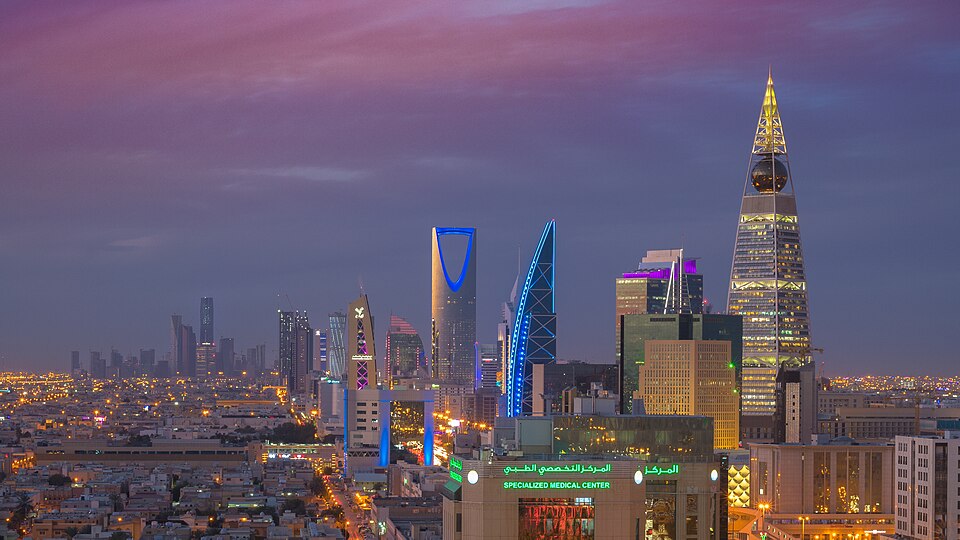
Riyadh, capital of Saudi Arabia. B.alotaby, CC BY-SA 4.0, via Wikimedia Commons
The announcement came from Saudi Film Commission CEO Abdullah bin Nasser Al-Qahtani, who positioned the 60% figure as part of a broader ambition to make the kingdom the most attractive production destination in the world, measured by both the rate and the speed of disbursement.
The Cannes venue for the announcement was deliberate. Producers from every major market attend the Marché du Film, and an incentive announcement made there reaches the decision makers who control location choices for hundreds of productions at once. Saudi Arabia has used Cannes as a platform for market announcements in each of the past three editions.
From 40% to 60%
The Saudi Film Commission introduced its original production rebate at 40% in 2022, an aggressive entry into the international incentive market for a country that had only lifted its cinema ban in late 2017. The new 60% rate is the headline number, but the accompanying changes to disbursement timelines and approvals may matter as much. Productions have historically cited slow payment cycles as a deterrent even with high headline rebate rates.
Rasha AlEmam, CEO of Yellow Camel Studios, is among the industry voices engaged with the Saudi Film Commission on the updated program. The streamlined structure is intended to reduce the administrative friction that has slowed uptake among international productions considering Saudi Arabia as a primary location.
The move from 40% to 60% is a 50 percent increase in the rebate rate in under four years. That pace of escalation reflects the commission's read on what it needs to do to compete with established incentive markets in Europe and Asia Pacific that have years of track record and established crew infrastructure. The rate is the argument the commission is making in a language producers understand immediately.
AlUla and the First Hollywood Feature
Saudi Arabia's most internationally promoted filming location is AlUla, a region of ancient oases and sandstone canyons in the country's northwest. In January 2026, "Chasing Red" completed production there, the first Hollywood film shot entirely in Saudi Arabia. The film stars Madelaine Petsch and Gavin Casalegno.
The completion of a Hollywood feature in the country is a significant proof of concept for the Saudi Film Commission's pitch to international studios and streamers. Permits, logistics, and local crew had to be in place for the production to operate, and "Chasing Red" demonstrated that they were.
International productions evaluating AlUla as a future location can now speak to the "Chasing Red" producers as a reference rather than approaching Saudi Arabia as untested territory. That shift from first mover to referenced precedent is a significant step in how production markets establish credibility.
AlUla's appeal to international productions is geographic and logistical. The region sits in northwestern Saudi Arabia, accessible by air from Riyadh and several Gulf hubs, and offers a range of natural environments within a compact area: ancient oases, dramatic sandstone formations, and an intact Nabataean archaeological site at Hegra. The landscape is distinctive in a way that standard European or North American locations cannot replicate.
"Chasing Red" confirmed that a full Hollywood production could operate there. Permits were issued, crew was sourced or imported, and a feature shot to completion. That process created a template other productions can follow rather than starting from scratch.
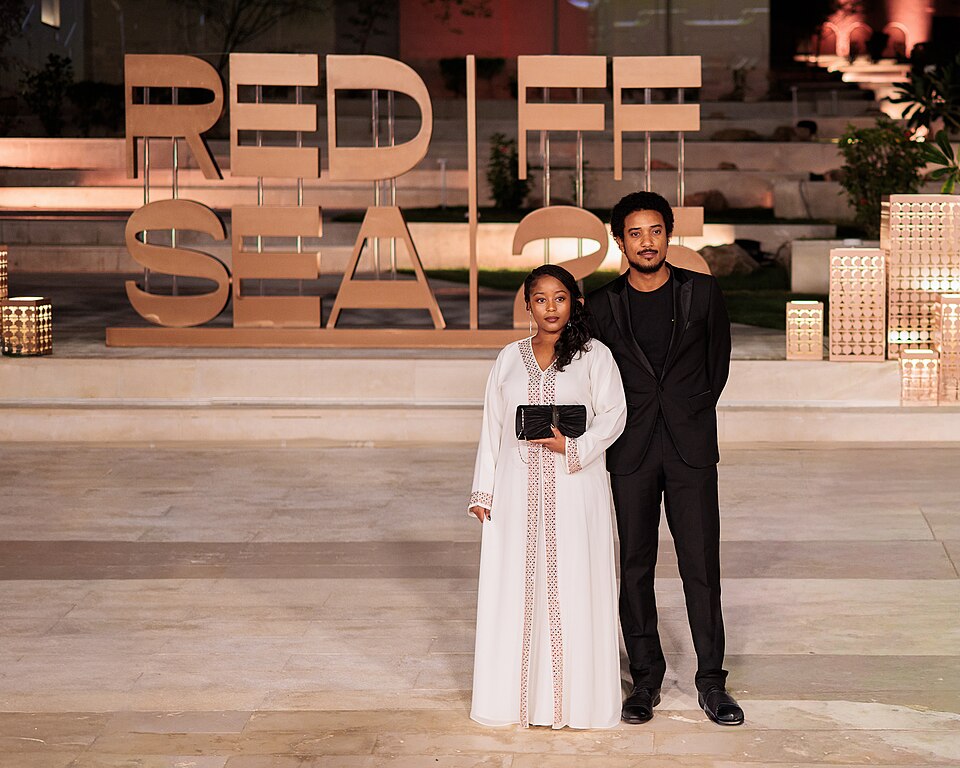
The closing night red carpet at the Red Sea International Film Festival 2025, Jeddah. Segolene Liger, CC BY-SA 4.0, via Wikimedia Commons
A Film Industry Built in Under a Decade
Saudi Arabia lifted its cinema ban in late 2017. In the years since, it has established the Red Sea International Film Festival in Jeddah as one of the region's primary showcase events, built the Saudi Film Commission as a functioning regulatory and promotional body, and now competes directly with established European and Asia Pacific production incentive markets.
The 60% rate positions Saudi Arabia above most production incentive markets globally. The UK's film tax credit sits at 25%. Australia's location incentive for qualifying productions is 16.5%. France's international coproduction rebate runs to approximately 30%. Saudi Arabia's rate now exceeds all of them.
The commission's development arc, from no cinema at all to a 60% rebate competing with France and the UK in under nine years, is one of the fastest government driven film industry buildouts in history. The institutional infrastructure that needed to exist, the commission itself, the regulatory framework, the festival platform, local crew development, and location services, had to be constructed in parallel rather than sequentially.
The Vision 2030 program driving Saudi Arabia's economic diversification treats the creative industries as a strategic sector rather than an incidental one. Film production incentives of this scale require sustained government commitment because the payback period for building an internationally competitive production market is measured in decades. The 60% rebate is a signal that commitment remains in place.
The Middle East region has been expanding its film industry investment in parallel. The UAE launched a $1 million AI Film Award to attract AI filmmaking talent to the region, and Saudi Arabia's rebate increase reflects the same strategic intent at a larger scale. Both countries are competing for the same pool of international productions that are now free to choose locations based on incentive structures rather than proximity to traditional studio infrastructure.
For context on how investment is reshaping the broader AI production landscape, the surge in AI studio funding in the US and UK is creating a class of production companies actively looking for favorable conditions to expand. A 60% rebate changes the cost calculus for any production that can justify Saudi Arabia as a location.
How the 60% Rate Compares Globally
Production incentive benchmarks as of May 2026 show the Saudi rate's competitive position clearly. The UK's film tax credit stands at 25%. Ireland's section 481 relief covers 32% of qualifying expenditure. Australia's location offset for qualifying international productions is 16.5%. France's international coproduction rebate runs to approximately 30%. New Zealand's large budget screen production grant reaches 20%.
Saudi Arabia's 60% exceeds all of them. The only production incentive markets that approach that level are certain regional programs within individual US states, which are geographically limited and often have annual caps that reduce their practical value for large productions. For an international production with flexible location options, 60% is not a marginal difference. It is a structural cost advantage.
The comparison becomes more significant when combined with the no cap structure Al-Qahtani described. Many high-rate incentive programs limit the total qualifying expenditure per production, which reduces their effective value for larger budget films. The Saudi Commission has framed its program as agile, suggesting less restrictive eligibility conditions rather than more.
Disbursement Timelines and Why They Matter
A high rebate rate matters only when productions actually receive the funds. Slow disbursement cycles have historically deterred international productions from committing to high rate markets where the headline number was real but the payment timeline stretched across years. The updated Saudi program explicitly addresses this.
Rasha AlEmam of Yellow Camel Studios has been working directly with the Saudi Film Commission on the restructured framework. Her involvement reflects an industry perspective on where the friction has been. The problem is not the stated rate but the operational steps between qualifying production and actual payment. Streamlining those steps is the part of the announcement that domestic industry participants will track most closely.
A production that qualifies for a 60% rebate but waits 18 months for payment has a financing gap that carries its own cost. A production that receives funds within a shorter window after qualifying expenditure has a genuinely different economic structure. Al-Qahtani's "most agile" framing is a promise about that operational reality, not just the headline rate.
Productions that have committed budgets and presales agreements in place treat rebate timing as a working capital question. If the commission can demonstrate consistent payment within a predictable window, the agility claim becomes bankable in the literal sense. Financiers can treat the anticipated rebate as collateral against production loans. That financial mechanism is how established incentive markets like Ireland and the UK have made their programs work in practice over decades.
The Red Sea Film Festival's Role
The Red Sea International Film Festival, established in Jeddah, has served as a showcase for Saudi Arabia's film industry ambitions since its first edition in 2021. The festival created a platform where Saudi productions could be seen by international buyers, where overseas talent could engage with Saudi counterparts, and where the Film Commission could present its development as a functioning industry rather than a future aspiration.
By Cannes 2026, the commission could point to a track record rather than a promise. The festival had screened Saudi films that received international distribution. The rebate program had processed payments. "Chasing Red" had completed principal photography. The announcement of a 60% rate arrived in a context where the commission had five years of operational evidence behind it.
That evidence changes how potential production partners evaluate the offer. A new incentive program from a market with no track record carries execution risk. The Saudi program carries the track record of its own prior operation, which reduces the uncertainty premium that productions typically factor into new market decisions.
Saudi Arabia's AI Filmmaking Ambitions
The Saudi Film Commission's rebate announcement coincides with a broader regional push toward AI production. The UAE's $1 million AI Film Award targets AI filmmaking specifically, positioning the Gulf as a region that wants to attract not only traditional production but the leading edge of AI generated content. Saudi Arabia's 60% rate applies to productions that use AI in their workflow as readily as it applies to traditional methods.
That combination, a high production rebate plus active regional support for AI filmmaking, creates an unusual environment for productions where AI is a significant part of the budget. If a production uses AI for VFX, environment generation, or post production work that qualifies for the rebate, the effective subsidy on those AI tools is substantial.
The potential intersection of AI production and Saudi incentives has not yet been widely discussed in industry trade coverage. As AI generated content becomes a larger portion of qualifying production expenditure, the Saudi rebate's application to those costs will be a question that producers and commission staff will need to resolve together.
Who Qualifies for the Rebate
The Saudi Film Commission's rebate applies to international productions that conduct qualifying principal photography or post production in the kingdom. The program is modeled on existing international incentive frameworks where production costs, post production expenditure, and qualifying crew costs each carry their own eligibility criteria.
Productions that shoot exterior scenes in AlUla while completing post production at facilities in Riyadh can potentially claim on expenditure across both phases. The commission has been building post production infrastructure alongside its location program, which means productions are not forced to choose between qualifying for the rebate and accessing the editing, color, and sound facilities they need.
For international streamers and studios evaluating the rebate, the qualifying spend percentage of a total production budget is the relevant figure. A production with a $50 million budget spending 60% of its costs in the kingdom would receive a rebate of up to $18 million. At that scale, the incentive changes the fundamental economics of whether to locate a production in Saudi Arabia at all.
The Competition for Production Capital
Every major English language film market is competing for the same pool of production capital. The UK, Ireland, Australia, New Zealand, Canada, and a dozen other markets each have incentive programs designed to attract the same productions. Saudi Arabia's 60% rate positions it as a new entrant offering substantially more than established markets, while still building the crew depth and post production infrastructure those markets have accumulated over decades.
The key question for international productions evaluating the offer is whether the savings from the rebate offset the additional complexity of operating in a newer production market. "Chasing Red" began to answer that question for one film. A pipeline of international productions completing there over the next 24 months would either confirm or complicate that answer for the broader industry.
The commission's ability to attract a second, third, and fourth production after "Chasing Red" is the real test of whether the rebate structure works. First productions in any market carry a learning curve for both the production and the host country's systems. Repeat productions are where the efficiency gains that make a market competitive actually materialize. At 60%, the rate provides room for early operational friction to be absorbed while still leaving a meaningful economic advantage over European alternatives.
Al-Qahtani's Cannes announcement signals that the commission is ready for that pipeline and has structured the program to receive it. Whether the productions follow is the market test that subsequent Cannes editions will begin to reveal.
The commission's Cannes presence has grown each year since 2021. The announcement of the 60% rate at the 2026 edition, alongside the UAE's parallel AI film investment push, suggests that the Gulf region is treating Cannes as the primary venue for competing with European and North American production markets on their own ground. That posture would have seemed implausible a decade ago. In May 2026, it was reported as industry news rather than novelty.
The broader Gulf production push reflects a shared regional strategy that individual country programs are executing through different mechanisms. UAE focuses on AI film awards and talent attraction. Saudi Arabia focuses on production rebates and location infrastructure. The combined effect, when viewed as a regional investment rather than competing national programs, positions the Gulf as a coherent alternative to the established English language production hubs of London, Sydney, and Toronto.
Sources
Variety | Screen Daily | Deadline
Continue Reading
.jpg?w=3840)


Video & LipSync
- Video Generator
- Text to Video
- Image to Video
- Start-End Frame to Video
- Draw to Video
- Motion Control
- Video Enhancer
- Video Upscaler
- Video Extend
- Video to Video LipSync
- Audio to Video LipSync
- Image to Video LipSync
- Video FaceSwap
- Seedance 2.5
- WAN 3.0
- Seedance 2
- FLUX 3
- Minimax H3
- Vidu Q3 Pro
- Grok Imagine Video 1.5
- Gemini Omni
- Google Veo 3.1
- Kling 3.0 Pro
- Luma Ray 3.2
- LTX 2.3
- Happy Horse 1.1
- Kling 3.0 Motion
- ByteDance Upscaler
- InfiniteTalk
- InsightFace
Image & Edit
- AI Character
- AI Actor
- Art Generator
- Text to Image
- Image to Image
- LoRA Image to Image
- Draw to Edit
- Image LoRA Training
- Remove Background
- Image Enhancer
- MidJourney 8.0
- Krea 2
- OpenAI GPT Image 2.0
- Nano Banana Pro Ultra
- Nano Banana 2 Lite
- Nano Banana Pro
- Minimax Image
- Clarity Pro
- Z-Image Turbo LoRA
- Krea 2 Turbo LoRA
- Z-Image LoRA Trainer
- Qwen Image LoRA Trainer
- Background Erase Network 2 (BEN2)