
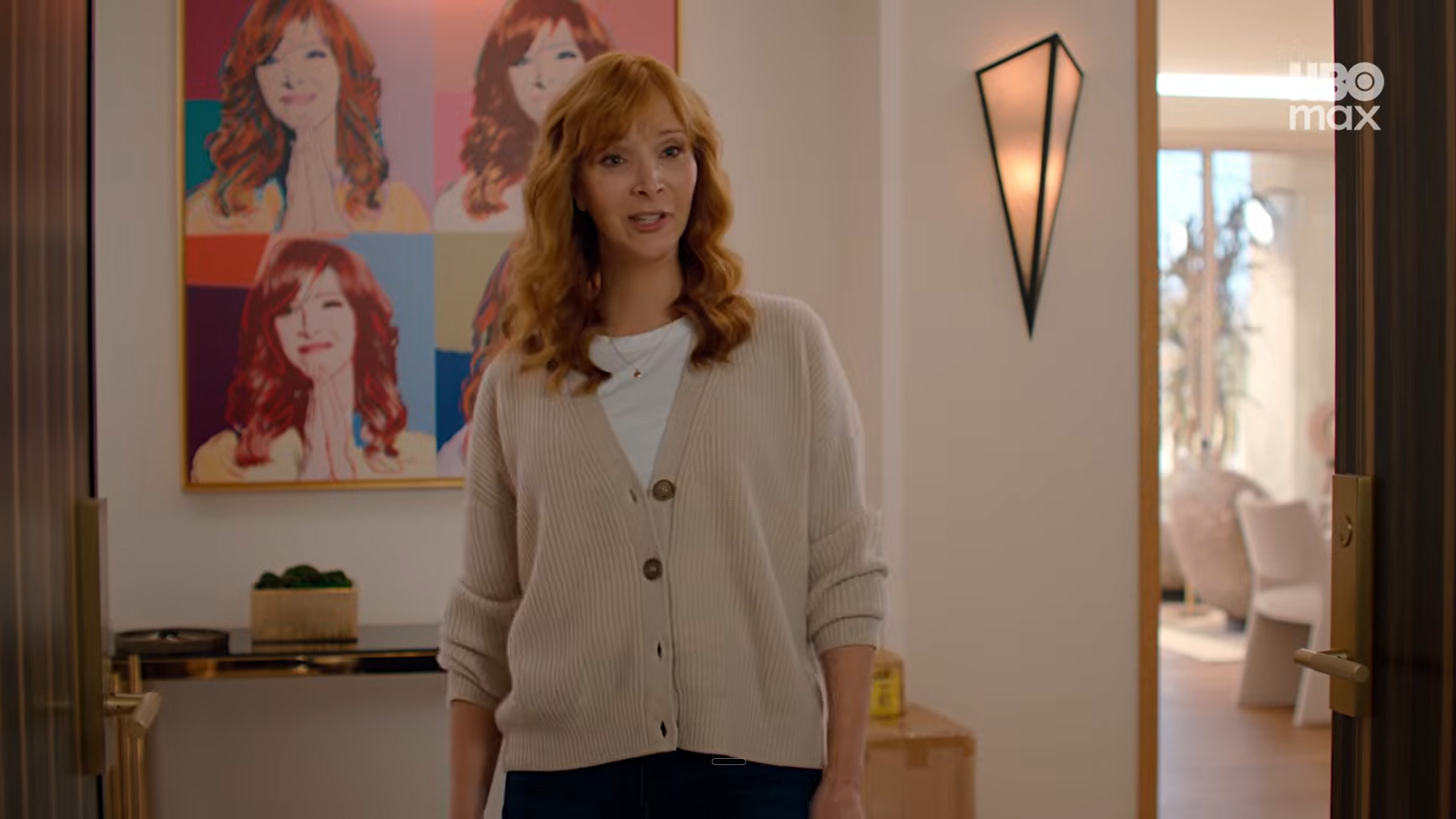
Courtesy of HBO Max
Share this post:
'The Comeback' Returns to Satirize AI's Hollywood Takeover
HBO's "The Comeback" returned March 22, 2026, for its eight episode final run. Valerie Cherish is back. This time, she is starring in a sitcom scripted entirely by AI, and she has no idea.
The Setup: A Secret the Network Is Keeping
The season opens in 2023, with Valerie performing in Broadway's "Chicago" during the SAG-AFTRA strike. Fran Drescher appears as herself, in her role as union president, delivering a blunt warning to anyone who will listen: "A.I. is coming for all of us."
A few years later, Valerie, adrift after a decade of mergers, strikes, and production losses, is offered the lead role and executive producer title on a new network multicam sitcom, "How's That?!" What the network does not tell her, or any of the crew, is that a generative AI program called "Al" is writing every script. The show's human showrunners, Josh and Mary, are plotting their own exit from a situation they want no part of. Mary puts it plainly: "I am not helping to build the scaffold that kills my profession."
The casting continues the show's tradition of sharp meta commentary. Bradley Whitford plays a character who frames the moment without hedging: "This is not the normal TV evolution. It's an extinction event." James Burrows, one of the most decorated directors in American sitcom history, directs the pilot of "How's That?!". His presence signals exactly the kind of institutional legitimacy the network is trying to paper over a machine's work with.
A Race Against the Calendar
When creators Lisa Kudrow and Michael Patrick King pitched the season to HBO, the network's chief Casey Bloys responded with two words: "Yes. Now!" King described the pace of development that followed as simply "as fast as you can."
The urgency was real. King told interviewers their goal was to get the season on the air "before a studio admitted they were using AI." Kudrow was equally direct about the anxiety driving production. AI developments were happening every day during filming, and she worried the satire would become old news before it could air. Their window was closing in real time, and they knew it.
The Show's Own History
"The Comeback" premiered in 2005 as a sharp satire of reality TV's grip on Hollywood, following Valerie Cherish as she navigated the humiliation of a documentary crew filming her during a struggling sitcom shoot. It was cancelled after one season and became a cult classic. Season 2 arrived in 2014 and took on prestige cable's dominance, earning Lisa Kudrow an Emmy nomination.
Michael Patrick King explained the logic of returning a third time in an interview with TheWrap. "When we did the very first 'Comeback,' way back 20 years ago, it was about the threat of reality TV. And then the next time, it was about streaming and dark prestige cable shows. The minute Lisa and I realized, 'Oh, we have another giant threat, maybe the biggest threat yet,' we thought, what would Valerie do with that?"
What Kudrow and King Actually Think
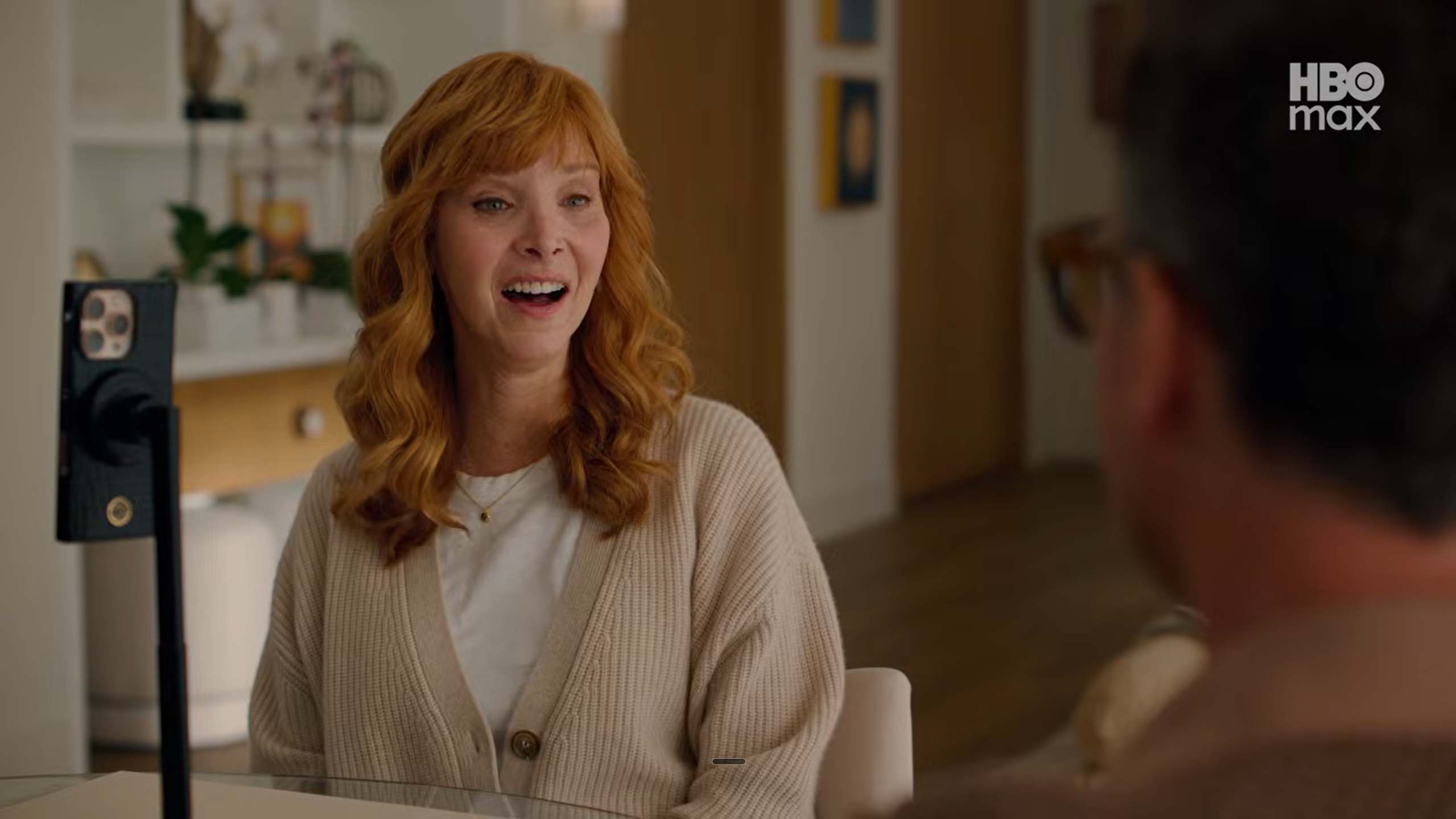
Both creators are clear that the season is not a straightforward warning against AI. King told TheWrap: "What we tried to say was that it is really no match for humans. There's always going to be a spark that AI can't do." Kudrow offered a similarly measured view, telling interviewers that audiences might enjoy some AI entertainment, but it is not going to take over everything.
Their own production backs that stance. Nothing in Season 3 was written by AI. Every script came from King, Kudrow, and their writers. King described the comedy as rooted in something genuine: "We're living in a nightmare of what could possibly happen to all of us." The difference between that nightmare and the show's actual outcome is the point.
Kudrow also spoke to the longer arc she sees ahead for the industry. "There's going to be a lot of corrections. Use of AI, and then a lot of corrections, and then we'll need people." The show, she suggested, is as much about that correction cycle as it is about the fear driving it.
The Format Carries the Argument
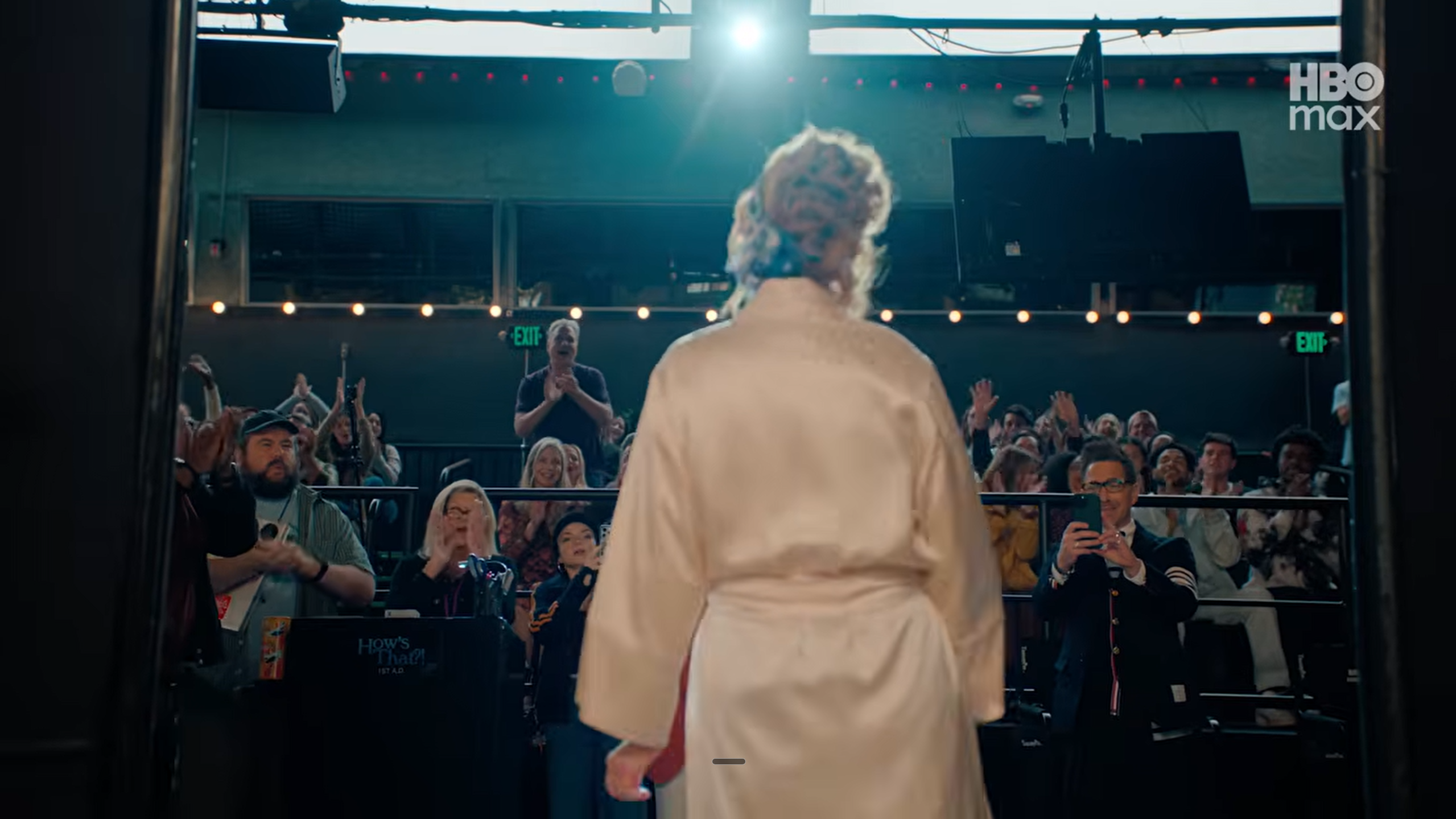
"The Comeback" has always run two cameras at the same time. One follows Valerie performing. The other watches her performing that performance. Season 3 takes that structure to its limit. The mockumentary camera watches Valerie deliver dialogue a machine produced, surrounded by a crew that knows the secret, a star who does not, and showrunners who are counting the days until they can leave.
Reviews from Mashable and Muse by Clio praised the precision of the show's satire. The fear it names is not a robot overtaking the writers' room overnight. It is the slower, quieter replacement: a network saying yes to the machine before anyone has publicly said they did it. The season premiered at SXSW and debuted on HBO March 22, 2026, with new episodes running through May 10.
The Timing Is the Punchline
The premiere landed two days after the White House released a legislative AI framework that would preempt California's actor and writer protections. SAG-AFTRA is pursuing a digital likeness tax on AI performers as it heads into the next round of contract negotiations. Christopher Nolan, now DGA President, is already shaping AI guardrails as the DGA contract approaches its June 30 expiration.
Valerie Cherish reading lines a machine produced in 2026 is satire. It is also, by the calendar, a plausible career trajectory.
King confirmed there will be no fourth season: "We're not doing a quadrilogy." The show ends before the industry does.
Sources
TheWrap | The Hollywood Reporter | Variety | Mashable | Muse by Clio | New York Times | National Today
Continue Reading
.jpg?w=3840)


Video & LipSync
- Video Generator
- Text to Video
- Image to Video
- Start-End Frame to Video
- Draw to Video
- Motion Control
- Video Enhancer
- Video Upscaler
- Video Extend
- Video to Video LipSync
- Audio to Video LipSync
- Image to Video LipSync
- Video FaceSwap
- Seedance 2.5
- WAN 3.0
- Seedance 2
- FLUX 3
- Minimax H3
- Vidu Q3 Pro
- Grok Imagine Video 1.5
- Gemini Omni
- Google Veo 3.1
- Kling 3.0 Pro
- Luma Ray 3.2
- LTX 2.3
- Happy Horse 1.1
- Kling 3.0 Motion
- ByteDance Upscaler
- InfiniteTalk
- InsightFace
Image & Edit
- AI Character
- AI Actor
- Art Generator
- Text to Image
- Image to Image
- LoRA Image to Image
- Draw to Edit
- Image LoRA Training
- Remove Background
- Image Enhancer
- MidJourney 8.0
- Krea 2
- OpenAI GPT Image 2.0
- Nano Banana Pro Ultra
- Nano Banana 2 Lite
- Nano Banana Pro
- Minimax Image
- Clarity Pro
- Z-Image Turbo LoRA
- Krea 2 Turbo LoRA
- Z-Image LoRA Trainer
- Qwen Image LoRA Trainer
- Background Erase Network 2 (BEN2)