EditorNodesPricingBlog

Xicoia Taps Amazon Executive to Scale AI Actor Tillyverse

March 3, 2026
Updated: July 3, 2026
Xicoia Taps Amazon Executive to Scale AI Actor Tillyverse

Photo by Florencia Tan Jun/Web Summit via Sportsfile

Share this post:

Xicoia Taps Amazon Executive to Scale AI Actor Tillyverse

The studio behind Tilly Norwood is moving from character creation to platform building. On March 2, 2026, Xicoia announced the expansion of the "Tillyverse" and brought in a former Amazon Prime Video executive to lead the project, marking a significant step in the emerging AI talent industry.

Tilly Norwood and the Studio Behind Her

Xicoia was founded by Eline van der Velden, who also serves as CEO of production company Particle6. The studio built Tilly Norwood as a fully AI generated character designed to function as a working actor across digital platforms. The character attracted both widespread attention and significant criticism when it launched, drawing a public rebuke from SAG-AFTRA and prompting industry figures from Whoopi Goldberg to Emily Blunt to weigh in.

AI character Tilly Norwood posing for a social media promotional image

Tilly Norwood | IG @tillynorwood

Tilly Norwood launched on Instagram with a fully realized visual identity and a social media presence that did not disclose her AI origin to followers. That lack of disclosure became the center of the initial industry controversy. SAG-AFTRA issued a statement directly objecting to the character, and prominent actors including Emily Blunt used public interviews to address what they saw as a threat to working performers.

Van der Velden has been direct about the ambition behind the project. "Tilly Norwood isn't just an AI character, she's a personality, a brand," she said in announcing the Tillyverse expansion.

From Controversy to Commercial Casting

When van der Velden announced plans for 40 AI generated characters in November 2025, the concept was still largely defined by controversy. The Tillyverse was an ambition without infrastructure, and the entertainment industry's response ranged from skeptical to openly hostile.

That changed in early 2026. By February, directors were actively approaching Particle6 to cast Tilly in productions. Van der Velden confirmed the shift in a Radio New Zealand interview one week before SAG-AFTRA negotiations began, a moment that signaled the project had crossed from concept into operational reality.

The March 2 announcement builds on that momentum. Xicoia is now constructing what it describes as a dynamic, constantly evolving digital universe where Tilly and a new generation of AI characters will "live, collaborate and build careers." The Tillyverse is scheduled to launch later in 2026. The company is also developing bespoke AI characters for third party clients, positioning itself as both a talent studio and a commercial production partner.

The Tillyverse Architecture: Characters as IP, Not Tools

The Tillyverse concept treats AI characters as intellectual property with ongoing careers rather than as production assets deployed on a per project basis. That distinction separates Xicoia from AI tool providers and places it closer to traditional talent management, with the key difference that Xicoia owns the talent rather than representing it.

A conventional talent agency takes a percentage of earnings from the human performers it represents. Xicoia owns Tilly Norwood outright and controls all commercial deployments of the character. The commercial structure is closer to owning a fictional brand than running a talent agency. How buyers and platforms price that distinction in deal terms will shape what the Tillyverse is worth.

Mark Whelan Joins as Head of Strategy

To lead the expansion, Xicoia hired Mark Whelan as Head of Strategy and Operations. Whelan spent six years at Amazon Prime Video, where he led social media expansion across European markets and worked on major franchises including The Grand Tour and Clarkson's Farm. Before Amazon, he held roles at comedy production company Third Leg Studios, Hollabox, and Culture Trip. He had a prior stint as a producer at Particle6, making this a return to van der Velden's orbit.
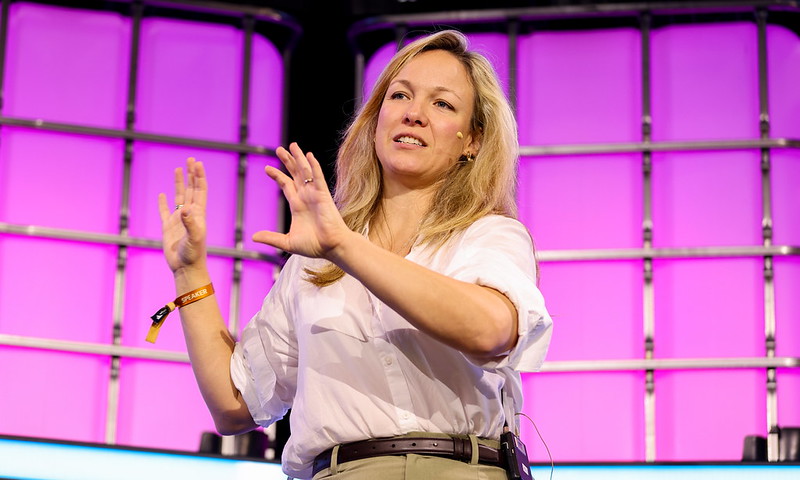
Van der Velden described Whelan as "a brilliant storyteller with a rare skillset" who "understands comedy, character-building, AI, audience behaviour and digital culture." Whelan called the role "a once-in-a-lifetime opportunity," adding that AI is "evolving at breathtaking speed."

Whelan's Amazon tenure gives Xicoia a hire who has managed the social media expansion of major franchise content across European markets. That specific experience maps onto the Tillyverse's core distribution challenge: building audience for characters across multiple platforms simultaneously.

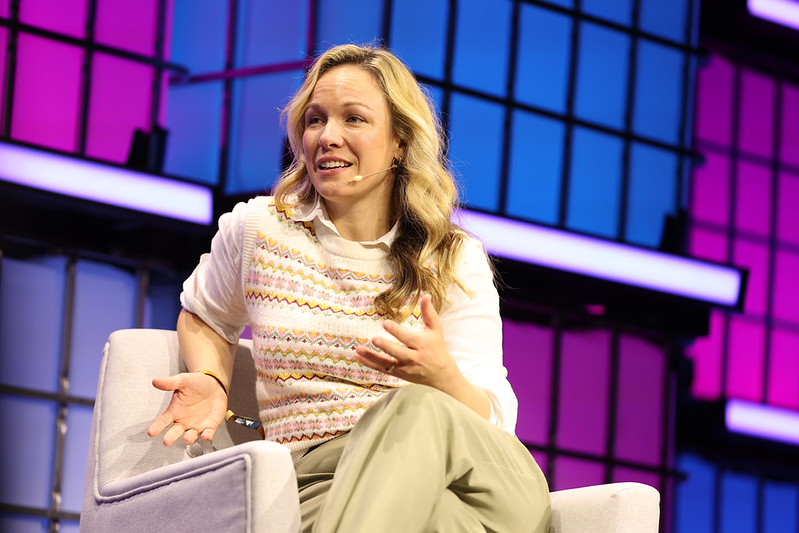
Eline van der Velden, Founder and CEO of Particle6, speaking on stage at Web Summit 2025 in Lisbon

Eline van der Velden, Founder & CEO, Particle6, on stage at Web Summit 2025, Lisbon. Photo by Florencia Tan Jun/Web Summit via Sportsfile

Whelan's Amazon Background and What It Brings

Whelan's six years at Amazon Prime Video spanned the period when the platform invested most aggressively in building its European audience through social media rather than traditional broadcast promotion. The Grand Tour and Clarkson's Farm are both properties with dedicated fan communities that respond to social content as much as to the shows themselves.

Managing social expansion for those properties required building platform strategies across different audience demographics and national markets simultaneously. The Tillyverse requires the same capability at a smaller initial scale with the additional complexity of an audience that needs to understand it is engaging with an AI character. Whelan's experience with social media for franchise IP is the relevant preparation.

Building Custom AI Talent for Third Party Brands

Whelan's mandate extends beyond Tilly Norwood. He will oversee the development of proprietary AI characters for the Xicoia roster while also creating custom AI talent for third party brands. That dual focus on internal character IP and external client work positions Xicoia as a studio for hire in the AI character space, a commercial model without clear precedent in traditional talent representation.

The custom character business is potentially the larger opportunity. Brands that want a consistent AI character for marketing campaigns, customer interaction, or content series need the technical capability to build one and the creative judgment to make one that works across contexts. Xicoia is positioning itself as the provider of both.

The SAG-AFTRA Tension and What Comes Next

SAG-AFTRA's earlier criticism of Tilly Norwood reflected union concerns about synthetic performers operating outside existing guild frameworks. The union's response has evolved since the initial rebuke: the SAG-AFTRA digital likeness tax proposal treats AI performers as a budget line item subject to fees that would redirect funds to pension and health plans.

How the Tillyverse's expansion interacts with that regulatory framework is one of the open questions the 2026 launch will surface.

Van der Velden's Approach to Controversy

Van der Velden has consistently treated the controversy around Tilly Norwood as an indicator of the project's significance rather than as a reason to moderate its ambitions. SAG-AFTRA's public rebuke, the comments from Goldberg and Blunt, and the industry hostility in late 2025 all preceded the shift in February 2026 when directors started approaching Particle6 for actual casting.

That timeline, from rebuke to casting inquiries in under four months, is the data point van der Velden has returned to in public statements. It suggests the industry's stated position on AI characters and the behavior of individual filmmakers looking for production solutions are not always the same thing.

What the 2026 Launch Timeline Means

The Tillyverse is scheduled to launch later in 2026, with Whelan in post from March. A six to nine month runway from the strategic hire to platform launch is a compressed timeline for building a universe of AI characters with documented social presences, content pipelines, and client relationships.

Van der Velden's decision to bring in a senior hire with franchise social media experience before the platform has launched suggests she is prioritizing audience building infrastructure over product development. The Tillyverse's commercial success will depend on whether AI characters can accumulate the kind of audience engagement that human celebrities generate. That is a distribution and marketing challenge as much as a technology challenge.

What Casting Inquiries From Directors Signal

The February 2026 shift van der Velden described, directors actively approaching Particle6 to cast Tilly, is the commercial indicator that makes the March announcement legible. An AI character studio without client demand is a speculative venture. An AI character studio receiving inbound casting inquiries from directors is a product business.

The nature of those inquiries matters for understanding what the market actually wants. If directors are seeking Tilly for digital productions, social content, or commercial work rather than traditional guild projects, the Tillyverse's growth will be in the digital content economy rather than in television and film. Both are large markets, but they carry different regulatory exposure and different revenue structures.

The revenue difference is significant. Digital content deals typically involve lower per project fees at higher volume. Traditional film and television deals involve higher per project fees with guild and union oversight requirements. Xicoia's commercial model, built on owned IP rather than commissioned work, sits outside the traditional deal structure in either category.

Van der Velden's March announcement explicitly targets both markets. The bespoke client character service addresses digital and commercial content demand. The Tillyverse platform itself, as it accumulates AI characters with social followings, positions for the film and television market where casting inquiries from directors have already arrived.

The Commercial Model Without Precedent

Van der Velden has described Xicoia's model as having no direct precedent in traditional talent representation. Conventional talent agencies manage human clients, negotiate on their behalf, and take a commission on earnings. Xicoia owns the talent outright, controls all commercial deployments, and captures the full commercial value of each engagement rather than a percentage.

The closest analog in entertainment is character licensing, where a studio or rights holder licenses a fictional character to third parties for commercial use. Xicoia is applying that model to characters designed to function as working talent rather than as cartoon mascots. The legal and commercial frameworks that govern that distinction are still being established.

Why Eline van der Velden Built This

Van der Velden's background as CEO of Particle6, a production company, shapes how she has approached the Tilly Norwood project. She built the character as a production challenge as much as a talent challenge: not just "can we create a believable AI character" but "can we build the commercial infrastructure to make AI characters commercially viable at scale."

The Tillyverse expansion and Whelan's hire are the answers to the second question. Van der Velden is not positioning Xicoia as a technology company with a character product. She is positioning it as an entertainment studio with a new kind of talent. Whether the market accepts that framing will determine whether the Tillyverse becomes a new category or remains a provocative experiment.

The Strategic Hire as Signal

Hiring a senior executive with a franchise social media background before the platform launches is a statement about priorities. Van der Velden is building distribution capacity before she has the full roster of characters to distribute. That sequencing suggests she has concluded that audience building is the constraint, not character creation.

A technology company building a character platform would typically hire engineers and designers first and distribution strategists later. Van der Velden's decision to bring in Whelan at this stage indicates that she sees the Tillyverse's primary challenge as a media distribution problem, not a technical one. The AI character creation capability is already proven. The question is whether audiences will engage with AI characters at a scale that justifies the commercial infrastructure.

What Bespoke Client Characters Means Operationally

Xicoia's plan to develop bespoke AI characters for third party clients creates a separate revenue stream from the Tillyverse platform itself. A brand that wants a custom AI character for a campaign or a platform that wants a synthetic host for its content could contract with Xicoia to develop that character under Whelan and van der Velden's supervision.

That service model requires different capabilities than building and managing the Tillyverse's own roster. Client characters have different owners, different consent and licensing structures, and different deployment contexts than characters Xicoia controls. Whether Xicoia builds that dual capability, proprietary roster plus client services, simultaneously or in phases will shape how the company looks to outside investors and potential acquirers. Whelan's Amazon background, which includes experience working within a large platform's commercial structure as well as managing independent creative projects, positions him to navigate both sides of that operation. Productions that cast Tilly in guild projects, if any do, would need to navigate what a digital likeness fee structure means for an AI character that has no human original. That is a legal question that existing frameworks do not yet answer.

The move signals a broader shift in how AI characters are being treated commercially. Rather than functioning as production tools or one off content experiments, the Tillyverse frames AI characters as intellectual property with careers, social presence, and the capacity to anchor brand partnerships across platforms. The 2026 launch will test whether the market responds to that framing.


Sources

Los Angeles Times | C21 Media | Televisual