
Bond Producer Barbara Broccoli Executive Produces Tribeca 2026 AI Documentary
.jpg?w=3840&q=90)
Share this post:
Bond Producer Barbara Broccoli Executive Produces Tribeca 2026 AI Documentary
Barbara Broccoli, executive producer of all 23 James Bond films and one of the most powerful producers in cinema history, is attached as executive producer of "AI: Probably Nothing to Worry About", a documentary about artificial intelligence that premieres at Tribeca 2026. The film screens in the Spotlight Documentary category when the festival opens June 3 in New York City.
The documentary is directed by Nick Holt, a British director with multiple BAFTA and Emmy Awards, and produced by Ben Brown and Zara Powell through 72 Films and Windfall Films. The runtime is 128 minutes.
The Film
Tribeca describes the documentary as a film that "traces the genesis of artificial intelligence through scientists, visionaries and power brokers". The festival's program notes call it "less a tech history lesson and more a portrait of competing egos and irreconcilable beliefs, assembled with the propulsive energy of a thriller".
The Spotlight Documentary designation places it in Tribeca's curated section alongside films of editorial distinction. The 2026 edition is the festival's 25th anniversary, with 118 features selected including 103 world premieres.
Two Nobel Laureates
The documentary's primary subjects are Geoffrey Hinton and Demis Hassabis, two architects of modern AI and both 2024 Nobel Prize recipients. Hinton received the Physics prize for foundational work on artificial neural networks; Hassabis received the Chemistry prize for AlphaFold 2, the protein structure prediction system he developed at DeepMind.
Hinton left Google in 2023 to speak without constraint about AI risk. In his Nobel Prize interview, he said: "We have much less idea of what's going to happen" with AI than with climate change. Hassabis cofounded DeepMind and shaped the applied AI research agenda that produced AlphaFold. A feature documentary placing both figures on screen together as its central subjects has not been made before.
Tribeca Film Festival. Public Domain, via Wikimedia Commons.
Tribeca's 2026 edition selected 118 features including 103 world premieres, making it one of the most premiere dense editions in the festival's history. The AI documentary sits within the Spotlight Documentary section alongside other curated editorial selections.
The 128 minute runtime places the film in the upper range for documentary features. Films of that length at Tribeca typically reflect either a complex subject that resists compression or a deliberate choice to let subjects speak at length rather than cutting to thesis-confirming clips.
Why Broccoli's Credit Is the Story
No major trade outlet has yet reported Broccoli's executive producer credit on this film. The British Council Film Database lists her alongside director Nick Holt, producers Ben Brown and Zara Powell, and the two production companies. Her involvement transforms the documentary's profile.
Broccoli produced Skyfall, Casino Royale, No Time to Die, and 20 other Bond films. Her choice to attach her name to a documentary about the scientists who created AI and now question it is a signal about how seriously the entertainment industry's establishment is taking this subject.
2026's AI Documentary Arc
Two of the most influential independent film festivals in the United States each selected a major AI origin documentary for their 2026 editions. Sundance premiered Daniel Roher's "The AI Doc: Or How I Became an Apocaloptimist" in January 2026. Roher, who directed the Oscar winning Navalny, built a personal essay about AI's impact that Variety called "a scary, dizzying and essential documentary".
Tribeca 2026, opening five months later, selected "AI: Probably Nothing to Worry About". Two different directors, two different formats, the same subject, both in official selection at their respective festivals. Both Sundance and Tribeca choosing prestige AI documentaries for the same year has no precedent.
Tribeca Programs AI Both Ways
Dreams of Violets, a fully AI generated feature, also received its world premiere in Tribeca's 2026 official selection. Tribeca is programming AI as a production method in that film and as a subject in this documentary, in the same 25th anniversary edition.
The two films occupy opposite positions: one asks how artificial intelligence was built and who carries responsibility for it; the other was made using it. The festival chose both.
Geoffrey Hinton and the Position He Holds
Geoffrey Hinton spent most of his career at the intersection of academic research and practical AI development. He trained neural networks at the University of Toronto and later Google Brain, where foundational methods for deep learning were refined into tools that became the basis for modern AI systems.
His resignation from Google in May 2023 was accompanied by a public statement that he regretted his life's work. The specific nature of that regret, that he contributed to building systems whose consequences he could not control, is the dramatic core of what a documentary about him would investigate. His Nobel Prize statement, "We have much less idea of what's going to happen" with AI than with climate change, was made by a man who helped build what he is now uncertain about.
A documentary with access to Hinton at this stage of his public position is covering a subject whose feelings about his own work have changed fundamentally. That shift, from practitioner to critic of the thing he built, is unusual enough that it warrants more than a news profile. It warrants 128 minutes.
Demis Hassabis and the Applied Track
Demis Hassabis cofounded DeepMind with Shane Legg and Mustafa Suleyman in 2010 and led it through its acquisition by Google in 2014 and subsequent development into one of the most productive AI research organizations in the world. AlphaFold 2, which predicted the structure of nearly every known protein, won him the 2024 Nobel Chemistry Prize.
Hassabis and Hinton represent two different relationships to AI's consequences. Hinton moved from practitioner to public critic. Hassabis has remained at the center of AI development, arguing for acceleration while acknowledging risk. The documentary placing both on screen together creates a debate between two Nobel laureates with opposite orientations toward the thing they both helped create.
That contrast is rare in documentary filmmaking. Having two subjects of comparable stature who hold genuinely different positions on the same subject, and who are both willing to articulate those positions on camera, is the kind of material that most documentary subjects cannot provide.
Barbara Broccoli's Executive Producer Role
Barbara Broccoli's executive producer credit is not primarily a financing role. Executive producer credits in documentary film frequently reflect championing, advocacy, and institutional access rather than production management. Her attachment signals that the film has been positioned within the highest tier of British film culture, where the Bond franchise remains one of the defining prestige properties.
Her specific contribution, documented in the British Council Film Database but not yet widely reported in trade coverage, likely includes access to screening venues, connections to distributors, and credibility that affects how buyers and broadcasters evaluate the project at Tribeca and in subsequent sales.
The Bond franchise has addressed technological acceleration, institutional power, and the consequences of invention throughout its 60-year history. Broccoli's choice to attach her name to a documentary about the people who built AI and now question it connects those themes to her personal creative legacy in a way that is not incidental.
Nick Holt's Approach
Director Nick Holt's BAFTA and Emmy track record indicates a filmmaker who has operated in both British prestige television and international documentary contexts. His prior work has addressed subjects that require managing competing perspectives from participants with significant institutional power and their own communications teams.
A documentary about Hinton and Hassabis is not simply a science film. It is a film about two men with different relationships to a technology that is reshaping the world, produced at a moment when both are publicly articulating positions. Getting access to subjects at that level of public visibility, during a period when every statement they make generates international news coverage, requires a filmmaker who can navigate the media environment that surrounds them.
Holt's existing track record with 72 Films and Windfall Films provides the institutional context for that access. Both production companies have made documentaries about high profile subjects in contested public discussions.
The Production Companies
72 Films and Windfall Films are British production companies with established track records in documentary filmmaking for international broadcast and theatrical release. 72 Films produced the BAFTA nominated "The Princes and the Press" for BBC Two and "George Michael: Freedom Uncut" for theaters worldwide.
Windfall Films has an extensive history in science and technology documentary, including productions for Channel 4, Discovery, and National Geographic. Their combination on a documentary about AI's origins reflects a project that needs both editorial credibility for prestige broadcast outlets and the production infrastructure for theatrical distribution.
The British Council Film Database listing confirms both companies alongside Broccoli's credit. That the project appears in British Council records indicates it qualifies as a significant British film production for funding and promotional purposes, which has implications for the international sales strategy.
Tribeca at 25 Years
The 2026 edition marks Tribeca's 25th anniversary. The festival was founded in 2002 to help revitalize lower Manhattan after the September 11 attacks. Its original mandate was civic as much as cinematic, which shaped a festival identity different from the prestige competition model of Sundance or the trade event model of Toronto.
The 25th anniversary edition's selection of 118 features, 103 of them world premieres, reflects a festival that has become a significant international premiere destination rather than primarily a New York civic institution. An AI origin documentary with Barbara Broccoli's executive producer credit would not have been out of place at any major festival. Its selection for Tribeca's anniversary edition places it alongside the films that will define how that milestone is remembered.
What the Documentary May Change
AI documentaries that reach general audiences through theatrical and streaming distribution have the potential to shift public understanding of how the technology was built and who made the decisions that led to the current moment. A documentary featuring Hinton and Hassabis gives a general audience access to the specific minds at the center of the story.
Most AI coverage in news media focuses on current events: new model releases, company disputes, policy debates. A documentary structured around the origin story and the people who lived it provides context that news coverage cannot accumulate. Audiences who watch the film will have a different relationship to subsequent AI news than audiences who have not.
Whether the film reaches that general audience depends on its distribution path after Tribeca. A streaming acquisition by a major platform would give it the reach to affect public understanding at scale. A theatrical run without broad streaming pickup would limit it to the audience that already follows documentary film.
What the Festival Year Revealed
The fact that both Sundance and Tribeca selected major AI origin documentaries for the same cycle points to where documentary film's attention was focused during the production period that fed both festivals. The Sundance film, Daniel Roher's personal essay, premiered in January 2026. The Tribeca film, a more traditionally structured origin story about AI's architects, premieres in June.
The subjects of the two films overlap without duplicating each other. Roher's film is about the filmmaker's encounter with AI and what it means for humanity. Holt's film is about the scientists who made the AI that is now the subject of Roher's concern. Together, they constitute a year's documentary treatment of the same subject from two different angles.
That dual-festival selection also reflects where documentary funding and editorial attention went during the 2024-2025 development cycle, when both projects were in production. The AI subject attracted the kind of institutional support from broadcasters, distributors, and executive producers that turns pitches into funded productions. The Tribeca and Sundance selections are the output of that funding cycle made visible.
The Hinton Quote in Context
Hinton's Nobel Prize statement that "we have much less idea of what's going to happen" with AI than with climate change has been widely cited in media coverage of his position since leaving Google. The quote describes a specific epistemic claim: that AI's consequences are less predictable than those of a physical process we have been modeling for decades.
That uncertainty claim is more disturbing than a specific catastrophe prediction would be. A defined risk can be prepared for. An undefined risk produces a different kind of concern, one that affects how researchers, policymakers, and the general public should allocate caution in the absence of clear targets. Hinton's framing is the more precise intellectual challenge, and a documentary that unpacks it through his own account of how he arrived at that position has something to offer that a news interview cannot.
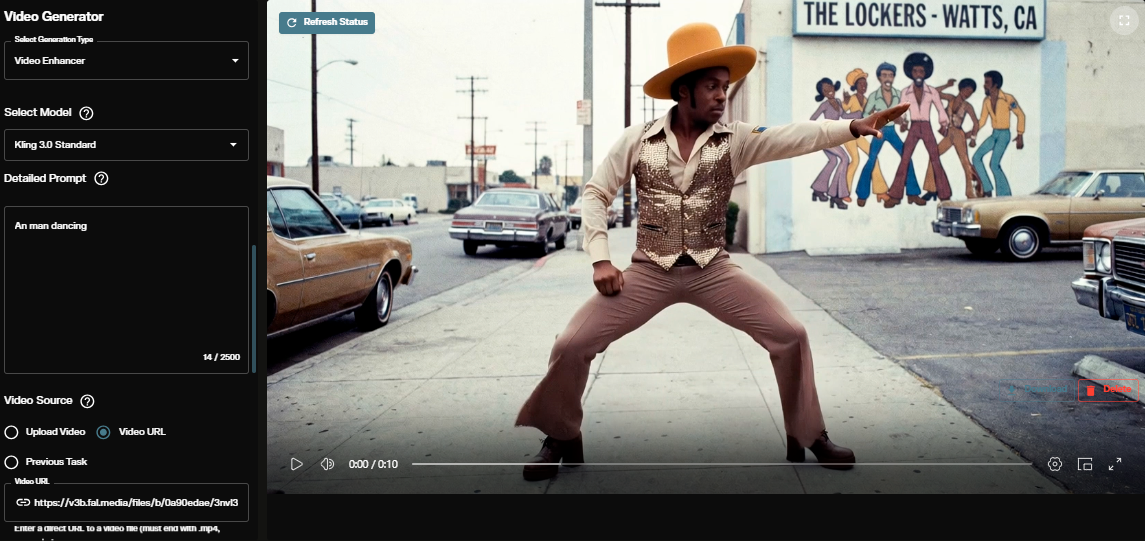
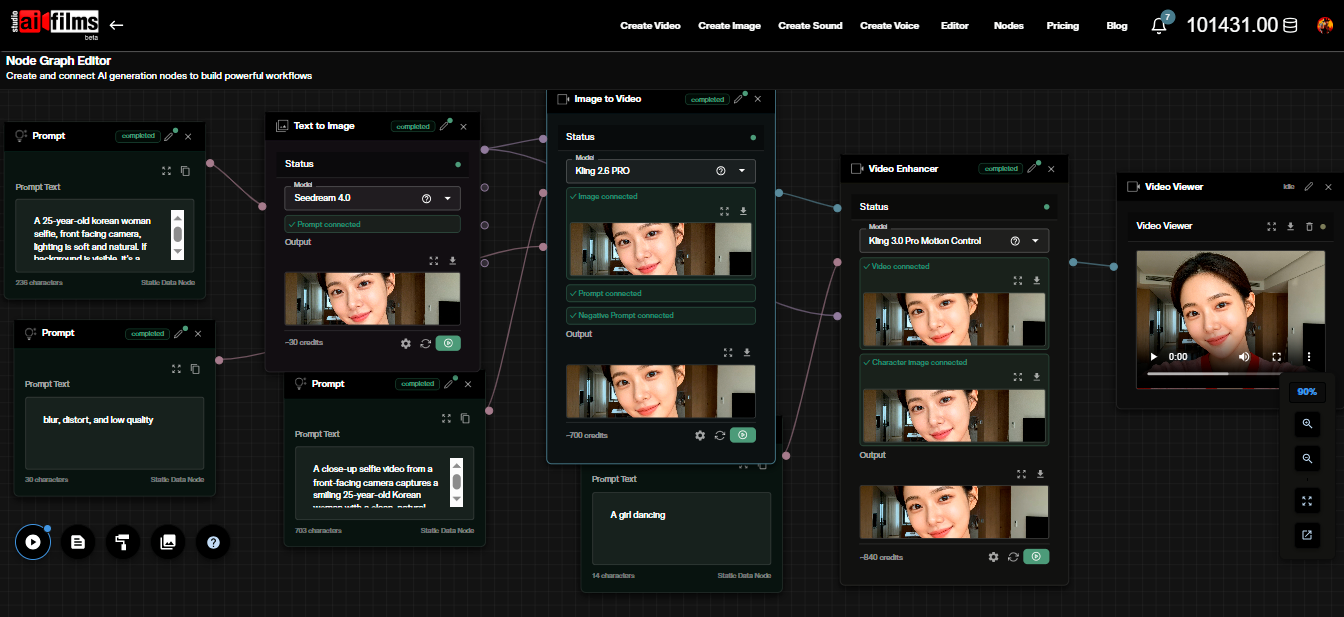
Filmmakers who want to work with AI on their own productions can generate video, images, and sound in AI FILMS Studio.
Sources
Tribeca Film Festival | British Council Film Database | IndieWire | Variety | Nobel Prize Official
Continue Reading
.jpg?w=3840)


Video & LipSync
- Video Generator
- Text to Video
- Image to Video
- Start-End Frame to Video
- Draw to Video
- Motion Control
- Video Enhancer
- Video Upscaler
- Video Extend
- Video to Video LipSync
- Audio to Video LipSync
- Image to Video LipSync
- Video FaceSwap
- Seedance 2.5
- WAN 3.0
- Seedance 2
- FLUX 3
- Minimax H3
- Vidu Q3 Pro
- Grok Imagine Video 1.5
- Gemini Omni
- Google Veo 3.1
- Kling 3.0 Pro
- Luma Ray 3.2
- LTX 2.3
- Happy Horse 1.1
- Kling 3.0 Motion
- ByteDance Upscaler
- InfiniteTalk
- InsightFace
Image & Edit
- AI Character
- AI Actor
- Art Generator
- Text to Image
- Image to Image
- LoRA Image to Image
- Draw to Edit
- Image LoRA Training
- Remove Background
- Image Enhancer
- MidJourney 8.0
- Krea 2
- OpenAI GPT Image 2.0
- Nano Banana Pro Ultra
- Nano Banana 2 Lite
- Nano Banana Pro
- Minimax Image
- Clarity Pro
- Z-Image Turbo LoRA
- Krea 2 Turbo LoRA
- Z-Image LoRA Trainer
- Qwen Image LoRA Trainer
- Background Erase Network 2 (BEN2)