

Wan Team / Alibaba (Apache 2.0)
Share this post:
Wan 2.2 GGUF & MoE: Open Source Video AI on 6GB–8GB VRAM
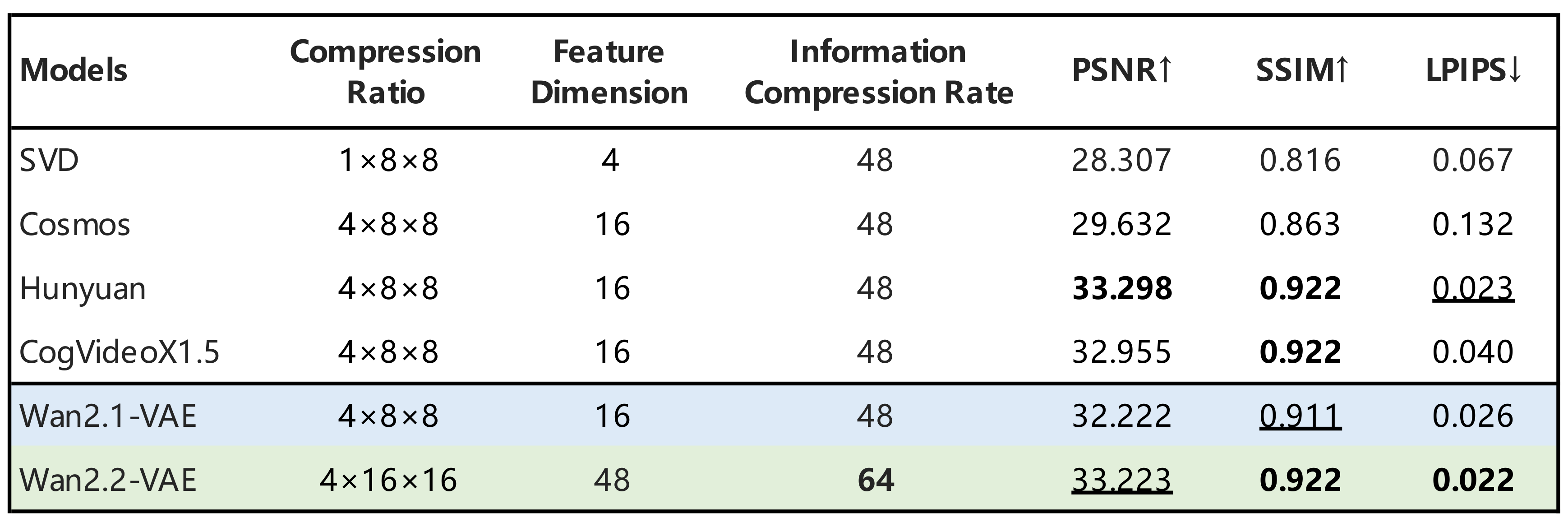
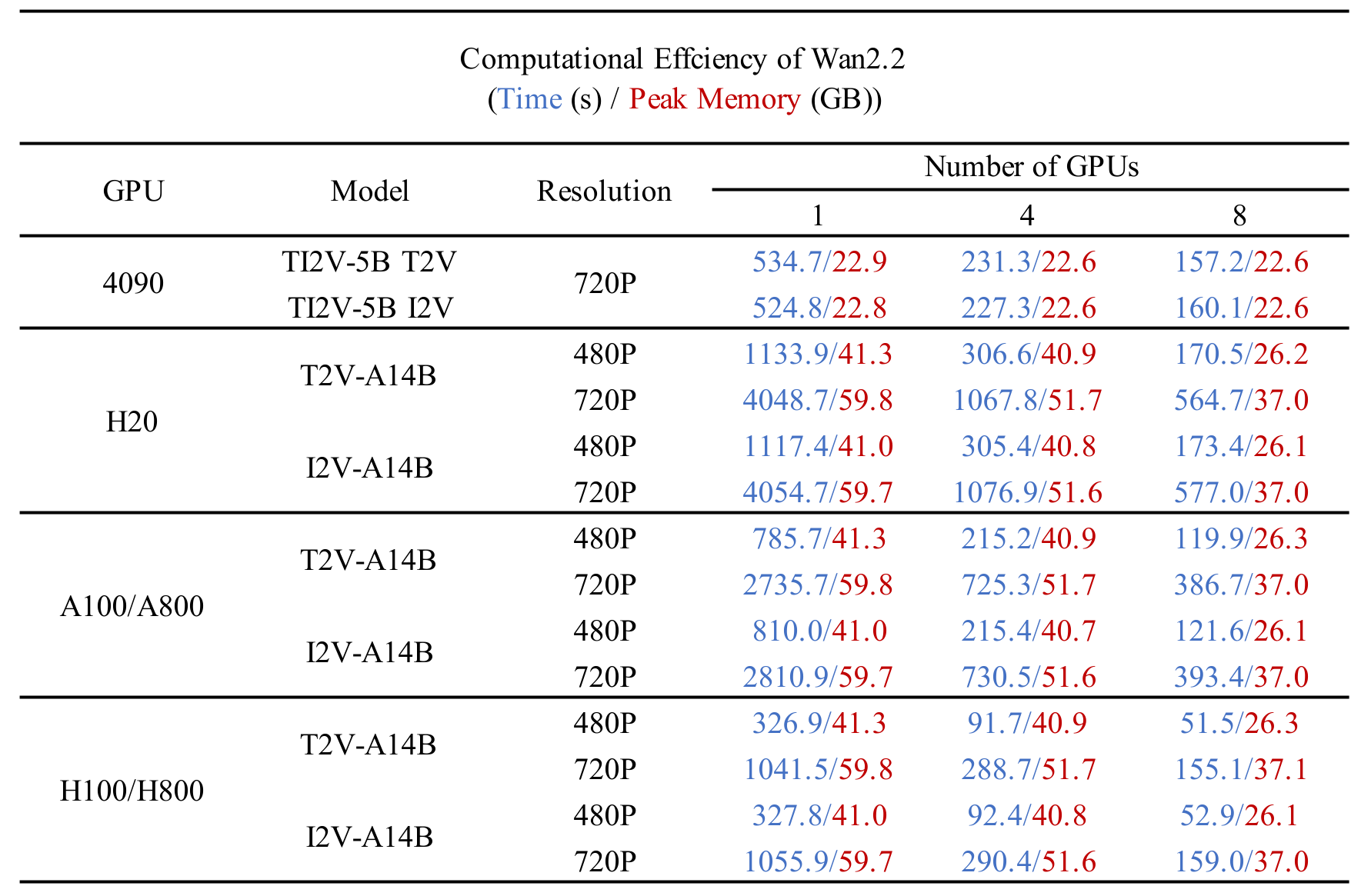
Running high quality image-to-video and text-to-video models locally on a laptop or mid range workstation has historically been blocked by GPU memory limits. Wan 2.2 (released by the Wan Team under an Apache 2.0 license, building on arXiv:2503.20314) removes that barrier through two architectural advances. First, the flagship Wan 2.2 A14B (Wan-AI/Wan2.2-T2V-A14B and Wan-AI/Wan2.2-I2V-A14B) introduces a Mixture of Experts (MoE) diffusion transformer with 27 billion total parameters but only 14 billion active parameters per denoising step, running inside 8 GB of VRAM with CPU offloading. Second, the compact Wan 2.2 TI2V 5B model pairs a $16 \times 16 \times 4$ high compression VAE with 4 bit Q4_K_M GGUF quantization (hum-ma/Wan2.2-TI2V-5B-Turbo-GGUF), bringing 81 frame video generation down to 6 GB of VRAM and a 6.1 GB disk footprint.
Studio availability. Wan 2.2 is not available in AI FILMS Studio. This article covers a public research release. To generate video in the Studio, see the models listed on the image to video page.
Mixture of Experts (MoE) Across Denoising Timesteps
Standard dense video diffusion transformers apply the exact same set of weights at step $t=T$ (pure Gaussian noise) and step $t=1$ (fine detail refinement). Yet the mathematical task at high noise is global layout and camera blocking, whereas the task at low noise is sharpening skin texture, fabric weave, and specular highlights.
Wan 2.2 A14B splits the denoising trajectory across two specialized 14B expert networks selected deterministically by the Signal to Noise Ratio (SNR):
- High Noise Expert (
Low SNR). Active during the initial denoising phase ($t > t_{\text{moe}}$, where $\text{SNR} < \text{SNR}_{\text{min}} / 2$). This expert focuses on subject silhouette, macro camera motion, and structural composition. - Low Noise Expert (
High SNR). Active during the second half of denoising ($t \le t_{\text{moe}}$). This expert refines high frequency surface detail, lighting gradients, and facial fidelity.
Because only one 14B expert is active at any given timestep, Wan2.2-T2V-A14B and Wan2.2-I2V-A14B deliver the representational capacity of a 27B parameter model while keeping per step FLOPs and active VRAM identical to a single 14B model.
Wan 2.2 TI2V 5B and Q4_K_M GGUF Quantization (6 GB VRAM)
For indie filmmakers storyboarding scenes on 6 GB or 8 GB laptops, the Wan 2.2 TI2V 5B hybrid model (Wan-AI/Wan2.2-TI2V-5B) redesigns the latent space itself. Instead of the standard $4 \times 8 \times 8$ VAE compression ratio used in earlier models, Wan2.2-VAE compresses video by $4 \times 16 \times 16$ across time, height, and width (a $64\times$ spatial token reduction per latent slice).
When quantized into the Q4_K_M GGUF format (hum-ma/Wan2.2-TI2V-5B-Turbo-GGUF), the entire local inference pipeline consists of three compact files totaling 6.1 GB on disk:
- GGUF Transformer (
wan2.2-ti2v-5B-turbo-Q4_K_M.gguf). The 5 billion parameter unified text and image to video backbone quantized to 4 bit block weights. - UMT5 Text Encoder (
umt5-xxl-enc-bf16.gguf). Handles multilingual prompt conditioning and cinematic lighting tags. - Spatiotemporal VAE (
vqvae.safetensors). Decodes latent tensors into832x480or1280x720video frames.
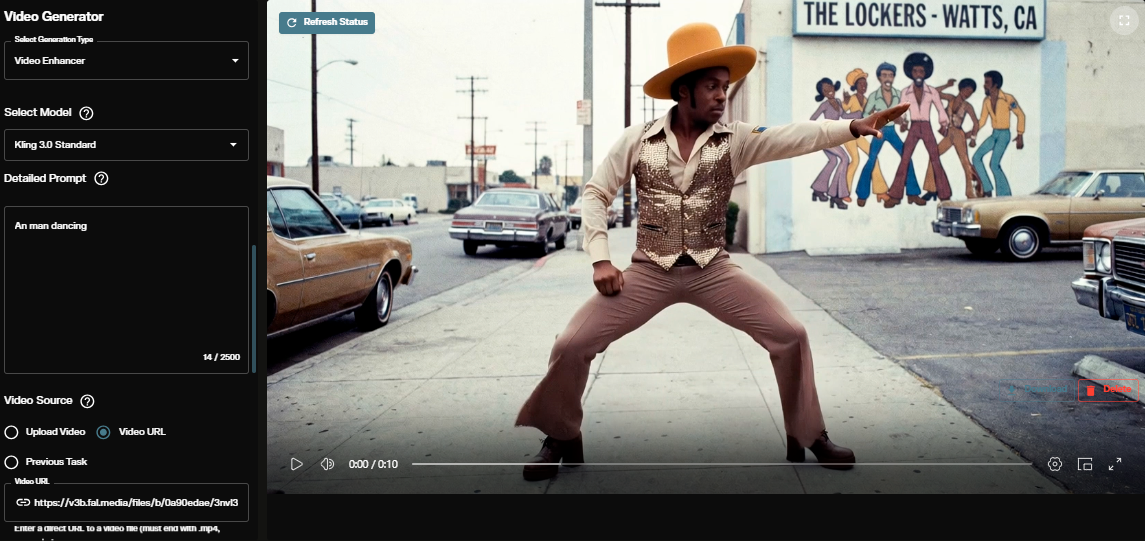
Source footage input before Wan 2.2 TI2V 5B latent conditioning. Source: NUS ShowLab (MIT).
Relit cinematic output synthesized on the Wan 2.2 TI2V 5B backbone. Source: NUS ShowLab (MIT).
Because Wan2.2-TI2V-5B is fast and open licensed under Apache 2.0, it also serves as the foundation backbone for downstream filmmaking tools including Kiwi-Edit open source video editing. For related work on Wan family acceleration and motion control, see our technical guides on FastWan-QAD ultrafast video generation, Wan-Move point level motion control, and Wan 2.2 Animate character replacement.
Hardware & Model Variant Comparison
| Model Variant | Hugging Face Repository | Architecture | Minimum VRAM | Disk Size | Default Output | License |
|---|---|---|---|---|---|---|
| Wan 2.2 TI2V 5B GGUF | hum-ma/Wan2.2-TI2V-5B-Turbo-GGUF |
5B Dense + $4\times16\times16$ VAE (Q4_K_M) |
6 GB VRAM | ~6.1 GB | 832x480 (81 frames, 16 fps) |
Apache 2.0 |
Wan 2.2 TI2V 5B (BF16) |
Wan-AI/Wan2.2-TI2V-5B-Diffusers |
5B Dense + $4\times16\times16$ VAE (bfloat16) |
10 GB VRAM | ~10.5 GB | 1280x720 (24 fps) |
Apache 2.0 |
| Wan 2.2 T2V A14B | Wan-AI/Wan2.2-T2V-A14B |
27B Total / 14B Active MoE (bfloat16) |
8 GB VRAM (with offload) | ~16 GB | 832x480 & 1280x720 |
Apache 2.0 |
| Wan 2.2 I2V A14B | Wan-AI/Wan2.2-I2V-A14B |
27B Total / 14B Active MoE (bfloat16) |
8 GB VRAM (with offload) | ~16 GB | 832x480 & 1280x720 |
Apache 2.0 |
Running Wan 2.2 Locally in Python with Diffusers
With diffusers>=0.32.0, both the A14B MoE models and the 5B hybrid model run directly in Python using WanPipeline and WanImageToVideoPipeline with CPU offloading enabled to fit 8 GB GPUs:
import torch
from diffusers import WanImageToVideoPipeline
from diffusers.utils import export_to_video, load_image

model_id = "Wan-AI/Wan2.2-I2V-A14B-Diffusers"

pipe = WanImageToVideoPipeline.from_pretrained(
    model_id,
    torch_dtype=torch.bfloat16,
)
# Offloads inactive expert and text encoder weights to system RAM to fit 8 GB VRAM
pipe.enable_model_cpu_offload()

reference_frame = load_image("concept_keyframe.png").resize((832, 480))

video_frames = pipe(
    image=reference_frame,
    prompt="Handheld tracking shot following a mountaineer cresting a snowy ridge at golden hour, volumetric rim light, 35mm cinema lens",
    negative_prompt="blurry, static, overexposed, low resolution, deformed limbs",
    height=480,
    width=832,
    num_frames=81,
    num_inference_steps=20,
    guidance_scale=5.0,
).frames[0]

export_to_video(video_frames, "wan22_i2v_preview.mp4", fps=16)
Generating with WAN 2.7 and WAN 3.0 in AI FILMS Studio
While Wan 2.2 is an open weights release for local hardware, AI FILMS Studio hosts the newer commercial generations of the Wan family directly in the cloud:
- WAN 3.0 Text to Video & Image to Video. Live in the Video Generation Workspace and on the Image to Video page, supporting 1080p multi shot narratives and synchronized native audio. Read our WAN 3.0 video generation tutorial for full workflow settings.
- WAN 2.7 Text to Video & Image to Video. Live in the Studio for fast, cost effective scene blocking and reference conditioning.
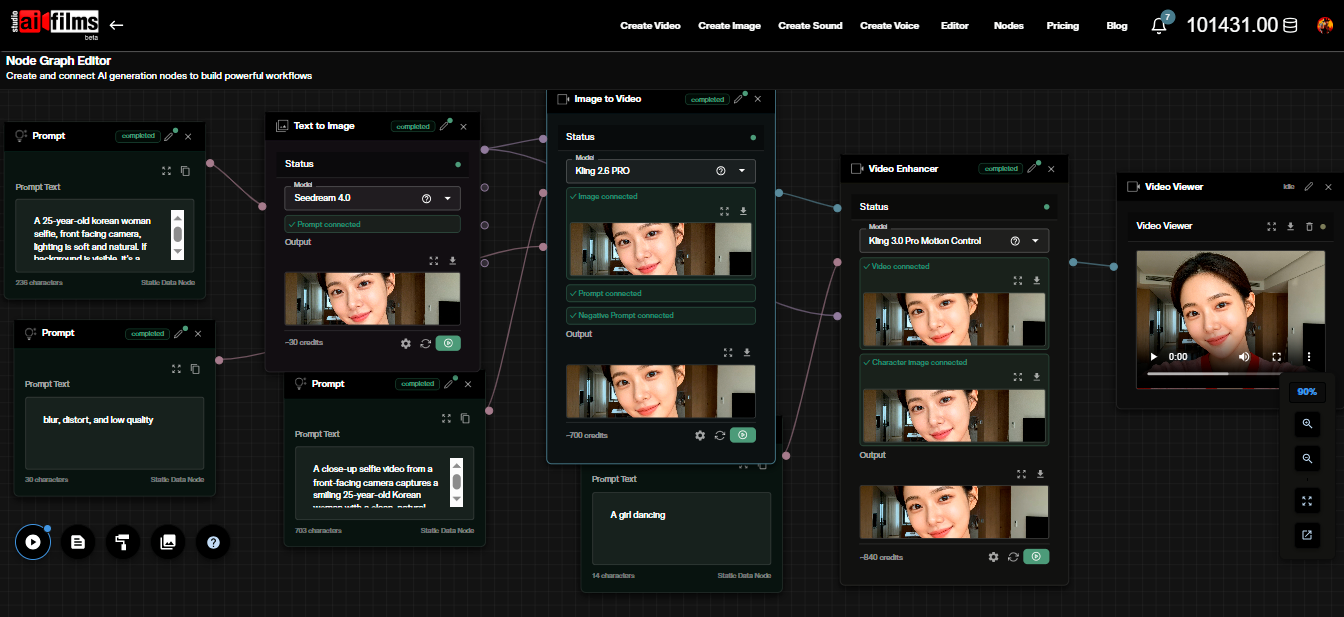
- Nodes Graph Editor Chaining. Inside the Nodes Graph Editor, you can connect a concept image generator node into a WAN 3.0 Image to Video node and pipe the resulting clip directly into a SeedVR2 Video Upscaler node for final mastering.
Sources
Wan 2.2 GitHub (Wan-Video/Wan2.2) | Wan Technical Report (arXiv:2503.20314) | Wan-AI Hugging Face (Wan2.2-T2V-A14B / TI2V-5B) | Wan2.2-TI2V-5B-Turbo-GGUF
Continue Reading


Video & LipSync
- Video Generator
- Text to Video
- Image to Video
- Start-End Frame to Video
- Draw to Video
- Motion Control
- Video Enhancer
- Video Upscaler
- Video Extend
- Video to Video LipSync
- Audio to Video LipSync
- Image to Video LipSync
- Video FaceSwap
- Seedance 2.5
- WAN 3.0
- Seedance 2
- FLUX 3
- Minimax H3
- Vidu Q3 Pro
- Grok Imagine Video 1.5
- Gemini Omni
- Google Veo 3.1
- Kling 3.0 Pro
- Luma Ray 3.2
- LTX 2.3
- Happy Horse 1.1
- Kling 3.0 Motion
- ByteDance Upscaler
- InfiniteTalk
- InsightFace
Image & Edit
- AI Character
- AI Actor
- Art Generator
- Text to Image
- Image to Image
- LoRA Image to Image
- Draw to Edit
- Image LoRA Training
- Remove Background
- Image Enhancer
- MidJourney 8.0
- Krea 2
- OpenAI GPT Image 2.0
- Nano Banana Pro Ultra
- Nano Banana 2 Lite
- Nano Banana Pro
- Minimax Image
- Clarity Pro
- Z-Image Turbo LoRA
- Krea 2 Turbo LoRA
- Z-Image LoRA Trainer
- Qwen Image LoRA Trainer
- Background Erase Network 2 (BEN2)