
.jpg?w=3840&q=90)
Share this post:
Wonder Studios: The A24 of AI Production
Wonder Studios, a British AI production company operating out of a converted Gothic church in East London, raised $15 million in its first year and reached a $50 million valuation. Backers include Atomico and ElevenLabs founder Mati Staniszewski. The company was founded by Xavier Collins, who previously worked at Deliveroo, and Justin Hackney, who came from ElevenLabs.
Collins described the opportunity as a "trillion dollar industry" and stated his goal plainly: "We could be one of the defining entertainment companies of the future".
.jpg)
Montclair Film, CC BY 2.0, via Wikimedia Commons
Collins described the company's ambition directly: "We could be one of the defining entertainment companies of the future". That framing places Wonder Studios against the full entertainment industry rather than inside an AI content niche. It signals a long term strategic position rather than a service business built on production contracts.
The combination of tech side founders from ElevenLabs and Deliveroo with creative mentorship from Boyle reflects a deliberate structural choice. Technical capability and editorial credibility are both present at founding, rather than being added separately as the company scales.
Danny Boyle and Beyond the Loop
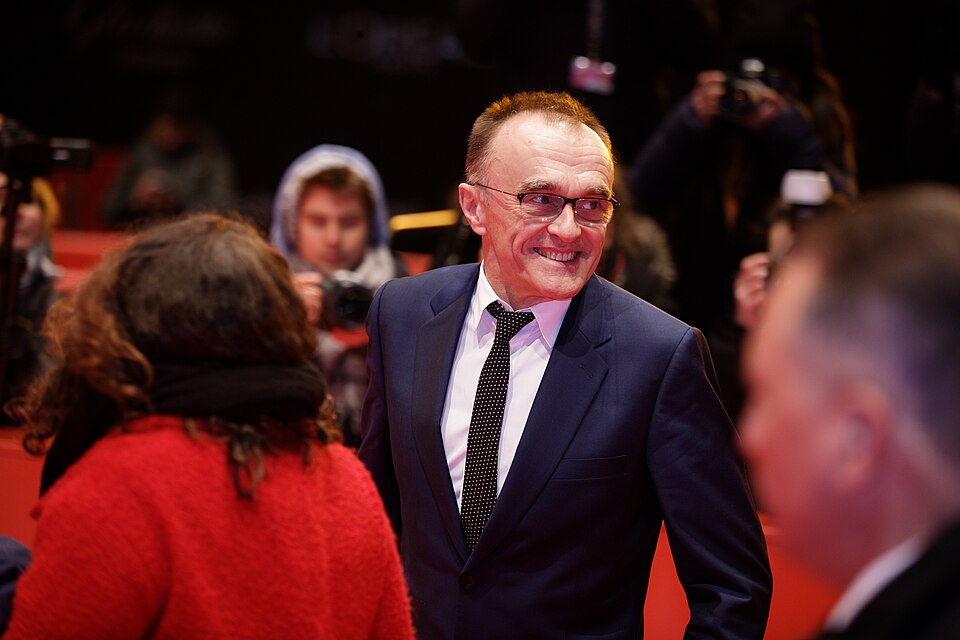
Director Danny Boyle is mentoring Wonder Studios' YouTube anthology series "Beyond the Loop," a series in the Black Mirror format with Season 2 planned for 2026. Boyle is not directing the episodes but is shaping the creative direction of the project.
The attachment is significant for a company in its first year. Boyle directed "Trainspotting," "28 Days Later," "Slumdog Millionaire," and the 2012 London Olympics opening ceremony. His involvement lends the series a degree of editorial credibility that purely technical AI ventures rarely attract this early.
Boyle's filmography is defined by stylistic ambition realized on constrained budgets. "Trainspotting" and "Slumdog Millionaire" are both films where limited resources produced distinctive visual results through directorial invention rather than production scale. That background maps directly to what Wonder Studios is attempting with AI tools.
His role is mentor rather than director. He shapes what "Beyond the Loop" becomes without directing episodes himself. That distinction keeps his primary career intact while lending the series a curatorial authority a purely commercial advisory role would not carry.
Maximilian Bühn, CC BY-SA 4.0, via Wikimedia Commons
The Music Video That Could Not Be Filmed
Wonder Studios' most recognized work is "Something in the Heavens," a music video for Lewis Capaldi in which AI generated visuals depict water enveloping people searching for loved ones. The video reached 1.6 million views and 26,000 likes.
Collins was direct about why AI was necessary: "not a single shot could have been filmed traditionally" within the available budget. Fifteen artists worked on the video. That figure matters because it pushes back against the assumption that an AI production replaces human creative labor wholesale.
A Growing Slate
Beyond Capaldi, Wonder Studios recreated historical scenes for "The Real Wolf of Wall Street," a documentary about Jordan Belfort. The company is also in development with an unnamed music artist on a separate project and has worked on AI voice recreation for dubbing, including work with French actor Alain Dorval.
Wonder Studios has developed proprietary production workflow technology to support its slate. The founders position the company explicitly as the AI equivalent of A24: a curator of distinctive work rather than a high volume content operation.
The company joins a broader surge of AI native studios attracting venture capital as the production industry begins to separate credible AI integrated operations from speculative ones. Obsidian Studio's partnership with Imagine Entertainment offers a comparable model from the US side of this shift.
The Gothic Church as Production Base
Wonder Studios operates out of a converted Gothic church in East London. The choice of location is as deliberate as any other element of the company's positioning. A Gothic church in East London places the studio inside a long tradition of British arts and culture spaces repurposed for creative production, from music studios to theater companies.
That context matters for how the company presents itself to talent and partners. Working in a converted church with established architectural character is different from working in a commercial studio space. It signals a cultural ambition that aligns with the curatorial positioning Collins and Hackney have described publicly.
The ElevenLabs Investment Logic
Mati Staniszewski, founder of ElevenLabs, is a named backer of Wonder Studios. ElevenLabs produces the AI voice synthesis tools that are among the most widely used in AI media production globally. Staniszewski's investment in a production company that uses AI voice recreation for dubbing creates a direct connection between tool developer and production studio.
That connection is strategic in both directions. ElevenLabs gains a production partner that demonstrates its tools' capability in finished work. Wonder Studios gains access to a voice synthesis capability at the frontier of what is commercially available.
Justin Hackney, one of Wonder Studios' co-founders, came from ElevenLabs directly. The investment and the founder relationship represent the same link between the two companies.
The Lewis Capaldi Music Video in Detail
"Something in the Heavens" depicts water enveloping people searching for loved ones. The visual concept required environments and physical interactions that could not be achieved through conventional production at the budget available to the project.
Fifteen artists worked on the video. That figure is significant because it pushes back against the framing of AI production as a replacement for human creative labor. The video required human creative decisions at every level of its production. AI was the tool that made those decisions realizable within the budget.
The 1.6 million views and 26,000 likes the video accumulated represent a real audience result for an AI produced music video. That data point is more concrete than most AI production company claims about audience reception, which typically rely on festival recognition rather than public engagement numbers.
The Jordan Belfort Documentary
Wonder Studios recreated historical scenes for "The Real Wolf of Wall Street," a documentary about Jordan Belfort. Documentary historical recreation is one of the production categories where AI generation has an established practical case: the footage does not exist, conventional production is prohibitively expensive, and audiences accept stylized historical material in documentary contexts.
The Belfort project gave Wonder Studios a production credit that demonstrates practical capability in documentary work rather than only music video production. A company with credits in both categories has a more diverse slate argument than one defined by a single production type.
AI Voice Recreation and Dubbing
Wonder Studios has worked on AI voice recreation for dubbing, including work with French actor Alain Dorval. Dorval is the official French voice of Arnold Schwarzenegger, a long-running dubbing relationship that gives the voice recreation project a specific and recognizable test case.
Dubbing is one of the most commercially practical AI voice applications. The global streaming market requires content in dozens of languages. Conventional dubbing requires casting voice actors, recording sessions, and post production at per language costs that compound across large catalogs.
AI voice recreation that preserves the character and performance quality of original dubbing relationships addresses a specific cost problem for international distribution. Wonder Studios' work in this area places it in a market with clear commercial demand.
What the A24 Comparison Means as Positioning
Collins' explicit positioning of Wonder Studios as "the A24 of AI production" is a specific claim about what the company is trying to be, not just a descriptive comparison. A24 is defined by its curatorial identity: a studio that selects projects based on a specific taste rather than a commercial template, and whose brand carries meaning to audiences and talent before they see the project.
Wonder Studios is claiming that same curatorial identity for AI production. A high volume AI content operation could generate more content at lower cost. Wonder Studios is arguing that the value it creates is through selection and quality, not volume.
Whether that positioning holds as the company scales beyond its first year slate is the question its 2026 and 2027 production decisions will answer. The A24 comparison creates a specific expectation that every project the company releases will either confirm or test.
Beyond the Loop Season 2 and the Series Strategy
"Beyond the Loop" has Season 2 planned for 2026. A second season is the first test of whether the anthology format can sustain audience interest and maintain the creative standard Boyle's mentorship is intended to set.
Anthology series in the Black Mirror format live and die by the quality of individual episodes rather than accumulating narrative momentum. Each episode is an independent creative decision. The consistency of creative judgment across episodes is what builds the series identity, and it is where Boyle's curatorial involvement is most directly relevant.
The $50 Million Valuation at Year One
Wonder Studios reached a $50 million valuation in its first year with $15 million raised. That ratio of valuation to capital raised reflects investor confidence in the company's trajectory rather than its current revenue, which for a production company of this size would not yet support that valuation on earnings alone.
The Atomico involvement brings one of Europe's leading venture capital firms into the cap table alongside the ElevenLabs founder investment. Atomico has backed European technology companies including Spotify, Supercell, and Klarna. Its participation signals that Wonder Studios has been evaluated against a technology company growth thesis rather than only a traditional media company model.
What the Proprietary Workflow Technology Does
Wonder Studios has developed proprietary production workflow technology to support its slate. The company has not disclosed the full technical details of what the workflow does, but its existence signals that Collins and Hackney identified production pipeline efficiency as a competitive advantage worth building internally rather than assembling from available tools.
A production company that can execute at lower cost or higher throughput than competitors using the same underlying AI models has a structural advantage that off the shelf tools cannot easily replicate. Whether the proprietary workflow constitutes a durable competitive advantage depends on how quickly the AI tools market evolves relative to the company's ability to maintain its internal technology lead.
The Development Pipeline Beyond Year One
Wonder Studios' announced pipeline beyond the Capaldi music video and the Belfort documentary includes development with an unnamed music artist and ongoing voice recreation work. The company has not disclosed titles, partners, or release timelines for most of this work, which is standard at its current stage.
The significance of the pipeline is not the individual projects but the pattern they suggest: music content, documentary recreation, and voice work across multiple media types. That diversity of content type is consistent with the curatorial positioning Collins has described, and with how A24 itself built a slate that ranges across genre rather than staying in a single category.
Sources
Deadline
Continue Reading


Video & LipSync
- Video Generator
- Text to Video
- Image to Video
- Start-End Frame to Video
- Draw to Video
- Motion Control
- Video Enhancer
- Video Upscaler
- Video Extend
- Video to Video LipSync
- Audio to Video LipSync
- Image to Video LipSync
- Video FaceSwap
- Seedance 2.5
- WAN 3.0
- Seedance 2
- FLUX 3
- Minimax H3
- Vidu Q3 Pro
- Grok Imagine Video 1.5
- Gemini Omni
- Google Veo 3.1
- Kling 3.0 Pro
- Luma Ray 3.2
- LTX 2.3
- Happy Horse 1.1
- Kling 3.0 Motion
- ByteDance Upscaler
- InfiniteTalk
- InsightFace
Image & Edit
- AI Character
- AI Actor
- Art Generator
- Text to Image
- Image to Image
- LoRA Image to Image
- Draw to Edit
- Image LoRA Training
- Remove Background
- Image Enhancer
- MidJourney 8.0
- Krea 2
- OpenAI GPT Image 2.0
- Nano Banana Pro Ultra
- Nano Banana 2 Lite
- Nano Banana Pro
- Minimax Image
- Clarity Pro
- Z-Image Turbo LoRA
- Krea 2 Turbo LoRA
- Z-Image LoRA Trainer
- Qwen Image LoRA Trainer
- Background Erase Network 2 (BEN2)