
Obsidian Studio: 'If It's AI-Detectable, You've Failed'
Share this post:
Obsidian Studio: "If It's AI-Detectable, You've Failed"
Obsidian Studio co-director Wes Walker has one standard for every project: if an audience can detect the AI, the film has failed. The studio, launched in 2025 and now partnered with Imagine Entertainment, has built its entire pipeline around that premise.
The Studio
Walker co-founded Obsidian with Louis Gheysens, CEO of Gang Group, a Belgian production company. The studio has 27 full time employees, five offices spanning New York, Paris, and Brussels, and no outside investors.
The company's first major commercial credit is an ad campaign for Longchamp, the French luxury fashion brand. Obsidian used that project as proof that AI generated content, when built around a director's storyboard, is indistinguishable from conventionally produced work.
Gang Group's existing infrastructure in European advertising production gave Obsidian a commercial client base to draw from while building its AI capabilities. The Belgian parent company's network in Paris and Brussels is why the studio could open five offices across two continents within its first year without outside investment. The advertising work funds the studio's development toward longer format content.
The Pipeline
Obsidian calls its method "director centered". Every project starts with hand drawn storyboards before any AI model is introduced. Walker describes the sequence as human vision first, AI iteration second, high end VFX third.
"For us as directors, it helps us actually feel quite free to dream", Walker said. Gheysens put the philosophy more directly: "We want to understand what exists in the minds of the directors and use those tools at the service of the directors, not the other way around".
Kling AI is Obsidian's primary tool, and the studio has worked closely with the company since its founding.
The VFX stage at the end of the pipeline is not a fallback for when AI output fails. It is a planned step that refines the AI generated footage to meet broadcast and theatrical technical specifications. That three stage structure, storyboard, AI generation, VFX, is what allows Obsidian to deliver outputs that pass technical quality review at the level commercial clients require.
The Storyboard First Sequence
Walker's description of the process has a specific order: storyboards before any AI model is introduced. That sequence means the AI is responding to human visual intent rather than generating the starting point.
When a director draws what a shot should look like before running it through a generation model, the model's output is evaluated against a pre-existing standard. That evaluation loop is what Obsidian calls quality control. The AI is not defining what the shot should be; it is being asked to match something the director already decided. That constraint is what makes the output legible as a directorial decision rather than an algorithmic one.
The storyboard first rule also changes how the AI tools are used technically. A generation model given a detailed visual reference, even a hand drawn one, produces different output from one given only a text description. The storyboard functions as a visual prompt that constrains the generation space in ways that pure text cannot, which is why Obsidian treats it as mandatory rather than optional.
What the Longchamp Campaign Demonstrated
The Longchamp ad campaign served as a proof of concept under commercial constraints. A luxury fashion brand's visual standards include precise color rendering, material authenticity, and consistency across campaign images.
Those requirements are harder to meet with generative AI than cinematic storytelling because the output must match a brand specification, not just convey narrative intent. Obsidian's ability to deliver under those constraints is the evidence behind its pitch to Hollywood clients. A studio that can produce to luxury fashion spec can produce to the visual quality standards that theatrical distribution requires.
Luxury fashion clients also operate under tight brand control and typically run multiple rounds of creative review before approving final assets. Obsidian's ability to iterate within that review process without sacrificing visual consistency across the campaign means its pipeline handles revision cycles, not just initial generation. That distinction matters to clients who expect multiple rounds before sign off, which is how commercial production actually works.

Hollywood sign. Photo via Wikimedia Commons.
Walker co-founded Obsidian with Louis Gheysens, CEO of Gang Group, a Belgian production company. The studio has 27 full time employees, five offices spanning New York, Paris, and Brussels, and no outside investors at the time of the Imagine announcement.
The Imagine Partnership
Obsidian's deal with Imagine Entertainment covers development, previsualization, and post production. The two companies are developing at least one feature film and a documentary together, with titles not yet disclosed.
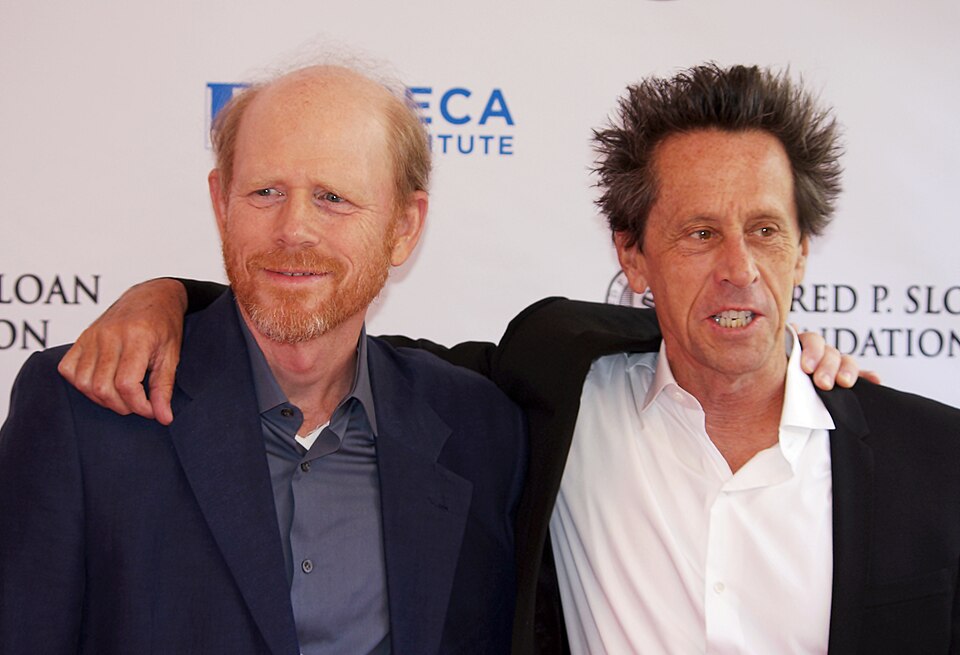
Ron Howard has framed AI tools as a way for directors to get more of what is in their "mind's eye" onto screen. His producing partner Brian Grazer applied AI to post production on "Churchill at War", using it to generate Winston Churchill's voice from wartime speeches that had never been recorded. The Obsidian deal extends both men's approach into a structured company relationship.
The previsualization component of the deal is where the pipeline has the most direct value to Imagine. Previsualization, using storyboards and animatics to plan a film before shooting, is a well established part of major film production. An AI powered previsualization workflow that produces higher fidelity output faster than traditional animatics gives Imagine a production planning tool with measurable cost implications before the cameras roll.
The documentary project alongside the feature film gives Obsidian two different format tests within the same partnership. Documentaries have different visual requirements from narrative features: more variable framing, more reliance on archival footage, more flexible structure. Success in both formats would validate Obsidian's claim that its pipeline is format agnostic.
No Outside Investors and What It Means for the Studio
Gheysens described the studio as having no outside investors at the time of the Imagine announcement. A 27-person operation without external funding is either profitable from commercial work or drawing on the founding partners' own capital.
The absence of venture funding means Obsidian is not subject to the growth pressures that cause AI startups to expand faster than their quality control can support. The Imagine partnership is the closest thing to a backing structure the studio has made public. That arrangement gives Obsidian access to Imagine's project pipeline and industry relationships without the equity dilution and growth requirements that come with institutional investment.
Most AI film startups that have reached comparable scale, five offices and 27 staff in their first year, have done so with investor capital. Obsidian's funding structure makes it more similar to a traditional independent production company than to a venture funded AI startup. That distinction affects everything from how it prices projects to how it retains ownership of its IP and tools.
Ron Howard has framed AI tools as a way for directors to get more of what is in their "mind's eye" onto screen. Imagine's institutional credibility is part of what makes the Obsidian partnership significant beyond its production output.
.jpg)
Ron Howard at TIFF 2024. Photo by Wil540 art, CC BY-SA 4.0, via Wikimedia Commons
Cannes Panel
On May 18, Kling AI hosted a session at the Cannes Marché du Film titled "From Creative Possibility to Production Reality: Kling AI in Cinematic Workflow". Walker appeared on the panel alongside Yang Eekjun, a South Korean director whose AI feature "Raphael" drew international attention.
The Cannes Marché du Film dedicated significant programming to AI this year, with the Walker panel one of several sessions aimed at working filmmakers rather than industry executives.
The Marché du Film is where distribution deals are made alongside the festival's competition screenings. Placing the Kling AI panel there, rather than in a side event or technology conference, means the tool is being presented to buyers and distributors as production infrastructure, not as an experiment. The audience for the Walker and Yang Eekjun session includes the people who decide what content gets distribution, which is a different kind of endorsement than a trade press review.
Yang Eekjun and the Panel as a Signal
Kling AI's choice to place Walker and Yang Eekjun on the same stage signals that the company is building its filmmaker relationships around directors whose work serves as demonstration cases for what the tool enables at professional quality.
Yang Eekjun directed an AI feature that drew international attention before the Cannes panel date. Having a Belgian director with a luxury fashion portfolio and a South Korean director who made a feature film appear together under the Kling banner illustrates the company's positioning: the tool works across production scales, national contexts, and commercial registers. The Cannes platform made that claim to the buyers and distributors in attendance, not just to trade press.
Kling AI's decision to sponsor a Cannes Marché session rather than just a product demonstration reflects where the company sees its market. Buyers at the Marché evaluate content that needs distribution, not tools that need customers. Placing Kling in that context positions it as a production partner rather than a software vendor, which is a different kind of commercial relationship than selling model API access.
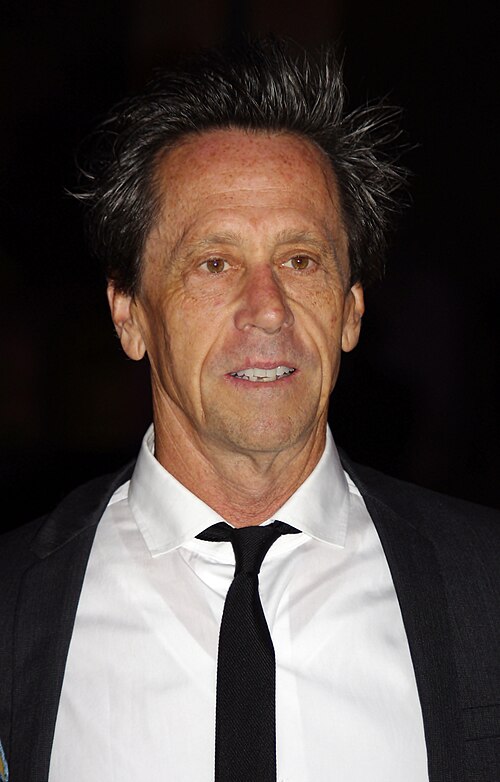
Brian Grazer, 2011. Photo by David Shankbone, CC BY 3.0, via Wikimedia Commons
Brian Grazer's involvement at Imagine gives Obsidian access to a producing partner with Oscar winning films and decades of studio relationships. The Imagine partnership is also a signal to the broader industry that studios at the top tier of Hollywood are evaluating AI production companies as collaborators, not just watching from a distance.
What the Model Proposes
Walker's position lands differently from the two dominant industry arguments. The replacement camp says AI will cut costs by eliminating crew. The resistance camp says AI degrades craft. Obsidian's case is that AI, when the director controls the process from the first storyboard, can raise the quality ceiling.
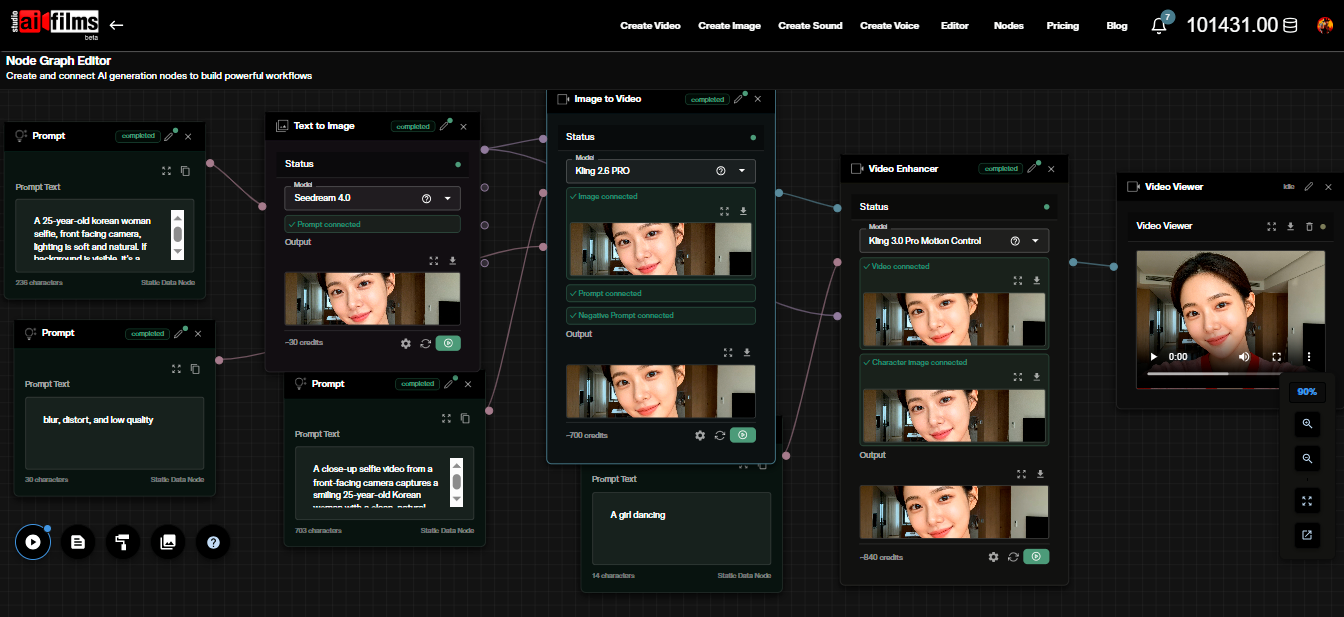
That case now comes with the backing of one of Hollywood's most established production companies. Across the Atlantic, UK startup Wonder Studios is running a similar thesis without studio backing: $15M raised and a $50M valuation in its first year, with Danny Boyle mentoring its anthology rather than a major studio providing the infrastructure. Independent filmmakers can access the same image-to-video and text-to-video tools entering professional pipelines through AI FILMS Studio, without the production company infrastructure.
The Obsidian model answers a specific question the industry has been asking since AI video generation tools became commercially viable: what does responsible professional use look like? Walker's answer is that responsibility begins at the storyboard, before the AI is involved, and that the tool's role is to execute a human decision rather than to make one. That framing is not the only possible answer, but it is one the Imagine partnership has now given significant institutional weight.
Whether that answer holds at feature film scale, with longer schedules, larger crews, and guild requirements that do not apply to commercial production, is what the Imagine partnership will test. The Longchamp campaign and the feature development project are structurally different production challenges, and success at one does not automatically predict success at the other.
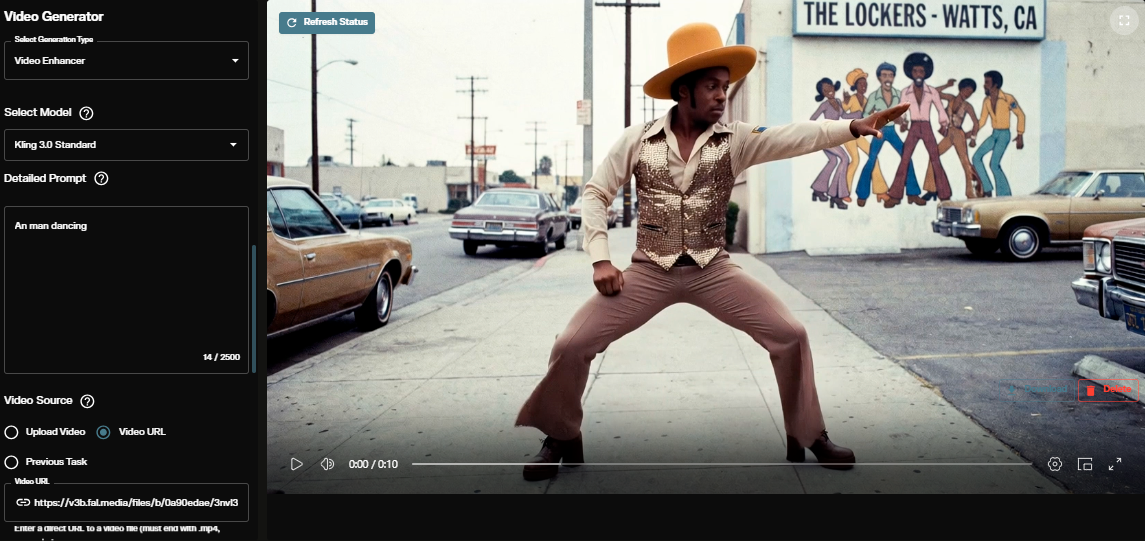
Filmmakers building their own AI workflows without studio infrastructure can access AI generation tools through AI FILMS Studio. The storyboard first principle Walker describes is available to any filmmaker regardless of whether they have a Imagine partnership behind them.
Walker's quote, "If it's AI detectable, you've failed", is a quality bar, not a position on disclosure. Obsidian is not arguing that AI use should be hidden from audiences in principle. The argument is that the craft standard for professional filmmaking requires outputs that do not break the viewer's attention. That bar applies whether the tool is AI, VFX, or practical effects.
The company's five office footprint across two continents and its Imagine partnership position Obsidian as a studio with genuine production reach, not a demo reel with a pitch deck. That distinction is what the next eighteen months of feature development will prove or disprove.
Sources
The Hollywood Reporter | Variety | Deadline
Continue Reading
.jpg?w=3840)


.jpg)
Video & LipSync
- Video Generator
- Text to Video
- Image to Video
- Start-End Frame to Video
- Draw to Video
- Motion Control
- Video Enhancer
- Video Upscaler
- Video Extend
- Video to Video LipSync
- Audio to Video LipSync
- Image to Video LipSync
- Video FaceSwap
- Seedance 2.5
- WAN 3.0
- Seedance 2
- FLUX 3
- Minimax H3
- Vidu Q3 Pro
- Grok Imagine Video 1.5
- Gemini Omni
- Google Veo 3.1
- Kling 3.0 Pro
- Luma Ray 3.2
- LTX 2.3
- Happy Horse 1.1
- Kling 3.0 Motion
- ByteDance Upscaler
- InfiniteTalk
- InsightFace
Image & Edit
- AI Character
- AI Actor
- Art Generator
- Text to Image
- Image to Image
- LoRA Image to Image
- Draw to Edit
- Image LoRA Training
- Remove Background
- Image Enhancer
- MidJourney 8.0
- Krea 2
- OpenAI GPT Image 2.0
- Nano Banana Pro Ultra
- Nano Banana 2 Lite
- Nano Banana Pro
- Minimax Image
- Clarity Pro
- Z-Image Turbo LoRA
- Krea 2 Turbo LoRA
- Z-Image LoRA Trainer
- Qwen Image LoRA Trainer
- Background Erase Network 2 (BEN2)